Day/Night surveillance

Amid growing warnings from cybersecurity analysts about the looming threat of quantum decryption, ImmuniWeb has released a free online tool that checks whether websites are protected by post-quantum cryptography (PQC). The tool analyzes SSL/TLS configurations and verifies their compliance with the latest quantum-resilient encryption standards from NIST. It also checks for adherence to PCI DSS, HIPAA, and other NIST cryptographic requirements. Available via both web interface and API, the tool...

Flir, a Teledyne Technologies company, introduced the iXX-Series of next-generation app-enabled thermal cameras that are set to transform inspection tasks across a multitude of asset condition monitoring, building inspection, and other applications. Built on Flir’s new ACE platform, the iXX combines the power of apps with a high-performance thermography inspection tool, enabling scalable, intuitive, and connected condition monitoring. Flir radiometric images The new Flir iXX solves thes...

Flir, a Teledyne Technologies company, launched the C8 thermal imaging camera, a new device set to enhance compact thermal diagnostics with high-clarity, rapid results. Improvements to the new-generation C8 include enhanced image quality, higher accuracy, improved sensitivity, and the addition of advanced reporting templates within Flir Ignite Pro. Integrate FLIR Ignite Pro cloud connectivity The result of these inefficiencies can lead to higher care costs, delayed repairs, and reduced produc...

Flir, a Teledyne Technologies company, launched the C8 thermal imaging camera, a new device set to enhance compact thermal diagnostics with high-clarity, rapid results. Improvements to the new-generation C8 include enhanced image quality, higher accuracy, improved sensitivity, and the addition of advanced reporting templates within Flir Ignite Pro. Traditional thermal inspections can be slow, unclear, and hard to document, relying on manual processes that risk overlooking critical issues. The...

AI-ISP technology represents a breakthrough in night surveillance, transforming cameras from simple low-light illumination devices into intelligent imaging systems that deliver daytime-level clarity, reliability, and smarter security throughout the night. Unmatched clarity is the goal GeoVision AI-ISP cameras (GV-GBLN4800/GV-GEBN4800) provide superior nighttime surveillance, including: Advanced image signal processing for extreme low-light conditions Superior noise reduction technology Ex...

The new, ultra-compact RSL 200 from Leuze is the smallest safety laser scanner on the market. It safeguards machines, automated guided vehicles and robots. Thanks to its minimal dimensions, it is very easy to integrate even where space is limited. With the RSL 200, Leuze is launching the smallest safety laser scanner on the market. The Sensor People are thus setting new standards in the miniaturisation and integration of safety laser scanners. Small, smaller, RSL 200 Thanks to its small dime...
News

Emergency24, a pioneer in third-party central station alarm monitoring, is proud to announce a groundbreaking partnership with Intrado Life & Safety, Inc. (Intrado), a global pioneer in emergency communications. Emergency24 now integrates with Intrado’s Emergency Data Broker alarm solution, digitally connecting alarm events directly to more than 600 911 centers across the United States. Strategic collaboration This strategic collaboration marks a significant leap forward in emergency response efficiency This strategic collaboration marks a significant leap forward in emergency response efficiency. By leveraging Intrado’s Emergency Data Broker platform, Emergency24 can now transmit alarm data to public safety answering points (PSAPs) in as little as 15 to 30 seconds - a dramatic improvement over the industry’s average 2.5-minute dispatch time via traditional phone calls. This digital dispatch process not only expedites emergency response but also reduces the potential for errors caused by miscommunication during voice calls. Words from Emergency24 Vice President “Emergency24 has always led the way in dispatch response times, and our partnership with Intrado takes that commitment to the next level,” said Steve Mayer, Vice President at Emergency24. “This is a win for subscribers, alarm companies, 911 centers, and first responders. The faster we can verify and transmit critical alarm data, the faster first responders can act-and that’s better for everyone involved.” Rollout in Seminole County, Florida Emergency24 will continue to expand digital dispatch coverage throughout 2025 The rollout began in Seminole County, Florida, and is expanding this month to Waukesha County, Wisconsin, and the Cook County Sheriff's jurisdiction in Illinois. Emergency24 will continue to expand digital dispatch coverage throughout 2025, bringing the benefits of Intrado’s EDB solution to additional jurisdictions nationwide. Investment in advanced digital dispatch strategies This partnership underscores Emergency24’s ongoing investment in advanced digital dispatch strategies, further enhancing its reputation as an industry innovator. The integration with Intrado’s EDB platform builds on Emergency24’s tradition of technological leadership and positions the company- and its alarm dealer partners- at the forefront of next-generation emergency response.

Konica Minolta has announced the sale of its entire 65% stake in MOBOTIX AG, along with all associated shareholder loans, to CERTINA Software Investments AG, a 100% subsidiary of the Munich-based family equity investor CERTINA Group. The CERTINA Software Division of CERTINA Group specialises in the development and expansion of technology-driven businesses worldwide. CERTINA expands portfolio KONICA MINOLTA's medium plan to divest non-focus business and concentrate on core business areas globallyKONICA MINOLTA's medium plan to divest non-focus business and concentrate on core business areas globally. CERTINA acquires the stock-listed MOBOTIX AG shares from KONICA MINOLTA and strengthens its software division. Acquisition of an established software and hardware manufacturer of high-end video and surveillance systems Strategic step to further expand the existing CERTINA Software Division and strengthen joint development activities Increased sales The purchase price has not been disclosed, including to the company. Closing is expected to occur in May 2025, and will be subject to mandatory antitrust clearance. The divestment is part of KONICA MINOLTA's medium plan to divest non-focus business and concentrate on core business areas globally, as outlined in their recent statement. KONICA MINOLTA’s Imaging-IoT Solutions business will continue to provide highly value-added video solution services centered on security and safety. KONICA MINOLTA will keep sourcing from MOBOTIX also in the future. A new chapter for MOBOTIX AG The CERTINA Software Division of CERTINA Group specialises in the development and expansion of technology-driven businesses worldwide. With a strong track record in strategic investments and business transformation, CERTINA brings deep industry expertise and financial backing to support MOBOTIX’s next phase of growth. By leveraging synergies within its broader portfolio, CERTINA aims to enhance MOBOTIX’s market position and drive continued innovation in security and video solutions. MOBOTIX joins CERTINA Tobias Eiblmeier, Head of Mergers & Acquisitions CERTINA Group: “The acquisition of MOBOTIX is a strategic step to further strengthen our software investments and underlines our long-term growth ambitions in our Group.” "We are excited to bring MOBOTIX into our portfolio, as we firmly believe our strategic expertise and commitment to innovation provide the best home for its future. By leveraging synergies with our existing technology investments, we are committed to supporting MOBOTIX’s next phase of growth and market pioneership," said Giovanni Santamaria, Managing Partner of CERTINA´s Software division. Revitalising MOBOTIX vision “We look forward to working with CERTINA as a strong partner on our side. The combination of our unique hardware designs with innovative software solutions on the edge based on our MOBOTIX DNA will bring exciting opportunities to grow together while utilising the synergies from all portfolio companies”, stated Christian Cabirol, CTO of MOBOTIX AG. Klaus Kiener, CFO of MOBOTIX AG, adds: “This transaction will also revitalise the MOBOTIX equity story for our 35% minority shareholders”. Transition and governance changes CERTINA intends to be represented on the supervisory board of MOBOTIX AGIt is expected that all current members of the supervisory board of MOBOTIX AG will resign in the course of the closing of the transaction. CERTINA intends to be appropriately represented on the supervisory board of MOBOTIX AG. Additionally, key pioneership updates include: Klaus Kiener (CFO) and Christian Cabirol (CTO) have extended their contracts until March 2027, ensuring continuity in financial and technological pioneership. Thomas Lausten (CEO) will leave MOBOTIX in mutual understanding at the end of his current contract in June 2025, working closely with the new pioneership team to ensure a smooth transition until then. Next steps for growth “It has been a pleasure to work with our many colleagues, partners and customers around the world during the past 8 years and it is now a good time to change pioneership with a new investor. CERTINA will bring significant value to our company with their experience in technology companies and I look forward to work with Giovanni Santamaria, Tobias Eiblmeier and their teams during the transition next months”, says Thomas Lausten.

Hanwha Vision has released version 6.0 of its Wisenet WAVE video management system (VMS), which gives security professionals greater control over configuring and managing their surveillance systems. This latest version supports more intuitive user management capabilities, making scaling and customising surveillance resources to the needs of individual operations easier than ever. WAVE VMS 6.0 highlights Highlights of WAVE VMS 6.0 include a redesigned user management interface, enhanced Lightweight Directory Access Protocol (LDAP) Integration, upgraded calendars, camera linking via hotspot/teleport, the ability to add temporary users, and cloud-based email. Similar to previous WAVE VMS releases, all features are supported across the platform's mobile, desktop, and server versions using any operating system. WAVE Sync is Hanwha Vision’s cloud-based service that allows users to access, view, share, and manage their WAVE VMS systems remotely from a Web browser. 24/7 transparent visibility “Organisations need greater flexibility in how they configure and operate their surveillance system, including their choice of a VMS model,” said Troy Wideman, Senior Product Manager, WAVE VMS & Recording Appliances, Hanwha Vision America. “Whether they’re managing a handful of employees at one location, or hundreds across multiple sites, they need to have centralised, 24/7 transparent visibility into every aspect of their system’s health and status, from any platform, and WAVE VMS 6.0 fits that bill perfectly.” Key Features of Wisenet WAVE VMS 6.0 Enhanced User Management: Improved and redesigned user management: System administrators can now assign permissions to individuals and groups through a streamlined user interface and assign members to multiple preset groups to decrease user setup time. LDAP Integration - Organisations, where employees are part of user groups in LDAP environments (a protocol allowing centralised monitoring and detection of activities within a network by tracking user logins, permissions, and other directory data), can map those groups to user roles in their VMS. Configuration of LDAP through the WAVE VMS Client. Continuous synchronisation of active directory. Supports mapping between LDAP groups and user roles. Temporary Users – Organisations can provide temporary access and permissions to users with varying user needs. Administrators have full control of time restrictions and link usage restrictions. Set time limits to varying times of day, seasonally, etc. New System Features: Camera linking hotspot/teleport – Seamlessly navigates large systems by connecting cameras. Track persons or vehicles between cameras within the viewing pane. Add multiple hotspots to easily move between cameras; hotspots provide further information on camera placement. NVIDIA hardware decoding support – Systems equipped with NVIDIA GPUs achieve smoother video playback and live monitoring. Reduce CPU resource usage by 20-30% during heavy usage. Emails via WAVE Sync – Users can route emails via WAVE Sync instead of through SMTP. Sends API requests to notifications service instead of using SMTP settings. WAVE Sync users will receive email notifications. New look calendar – WAVE users can locate footage more efficiently, quickly navigating by year, month, day, and time of day.

Hanwha Vision, the global vision solution provider, has unveiled its key trend forecast for video surveillance in 2025. The industry is poised to enter an era of super-intelligent video surveillance, transcending basic detection and search capabilities and moving towards autonomous decision-making based on comprehensive understanding and analysis. Powerful Edge AI: The next frontier Artificial intelligence continues to redefine what’s possible in video surveillance, and edge AI is driving this transformation. By bringing powerful AI capabilities directly to edge devices like cameras, security systems are delivering faster decision-making, enhanced operational efficiency, and greater autonomy. AI-powered Image Signal Processors Edge AI cameras are predicted to evolve into intelligent AI agents capable of independently understanding Advanced technologies such as neural processing units and AI-powered Image Signal Processors – specialised chips designed for AI – are unlocking new levels of performance, from superior image quality to real-time behavioural analysis. Looking ahead, edge AI cameras are predicted to evolve into intelligent AI agents capable of independently understanding and assessing situations, generating events, and providing real-time alerts. Generative AI – From seeing to real intelligence Generative AI is poised to revolutionise how we interact with video systems. While this technology has primarily been cloud-based, Hanwha Vision envisages its integration into edge AI devices, enabling them to understand, assess, and respond autonomously to increasingly complex situations. This shift promises groundbreaking applications in areas such as intrusion detection, fire prevention, and more. Intrusion and fire detection For example, intrusion detection will go beyond the limitations of conventional systems by analysing human behavioural patterns – such as running, loitering, or climbing fences – to determine intent, rather than simply detecting movement within predefined zones. Similarly, fire detection will move beyond merely detecting smoke or flames. By analysing the broader context, including evacuation behavior and fire extinguisher use, these advanced systems will assess the likelihood of a fire and facilitate rapid response. Event and object tracking Hanwha Vision predicts that security systems will be able to track a series of events or objects This transformation will empower edge AI cameras to act autonomously on behalf of users, significantly enhancing security and efficiency. Furthermore, Hanwha Vision predicts that security systems will be able to track a series of events or objects through multiple cameras using generative AI that understands event sequences. Collaborative and accessible ecosystems The video surveillance market is poised for a shift with the expansion of AI ecosystems, to usher in an era of innovation. The days of individual companies competing to develop their own proprietary AI technologies are fading. Building and expanding an AI ecosystem through collaboration has emerged as a key factor determining market competitiveness, promising scalability, and rapid innovation for the video surveillance market. Integrating AI solutions into video surveillance First, the AI ecosystem allows for easy expansion of functionality by integrating AI solutions into video surveillance systems as needed. For instance, Hanwha Vision’s AI Box empowers users to add sophisticated AI features, such as object detection/classification and advanced video analytics, to conventional security cameras without replacing existing infrastructure. Customised solutions Users can selectively deploy AI solutions optimised for their specific environment and objectives Another advantage of an AI ecosystem is its ability to meet diverse customer needs by providing customised solutions. Similar to adding apps to a smartphone, users can selectively deploy AI solutions optimised for their specific environment and objectives. This flexibility allows for the creation of bespoke systems, such as integrating customer behaviour analysis AI in retail stores or implementing production line monitoring solutions within smart factories. 4-channel AI PTRZ multi-directional camera Recently, Hanwha Vision launched a 4-channel AI PTRZ multi-directional camera that offers access to a vast ecosystem of AI apps. This enables users to add AI functionalities tailored to their specific needs and build customised solutions across various applications, demonstrating the power of AI at the edge. Streamlined solutions for simplified management As technology grows more sophisticated, the demand for simplicity and efficiency rises. The security market is shifting towards end-to-end solutions that seamlessly integrate systems and services, expanding the scope of security. This surpasses the traditional role of video capture and storage, encompassing integration with access control, fire detection, data analytics, and environmental sensors to create a comprehensive security framework. Single-pane-of-glass interfaces These unified platforms offer real-time situational awareness and seamless interoperability Furthermore, the emergence of single-pane-of-glass interfaces – a user interface that consolidates data and functionality from multiple systems or tools into a unified, centralised view is transforming how organisations manage their security and operational systems. These unified platforms offer real-time situational awareness and seamless interoperability, turning security centres into strategic hubs for business intelligence. End-to-end solutions Building end-to-end solutions can present challenges, including ensuring interoperability between disparate systems, managing integration costs, and mitigating potential functionality issues. To address this, there is a growing trend towards one-stop solutions where a manufacturer provides all necessary products and services for streamlined deployment. Barcode Reader Camera For instance, Hanwha Vision offers the logistics industry’s first integrated barcode reading and video capture solution, the Barcode Reader Camera. This solution bolsters the logistics process, delivering cost reduction, time savings, enhanced safety, and increased operational efficiency. Cybersecurity and transparency: building trust In an era of heightened cybersecurity threats, transparency and trustworthiness are non-negotiable In an era of heightened cybersecurity threats, transparency and trustworthiness are non-negotiable. From privacy by design principles to ensuring the highest levels of certification, reputable manufacturers will be further committed to safeguarding data and proactively ensuring their systems meet the highest standards of security and integrity. 2025 may mark a turning point for cybersecurity: recent research from Hanwha Vision Europe reveals a concerning gap between users’ belief that their video systems are protected from cyber-attacks – and their oversight in implementing even simple measures to keep them secure. Networked video cybersecurity best practices The survey of over 1,150 IT and security managers across Europe reveals that 92% of IT and security managers believe their video systems are highly secured against cybercrime – yet just 23% are implementing basic network security measures. The full research findings, including an analysis of variations between countries, industry sectors, organisation sizes, and roles, can be found here: Cybersecurity Report. They also feature a guide to networked video cybersecurity best practices.

North Yorkshire and Devon & Cornwall are the latest police forces to become ECHO-connected, having joined in August and November 2024, respectively. Their addition brings the total number of ECHO-connected police forces in the UK to 13, with ECHO enabling the efficient handling of over 70,000 Intruder and Hold-up Alarms incidents annually, improving police response times and outcomes for victims. Pioneering Echo-connected alarm receiving centres (ARCs) including ADT, Secom, Cougar/K-SOC and Banham are now delivering automated alarm signal service levels in excess of 90%, facilitating quicker police response and ensuring faster, more effective action. Efficiency and accuracy of response James Sharp, Operations Director at Cougar Monitoring/KSOC explained: “Using ECHO to contact the police has provided several benefits, particularly in enhancing the efficiency and accuracy of our response. The uniformity of the data being sent to the police has meant a consistent response and timely dispatch. It has also enabled us to keep track of our live URNs (alarm incidents) in a more efficient way." "The speed of (alarm signal) delivery to the police has made a marked improvement. The time taken to pass alarms significantly reduces and gets a more accurate and instantaneous response. This allows for better scalability, reliability and time efficiencies overall. We are also able to better report against activations as our AMS (Alarm Management System) logs the case in a step-by-step sequence removing the need to listen back to call recordings to investigate an incident." Introduction of ECHO Paul MacQueen, Control & Command Manager at Secom commented, "I have been with SECOM for over 32 years and in that time SECOM has seen many significant changes and improvements within our industry." "The introduction of ECHO is another one of those changes that has improved our industry for certified security companies such as SECOM, in terms of speed of Police response, driving better customer service for our clients, as well as enhancing the labour and time efficiency within our business, reducing miscommunication between SECOM and the Police operational staff." Benefits from automated alarm transfer Rick Carr, Systems Manager at ADT Fire & Security underlined this: “ADT has a long history of automated alarm transfers to the police which precedes the ECHO story. We are now firmly committed to ECHO which has in the last 4 years created opportunity for all police forces to benefit from automated alarm transfer whilst at the same time keeping it simple for ARC infrastructure and reducing costs.” At Banham, Roger Kay, Associate Director, elaborated: “Banham were very excited to be a part of the proof of concept for ECHO in the early days testing the passing of URNs to Essex and the Met via ECHO. It’s true to say we’ve never looked back: there are zero downsides to the ECHO process and it’s quicker and more accurate than calling the Force Control Room." Regular internal URN audits Kay added: "Any associated cost more than repays itself; ECHO makes it as simple as possible to declare URN elements by the associated force and customers benefit from officers attending as quickly as humanly possible. Our regular internal URN audits are a good thing too, more than offsetting our time saved in operations.” Martin Harvey, Director at ECHO commented: “ECHO has proven itself to deliver a win-win for police forces and ARCs in responding to alarm incidents, enabling a fast efficient response with increased likelihood of better outcomes for victims of crime, at the same time ensuring a better use of resources by all players in delivering that outcome. This is the potential reality for all police forces and we encourage those who have yet to commit to get ECHO-connected.” Alarm interface package Eight additional police forces - Dorset, Durham, Gwent, Lancashire, Leicestershire, Merseyside, Surrey and Sussex - have installed their 'Alarms Interface' and are currently awaiting activation. In 2025, ECHO is planning to further enhance its alarms interface package to include the Unique Property Reference Number (UPRN) data some forces rely on, as well as police responders ‘time of arrival’ (at incidents) and incident reason codes to better inform ARCs and their customers about incident status in real-time, further improving links between ARCs and their police counterparts, whilst saving call handlers’ time.

As demand for high-efficiency security systems rises among large enterprises, the global security solution provider VIVOTEK (3454-TW) introduces new software service “Device Manager”. Remote management service This all-in-one remote management service allows large enterprises to manage thousands of network cameras, assign IPs, and update firmware remotely, significantly reducing time and labor costs, and acting like a dedicated security manager for the company. For instance, when a camera goes offline, the system immediately sends a notification, effectively preventing potential security incidents and helping businesses improve their operations. IP camera market The IP camera market is projected to reach $14.74 billion by 2024 and grow to $28.25 billion by 2029 According to a report, the IP camera market is projected to reach $14.74 billion by 2024 and grow to $28.25 billion by 2029, with a compound annual growth rate (CAGR) of 13.9%. As the security industry sees broader applications, many companies are recognising security as a critical part of their operations. AI-powered services and products For businesses with large-scale security systems, effectively simplifying management processes is the key to staying competitive. VIVOTEK, understanding this need, has introduced a diverse range of AI-powered network cameras, recorders, and the VORTEX cloud security service, it has also optimised its software systems to enable easier security management for its clients. Key features The VIVOTEK Device Manager is available for free download on the official website and can be used effortlessly by entering the IP address of a VIVOTEK camera. Key features include: Batch Deployment for Fast Setup: Quickly configure cameras, assign IPs, and update firmware to ensure the system is always up-to-date and running smoothly. Stay Informed 24/7: The Device Manager runs around the clock, and whenever an abnormal event is detected—such as a device going offline—an instant notification pops up, giving clients valuable time to respond to incidents. Enhanced Remote Management for Maintenance: Users can monitor and adjust equipment at multiple locations without needing to be on-site. Devices can also be grouped for easier system maintenance. Synergy with third-party VMS To strengthen its enterprise security ecosystem, VIVOTEK has partnered with industry-pioneering Video Management System (VMS) platforms such as Genetec and Milestone to integrate its network cameras and provide more efficient video analysis. With the Device Manager, VIVOTEK increases synergy with third-party VMS platforms and delivers a more comprehensive security management experience for large-scale enterprise customers.

Expert commentary

It’s no secret that the data security sector is constantly changing. It has an annual CGR of about 12.3%. Future trends in data security Much of this has to do with the rise of cybercrime in recent years, with reports showing that cyberattacks happen as often as every 39 seconds. To combat the growing rate of cybercrime, data security has been on the rise. As we journey further into this era, it becomes evident that a spectrum of significant trends is molding the future of data security. This exploration delves into a selection of these trends, unraveling their importance and the potential implications they carry 1. AI security tools will increase Artificial Intelligence is also being used in the development of smart attacks and malware The introduction of Artificial Intelligence in the data security industry brought significant changes, especially in cybersecurity. AI has been the golden standard for face detection, natural language processing, automated threat detection, and automated security systems. Additionally, Artificial Intelligence is also being used in the development of smart attacks and malware, bypassing even the latest security protocols in data control. And as time progresses, AI security tools will flourish and dominate the scene. Let’s take a more in-depth look at three of the top AI security tools. Targeted attack analysis tool Manufacturers utilise targeted attack analysis tools to uncover targeted and stealthy attacks. Artificial Intelligence can be applied to the program’s capabilities, processes, and knowledge. For instance, Symantec launched this tool to combat the Dragon 2.0 attack in 2022. The phishing attack reprimanded multiple energy companies while trying to gain access to their operational networks. Targeted Attack Analysis Tools can analyse incidents and look for similarities from previous situations. They also help detect suspicious activities and collect all the necessary data to determine whether a specific action is malicious. Intercept X tool Results from the Intercept X Tool feature high accuracy and a low false positive rate Sophos, a British security hardware and software company, launched the Intercept X Tool. It engages a neural network that records and analyses data like a human brain. Sophos’ Intercept X Tool can extract features from a single file and perform a deep analysis. It detects malicious activities within 20 milliseconds. Plus, it’s also trained to work on bi-directional sharing and real-world feedback of threat intelligence. Results from the Intercept X Tool feature high accuracy and a low false positive rate. IBM Watson Technology IBM’s QRadar Advisor uses IBM Watson Technology, a unique AI tool for fighting cyber attacks. Artificial Intelligence can auto-investigate activities and indicators for potential exploitation or compromise. With cognitive reasoning, IBM Watson Technology can present critical insights to accelerate the response cycle. Security analysts can utilise this technology to search for threat incidents, reducing the risk of letting them fly under the radar. 2. Blockchain as a security solution It guarantees no points of failure or hackable entrances that can expose datasets inside the system Blockchain is a type of distributed ledger technology (DLT) that aims to establish trust within an untrusting ecosystem. Today it’s one of the most robust cybersecurity technologies in the industry. Blockchain utilises a decentralised ledger system, but your team members can still gain access to transparent information in the cloud. Members can also record, pass along, and view necessary transactional data in the blockchain. The entire blockchain process maintains data integrity within the system while establishing trust among team members. It guarantees no points of failure or hackable entrances that can expose datasets inside the system. Cybersecurity, biometrics Cybersecurity primarily benefits from these features because blockchain can create a secure and robust wall between data and hackers. On top of that, blockchain ledgers can include biometrics like fingerprints and retina scans. These prevent hackers from accessing any private data. Because blockchain is decentralised, it also limits hackable data. Together with the technology’s record-keeping system, each node is provided insight into data manipulation exposing real-time cybercrime attempts. 3. Increased and widened access control Without access control, expect your company to be open to security issues, including theft, data loss, and breach of data Access control is critical in data security. More than a valuable security tool, business leaders can use access control to regulate people accessing any given resource. A company with an IT security setting can control who has the liberty to edit certain files. One of the primary goals of access control is to minimise threats or attacks to organisations and businesses to keep people and data secure. Without access control, expect your company to be open to security issues, including theft, data loss, and breach of data protection laws. Benefits The benefits of increased and widened access control include: Identifying who can access and control your data at specific time intervals. Protecting data from overwriting, accidental deletion, and malicious intent. User permissions that can be readily changed. Compliance and regulation with data privacy laws. Central management of access to data through a reporting portal or a dashboard. Multi-factor authentication Access control comes in various types and systems, so it’s critical to know the features of what you’re looking for. The most common type is multi-factor authentication or MFA. It involves multiple steps before logging in, requiring the user to enter other relevant information besides the password. Some other examples of information include biometrics, answering a security question, or entering a code sent to the user’s email address. Two-factor authentication, role-based access control Two-factor authentication further prevents unauthorised entries that can result in unnecessary data possession Two-factor authentication further prevents unauthorised entries that can result in unnecessary data possession. Another type of access control is role-based access control. In this setup, only one individual can set up access guidelines and grant permissions to specific team members within an organisation. 4. Greater use of the zero-trust security model The zero-trust security model is a framework that requires every user within and outside the organisation to undergo authentication, authorisation, and validation. These are all essential to ensure proper security configuration before access is granted to the company’s applications and data. A zero-trust model assumes that anyone can cause data breaches and that a traditional network edge is not taken into effect. Moreover, it addresses the following modern-day challenges: Hybrid cloud environments. Security of remote workers. Ransomware threats. This framework utilises the combination of multiple advanced technologies, including: A risk-based multi-factor authentication. Endpoint security. Identity protection. Cloud workload technology. The zero-trust model uses all these innovative tools for system identification, user verification, access consideration, and system security maintenance. Constant validation and monitoring Enforcing strict policies and compliance with data privacy laws are also essential Additionally, it also considers data encryption, email security, and asset verification before establishing connections with applications. The architecture of a zero-trust framework requires constant validation and monitoring of the users and the devices they are using. Enforcing strict policies and compliance with data privacy laws are also essential. More importantly, the zero trust architecture requires all organisations to be aware of all their available services and accounts to gain complete control of data handling and manipulation. 5. Increased privacy regulations Privacy regulations and policies guide organisations in proper data control, handling, and security. These policies guide organisations in proper data control, handling, and security. As a responsible business owner, you must comply with these regulations to avoid legal issues. With cybersecurity attacks becoming common, expect increased and stricter privacy regulations to be released in the next few years. While current policies are still taken into effect, various modifications and adjustments will occur to compete with the rising numbers of data breaches, thefts, data loss, and more. California Privacy Rights Act (CPRA) Currently, the California Privacy Rights Act (CPRA) is the most comprehensive legislation on state data privacy. It only started to take effect on January 1, 2023. The CPRA introduces the following principles: Broad individual consumer rights. Significant duties of people who need to collect sensitive and personal information. Additional definitions of data privacy and security. An individual’s duties include releasing information about data collection to concerned data subjects and proper access, correction, and deletion of information. Final thoughts 2023 is a big year for data security. Trends such as increased adoption of zero-trust policies, a greater reliance on AI security tools, and the implementation of blockchain as a security solution are all things we expect to see shortly. Staying up-to-date with these trends is important for keeping your business current and ensuring that you’re adhering to new and changing regulations. Doing so can give you an edge over the competition and keep you out of legal hot water.

Physical security is essential for a modern production facility, users don’t want just anyone entering the building or accessing secure areas. But what about production machinery? Machine authentication is often a missing link in the security plan for manufacturers. Why machine authentication? Most manufacturers have made significant investments in physical access control (PAC) for production facilities. Few shops currently hand out physical keys to employees or leave the building unlocked during production hours. For all but the smallest shops, front-door access typically involves individual radio-frequency identification (RFID) badges that enable tracking of who is coming and going and at what times. Use of physical keys, password login It is simply assumed that anyone who has access to the factory floor has the knowledge, authority, and training But when it comes to production machinery, many manufacturers still rely on physical keys, password login on the human-machine interface (HMI), or a shared PIN to unlock machine access. In some shops, machines may not be secured at all, it is simply assumed that anyone who has access to the factory floor has the knowledge, authority, and training to use the machines responsibly. However, this is not necessarily a good assumption, especially in a larger manufacturing plant where many people can access the production floor. Valuable and sensitive equipment CNC machines, robotic welders, process equipment, and other production machinery can cost anywhere from $5,000 to half a million or more, depending on their size and function. They also have significant safety risks for untrained users and may hold valuable and sensitive IP (such as customer design specs or batch recipes). User authentication Authenticating users at the machine level closes an important security loophole and makes plants safer and more productive. Machine authentication prevents untrained or unauthorised users from accessing production machinery. The right authentication system also allows access levels to be tailored for different users based on training credentials, job roles, or even projects. Machine authentication benefits A strong machine authentication solution provides several benefits for manufacturers: Minimises unplanned downtime and expensive damage to machines caused by untrained operators. Enables tracking of production outcomes by machine operator for better quality control and troubleshooting. Protects company and client IP held on the machine by preventing unauthorised access to machine controls and memory. Enhances plant safety and compliance by limiting machine access to operators with the appropriate credentials. Reduces the risk of deliberate sabotage by unauthorised operators, including damage to machines and production facilities and data theft or corruption. Mark Merino, the Director of the Digital Factory Group for Polaris Automation, explains, “Machine authentication allows us to identify which people are logged into different pieces of equipment and make sure they are trained appropriately for the machine and have the right clearances for the data they are trying to access.” Choosing the right machine authentication solution Access control for production machinery can be accomplished by various means, including password and PIN systems, physical keys or fobs, RFID badges, or smartphone-based mobile credentialing systems. The best machine authentication system will: Be highly reliable and secure to protect the machine from unauthorised access. Enable identification of individual operators and tracking of who has used the machines, at what times, and for what projects. Allow access levels to be differentiated by the user. Be easy to implement and administer. Discourage sharing or cloning of credentials. RFID readers An RFID reader can be easily connected to or integrated with the HMI for the machine In most manufacturing environments, the simplest solution for machine authentication is the RFID badge employees already carry for building entry. An RFID reader can be easily connected to or integrated with the HMI for the machine. All users must do to authenticate themselves is swipe their badge over the reader to unlock machine controls. RFID benefits RFID provides multiple benefits for end users, IT, and managers: It leverages technology already widely used, so users do not have to carry a separate key or fob to access machine controls. It is more secure and easier to manage than a password system, as passwords are frequently forgotten, shared, or hacked. Unlike shared PINs, physical keys, or fobs, user authentication via an ID badge enables accurate identification of who is logging into the machine. Users are much less likely to share their picture ID badge (which is often also linked to HR functions such as time and attendance) than a machine password, PIN, or key. If an ID badge is lost or stolen, or an employee leaves the company, IT can easily disable access to the card. RFID credentials are very difficult to hack or clone. Transmission between the reader and card can be encrypted for added security. Unlike biometric options, RFID is highly reliable even in hot, dirty, or humid environments and does not require workers to remove gloves, safety goggles, or masks. Getting started with machine authentication Machine authentication starts with selecting the right RFID reader. A universal RFID reader supports easy implementation, integration with other building systems, and scaling. A universal reader also provides flexibility for the future in case companies want to change transponder technologies or allow for user authentication using mobile credentials on a smartphone. IIoT model User authentication must be designed within the context of the wider security ecosystem of the plant To ensure the security of production machinery, user authentication must be designed within the context of the wider security ecosystem of the plant. Modern production machines are increasingly networked and connected in an “Industrial Internet of Things” (IIoT) model. That means machines are not only vulnerable themselves but are also endpoints in the broader IT landscape of the plant. Machine authentication systems must incorporate best practices for endpoint security, such as those outlined by ISO (International Organisation for Standardisation), NIST (National Institute of Standards and Technology), and other industry organisations. Best practices: The reader installation should be tamper-proofed to prevent physical disruption of the authentication system. Use an encryption standard suitable for the security level of the application. Encryption prevents data interception or card cloning. If higher security is desired, RFID can be implemented as part of a multi-factor authentication system along with biometrics and/or a password or PIN. The authentication system should support different access levels for different users or classes of users. A role-based permission system allows for different levels of access for line operators, supervisors, IT, and maintenance, for example. For maximum safety and security, individual users should only have the minimum access required to do their jobs. With secure machine authentication, manufacturers can protect people, production equipment, and IP, while enabling smooth operations. It all starts with an authentication system that supports reliable and secure operator identification at the machine level.

Our recent survey on the state of access control in 2023 showed that HID partners and end users, as well as security and IT professionals, may have varying needs and concerns but nearly all agree on one thing: the need for sustainable solutions. Operational transparency In fact, sustainability was a top issue for almost 90% of our survey respondents. Our end users and their consumers are primarily driving this demand, with ever-increasing numbers asking for operational transparency and requiring solutions that reduce environmental impact. And we’re not the only ones seeing these trends. The sustainability shift Together with ASSA ABLOY, they have committed to an ambitious sustainability programme Sustainability continues to be a key focus for HID and is a core consideration when it comes to the development and optimisation of products and solutions. Together with ASSA ABLOY, we have committed to an ambitious sustainability programme with specific, science-backed targets in line with the Paris Agreement. Initiatives While we work hard to lead the way, we’re certainly not alone. Investors are increasingly applying non-financial environmental, social, and corporate governance factors (ESG factors) as part of their analysis process to identify material risks and growth opportunities. Security vendors are including sustainability achievements in their reporting systems. Businesses are increasingly referring to “Net zero” and “renewable” initiatives. Bloomberg predicts that global ESG assets will exceed $53 trillion by 2025, that’s more than one-third of the anticipated total assets under management. The United Nations is focusing on sustainability with their Sustainable Development Goals (SDGs), a set of 17 goals and 169 targets that balance ESGs. Digital sustainability credentials This growing number of eco-minded organisations are seeking sustainability in every facet of their business, including their credential programmes. While digital credentials continue to be a solution that aligns with the sustainability agenda (in addition to delivering many other benefits!), many are seeking physical alternatives to traditional PVC cards. All of this presents a problem for providers: how to create cost-effective, sustainable, and highly-secure physical credentials? For HID, the answer is bamboo. Introducing the HID Eco Card HID Eco Card is made of sustainable, environmentally-friendly bamboo certified by FSC and TUViT Seal 5 The recently released HID Eco Card is made of sustainable, environmentally-friendly bamboo certified by the Forest Stewardship Council (FSC) and TUViT Seal 5. We love that it’s exceptionally fast growing and requires little agricultural intervention like fertilizer or pesticides, plus has low energy consumption and CO2 emissions during processing. Our customers also love that it reduces their plastic and consumables waste. Features In addition to being eco-friendly, the HID Eco Card is: Secure - SIO-enabled, featuring advanced Seos® encryption technology to keep data safe. Versatile - Compatible with a wide range of access control systems and ideal for a variety of applications. Durable - Designed for durability and reuse, with a three-year warranty. Brandable - Can be customised so brands can showcase their commitment to sustainability and security. Small shifts like opting for bamboo badges can make a real difference to the planet and public perception. It’s just one-way organisations are showing their commitment to sustainability and another way HID is pioneering the world in powering trusted identities.
Security beat

New robots and indoor drones for security applications are on the horizon, based on the work of ADT Commercials’ Innovation Lab, which is evaluating the new technologies’ value to customers and some typical use cases. The Innovation Lab has been in place for just under a year and just moved into a 2,000-square-foot facility that is staffed with four dedicated ADT Commercial employees and teams from various commercial innovation partners. The idea of the lab is to close the gap between the incubation of new technologies and the needs and realities of the ultimate customer. The goal is to adapt the design of a product to meet the customer’s need, instead of forcing the customer to adapt their use of the technology to meet its limitations. Addressing a problem Every project or investment at the innovation lab starts with the identification of the problem, never the solution" "Every project or investment at the innovation lab starts with the identification of the problem, never the solution," says Ed Bacco, Vice President, Enterprise Security Risk Group for ADT Commercial. “Then we develop detailed functional requirements to address what this technology needs to do to address the problem.” “Then – and only then – do we move toward developing the technical specifications to answer how the technology needs to operate to address the problem,” he adds. Prioritising innovation The approach sets ADT Commercial apart from most labs. The last item they focus on is the creation of a business model to address how they can sell the technology. “Early on, the company recognised that if we truly want to focus on innovation, we need to prioritise invention over profits, which is why the lab doesn’t operate under a profit-and-loss model,” says Bacco. This article will describe two recent technologies the Innovation Lab has been working with, and how they can impact the future of the security industry. Halodi Humanoid Robotics Unlike other competitive robot solutions, Halodi Humanoid Robotics can interact with the built environment The ideal use of humanoid robots is to perform jobs that are considered repetitive, dirty, dangerous, and/or mundane. In security, that describes most security guard positions. Unlike some other competitive robot solutions, Halodi Humanoid Robotics can interact with the built environment, meaning that they can autonomously open doors, call elevators, present security badges, operate pins pads, and more. Observe and report functionality The basic use case for the bot is based on the fact that the role of 98% of all security guards is to “observe and report.” There is often a misconception in the public that guards are widely permitted to engage hands-on with alleged offenders, but most guarding contracts restrict that ability. Therefore, given the mundane and routine nature of guarding, humans find it a challenge to maintain the high degree of awareness that is needed, whereas the bots never waiver, never rest and never lose awareness. Alternative to human guards If a bot is to serve as an alternative to human guards, then it needs to interact with the human environment The bot wasn’t designed to be “human-like.” There is a general concept in humanoid robotics called the “uncanny valley” that defines a tipping point when humans become uncomfortable with humanoid robots if their design resembles humans too closely. However, if a bot is to serve as an alternative to human guards, then it needs to be capable of interacting with an environment that was designed for humans. That means opening doors, riding elevators, bending down, picking up items, etc. Remotely operated Current robotic devices are skilled at sensing/analysing the environments they are deployed in, but their ability to interact with them is limited. The other advantage of a humanoid robot is when it’s being remotely operated in the avatar mode, meaning virtually, the human operator finds the experience familiar and intuitively knows what to do. Access, intrusion, and VMS integration The bots can be integrated with access control, intrusion, and video management systems and can conduct patrols autonomously and report anomalies and/or respond to alarms via those same systems. The bots can be equipped with other sensors to constantly analyse the environment for threats to human life such as carbon monoxide, smoke, hazardous chemicals, or poor air quality. IR capabilities IR capabilities also enable the bot to detect the possible failing or overheating of equipment They are capable of “seeing” in the Infrared Range (IR), which makes them suitable for responding to the source of fire/smoke alarms while humans evacuate. IR capabilities also enable the bot to detect the possible failing or overheating of equipment. Although designed to operate autonomously, the bot can also be controlled by a simple point-and-click mapping device or using the avatar control system. Applications “The biggest challenge we’ve seen with customers who are conducting in-field pilots is aligning their excitement of how the bots can improve their traditionally non-security applications with the current capabilities,” says Bacco. These applications include using the bots to conduct safety audits of items like fire extinguishers and Automated External Defibrillators (AEDs), serving as a fire watch, greeting visitors in the lobby, and automating gates at industrial and distribution sites. Autonomous Indoor Drones COVID-19 has shown that customers are looking for predictable and repeatable solutions to meet their security needs" As the name implies, autonomous indoor drones are focused on flying indoors versus the outdoor environment, which is heavily regulated by the U.S. Federal Aviation Administration (FAA). Flying autonomously indoors not only eliminates FAA oversight but also will enable ADT Commercial to offer another choice to customers to further reduce their dependencies on and costs of human guards. “The COVID-19 pandemic has shown that customers are looking for predictable and repeatable solutions to meet their security needs that aren’t dependent on humans,” says Bacco. The three use cases for the drones are automated alarm response, random tours, and directed missions. Automated response mode In the automated response mode, when an alarm is triggered, the drone will automatically initiate a mission to the point of alarm and report any anomalies (i.e., people, heat signature, etc.). It can also be programmed to fly random patrols as a deterrent to a possible breach, and an operator can remotely initiate a mission using a simple point-and-click map interface. Drone mobility An obvious comparison is to fixed camera systems, which are an important component of any security system. But, unlike a fixed device, the mobility of a drone enables a view of an environment that is more easily understood by humans, meaning that we think and see in 3D, whereas fixed views are limited to 2D. Added to that, there is a deterrence factor that a mobile surveillance device has over a fixed. Noise consideration and applications Customers want to fly drones 24/7 in minimally manned locations such as data centres, warehouses The drone is designed to operate in environments that are being shared with humans. As an example, it will not initiate a mission if a person is standing under it, and it will autonomously alter course if a person is in its flight path. However, like all drones, the noise factor is a consideration, and the best applications in offices are after hours. Customers want to fly them 24/7 in more minimally manned locations such as data centres, warehouses, and manufacturing facilities, where noise is less a factor. Stand-alone and integrated system An indoor drone can be operated as a stand-alone system with its user interface, or it can be integrated fully with traditional security and VMS systems. “We are also developing additional computer vision-based analytics that will leverage the cameras on the drone,” says Bacco.

Video surveillance cannot address all the security challenges in education, but it is a valuable tool and among the least obtrusive options available. And the list of security challenges that video can address grows every day. Video systems can provide real-time monitoring of school premises and facilitate rapid response to incidents. New advances such as video analytics are currently underutilised in the education arena. Historically, video has been used as a forensic tool in the education market, providing critical information about an incident after the fact. But that generalisation is changing. Today, networking enables video images to be shared throughout a school system, travelling over existing networks, empowering a more centralised security management structure, and making video more valuable. In particular, higher education institutions are more likely to view live video, given the larger campuses, greater number of buildings, and more public areas where staff and students congregate. Challenges for securing a school environment Multiple challenges in the education market for security goods and services (from a video perspective) include wide open spaces that make securing schools with video surveillance cameras difficult since the vast amount of coverage required can be cost-prohibitive. Second, state and federal regulations must be taken into account and balanced with the need to protect student privacy. Panoramic cameras are one tool to address challenges, as a single 360-degree camera can replace between 4 and 5 PTZ cameras Finally, schools and colleges face dwindling budgets, which means security solutions must deliver more coverage and functionality, while also being cost-effective to deploy. Panoramic cameras are one tool to address these challenges, as a single 360-degree camera can replace between four and five traditional pan-tilt-zoom cameras, resulting in fewer cameras and more coverage – all at a lower cost for hardware and licensing. Data capture form to appear here! Intelligent cameras with video analytics Video surveillance with video analytics can be deployed to monitor areas at certain times of day. For example, once school starts, there shouldn’t be a lot of activity in the parking lot or in particular areas around the school. For these situations, intelligent cameras with video analytics can be used to detect activity in those areas of interest to alert school security that something may need their attention. Radar detection is ideal for perimeters, where a device can be set up unobtrusively to alert when someone enters a particular area. ACC 6 video management software with Avigilon Appearance Search technology provides advanced video analytics search The goal in a potentially dangerous situation is to speed up response times. The faster you’re able to detect something using technology, the faster you’re able to respond. Therefore, being able to identify something happening in a parking lot and alert school resource officers could provide 30 seconds or a minute head start for response, which can get the school into a lockdown situation and get first responders on site more quickly. Video cameras with low-light capability It’s been shown that using lighting at night can deter crime. However, it can be expensive to keep a building and grounds illuminated all night, every night. To mitigate these concerns and potential costs, there are video cameras available with extreme low-light capability that allows them to see in near-dark or in some cases complete darkness. This allows a school to save money by turning lights off while achieving a level of surveillance performance similar to daytime deployments. There are video cameras available with extreme low-light capability to see in near-dark or complete darkness Facing above-average student incident rates and student disciplinary concerns at some schools, a school system in the United States sought to upgrade its video surveillance system to allow better local and remote monitoring in important areas. Avigilon high-definition cameras with self-learning video analytics and access control solutions were installed in 101 schools, and ACC 6 video management software with Avigilon Appearance Search technology provides advanced video analytics search. A deep learning artificial intelligence search engine can sort through hours of footage and allow operators to click on a button and search for all instances of a person or vehicle across all cameras on a site, quickly and efficiently.

The phrase ‘eye in the sky’ is taking on a whole new meaning as the concept of home security drones becomes a plausible idea that could be realised in the not-too-distant future. It’s a possibility that came to light recently in the form of a patent that was granted to Amazon for ‘Image Creation Using Geo-Fence Data’. The patent specifies a “geo-fence, which may be a virtual perimeter or boundary around a real-world geographic area.” An unmanned autonomous vehicle (UAV) may provide surveillance images of data of objects inside the geo-fence. Any video captured outside the geo-fence would be obscured or objects removed to ensure privacy. Detecting break-ins and fires The Amazon patent outlines how its UAVs could perform a surveillance action at a property of an authorised party. It would be ‘hired’ to look out for open garage doors, broken windows, graffiti, or even a fire. The drone would only view authorised locations and provide information back to the homeowner. The idea is to deploy Amazon’s ‘delivery drone’ to provide surveillance of customers’ homes The idea is to deploy Amazon’s previously proposed (but not yet realised) ‘delivery drone’ to provide surveillance of customers’ homes between making deliveries. (One could say the employment situation has truly peaked when drones start taking second jobs!) In a ‘surveillance as a service’ scenario, Amazon’s customers would pay for visits on an hourly, daily or weekly basis. Drones would be equipped with night vision and microphones to expand their sensing capabilities. (The microphone aspect seems creepy until you remember that Amazon’s Echo devices already have a microphone listening to what happens inside our homes.) A remaining obstacle for such a plan is the matter of U.S. Federal Aviation Administration regulations that restrict commercial drone operations and even hobbyist or consumer drone flights outside an operator’s line of sight. Drones would be equipped with night vision and microphones to expand their sensing capabilities Amazon company officials have stressed that the plan is still in its infancy and implementation would be in the future. “The patent clearly states that it would be an opt-in service available to customers who authorise monitoring of their home,” Amazon’s John Tagle told National Public Radio (NPR). Although use of drones for security is in the future, the launch of delivery drones appears to be on the nearer-term horizon. Amazon has said it hopes to launch a commercial service in a matter of months. Amazon’s competitor – Alphabet’s Wing – has already been granted FAA approval to make deliveries in the United States. Autonomous drone monitoring Another company, Sunflower Labs, is also working on security drones and has created a prototype that uses an autonomous drone to monitor activity in conjunction with a series of motion and vibration sensors located around the house. The sensors, which can detect footsteps or car engines, are placed around the home to create a virtual map, track objects and guide the drone. The ground sensors would alert a homeowner of something moving around the house. The homeowner could then elect to deploy the drone, which would stream a live video feed to a smart phone or tablet. Smart home technologies are in the process of transforming the home security market Smart home technologies and do-it-yourself security installations are in the process of transforming the home security market. The traditional ‘alarm service’ model is barely recognisable today among all the changes and new products, from home automation to video doorbells to personal assistants such as Siri and Alexa. Technology-loving consumers are looking at an expanding menu of options just as they are embracing new ways to protect their homes. Instead of a call to an alarm company, a consumer today may instead view a video of a burglary-in-progress live-streamed to their smart phone. Amazon and the other Big Tech companies are already playing a role in the disruption. Home security provided by a drone (on its way to delivering a package down the street) may seem like an extreme divergence from the norm. But such is the changing world of smart homes and residential security.
Case studies

Ferroport, which operates the iron ore terminal at the Port of Açu in São João da Barra, Rio de Janeiro, Brazil, has deployed state-of-the-art video surveillance cameras from Axis Communications to enhance nighttime security and visibility, while decreasing environmental impact and prioritising sustainability. With cutting-edge technology, the port now has precise surveillance cameras that capture high-quality nighttime images, while reducing the amount of artificial lighting that negatively impacts the surrounding ecosystem. Partnership with Axis Communications The partnership with Axis Communications has allowed Ferroport to meet Brazilian port standards with ease, while also supporting its robust sustainability strategy. Partnership with Axis Communications has allowed Ferroport to meet Brazilian port standards The ISPS Code (Resolution 53 Conportos) and Ordinance 143 of the Federal Revenue Service mandates that Brazilian port terminals must remain under 24/7 video surveillance, pioneering the port to search for a solution that would comply with these stringent standards while also enhancing wildlife conservation efforts in the area. Ferroport’s commitment to environmental stewardship has resulted in the planting of 66,000 trees in the surrounding area over six months and protecting more than 1.3 million loggerhead sea turtle hatchlings since 2008. Balance security with environmental conservation “Security is a top priority for Ferroport, with cutting-edge technology in place to protect our assets,” said Marcelo Oliveira, Property Security Coordinator for Ferroport. “With 206 cameras monitoring offshore, operational, and perimeter areas, our system was equipped to monitor unauthorised vessels during daylight hours, but nighttime surveillance presented a challenge due to the absence of natural light." "To balance security with environmental conservation, we partnered with Axis to capture high-quality images in complete darkness – enhancing security while minimising ecological impact.” Video surveillance network Ferroport invested in 20 Axis cameras, but the company has been expanding its network Ferroport upgraded its video surveillance network with cutting-edge technology capable of ensuring accurate and reliable surveillance of the port around the clock. Initially, Ferroport invested in 20 Axis cameras, but the company has been expanding its network as the impressive quality of the devices and positive impact on sustainability have become clear. With these installations, Ferroport can now: Leverage a high-tech solution that balances security, compliance, and environmental responsibility. Capture high-quality images in complete darkness – minimising the impact of artificial lighting on local ecosystems. Turn off night operating floodlights, allowing endangered species like maned wolves, porcupines, capybaras, and anteaters to return to their habitat. Use deep learning analytics for remote perimeter detection to prevent unauthorised entry by land, sea, or approaching vessels. Security capabilities “While Ferroport was looking to enhance its security capabilities, the company wasn’t willing to sacrifice its values or conservation goals to achieve it,” said Winicius Corali, Regional Sales Manager, Brazil, Americas. “We were able to work closely with port representatives to identify a solution that would provide the functionality Ferroport needed to comply with Brazilian regulations while also sustainability and conservation. Our hope is that Ferroport can serve as an example for other port security projects.”

ZeroEyes, the creators of the only AI-based gun detection video analytics platform that holds the full US Department of Homeland Security SAFETY Act Designation announced that its proactive gun detection and intelligent situational awareness solution has been adopted by Cardinal Local Schools in Middlefield, Ohio to protect its students, faculty, and staff from gun-related threats. Gun-related violence Gun-related violence remains a significant and growing problem in the United States, affecting communities across the country. According to the ZeroEyes Gun Violence Research Centre, 42% of Ohio shootings analysed took place in K-12 institutions. “We are committed to ensuring the safety of our community,” said Jack Cunningham, superintendent of Cardinal Local Schools. AI gun detection “With the addition of a full-time Resource Officer and security measures like locked doors, visitor sign-ins, door barricade devices, and metal detectors, we are trying to take advantage of as many steps as possible to enhance our security efforts." "ZeroEyes’ AI gun detection is a crucial part of this multi-layered security plan and provides extra reassurance that we can respond swiftly to potential gun threats.” Cardinal Local Schools The district is recognised for successfully implementing PBIS district-wide Cardinal Local Schools is a rural public district serving approximately 750 K-12 students in Geauga and Trumbull counties. Students can take college preparatory classes, fine arts classes, and college credit plus courses. Through partnerships with local factories, Cardinal Local Schools provides an engineering and manufacturing pathway for students pursuing college or workforce opportunities. The district is recognised for successfully implementing Positive Behavioural Interventions and Supports (PBIS) district-wide, highlighting its commitment to a safe and supportive learning environment. Intelligent situational awareness software ZeroEyes’ AI gun detection and intelligent situational awareness software layers onto existing digital security cameras. If a gun is identified, images are instantly shared with the ZeroEyes Operations Centre (ZOC), the industry’s only U.S.-based, fully in-house operation centre, which is staffed 24/7/365 by specially trained U.S. military and law enforcement veterans. If these experts determine the threat is valid, they dispatch alerts and actionable intelligence including visual description, gun type, and last known location to local law enforcement and university security as quickly as 3 to 5 seconds from detection. School safety standards “By integrating our AI gun detection system, Cardinal is setting a new standard for school safety,” said Mike Lahiff, CEO and co-founder of ZeroEyes. “Our goal is to provide peace of mind and ensure that any potential gun threats are identified and addressed before first shots are fired, helping to create a safer learning environment for everyone."
ZeroEyes, the creators of the only AI-based gun detection video analytics platform that holds the full US Department of Homeland Security SAFETY Act Designation, and EPS, an Ohio-based security systems integrator announced a partnership to protect schools against the threat of gun-related violence. They also unveiled their first joint customer, the Tri-County Career Centre (TCCC) in Southeastern Ohio, which has adopted ZeroEyes’ proactive security technology to protect students, faculty, and staff. Camera placements The partnership aims to amplify customer service and extend the reach of ZeroEyes’ technology to new territories. EPS played a key role in the adoption and implementation of ZeroEyes at the TCCC, conducting site visits, identifying the most effective outdoor cameras, and working closely with ZeroEyes to determine the optimal camera placements. Public, and school safety “As a 100% family-owned business that has been operating for over 40 years throughout the US, EPS prides itself on staying ahead of the game when it comes to technology, the public, and school safety,” says EPS President Charles Wilde. “ZeroEyes’ edge technology and proven commitment to public safety fits squarely within EPS’s model. It's an impressive product, and it's only going to get better as AI continues to advance. I believe it to be a first line of defense against the school shootings that are happening throughout the US.” Comprehensive security integration services EPS specialises in custom solutions across fire detection, security, access control, and video surveillance Based in Canal Winchester, Ohio, EPS provides comprehensive security integration services from design through installation and maintenance. The company specialises in custom solutions across fire detection, security, access control, and video surveillance. “After seeing a ZeroEyes demo presented by an existing EPS client, I instantly knew we needed it as an additional layer of protection,” said Connie Altier, Superintendent of TCCC. “This technology provides a level of safety that I wasn’t even aware existed. Once I learned about it, there was no question in my mind—we had to implement it to ensure the highest level of security for our school.” TCCC Serving the community for 50+ years, TCCC educates 650 students spanning eight districts in rural Southeastern Ohio. The school offers programs for high school students and adults, and its diverse programs are designed to provide students with the critical know-how and real-world exposure needed to excel in their selected careers. TCCC is the first school in Athens County, Ohio to implement a multi-layered security system complete with security cameras, key card door access, a full-time onsite resource officer, and ZeroEyes. AI gun detection and intelligent situational awareness If these experts determine that the threat is valid, they will dispatch alerts and actionable intelligence ZeroEyes' AI gun detection and intelligent situational awareness software is layered on existing digital security cameras. If a gun is identified, images will instantly be shared with the ZeroEyes Operations Centre (ZOC), the industry's only U.S.-based, fully in-house operation centre, which is staffed 24/7/365 by specially trained U.S. military and law enforcement veterans. If these experts determine that the threat is valid, they will dispatch alerts and actionable intelligence, including visual description, gun type, and last known location, to local law enforcement and the school security team as quickly as 3 to 5 seconds from detection. Protection against gun-related violence “As we work toward a safer future for all, partnering with systems integrators like EPS helps us expand our reach to new areas so we can protect more people," said Mike Lahiff, CEO and co-founder of ZeroEyes. "Our solution complements EPS's model perfectly, creating a powerful duo to enhance security measures. We look forward to working together to protect the TCCC and other future joint customers against gun-related incidents.”
About a year and a half ago, Peter de Jong introduced Dahua to Fred Koks, General Manager of KITT Engineering. Since then, Dahua, KITT Engineering, and Ocean Outdoor have completed five joint projects. Follow-up appointments for the next two projects are already scheduled. Looking back "Let's see what happens" was Fred's reaction when introduced to Dahua. ''We evaluate our portfolio with suppliers every year,'' he explained. "We have to. So much is changing and new technology is developing incredibly fast. You have to keep up." He knows better than anyone how mobile the market is. "Among suppliers of LED screens, there is a constant battle for market position and new technology. We all know the big providers and the market pioneers. But it is not necessarily that they are also at the forefront of technology." Working in collaboration Erwin van Domselaar, Operations & Project Manager at Ocean Outdoor, says his company dares to blindly trust the expertise of Koks and his people when choosing a particular type of LED screen. "KITT Engineering is our technical supplier. They are very good at distinguishing good products from bad ones, and we trust them completely. When they have a product they see a future in, they discuss it with us to see if we can take on a project together with it." Shopping centre - Koperwiek In Dahua's case, that first project is a screen in a shopping centre called Koperwiek – an indoor shopping centre with more than a hundred fashion-related shops – located in Capelle aan den Ijssel. "That was a relatively small project," Erwin recalls. "The screen was not too big. But the initial learnings and experience with the screen were very good before we started. And the installation itself went off without a hitch. Exactly what we expected from this product." Shopping centre - Sterrenburg Soon, a second project was launched. This time in a shopping centre called Sterrenburg in Dordrecht. "Here, not everything went smoothly right away. Not regarding the screen, but its coincidence with the shopping centre's renovation. They had just finished." "All the walls had been neatly plastered and at that moment we asked if a new cable could be drawn. Fortunately, all this was eventually dealt with and solved in a very pleasant cooperation with the project developer, but it took some time." Pure craftsmanship The third and fourth projects are true masterpieces. In Hoofddorp, KITT Engineering installed a corner screen. "A unique screen for us," says Erwin. "It is the first screen that goes around a corner. It is half a meter that goes around the corner, fitting in super nicely with the surroundings." "On paper, a huge screen of forty square meters, but when you stand there, you don't notice it because it blends in so well with the surroundings. We are always looking for something new and surprising. And a screen that turns around the corner offers a lot of new possibilities. For example, in terms of 3D content." The screen turns around the corner Fred adds, "The screen doesn't just go around the corner, it goes around the corner seamlessly. KITT is always trying to bring novelties forward so we've had corner screens before. But that was in art projects and things like that where requirements are a lot lower." "In the process, we were able to try out various techniques and we also found out that the products we had at our disposal at that time were not one hundred percent ready." Cold corner "Then Dahua came up with a prototype, we were very pleased with the 'cold corner' as we call it. It is LED on LED, without a seam." To understand how clever this feat of engineering is, it's worth realising that the margin you have to make the image seamless is the space between two LEDs. Millimeter work, on a length of ten by five meters. Zuidplein shopping centre "The fourth project was placing a screen in the atrium of Zuidplein shopping centre in Rotterdam," Peter says. "The screen was placed against a glass elevator." "When you see that, [it is] not normal the way it came together. You don't see a cable or anything. Fantastic." Westfield Mall The fifth project collaboration between Dahua, KITT Engineering, and Ocean Outdoor is an LED display screen in Westfield Mall in the Netherlands. 24/7 remote system monitoring In addition to the regular LED screen and the driving system, a screen control and monitoring system was also developed to monitor the primary system at every point. “We want to see remotely how our assets in the country are doing," Fred explains. From the video player to dysfunctional LEDs, everything can be monitored remotely. For instance, it prevents the light intensity from being too high. Something that can have major consequences in outdoor advertising.
ZeroEyes, the creators of the only AI-based gun detection video analytics platform that holds the full US Department of Homeland Security SAFETY Act Designation announced that its proactive gun detection and intelligent situational awareness solution is deployed at the University of New Haven. This integration marks the first time a Connecticut university has adopted ZeroEyes, enhancing the safety and security measures across the campus and surrounding areas. University of New Haven The University of New Haven, located on a suburban campus near New Haven, Connecticut, serves a community of over 10,000 students, faculty, and staff. Its comprehensive, multilayered safety and security strategy ensures protection 24/7/365 with features such as electronic card access gates, CCTV cameras, emergency phones, and the LiveSafe app, which facilitates real-time communication with the University Police Department that patrols the entire campus. Threat identify, assess, and respond With the deployment of ZeroEyes, the campus's security infrastructure is even better equipped to identify With the deployment of ZeroEyes, the campus's security infrastructure is even better equipped to identify, assess, and respond to potential gun-related threats. “The security of our campus and the safety of our students, faculty, staff, and visitors are our paramount priority,” said Adam Brown, chief of the University of New Haven Police Department. AI-based gun-detection system “From our first conversations with ZeroEyes, it was clear they could help enrich the safety and security of our community by offering an AI-based gun-detection system that uses the most advanced technology – supported by a specially trained operations center – to identify and analyze the presence of a firearm." "Testing, implementing, and integrating ZeroEyes into our safety and security systems and protocols has been seamless. ZeroEyes’ expertise in this critical area of public safety provides an important tool that enhances the safety and security of our community.” Situational awareness software If a gun is identified, images are instantly shared with the ZOC which is staffed 24/7/365 ZeroEyes’ AI gun detection and intelligent situational awareness software layers onto existing digital security cameras. If a gun is identified, images are instantly shared with the ZeroEyes Operations Centre (ZOC), the industry’s only U.S.-based, fully in-house operation centre, which is staffed 24/7/365 by specially trained U.S. military and law enforcement veterans. If these experts determine that the threat is valid, they dispatch alerts and actionable intelligence including visual description, gun type, and last known location, to local law enforcement and university security as quickly as 3 to 5 seconds from detection. Campus safety “Our collaboration with the University of New Haven underscores their unwavering dedication to campus safety in Connecticut,” said Mike Lahiff, CEO, and co-founder of ZeroEyes. “By integrating our AI gun detection solution, the university is taking a significant step forward in safeguarding its students, faculty, and staff. We are honored to support their mission to create a secure educational environment.”

The new GoldenEye Hotel and Resort on the Bulgarian and Turkish border, Europe’s largest casino development, opened in 2024 by BC Industries is providing enhanced security with more efficient guest services thanks to a 600-camera video surveillance solution from IDIS. The advanced camera system combines 24/7 visibility over gaming tables and public areas, fault-free image capture and recording of UHD video footage, a more efficient real-time monitoring platform for multiple users, and options for rapid targeting of AI analytics. End-to-end visibility As well as meeting the higher security requirements typical of casino operations, the system from South Korea’s largest in-country video tech manufacturer supports the GoldenEye resort in providing a more impressive welcome for hotel guests with full visibility over corridors, communal areas, and back-of-house operations ensuring the ultimate guest experience. The end-to-end solution has been installed by Volga Elektronik to cover the casino, hotel, and car parks. High-definition image capture IDIS 12MP Super Fisheyes, 8MP IR, and 5MP IR dome cameras allow broad scene surveillance A combination of IDIS 12MP Super Fisheyes, 8MP IR, and 5MP IR dome cameras allows broad scene surveillance of all internal areas, without blind spots, plus targeted coverage of priority locations such as cashier cages and slot machines. High-definition image capture allows gaming tables to be monitored in fine detail with operators able to identify card suits, and chip denominations and quickly detect any suspicious player activity, regardless of low light or cigarette smoke. Instant and smooth dewarping Instant and smooth dewarping of the fisheye images supports efficient real-time viewing and playback, allowing incidents to be resolved rapidly and preventing game stoppages. This ensures positive experiences, and confidence, for both customers and staff. External areas, including parking bays and entrances, are covered using IDIS 5MP IR bullet cameras and 2MP IR PTZs. IDIS Solution Suite VMS, NVRs IDIS Solution Suite VMS allows 24/7 monitoring by six operators and two supervisors, using a control room video The system also comprises seven 64-ch NVR recorders; and IDIS Solution Suite enterprise-class VMS and Critical Failover to protect continuous access to video and provide full redundancy in the event of a range of fault conditions. IDIS Solution Suite VMS allows 24/7 monitoring by six operators and two supervisors, using a control room video wall, with live viewing and simultaneous playback. The solution is NDAA compliant, with inherent cybersecurity protection; and it meets GDPR requirements, with IDIS’s dynamic video privacy masking allowing footage to be easily exported without privacy infringement. Advanced surveillance capabilities “IDIS video technology is perfectly designed for casino security,” said Mert Çalışkan, BC Industries’ Casino Operations Director. “Our new system gives us all the advanced surveillance capabilities we need to protect our guests and our facilities. And we’ll be able to easily adapt and extend it in the future and take advantage of exciting new capabilities.” ERP software The resort would be taking advantage of this future-proofing capability that comes with all IDIS technology In the next project phase analytics data integration with the casino’s ERP software is being introduced, along with transaction data overlaid on recorded video for efficient incident investigation. Koray Ozyildirim, IDIS Türkiye Country Manager confirmed that the resort would be taking advantage of this future-proofing capability that comes with all IDIS technology. IDIS AI video solutions and integration “Across the casino sector there is huge potential for adopting IDIS AI video solutions and integration capabilities,” he said. “IDIS’s industry-pioneering analytics are flexible and powerful and can be targeted at specific locations to enable highly accurate people counting, heat maps, and occupancy monitoring. Along with seamless systems integration, this will increasingly deliver a host of competitive advantages including enhanced security, better customer service, and, ultimately, greater profitability.”
Round table discussion

A software platform designed to centralise and manage various physical security systems within an organisation used to be called a PSIM (physical security information management) system. Generally speaking, however, the PSIM term has fallen out of favour because the systems were seen as expensive and difficult to manage. The phrase has been replaced by command-and-control, referring to software that combines access control, video surveillance, intrusion detection, and other systems into a unified platform. It’s a ripe area for innovation in the physical security space. We asked this week’s Expert Panel Roundtable: What’s new in command-and-control systems, and what is the impact?

By all reports we have heard, 2024 is rushing by at a rapid pace. Many of us are just now catching our breaths after the busy holiday season, even though spring is practically here. Having had a healthy taste of 2024 already, our Expert Panel Roundtable is eager to weigh in on what lies ahead for the rest of the year to come. We asked this week’s panel: What large trends are driving growth in the physical security industry in the year ahead?

There is safety in numbers, or so the expression goes. Generally speaking, several employees working together tend to be safer than a single employee working alone. Even so, some environments require that workers complete their jobs alone, thus presenting a unique combination of security vulnerabilities. The U.S. Occupational Safety and Health Administration (OSHA) defines a lone worker as “an employee working alone, such as in a confined space or isolated location.” We asked this week’s Expert Panel Roundtable: How can security technologies help to protect "lone workers?"
Products





White papers

3 ways AI can improve safety and reduce compliance costs
Download
Assessing safety readiness for education campuses
Download
Improving city mobility using connected video technology
Download
Making sense of today’s security camera options
Download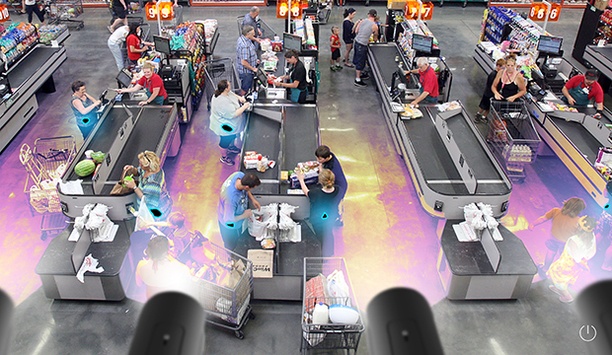
How to catch shoplifters with thermal imaging
Download
Hikvision DarkFighter Technology for high-quality images at night
Download
Hikvision Anti-IR Reflection Dome Camera
DownloadVideos


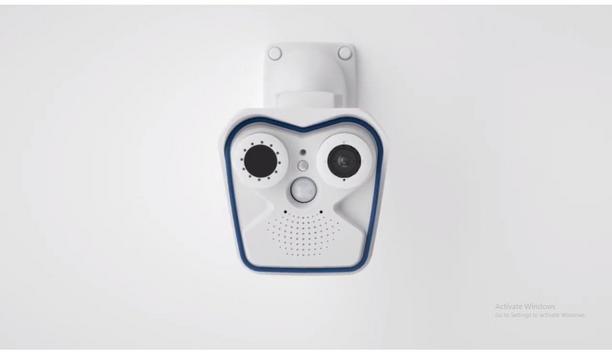
Day/Night surveillance: Manufacturers & Suppliers
- Hikvision Day/Night surveillance
- Dahua Technology Day/Night surveillance
- LILIN Day/Night surveillance
- Bosch Day/Night surveillance
- AV Costar Day/Night surveillance
- Hanwha Vision Day/Night surveillance
- Pelco Day/Night surveillance
- Vicon Day/Night surveillance
- Sony Day/Night surveillance
- Illustra Day/Night surveillance
- Axis Communications Day/Night surveillance
- Messoa Day/Night surveillance
- Visionhitech Day/Night surveillance
- IDIS Day/Night surveillance
- UltraView Day/Night surveillance
- Bolide Day/Night surveillance
- eneo Day/Night surveillance
- LTV Europe Day/Night surveillance
- VIVOTEK Day/Night surveillance
- Panasonic Day/Night surveillance

Technology's role in securing banks and financial institutions
Download
Security technologies promote real-time awareness in K-12 schools
Download
Integrated systems enable critical and compliant security for transportation
Download
Modernising physical access control
Download
Access. Intrusion. One estate.
Download