SourceSecurity.com
  • Products
    CCTV
    • CCTV cameras
    • CCTV software
    • IP cameras
    • Digital video recorders (DVRs)
    • Dome cameras
    • Network video recorders (NVRs)
    • IP Dome cameras
    • CCTV camera lenses
    Access Control
    • Access control readers
    • Access control software
    • Access control controllers
    • Access control systems & kits
    • Audio, video or keypad entry
    • Electronic locking devices
    • Access control cards/ tags/ fobs
    • Access control system accessories
    Intruder Alarms
    • Intruder alarm system control panels & accessories
    • Intruder detectors
    • Intruder warning devices
    • Intruder alarm communicators
    • Intruder alarm accessories
    • Intruder alarm lighting systems
    Understanding AI-powered video analytics
    Understanding AI-powered video analytics
    Dahua Smart Dual Illumination Active Deterrence Network PTZ Camera

    Dahua Smart Dual Illumination Active Deterrence Network PTZ Camera

    Hikvision DS-K6B630TX: Smart Pro Swing Barrier for Modern Access Control

    Hikvision DS-K6B630TX: Smart Pro Swing Barrier for Modern Access Control

    Climax Mobile Lite: Advanced Personal Emergency Response System (PERS)

    Climax Mobile Lite: Advanced Personal Emergency Response System (PERS)

    Hanwha Vision OnCAFE: Cloud-Based Access Control for Modern Enterprises

    Hanwha Vision OnCAFE: Cloud-Based Access Control for Modern Enterprises

  • Companies
    Companies
    • Manufacturers
    • Distributors
    • Resellers / Dealers / Reps
    • Installers
    • Consultants
    • Systems integrators
    • Events / Training / Services
    • Manned guarding
    Companies by Product area
    • CCTV
    • Access control
    • Intruder alarm
    • IP networking products
    • Biometrics
    • Software
    • Digital video recording
    • Intercom systems
    Understanding AI-powered video analytics
    Understanding AI-powered video analytics
  • News
    News
    • Product news
    • Corporate news
    • Case studies
    • Events news
    Latest
    • Hikvision attains ISO 37301 Certification for Compliance Management System
    • SentriGuard's role in sustainable security solutions
    • Axis joins CISA Secure by design for cybersecurity
    • Xtract One's SmartGateway enhances Nova Scotia security
    Understanding AI-powered video analytics
    Understanding AI-powered video analytics
  • Insights
    Insights
    • Expert commentary
    • Security beat
    • Round table discussions
    • Round Table Expert Panel
    • eMagazines
    • Year in Review 2023
    • Year in Review 2022
    Featured
    • What are emerging applications for physical security in transportation?
    • What is the most overlooked factor when installing security systems?
    • Amid rising certificate demands, stricter compliance and quantum threats, PKIaaS is a necessity
    • How should security adapt to the unique aspects of healthcare?
    Understanding AI-powered video analytics
    Understanding AI-powered video analytics
  • Markets
    Markets
    • Airports & Ports
    • Banking & Finance
    • Education
    • Hotels, Leisure & Entertainment
    • Government & Public Services
    • Healthcare
    • Remote Monitoring
    • Retail
    • Transportation
    • Industrial & Commercial
    Understanding AI-powered video analytics
    Understanding AI-powered video analytics
    Alamo enhances security with Alcatel-Lucent solutions

    Alamo enhances security with Alcatel-Lucent solutions

    The University of Dundee implements HID for modern access control

    The University of Dundee implements HID for modern access control

    The Camp: Enhance security with ASSA ABLOY Aperio wireless locks

    The Camp: Enhance security with ASSA ABLOY Aperio wireless locks

    SBB upgrades surveillance with Hanwha Vision cameras

    SBB upgrades surveillance with Hanwha Vision cameras

  • Events
    Events
    • International security
    • Regional security
    • Vertical market
    • Technology areas
    • Conferences / seminars
    • Company sponsored
    Virtual events
    • Video Surveillance
    • Access Control
    • Video Analytics
    • Security Storage
    • Video Management Systems
    • Integrated Systems
    Understanding AI-powered video analytics
    Understanding AI-powered video analytics
    Technology Summit International 2025

    Technology Summit International 2025

    Gartner IT Infrastructure, Operations & Cloud Strategies Conference 2025

    Gartner IT Infrastructure, Operations & Cloud Strategies Conference 2025

    G2E Philippines 2025

    G2E Philippines 2025

    IFSEC India 2025

    IFSEC India 2025

  • White papers
    White papers
    • Video Surveillance
    • Access Control
    • Video Analytics
    • Video Compression
    • Security Storage
    White papers by company
    • HID
    • ASSA ABLOY Opening Solutions
    • Milestone Systems
    • Eagle Eye Networks
    • Hanwha Vision America
    Other Resources
    • eMagazines
    • Videos
    Aligning physical and cyber defence for total protection

    Aligning physical and cyber defence for total protection

    Understanding AI-powered video analytics

    Understanding AI-powered video analytics

    Modernizing access control

    Modernizing access control

    Enhancing physical access control using a self-service model

    Enhancing physical access control using a self-service model

About us Advertise
  • AI-powered video analytics
  • AI special report
  • Cyber security special report
  • 6
Counter terror
  • Home
  • About
  • News
  • Expert commentary
  • Security beat
  • Case studies
  • Round table
  • White papers

Check out our special report on casino security

Get it now!

How to move from crisis response to crisis management

How to move from crisis response to crisis management
Kevin McNulty
Kevin McNulty
Contact company
Contact Everbridge
icon Add as a preferred source Download PDF version
Quick Read
⌵
Summary is AI-generated, newsdesk-reviewed
  • Critical event management involves four phases: Assess, Locate, Act, and Analyse.
  • CEM platforms integrate data sources, providing visibility for swift threat response.
  • Automation in CEM platforms enhances speed and reduces human error in crisis management.

Governments and corporations face crisis events every day. An active shooter terrorises a campus. A cyber extortionist holds a city for ransom. A hurricane washes away a key manufacturing facility. Not all critical events rise to the level of these catastrophic emergencies, but a late or inadequate response to even a minor incident can put people, operations and reputations at risk.

Effective response plan

In 2015, for example, the City of Boston experienced several record-breaking snowstorms that forced the city to close the subway system for three days. The extreme decision cost the state $265 million per day and was largely attributed to a lack of preparation and an inadequate response plan by the transportation department. The reputation of the head of the transportation department was so damaged by the decision she was forced to resign.

Being able to better predict how the storms would impact the subway system’s aging infrastructure – and having a more effective response plan in place – could have saved the state hundreds of millions of dollars (not to mention the transit chief’s job). A comprehensive critical event management strategy begins before the impact of an event is felt and continues after the immediate crisis has ended. This full lifecycle strategy can be broken into four distinct phases – Assess, Locate, Act and Analyse.

Assessing threats for prevention

Security teams might have complained about not having enough intelligence data to make accurate predictionsIdentifying a threat before it reaches critical mass and understanding how it might impact vital assets is the most difficult challenge facing security professionals. In the past, security teams might have complained about not having enough intelligence data to make accurate predictions. Today, the exact opposite might be true – there is too much data!

With crime and incident data coming from law enforcement agencies, photos and videos coming from people on the front line, topics trending on social media and logistical information originating from internal systems it can be almost impossible to locate a real signal among all the noise and chatter. Being able to easily visualise all this intelligence data within the context of an organisation’s assets is vital to understand the relationship between threat data and the individuals or facilities in harm’s way.

Social media monitoring

Free tools like Google Maps or satellite imagery from organisations like AccuWeather, for example, can help understand how fast a storm is closing in on a manufacturing facility, or how close an active shooter is to a school. Their usefulness, however, is limited to a few event types and they provide only a very macro view of the crisis.Data from building access systems, wifi hotspots, corporate travel systems, among others, can be used to create a profile

Critical event management (CEM) platforms, however, are designed specifically to manage critical events of all types and provide much greater visibility. Internal and external data sources (weather, local and national emergency management, social media monitoring software, security cameras, etc.) are integrated into these platforms and their data is visualised on a threat map.

Security teams can quickly see if there are actual threats to the organisations or communities they are protecting and don’t lose time trying to make sense of intelligence reports. The more they can see on a ‘single pane of glass,’ the faster they can initiate the appropriate response.

Locating a threat

Once a threat has been deemed a critical event, the next step is to find the people who might be impacted – employees/residents in danger, first responders and key stakeholders (e.g., senior executives or elected officials who need status updates). Often, this requires someone on the security team to access an HR contact database and initiate a call tree to contact each person individually, in a specific hierarchical order.

This can be a time-consuming and opaque process. There is no information on the proximity of that person to the critical event, or if a person has skills such as CPR that could aid in the response.

Ensuring ahead of time that certifications, skill sets, or on-call availability is included with contact information can save valuable time in the middle of a crisis response. Going even further, data from building access systems, wifi hotspots, corporate travel systems, among others, can be used to create a profile of where a person just was and where he or she might be going in a CEM platform. This information can be visualised on the threat map and help determine who is actually in danger and who can respond the fastest. The emergency response then becomes targeted and more effective.
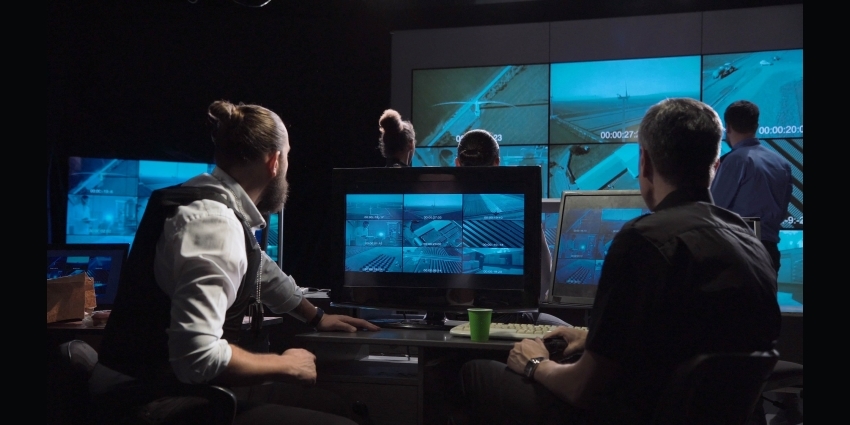
Internal and external data sources (weather, local and national emergency management, social media monitoring software, security cameras, etc.) are integrated into CEM platforms
Security teams can quickly see if there are actual threats to the organisations or communities they are protecting

Acting and automating

The third step is to act and automate processes. If there is a tornado closing in on a town, for example, residents should not have to wait for manual intervention before a siren is activated or a message sent out.

Organisations can build and execute their standing operating procedures (SOPs) fully within a CEM platform. Sirens, alarms, digital signs and messages can all be automatically activated based on event type, severity and location. Using the tornado example, an integration with a weather forecasting service could trigger the command to issue a tornado warning for a specific community if it is in the path of the storm.

Summon security guards

Warning messages can be prepared in advance based on event type so there is no chance of issuing a misleading or unclear alert

Warning messages can be prepared in advance based on event type so there is no chance of issuing a misleading or unclear alert. All communications with impacted individuals can be centralised within the platform and automated based on SOP protocols. This also includes inbound communications from first responders and impacted individuals. An employee confronted by an assailant in a parking garage could initiate an SOS alert from his or her mobile phone that would automatically summon security guards to the scene.

Conference lines can also be instantly created to enable collaboration and speed response time. Additionally, escalation policies are automatically engaged if a protocol is broken. For example, during an IT outage, if the primary network engineer does not respond in two minutes, a designated backup is automatically summoned. Eliminating manual steps from SOPs reduces the chance for human error and increases the speed and effectiveness of critical event responses.

Analysis of a threat

Looking for ways to better prepare and respond to critical events will not only improve performance when similar events occur again

It’s not uncommon for security and response teams to think that a critical event is over once the immediate crisis has ended. After all, they are often the ones pushing themselves to exhaustion and sometimes risking life and limb to protect their neighbours, colleagues, community reputations and company brands. They need and deserve a rest. In the aftermath of a critical event, however, it’s important to review the effectiveness of the response and look for ways to drive improvements. Which tasks took too long? What resources were missing? How many times did people respond quickly?

With a CEM platform, team performance, operational response, benchmarking data and notification analysis are all captured within the system and are available in a configurable dashboard or in after-action reports for analysis. Continuously looking for ways to better prepare and respond to critical events will not only improve performance when similar events occur again, but it will also improve response effectiveness when unforeseen events strike.

Coordinate emergency response

Virtually every organisation has some form of response plan to triage a critical event and restore community order or business operations. While many of these plans are highly effective in providing a structure to command and coordinate emergency response, they are reactive in nature and don’t account for the full lifecycle of a critical event – Assess, Locate, Act and Analyse.

Whether it’s a large-scale regional emergency or a daily operational issue such as an IT outage, a comprehensive critical event management strategy will minimise the impact by improving visibility, collaboration and response.


Discover how AI, biometrics, and analytics are transforming casino security

Download PDF version Download PDF version
Google logo Add as a preferred source on Google
  • Network / IP
  • Campus security systems
  • Physical security
  • Security cameras
  • Security camera systems
  • Security monitoring system
  • Security access systems
  • Building security
  • Counter terror
  • Cyber security
  • Crime prevention
  • Central Monitoring
  • Data Security
  • Incident Management
  • City Surveillance
  • Related links
  • Articles by Kevin McNulty
  • Related categories
  • Access control software
Related white papers
Monitoring traffic flow: Everywhere, all the time

Monitoring traffic flow: Everywhere, all the time

Download
The critical importance of Trusted Execution Environment in access control

The critical importance of Trusted Execution Environment in access control

Download
How to ramp up perimeter security with license plate reader technology

How to ramp up perimeter security with license plate reader technology

Download
Related articles
Physical and cyber security precautions when travelling

Physical and cyber security precautions when travelling

Mass security screening technology for large events

Mass security screening technology for large events

2018 FIFA World Cup Russia integrates safety, security and service

2018 FIFA World Cup Russia integrates safety, security and service

Follow us

Sections Products CCTV Access Control Intruder Alarms Companies News Insights Case studies Markets Events White papers Videos AI special report Cyber security special report RSS
Topics Artificial intelligence (AI) Mobile access Healthcare security Counter terror Cyber security Robotics Thermal imaging Intrusion detection Body worn video cameras
About us Advertise About us 10 guiding principles of editorial content FAQs eNewsletters Sitemap Terms & conditions Privacy policy and cookie policy
  1. Home
  2. Topics
  3. Counter terror
  4. News
  5. Expert commentary
About this page

Transition from crisis response to proactive management with advanced security tech solutions, reducing risks and streamlining operations.

See this on SecurityInformed.com

Subscribe to our Newsletter

Stay updated with the latest trends and technologies in the security industry
Sign Up

DMA

SourceSecurity.com - Making the world a safer place
Copyright © Notting Hill Media Limited 2000 - 2025, all rights reserved

Our other sites:
SecurityInformed.com | TheBigRedGuide.com | HVACinformed.com | MaritimeInformed.com | ElectricalsInformed.com

Subscribe to our Newsletter


You might also like
Understanding AI-powered video analytics
Security and surveillance technologies for the casino market
Modernizing access control
Addressing Cybersecurity Vulnerabilities in the Physical World
SourceSecurity.com
SecurityInformed.com

Browsing from the Americas? Looking for our US Edition?

View this content on SecurityInformed.com, our dedicated portal for our Americas audience.

US Edition International Edition
Sign up now for full access to SourceSecurity.com content
Download Datasheet
Download PDF Version
Download SourceSecurity.com product tech spec