Audio surveillance

Shooter Detection Systems (SDS), an Alarm.com company and foremost provider of gunshot detection solutions, announced that its SDS Perimeter Outdoor Gunshot Detection System is now available following the successful completion of its beta testing program. Purpose-built for exterior environments, SDS’s new outdoor technology extends the company’s proven gunshot detection capabilities beyond building interiors to provide earlier threat awareness across campuses, building perimeters, p...

AtlasIED, a recognised pioneer in the commercial audio and security industries, has announced the expansion of its global presence with the opening of a new experience center and showroom in Warendorf, Germany. This initiative highlights AtlasIED's ongoing commitment to providing exceptional local customer service and training, and reinforces AtlasIED’s dedication to its European customers. Location The beautiful and historic town of Warendorf has long been a centre of innovation and i...

At GSX booth #3307, Acoem, a pioneer in advanced physical security solutions, will showcase important updates to its ATD gunshot detection technology, and a new on-premises option for its Cadence software, reinforcing its position as a pioneer in edge-based acoustic AI gunshot detection. Unlike legacy systems that depend on multiple sensors or remote servers, the Acoem ATD System conducts detection and classification directly on the edge. First responders and security teams PTZ...

The UHD World Association (UWA) is proud to announce a technical collaboration with Avid® that brings the Audio Vivid standard into the Pro Tools® ecosystem. For the first time, Avid will present at IBC 2025 a specially configured Pro Tools workstation supporting Audio Vivid, marking an important milestone for this open and immersive audio format for professional post-production and broadcast workflows. Integrate with Avid's immersive SDK UWA is among the first organisations...

Hanwha Vision, a pioneer in security and surveillance solutions, introduces the Audio Beacon, SPS-A100M, an advanced AI-powered audio surveillance solution that ensures users can be alerted and respond rapidly to critical situations. Equipped with a powerful 90dB speaker, five integrated microphones, and intelligent sound classification, the Audio Beacon is engineered to enhance situational awareness and real-time communication. Immediate awareness The LED ring provides a visible and r...

Hanwha Vision, a pioneer in security and surveillance solutions, introduces the Audio Beacon, SPS-A100M, an advanced AI-powered audio surveillance solution that ensures users can be alerted and respond rapidly to critical situations. Equipped with a powerful 90dB speaker, five integrated microphones, and intelligent sound classification, the Audio Beacon is engineered to enhance situational awareness and real-time communication. Decision-making and direct communication LED ring provides a vi...
News

Alibaba has unveiled Wan2.2-S2V (Speech-to-Video), its latest open-source model designed for digital human video creation. This innovative tool converts portrait photos into film-quality avatars capable of speaking, singing, and performing. Part of Alibaba’s Wan2.2 video generation series, the new model can generate high-quality animated videos from a single image and an audio clip. Visual representations Wan2.2-S2V offers versatile character animation abilities, enabling the design of videos across options Wan2.2-S2V offers versatile character animation capabilities, enabling the creation of videos across multiple framing options, including portrait, bust, and full-body perspectives. It can generate character actions and environmental factors dynamically based on prompt instructions, allowing professional content creators to capture precise visual representations tailored to specific storytelling and design requirements. Advanced audio-driven animation technology Powered by advanced audio-driven animation technology, the model delivers lifelike character performances, ranging from natural dialogue to musical performances, and seamlessly handles multiple characters within a scene. Creators can now transform voice recordings into lifelike animated movements, supporting a diverse range of avatars, from cartoon and animals to stylised characters. Flexible output resolutions To meet the diverse needs of professional content creators, the technology provides flexible output resolutions of 480P and 720P. This ensures high-quality visual output that meets various professional and creative standards, making it suitable for both social media content and professional presentations. Innovative technologies Wan2.2-S2V transcends traditional talking-head animations by mixing text-guided motion control Wan2.2-S2V transcends traditional talking-head animations by combining text-guided global motion control with audio-driven fine-grained local movements. This enables natural and expressive character performances across complex and challenging scenarios. Another key breakthrough lies in the model's innovative frame processing technique. By compressing historical frames of arbitrary length into a single, compact latent representation, the technology significantly reduces computational overhead. This approach allows for remarkably stable long-video generation, addressing a critical challenge in extended animated content production. Alibaba’s research team The model’s advanced capabilities are further amplified by its comprehensive training methodology. Alibaba’s research team constructed a large-scale audio-visual dataset specifically tailored to film and television production scenarios. Using a multi-resolution training approach, Wan2.2-S2V supports flexible video generation across diverse formats – from vertical short-form content to traditional horizontal film and television productions. Alibaba Cloud’s open-source community Wan2.2-S2V model is available to download on Hugging Face and GitHub, as well as Alibaba Cloud’s open-source community, ModelScope. A major contributor to the global open-source community, Alibaba open-sourced Wan2.1 models in February 2025 and Wan 2.2 models in July. To date, the Wan series has generated over 6.9 million downloads on Hugging Face and ModelScope.

Acoem, a pioneer in advanced acoustic threat detection solutions, announced the appointment of Edwin (Ed) Brennen as Business Development Manager for its ATD (Acoustic Threat Detection) team. With more than 35 years of experience across public sector technology and electronic security, Brennen will lead Acoem’s channel partner development efforts in North America. Acoem’s ATD solution Brennen joins Acoem with many years of experience selling and keeping security technology solutions In his new role, Brennen will focus on building and supporting a strong ecosystem of integrators, distributors, and service providers to expand access to Acoem’s ATD solution, an advanced gunshot detection system that combines decades of military-grade acoustic research with real-time camera integration and scalable deployment options. Brennen joins Acoem with many years of experience selling and supporting security technology solutions to state, local, and education (SLED) agencies. He has worked closely with courts, jails, and law enforcement agencies across multiple states, providing consultative guidance and long-term support. Leadership roles in sales and channel operations In addition, he brings deep expertise in the electronic security industry, having held senior roles at ADT and Honeywell. His hands-on experience spans the entire integration lifecycle, from alarm installation and service to regional leadership roles in sales and channel operations. Gunshot detection presents a strong value proposition for systems integrators, opening new revenue opportunities while enabling them to deliver a more holistic approach to physical security. Acoustic threat detection Integrators can better meet the needs of customers seeking layered, real-time threat detection By adding acoustic threat detection to their technology stack, integrators can better meet the needs of customers seeking layered, real-time threat detection. It also allows them to differentiate their offerings in competitive markets and support clients in high-risk environments such as schools, utilities, corporate campuses, and public venues. Modern security strategies “Ed brings a rare combination of technical know-how and real-world sales leadership that will be instrumental as we expand our partner network,” said Timothy English, Managing Director of Security Solutions at Acoem. “Gunshot detection is becoming an essential layer in modern security strategies. Ed’s ability to engage with integrators and help them see the opportunity in this space will be a key driver of our growth in North America.” Acoem’s participation at the GSX 2025 “I’m excited to join a company with such a unique and proven approach to gunshot detection,” said Brennen. “Acoem’s ATD-300 stands apart with its ability to slew PTZ cameras to the source of a gunshot in real time, all from a single sensor. This delivers actionable intelligence, and provides flexible deployment options, including portable and covert installations." "My goal is to help the right partners recognise the value of this technology and introduce it into markets where it can truly make a difference.” The appointment comes ahead of Acoem’s participation at the GSX 2025 trade show, where Brennen will meet with new and prospective partners.

Texas-based Garrett Metal Detectors announces that it has begun taking orders for its newly released Garrett Guide™ detector, and that the product details and accessories are now live and available for purchase on garrett.com and Garrett Direct. Guide is the new flagship model for Garrett's line of hand-held security screening products, with a sleek new look to meet the aesthetic desires of the modern security customer. Key features of Guide Guide comes well-appointed with a high-capacity 125-hour integrated Li-Ion battery Guide comes well-appointed with a high-capacity 125-hour integrated Li-Ion battery, seven selectable sensitivity levels, IP 65 waterproofing, enhanced interference immunity, and an ergonomic microtextured grip. Garrett also offers a unique modular charging station enabling up-to-five Guides to be charged simultaneously within an industry-best 13.3in [338mm] x 5.2in [132mm] footprint. The company describes Guide as the natural successor to the globally-renowned Super Scanner™ hand-held line, which has been the most popular mass-market handheld for the past forty years. Guide: Future of handhelds "Guide will be the preferred handheld for the next generation of security professionals," said Steve Novakovich, CEO of Garrett. "It's astounding that the Super Scanner V is still the most popular hand-held detector worldwide after all these years. And yet it is.” “With this in mind, we approached the project to update our mainstay security handheld very carefully. We wanted to improve functionality, ergonomics, and aesthetics while reducing the negative impact on the environment by eliminating the need for alkaline batteries.” “We also wanted to retain a family resemblance with the Super Scanner line, and we insisted on retaining the incredible ruggedness and reliability that Garrett Security customers have come to expect. Guide is the result of that project. It's also the best-looking handheld on the market." Effective security operations Guide is manufactured at Garrett's Garland, Texas facility with appropriate design patents and trademark protections. All Guide units will be covered by the Amazon Transparency program which enables customers to scan the QR code on the retail package to see if the product is a genuine Garrett product. Garrett encourages security customers to insist on buying genuine products from reputable companies to ensure quality, product performance, and effective security operations.

Dallmeier and Hexagon have agreed to form a technology partnership. Dallmeier electronic, a major manufacturer of video-based security solutions “Made in Germany”, and Hexagon, a global provider of digital reality solutions combining sensor, software, and autonomous technologies, are joining their expertise to work together and develop integrated security solutions for various application areas, particularly critical infrastructures. Panomera® technology integrated into Hexagon platform At the core of the partnership is the integration of Dallmeier Panomera® camera technology into Hexagon’s management solutions. Through this integration, video surveillance, video analytics and Physical Security Information Management (PSIM) can be combined to create seamless and holistic security solutions. Integration for greater security and efficiency for customers Customers would benefit from integrated and interoperable solutions that meet the highest security, efficiency and ease-of-use requirements. Whether at airports, railway operators, local authorities or financial institutions, users of the combination of Dallmeier video surveillance systems and Hexagon information and deployment management technology can detect security-related incidents quickly, assessing these incidents more accurately and respond effectively. Technology “Made in Europe” as a strategic advantage Both companies have decided to collaborate and work together on technology in order to offer high-quality security solutions In the context of geopolitical uncertainties and growing demands for data protection and sovereignty, European technologies are becoming increasingly important. Both companies have decided to collaborate and work together on technology in order to offer high-quality security solutions from Europe that are independent, trustworthy, reliable and sustainable. Comments on the partnership “We are very pleased to announce this partnership with Dallmeier. By combining our expertise, we can offer our customers even more innovative and comprehensive solutions,” explains Andreas Beerbaum, Vice President International Sales – Physical Security at Hexagon’s Safety, Infrastructure & Geospatial division. Thomas Dallmeier, Dallmeier’s CEO, adds: “Integrating our camera technology into VMS and PSIM systems from other manufacturers is a key milestone in Dallmeier’s strategy of offering a portfolio of open systems." "The integration of our Panomera® systems into the Hexagon platform enables end customers and system integrators using Hexagon to fulfil their requirements optimally.”

ZKTeco USA, a major provider of biometric verification and access control technology, announced the company has launched its new cloud-based access control software platform, Cielo365 that is changing the game in access control. Cielo365 is an add-on product that enables customers to easily transition from an on-premise solution to a cloud-based system effortlessly. The new software supports legacy ZKTeco devices and is compatible with existing access control hardware including SpeedFace and Pro Series panels, and new hardware such as the Omni Series. Cielo365 Cielo365 is an industry pioneer, cloud-based SaaS access control software application that allows users the ability to manage their access control from anywhere at any time, on any device. “We truly offer customers a one stop shop access control solution that is extremely scalable and cost effective,” states Esteban Pastor from ZKTeco USA. “Users now have an easy way to transition to the cloud with Cielo365 and utilise one centralised interface to control access and monitor multiple locations globally.” Blue Sky and ZKTeco partnership “Blue Sky Systems is extremely excited to partner with ZKTeco USA and provide greater choice to customers looking for a cloud solution,” states Jason Bair. “The best part about Cielo365 is the ease of integration to ZKTeco’s existing standalone reader & controller; making it the perfect solution for customers who want to transition to the cloud with ease." Software features Cielo365 software was designed to be a flexible, scalable foundation to help customers elevate their security Cielo365 software was designed to be a flexible, scalable foundation to help customers elevate their security by eliminating the need for onsite servers. Features include device and real-time monitoring, alarms & notifications, multi-site management, site maps and reports, customer user roles, and interlock & anti-passback. With remote access capabilities, users receive their own login and can manage various functions, such as opening doors, locking doors, adding users, and more, from any location using their tablet, laptop, home PC, or mobile device. Needs of the market ZKTeco USA understands the needs of the market and manufactures all products in-house to help keep costs low and quality high. Its rugged hardware line includes a standalone reader and controller that eliminates the need for wires for a faster installation. With different screen sizes available, the standalone unit can be used as an intercom and integrated with visitor management, biometrics & video surveillance systems, and can also be used for mobile credential management. ZKTeco USA offers everything needed to streamline an organisation's access control, whether it’s across a single facility or multiple sites.

Barix celebrates its 25th year in business at InfoComm with the launch of a new Annuncicom two-way audio solution that continues its legacy of bridging analogue systems with IP networks. To be shown at Booth 2832, the new Annuncicom AHE-YA404 gives integrators an all-in-one solution to modernise legacy 2 or 4-wire intercom and paging solutions without the need to replace existing cabling or call stations. Legacy intercom panels Specifically, the Annuncicom AHE-YA404 is a powerful analogue headend with integrated VoIP SIP support and onboard amplification. The 1RU device enables seamless paging and intercom functionality from standard SIP phone to as many as 16 individual legacy intercom panels. Importantly, the AHE-YA404 offers direct connection to speaker/microphone and call-button panels without the need to replace existing cabling or call stations. Upon establishing connectivity, the headend enables two-way HDX communication and room monitoring within help points, emergency intercoms, and security systems among other applications. Internet security standards The Annuncicom product line is one of Barix’s core flagship brands dating back to company’s earliest years The Annuncicom product line is one of Barix’s core flagship brands dating back to company’s earliest years, and represents the company’s legacy in bidirectional voice and audio over IP products for use in almost any application and business vertical. The Annuncicom AHE-YA404 carries that legacy forward with a modern hardware and software architecture that ensures long-term reliability, full compliance with current internet security standards, and easy adaptation to specific customer needs. Annuncicom AHE-YA404 Like all modern Barix Audio over IP devices, the Annuncicom AHE-YA404 supports a wide range of professional audio environments including Dante®, SIP, InformaCast, and Syn-Apps, and handles popular codecs such as PCM, AACplus, MP3, OPUS, G.711, and G.722. Advanced features include priority-based paging, background music, and scheduled or network-triggered audio file playback — features that strengthen its value proposition as an all-in-one solution. Analogue intercom systems “Barix has a rich legacy of bringing paging and intercom systems at schools, hospitals, factories, train stations and more onto IP networks. That includes building bridges to SIP functionality to efficiently manage connections for voice calls over the network,” said Reto Brader, CEO, Barix. Reto Brader adds, “Our latest Annuncicom innovation allows our customers to upgrade their analogue intercom systems without removing cables and intercom panels, providing integrators with a direct and accelerated path to IP paging and intercom that keeps costs and labour manageable for all involved.” InfoComm takes place June 11-13 at the Orange County Convention Center in Orlando.

Expert commentary

Gun violence remains one of the most unpredictable threats in today’s physical security landscape. When it strikes, seconds matter. The ability to detect and respond to gunfire almost instantaneously can determine outcomes. Security pioneers and first responders know this, and yet too many gunshot detection systems in operation today are shackled by outdated assumptions and aging architecture. The demand now is not for incremental improvements, but for a complete rethinking of how these systems function. Prevailing model For years, the prevailing model has relied on server-heavy frameworks and complex sensor networks that introduce unnecessary latency and complexity. Systems that depend on sending audio data to remote servers for analysis are inherently slower. In a live gunfire situation, waiting even a few seconds for confirmation can be the difference between life and death. The expectation in 2025 is clear: detection and actionable intelligence must occur in real time, with no delays. Edge-based intelligence: The new standard Deploying three or more sensors to cover an area imposes significant cost and operational burdens To minimise points of failure and latency, the future of gunshot detection lies in edge processing. Intelligence must reside inside the sensor itself, not in a data centre or a remote server. Edge-based acoustic sensors can now detect and geolocate gunshots in under three seconds without external dependencies. They do not require triangulation or corroboration from multiple devices. One sensor, one shot, one instant location—that is the new standard. Consider the limitations of traditional perimeter-based systems. Deploying three or more sensors to cover an area imposes significant cost and operational burdens. Maintaining this infrastructure often means trade-offs in coverage and flexibility. For example, if a detection system can only triangulate within a ring of sensors, there will be no information available for shots fired outside this restricted perimeter, even from a short distance away. Worse, these older models are prone to false positives triggered by fireworks, construction noise, or other environmental sounds. Each false alert erodes confidence in the system and burdens response teams unnecessarily. Contrast this with modern edge-AI sensors that not only detect the muzzle blast of a firearm but also analyse the ballistic wave of a hypersonic projectile in motion. This dual-signature capability delivers a level of accuracy far beyond what older systems can offer. When a shot is fired, the sensor detects, classifies, and pinpoints the event almost instantly. There is no reliance on back-end processing or corroborative triangulation. The sensor acts autonomously and decisively. Real-time response with visual confirmation The level of integration changes gunshot detection from a passive alerting tool into an active part These advancements do not stop at detection. Integration with existing security infrastructure is crucial. Modern sensors leverage open standards such as ONVIF Profile S to control pan-tilt-zoom (PTZ) cameras directly. As soon as a gunshot is detected, the sensor can automatically cue a camera to the exact coordinates of the event. This process happens in less than three seconds, giving operators live visual intelligence of the situation as it unfolds. The days of security personnel scouring multiple camera feeds or responding to vague reports are over. Today, they can focus their attention on the precise location of the threat. This level of integration transforms gunshot detection from a passive alerting tool into an active part of situational awareness. It provides command centres and first responders with actionable intelligence, enabling them to make informed decisions in real time. It is not enough to know that a shot was fired; security teams need to see where it happened and assess the scene immediately. Adapting to the environment Environmental adaptability is another area where modern edge-based systems excel. Acoustic detection has long struggled with ambient noise. Urban environments are filled with loud, impulsive sounds that can easily be mistaken for gunfire. However, edge-AI sensors can now be trained to understand the acoustic profile of their specific environment. They learn what constitutes normal background noise and adjust accordingly. If a venue frequently hosts fireworks displays or is situated near construction zones, edge-processed AI systems can be trained to differentiate those sounds from genuine threats. This site-specific learning dramatically reduces false positives and enhances overall system reliability. Flexibility in deployment A single intelligent sensor can now provide broad coverage with minimal setup Flexibility in deployment is equally important. Today’s security needs are not confined to permanent installations. Large public events, temporary venues, and rapidly evolving threat environments require portable solutions. Edge-based sensors can be deployed on mobile platforms such as trailers or temporary masts, providing high-precision detection wherever it is needed. Because all processing occurs at the edge, these mobile systems do not rely on centralised servers to function effectively. The sensor is the system. This shift represents a fundamental change in how security professionals approach gunshot detection. The industry is moving away from reactive, infrastructure-heavy models toward proactive, efficient, and adaptable solutions. A single intelligent sensor can now provide broad coverage with minimal setup. It detects, locates, and visually confirms threats autonomously. Interoperability further enhances the value of modern systems. By embracing open protocols, these sensors integrate seamlessly with existing video management systems (VMS) and security platforms. Organisations are no longer locked into proprietary ecosystems. They can deploy best-in-class solutions that work together harmoniously. This openness accelerates deployment and reduces friction, a critical advantage when securing dynamic environments on tight timelines. Privacy by design Alert signals contain location, timing, and sound type data only with no continuous listening Privacy concerns are front and centre in any surveillance deployment and the thought of an audio listening device can raise eyebrows. Modern gunshot sensors are event-driven and only share short recordings (such as a 1.5-second clip for verification) triggered by gunshot levels (over 100 dB). Conversations and other ambient audio are neither captured nor stored. Alert signals contain location, timing, and sound classification information only with no continuous listening or streaming. Closing the gap between detection and response Ultimately, doing gunshot detection right demands a new mindset. Edge processing is not a technical novelty; it is an operational necessity. Security pioneers must expect and demand more from their detection systems—faster alerts, smarter filtering, real-time visual confirmation, seamless integration, and scalable deployment. The technology to achieve this exists today. High-accuracy, real-time gunshot detection is not a future promise; it is a present reality. The responsibility now lies with the industry to embrace this better way forward. Communities and the professionals who protect them deserve solutions that rise to meet today’s challenges with intelligence, speed, and precision.

Open platform video technology software is more than just a product; it's a tool that helps customers achieve their desired business outcomes. Safety, round-the-clock security, and increased operational efficiencies are now the norm due to video technology. Responsible Technology Despite humanity’s impressive technological advances, we also recognise the immense responsibility that comes with technological innovation. It's not enough to focus solely on the positive impact video technology can make, we must also be vigilant in identifying and addressing any potential negative consequences it can have on society and its citizens. This is the role of Responsible Technology. Data privacy We want to use all the good things that technology innovation brings, whether it be video, AI, ML, facial recognition, etc. We want to use all the good things that technology innovation brings, whether it be video, Artificial Intelligence, machine learning, facial recognition, etc. to serve people in societies in a responsible way. That means making sure that we regulate technology in a way that respects human rights and data privacy. Addressing the challenges The challenge is, that rather often technology leaders and policymakers either have conflicting interests or collaborate too late. To be responsible, business leaders must support their societies and policymakers in making regulations in the interest of the common good. At Milestone Systems, we are actively looking at how we develop our software responsibly, how our partners responsibly sell our software, and very importantly, how our customers use our software with a responsible mindset. Ensuring good corporate governance As a long-time partner within the security industry, we’re celebrating our 25th Anniversary this year, we are supporting the regulation of video technology for the good of society. However, it of course needs to strike the fine line between the right legislation and not hindering innovation. UNGP The UNGP is the most authoritative and widely adopted set of principles for responsible business At Milestone Systems, we want to play an active role in this and that is why we have pledged our support to the UN's Guiding Principles on Business and Human Rights (UNGP). The UNGP is the most authoritative and widely adopted set of principles for responsible business. The principles call on governments and companies to identify, prevent, mitigate, and remedy actual and potential human rights abuses. Since its launch in 2011, the UNGPs have received wide support from states, civil society organisations, and the private sector, making them the key global foundation for business and human rights. Protect, respect, and remedy Through this commitment, we are taking steps to ensure good corporate governance and ethical standards in the development of our technology. We're generating mechanisms to prevent misuse and we are building educational practices internally. Based on the UNGP’s three pillars: protect, respect, and remedy, we are developing a set of Responsible Technology Principles and procedures for the development, selling, and use of our products. Need for video technology regulation In addition, we are currently evaluating all the various technology areas in which our video software can be used, such as with third-party integrations that utilise e.g., facial recognition. We are mapping out the advantages and disadvantages for societies. One key area of concern is how local authorities are mapping and storing data about us as individuals. This is the reason why we're inviting more legislation to regulate video technology rather than less. Engaging With policymakers We are meeting ministers and trade organisations as we believe this needs to be a joint effort where all parties are heard We are proactively reaching out to and connecting with policymakers and other relevant stakeholders to discuss our approach to and take on Responsible Technology and encouraging the political landscape to work with us around regulation and legislation. We are meeting ministers and trade organisations as we believe this needs to be a joint effort where all parties are heard and where we can openly weigh the advantages and the challenges of technology, whether it is video, facial recognition, machine learning, Artificial Intelligence, or other technologies. Striking a balance Implementing Responsible Technology is a journey, not a destination. To give it the focus needed, we have created a dedicated team to implement this initiative at Milestone Systems. At the same time, we are reaching out to the political landscape to discuss how we balance regulation without hindering innovation. Video technology used ethically We are a global company with worldwide operations, and we are having dialogues about how video technology is being used and how we can have meaningful talks about what regulation and legislation should look like. However, we don’t necessarily want to limit access to the technology itself. Facial recognition We encourage the policymakers to engage with us in the industry so that together we can strike the fine line Facial recognition is a great example of this. The EU is considering making live facial recognition illegal. That would be a huge inhibitor of proactive terrorism prevention. For example, if a well-known terrorist is walking down the street and is being mapped out against Interpol’s most wanted list, the authorities should be able to react. However, if a person walking down the street but is not mapped out or does not have any priors then the city should not be allowed to store the data of that individual’s whereabouts at that point in time. This potential legislation is concerning to me as a citizen of Europe. Instead, we encourage the policymakers to engage with us in the industry so that together we can strike the fine line for the better good of all of us. Maintaining high ethical standards We have a firm understanding and expectation that ethical standards are a huge driver in the security business. Citizens are not in favour of technology companies abusing data about them and monetising from things that they have not opted in to do. Soon, I think we will see many more companies and governments leaning toward suppliers that do have a responsible mindset and high ethical standards for partnerships. Ethical practices Our journey toward Responsible Technology is an ongoing process, and we must remain steadfast in our commitment to ethical practices and the protection of human rights. We recognise that the rapidly changing technological landscape continually presents new challenges and opportunities. For this reason, we continuously look into how we can improve, for example, our end user licence agreements to avoid potential human rights abuses. An industry responsibility Security companies must prioritise careful planning and preparation, including developing policies and procedures For Responsible Technology to truly become a reality, compliance with international human rights laws and data privacy regulations is critical. Security companies must prioritise careful planning and preparation, including developing policies and procedures that govern the ethical use of video surveillance systems. The secure and ethical community In today's technology environment where deep integrations, machine learning, and artificial intelligence are becoming the norm, Responsible Technology is more relevant than ever. The security industry has a unique opportunity to set an example for other sectors by promoting a secure and ethical development community that prioritises Responsible Technology, trustworthy data collection, and the protection of human rights. We must all rise to this challenge and embrace our role as ethical leaders for the greater good of both people and societies.

Inadequate security measures on your essential infrastructure can have severe consequences. Consequences Consider the rail industry: If a vandal cuts the cables on a vital mechanism that controls train signals, train safety is jeopardised. To avoid train collisions or derailments and thus significant damage to property and potential loss of life, the operating company must shut down the service until the infrastructure is repaired and the network is up and running again. The disruption affects the rail ecosystem itself, but also the people using the trains, the transportation of cargo, and more. The financial cost of repairing the damage, restoring signal functionality, and compensating for delays can be substantial. For another example, consider electrical substations: A fire or targeted attack can damage the system and lead to devastating power outages. Traditional surveillance limitations Traditional video surveillance has its limits when it comes to protecting transformer stations Traditional video surveillance has its limits when it comes to protecting transformer stations. The facilities are often located in rural areas, where straying animals or flying leaves trigger false alarms. 3D Surveillance solutions overcome these challenges by volumetrically securing the area and immediately detecting intruders only raising the alarm in the event of a human intruder and even identifying drone attacks. Protecting critical infrastructure with 3D surveillance Critical infrastructure must be monitored. It remains at risk if operators do not have systems for monitoring entire areas rather than just the periphery if security personnel has limited information in case of an intrusion and if security response protocols are not automated. 3D Surveillance solutions 3D Surveillance is an important tool for protecting critical infrastructure and ensuring the safety of those who rely on it. Integrating LiDAR technology, 3D Surveillance solutions provide a comprehensive view of the area being monitored with real-time monitoring and response, protecting critical infrastructure from damage and providing a more comprehensive security system. Advanced analytics and artificial intelligence Security personnel can identify and verify threats more easily and track the movements of individuals or vehicles, as well as respond to incidents as they happen. 3D Surveillance systems can be equipped with advanced analytics and artificial intelligence (AI) capabilities to detect patterns and anomalies that may indicate a potential threat. This can help to prevent potential attacks or accidents before they occur, as well as enable more accurate responses to incidents. Talent challenge Turning to autonomy by implementing sensor- and software-based solutions requires fewer if any, in-person patrols 3D Surveillance can also help tackle the talent challenge in the industry: Recruiting security professionals involves extensive background checks, and jobs in the industry are notorious for their low salaries, which results in high staff turnover. Turning to autonomy by implementing sensor- and software-based solutions requires fewer if any, in-person patrols and ensure reliable infrastructure protection. Additional security measures In many countries, more stringent legislation now mandates the implementation of additional security measures to safeguard critical infrastructure, particularly at a country's points of entry, such as airports and harbours. Protecting the perimeter is no longer enough. For instance, airport management must ensure that critical areas, including the space around aircraft and near unauthorised access points, are secure. While multi-layered screening of individuals at the perimeter is a valuable security measure, it must be complemented by smooth and efficient surveillance of the entire area, which can only be achieved through advanced technology. Different adoption rates 3D Surveillance technology is only beginning to gain traction in most locations, and adoption rates differ significantly from one region to another. For instance, Scandinavia and Eastern Europe have embraced 3D Surveillance to a greater extent than Western Europe. Regions with lower adoption rates will likely catch up as they seek to reinforce the security of their critical infrastructure, especially given the conflict in Eastern Europe. Vandalism and damage protection 3D Surveillance enhances the security of critical infrastructure, reduces the risk of downtime and loss of revenue 3D Surveillance offers reliable protection against vandalism and damage - major concerns for companies that rely on critical infrastructure. LiDAR-based, software-enhanced 3D Surveillance solutions provide real-time insights and enable automatic processing of the information so that operators can autonomously and quickly detect and respond to potential threats. These solutions are scalable and customisable, allowing companies to adapt their security measures to their unique needs and changing environments. 3D Surveillance enhances the security of critical infrastructure, reduces the risk of downtime and loss of revenue, and ensures compliance with regulatory requirements. Asset management and maintenance planning Beyond its security benefits, 3D Surveillance can help with tasks such as asset management and maintenance planning. It can help identify potential problems or maintenance needs before they become more serious issues by providing a real-time view of the monitored infrastructure. This can help to reduce downtime and keep critical infrastructure running smoothly. Real-time management The same technology can also perform volume monitoring tasks and thus facilitate the management of valuable resources such as bulk material, grain, wood chips, or chemicals. By scanning the stock 24/7 and automatically calculating stock volume updating records in real-time, this technology supports lean production systems and automated processing.
Security beat

For an enterprise, addressing cyber security requires that stakeholders have immediate access to critical information compiled from multiple sources and presented where and how they need it. Various data sources monitor the cyber security status of a company’s computer systems to provide real-time visibility. Aggregating that data into visual dashboards and presenting it to operators enables any cyber security problems to be flagged quickly and resolved. Software system enhances cyber security Userful Corporation provides a software system that enhances cyber security operations for an enterprise Userful Corporation provides a software system that enhances cyber security operations for an enterprise, enabling stakeholders to envision various cyber security factors, such as application security, network security, cloud security and IoT (Internet of Things) security. The software system empowers operators to respond more efficiently. Working in conjunction with a company’s existing IT infrastructure, Userful software combines datasets from diverse systems into a visual format and delivers the information to a desktop computer, a video wall, or even to a home office. Real-time visibility “It provides a new dynamic to how cyber security issues are resolved,” said Shane Vega, Userful Corporation’s Vice President (VP) of Product Marketing, adding “The individuals who have flagged a cyber security issue may not be the ones to respond. Having real-time visibility provides more value to the overall response.” A typical cyber security operations centre resembles a physical security command or emergency management hub – large video walls, individual desktop workstations, and operators that need to share information and respond quickly to any incident. Userful’s software helps in managing operations centres Userful’s software manages how data is presented in an operations centre environment, without relying on proprietary hardware, operating outside an end-user customer’s IT infrastructure. Managing operations centres is a core offering for Userful Corporation, including command centres of all types, from traditional network operation centres to emergency network systems to security systems. The ability to use one software system throughout an enterprise is appealing to companies that have historically grappled with proprietary and siloed systems. Solutions that are easy to deploy, manage and scale Cyber security professionals need solutions that are easy to deploy, manage and scale" “We are a platform that can be utilised across the enterprise,” said Shane Vega, adding “Cyber security professionals need solutions that are easy to deploy, manage and scale, so they can manage all the threats every day.” Compiling and displaying information to an operations centre has historically involved silos of proprietary audio/video (AV) hardware. Ironically, the hardware approach presents cyber security risks that undermine the very mission of protecting a company’s data and networks. The proprietary systems operate outside the company’s network infrastructure, and IT professionals do not have visibility into the systems. Security Orchestration, Automation and Response (SOAR) Instead of hardware, displaying information on Security Orchestration, Automation and Response (SOAR) can be accomplished using software running on off-the-shelf components, managed by the IT department and featuring all the cyber security protections required, throughout the enterprise’s network infrastructure. SOAR includes threat and vulnerability management, security incident response and security operations automation, enabling companies to collect threat-related data from several sources and automate the responses. Cyber security threats Possible threats might include an influx of packet generation, malware, someone seeking access to the network, or a malicious email. Various tools manage each threat, and each must be visualised. Because the threats are related, a comprehensive dashboard enables operators to create parallels and respond more efficiently. The software-as-a-service system ensures that all software is updated and can operate on the latest hardware In the Userful AV-over-IP scenario, an IT department takes full ownership of the computers and subsystems installed on the network. The software-as-a-service system ensures that all software is updated and can operate on the latest hardware. Companies always have an ecosystem of interconnectivity. Single platform/solution The single platform/solution also extends beyond operations centres to include meeting rooms and digital signage. All images are captured using existing protocols, such as Real Time Streaming Protocol (RTSP), HTTP Live Streaming (HLS), Web Real-Time Communication (WebRTC), and so forth. In contrast, the AV industry is hardware-centric and has been known to circumvent software approaches in order to justify selling more hardware. AV systems typically operate in terms of pixels rather than bytes of information and use proprietary software. Companies always have an ecosystem of interconnectivity Different departments in a company have historically installed their own specific AV systems, based on proprietary hardware, so that each department is siloed from the rest of the organisation. Dangers of random hardware on a network Random hardware on a network, beyond the reach of the IT department, can provide access points to the network for hackers and other cyber security threats. Each proprietary hardware system exists outside the existing security protocols of the enterprise and each represents a cyber security vulnerability. Some companies end up with five or six different operations centres that involve three or four manufacturers, all siloed. Software versus hardware Our biggest challenge is to get people to understand what is possible with software versus hardware" “Our biggest challenge is to get people to understand what is possible with software versus hardware,” said Shane Vega, adding “The industry is inundated with hardware, and the risk is the unknown. Customers may not be familiar with a software solution that can accomplish what they have historically depended on hardware for.” Userful Corporation works through channel partners (integrators), who assemble complete systems using Userful software and other components, such as video screens, large-format commercial displays, groups of tiled displays, projectors – any type of display with an input. Corporate policy specifies security at every level Userful’s corporate policy specifies security at every level, including user authentication, encryption, endpoint security, air-gapped servers, information security policies, General Data Protection Regulation (GDPR), and a solution built on industry-leading IT standards. To spread the word about Userful Corporation’s capabilities related to cyber security, the company will be participating in Infosecurity Europe 2022, taking place from June 21 to June 23, 2022 at ExCeL, London, United Kingdom (UK).

Audio-video technologies have historically been a silo in the enterprise, separated from the larger network infrastructure by their use of analogue, hard-wired and proprietary connections. Software-defined system However, AV devices such as video walls and corporate signage add more value to security and emergency response operations when they are connected to the larger IT network and can interface seamlessly with other systems. That’s the approach provided by Userful, which offers a software-defined system for end-to-end control of audio-video applications in an enterprise, using a web browser and standard industry protocols. The use of software avoids the need for proprietary hardware and the compatibility challenges of multiple hardware systems operating in silos. It also yields visibility and control throughout the system. Single software system The single software system grants IT, administrators, the ability to govern multiple platforms The single software system grants IT, administrators, the ability to govern multiple platforms, while providing individual departments access to the specific applications they need. The emphasis is on meeting stakeholders’ functional requirements using a system governed by the IT department. The data travels across the IT network infrastructure without being blocked by the use of proprietary hardware and cabling, for example. Digital transformation Avoiding the analogue (hardwired) approach enables enterprises to “digitally transform” the operation of their audio-video devices. The approach is especially useful at the intersection of security and digital signage. “We give the power back to the local IT administrators, who can govern the system and enable customers to govern their applications,” says Shane Vega, VP of Product Marketing at Userful. The company’s software aggregates video information and distributes it as needed to individual video displays. Real-time event monitoring The software enables various video devices to become a seamless part of the IT infrastructure. It also facilitates sharing of information throughout the enterprise, even in an emergency. In contrast, proprietary, siloed systems hamper the free flow of information when it is needed the most. For example, if there is an emergency or active shooter situation, video devices throughout an organisation can be leveraged to inform occupants about the details of the event in real-time and to provide actionable instructions specific to an occupant’s location in the building. Visual communications When security is integrated into a larger platform, it can spread the message visually throughout the enterprise Visual communications, such as digital signage, comprise a powerful extension of a security system that actively monitors threats, and offers the ability to communicate to a large group of people. When security is integrated into a larger platform, it can spread the message visually throughout the enterprise. Strategic messaging can guide building occupants to their best course of action during an emergency, whether it is to flee or to shelter in place. Situational awareness The software-driven IT system can aggregate information from multiple sources, such as video camera feeds or information from an access control system, and display it on a large video wall, for example. Free-flowing information promotes situational awareness in a control room, and enables immediate response, whether it’s to call the fire department, sound an alarm, or initiate a mass exodus of building occupants. IT software approach “It makes everyone strategically aware and sends the appropriate messaging to those who need it, rather than to everyone at once,” says Vega. Facilitating more effective operations centers is the “tip of the spear” of what Userful offers customers, he adds. The IT software approach simplifies video wall applications, which are becoming increasingly complex, by enabling content to be scaled, chopped, and aggregated to fit the demands of a display wall. An analytic might trigger the system to enlarge a camera view on the full screen, to send video to the police, or “take over” screens throughout a building to provide strategic messaging. Third-party integrations Designing video walls more strategically in an operations centre can help operators interpret information quickly Designing video walls more strategically in an operations centre can help operators avoid fatigue and interpret information quickly and efficiently. “Userful’s role in the display world is to make sure software can distribute the information despite the hardware,” said Vega. Userful works with third-party integration to add system functionality and automate responses. Software flexibility “We’re a platform that pulls in sources of information, maybe it’s a hundred cameras, and then we manage the entire solution,” says Vega. “We enable users to take data from multiple sources and send it to a wide range of displays, creating a repository of information.” “When you have a software-defined platform, you can extend the solution using the flexibility of the software into a system that cannot be achieved with hardware,” says Vega. “If people want to scale their system to multiple locations, we can add a source remotely.” Proactive responses to security “Security is an important market for everyone, paramount for any organisation,” says Vega. “Individuals are responsible for the safety and security of constituents and require a proactive, not reactive response.” “We can provide proactive responses because of the nature of AV-over-IP, which is interoperability. It can draw attention to threats and proactively communicate response plans.” Managed service provider The “software-defined” approach can help systems integrators position themselves as a managed service provider Getting away from siloed solutions should be a priority for any IT purchase by an organisation, says Vega. “We need to train end-users to take a holistic view and not to look at it from a siloed perspective. A fuller understanding helps them gain efficiencies.” The “software-defined” approach can help systems integrators position themselves as a managed service provider rather than just “selling boxes.” “Think about how you can partner with end-users over the long term,” advises Vega. Information-based automation “Think of technology as a holistic part of the business for better outcomes across the whole business. More information is better information, and integrators can help customers create automation that will provide more awareness.” The Userful proposition offers especially good value in transportation markets, such as ports and airports; and in campus environments, such as enterprise, higher education, and airports. In any scenario where there are a lot of screens, the system can distribute corporate and emergency messaging, whether on a baggage claim screen or a way-finder screen.

The boundaries between the smart home market and security market at large are narrowing. Amidst a wave of expansion, suddenly everything is becoming digital. Home automation has been around for close to 30 years but hasn’t really hit it big because integration hasn’t been that simple. Now that the Internet of Things has stepped into the market, home automation is really taking off. As technology in the smart home market advances, the gap between the residential and professional security markets is growing smaller. Additional revenue for security industry There will continue to be more opportunity for interoperability, and home automation will continue to grow and eventually become a norm. Growth in the residential security market and its position as the channel for smart home solutions, have attracted numerous new entrants. Telecoms, cable operators, and CE (consumer electronics) manufacturers are joining traditional security players as they compete to fulfill consumer demand for safety and security. Connected products also provide a layer of competition as consumers must decide whether having category devices such as doorbell video cameras, networked cameras and other products suffice for their security. Smart home services can provide additional revenue streams for the security industry. In Parks Associates’ 2017 survey of U.S. security dealers, 58% report that smart home service capabilities enable extra monthly revenue. Almost half of dealers also note they have to offer smart home devices and services in order to keep up with their competition. Data capture form to appear here! Residential security solutions Growth is going to be slow and steady. Everyone needs to be realistic about that" The trend has no doubt accelerated in the last couple of years. New collaborations are being made between audio-video (AV) suppliers and security solution providers. The clientele of high-end AV products is becoming increasingly concerned with home security and property protection. So, in recent months, the requirement for residential security solutions has been increasing as technical solutions can go hand in hand with AV installers’ capabilities and client base. “One of the big mistakes many make is that they assume – based on some of the hype and big market investments – that the smart home market is set to explode,” says Michael Philpott, Senior Practice Leader, Consumer Services at Ovum. "This is not the case – growth is going to be slow and steady. Everyone needs to be realistic about that, rather than expecting some rapid ramp up simply because some big names have entered the market.” Pressure to upgrade security standards Surprisingly for what has historically been something of a grudge purchase, in the context of home automation, security is seen as a solution some consumers are looking for. Another security aspect of home automation is cyber security, in particular how it applies to various IoT devices in the home. Now as connected devices gather personal information from realms long considered private and protected – the bedroom, the kitchen counter, the nursery – the risks are higher than ever. All of the data that various devices and sites have collected can be combined, shifted and then exploited by marketers or even stolen by hackers. Both manufacturers of smart home products and the companies that install them are feeling pressure to upgrade security standards. They are moving to set policies that will regulate who has access to data and how it is used. Ease of installation Advances in the home market are increasing customers’ expectations as well as adoption of newer technologies A recent revelation that some “smart TVs” might be listening to conversations and transmitting them to "third parties" caused an uproar. These sets have voice activated features that enable users to change channel, turn on a DVD or browse the internet by speaking to the screen or remote. The fine print in privacy policies contains warnings that general conversations are also being heard, and one company even told owners to turn off this function if they were concerned. Another impact of smart homes on the security marketplace is to raise expectations about the capabilities of commercial systems. Products made today for residential applications are very high quality, easy to install (do-it-yourself, or DIY), and have very rich feature sets. End users expect their commercial solutions to have a similar ease of use and ease of installation. Geofencing in commercial applications The quality of video that people are seeing at home is motivating some legacy commercial customers to finally move to IP video from lower resolution analogue cameras. A higher percentage of commercial customers use mobile applications to view integrated video and access control data. People’s experience with smart thermostats has them asking for geofencing in some commercial applications. In short, advances in the home market are increasing customers’ expectations as well as adoption of newer technologies. Read part two of our smart home mini series here.
Case studies

Melbourne Connect is a new ecosystem led by Melbourne University to provide a visionary precinct to collaborate on first class education, hands on training, and top-edge research. This district is on the edge of the Melbourne CBD with commercial and retail partner tenants, including technology, design, energy, health and major multi-nationals to create an epicentre of brilliant minds. EQUANS were engaged by Lendlease and Melbourne University to integrate all areas of the precinct with shared AV spaces for multiple tenancies and the Student Accommodation Building (SAB). The requirements for this project were to provide seamless, cutting-edge audio-visual collaboration spaces to cater for innovative, world-class research, education, and training. The Solution EQUANS took a tailored approach to installing a range of custom and bespoke AV elements Across the precinct buildings, EQUANS took a tailored approach to installing a range of custom and bespoke AV elements, maximising the ability for users to project and share content. In the School of Engineering, EQUANS installed custom and bespoke elements into the department. Especially in the Human Computer Labs where IDL group users utilise 3D mapping and augmented reality to further research and insight into their innovative future. EQUANS installs audio-visual equipment In the Science Gallery, which includes a multitude of spaces, EQUANS installed audio-visual equipment in the Ground Floor Exhibition, Theatres, Basement Gallery and over 43 lecture theatres and 63 workshop areas. To capture the attention of the younger generation and for a first-rate space to explore issues and ideas of the future, EQUANS integrated cutting-edge audio-visual equipment in all areas to create a world class education area dedicated to STEM. Similar projects were implemented in the Student Accommodation building and the Melbourne Connect Superfloor. The Benefit Through EQUANS, all audio-visual systems and spaces have been curated in a way to encourage a high level of collaboration and learning from the younger generation. Students, researchers, and high-tech companies will further understand, explore and achieve their goals in STEM. This multi-million-dollar AV project has also been designed to ensure it is future proofed and represent evolving and innovative solutions.

EQUANS were engaged by JLL to create a Digital Artwork Display using LED to showcase immersive content and create a high tech but nature-driven aesthetic at one of Melbourne’s premier business addresses. Digital Artwork Display The Digital Artwork Display had to encompass functional requirements, including LED video wall display, a display interface unit for image processing, LED time module control and remote monitoring, a digital playback server capable of displaying the artwork’s intense digital content, and a control interface accessible via web browser and mobile tablet device. The display’s aspect ratio of 32:9 presented a unique and challenging canvas for content creation. To ensure the highest aesthetic standards, any content had to be able to be displayed in its native aspect without stretching or compressing. The Solution This project is a real-time artwork with interactive waves, tides and currents from an island cluster This project is a real-time artwork with interactive waves, tides and currents from an island cluster in Australia. The PC that the artwork is generated from reads the tidal information in real time and converts it into the artwork. As the wind blows, waves ripple across the screen and during high tide the islands are covered with water. A digital set-top box allows display of commercial TV channels for breaking news and events, if relevant to the building occupants. The LED cabinets are mounted onto a custom aluminum-extruded mounting frame to ensure sub-millimetre accuracy required for an extremely flat image without visible cabinet lines. Sound system with 25 speakers installed To support the video art, a sound system with 25 speakers across three separate zones and 8 audio channels allows for optimal tuning and configuration. The audio resides on a QSC digital sound processor platform supporting network audio. This enables visitors to listen to highest quality sound from a range of audio sources. Control of the video wall takes place via a Crestron control system with a wireless touch panel that technicians can access from the foyer. All head-end equipment is powered by a 2KVA uninterrupted power supply, allowing soft power downs in case of power outages, helping extend the life of the system. The Benefit EQUANS have implemented ground-breaking technology at Freshwater Place’s newly refurbished foyer. The publicly accessible digital artwork provides an opportunity for all building occupants to engage with interactive, situational and customised technology. The 11x3m Silicon Core LED screen and audio system was a successful installation from EQUANS ANZ. Overview Key facts: 25 speakers across three separate zones & 8 audio channels Unique display aspect ratio 32:9

Matrix client, a pivotal divisional office within the Railways Department, manages railway operations across multiple divisions. Serving as the central administrative hub, the Divisional Railway Manager (DRM) office is dedicated to ensuring safe, efficient, and dependable train services, while addressing operational challenges and enhancing the passenger experience. This case study explores the DRM office’s adoption of innovative communication strategies and processes that optimise management, streamline operations, and elevate service delivery throughout the region. Requirements The DRM office sought a telecom solution to modernise their existing system, to enhance communication efficiency and reliability. The primary challenges they faced included: Outdated Communication Infrastructure: The existing system struggled to keep up with operational demands, causing frequent communication disruptions both within the office and with external entities. Need for Technology Integration: The office required a scalable, modern solution capable of merging traditional telephony with advanced VoIP systems, enabling seamless communication across all departments. Seamless System Compatibility: It was essential for the Matrix VoIP Gateway to integrate smoothly with the current third-party PBX, ensuring uninterrupted communication and compatibility with the existing setup. Improved Call Management: Reliable, real-time communication between the DRM office and other railway divisions was vital for coordinated operations and efficient management. Solution The Matrix solution, featuring the Matrix VoIP gateway, was seamlessly integrated with the existing third-party PBX system, successfully bridging modern communication technologies with legacy infrastructure. Key aspects of the solution include: Connection with Third-party PBX: The Matrix VoIP-PRI gateway (SETU VTEP) seamlessly integrated with the existing third-party PBX system, while the Matrix SIP phone (SPARSH VP510) connected effortlessly via LAN to support cohesive and efficient communication within the same PBX setup. Connection to Railway Network: The VoIP-PRI gateway established a dependable PRI network specifically for the Railways, efficiently managing multiple communication lines and ensuring robust connectivity across the network. Analog Network Integration: The Matrix FXO and FXS gateway (ETERNITY GENX12S) enabled analog connections, linking to the third-party PBX through a network switch to extend connectivity options, while maintaining a unified communication structure. This configuration allowed the DRM office to bridge modern digital and analog communication systems, ensuring reliable and adaptable connectivity across all platforms. Results The implementation of the Matrix VoIP Gateway in the DRM office's communication system brought significant operational improvements, achieving the following outcomes: Improved Reliability: The ETERNITY GENX12SAC ensured continuous connectivity across divisions, enabling a smooth and uninterrupted flow of information. This enhanced reliability improved coordination and accelerated decision-making processes. Effortless Integration: The Matrix VoIP Gateway integrated seamlessly with the existing third-party PBX system, creating a unified and efficient communication ecosystem that streamlined internal and external communications. Future-Ready Solution: Designed with scalable VoIP technology, the Matrix solution was built to support future growth, upgrades, and evolving communication needs. This future-ready approach provides the DRM office with long-term efficiency and adaptability without requiring major infrastructure changes. Matrix VoIP Gateway The Matrix VoIP Gateway delivered a robust, integrated, and future-ready communication system that not only addressed the office's current needs, but also strategically positioned it for future advancements and scalability.

360 Vision Technology, the UK-based manufacturer of ruggedised HD, radar, and thermal PTZ surveillance cameras, has been selected to supply its radar surveillance camera technology to a solar farm site in Ross-on-Wye, Herefordshire. Predator Radar camera Capable of generating 1-Megawatt of electrical power, the solar farm site was constructed by VARTEC EPC Limited for Lowther Renewables Ltd, to help offset the carbon footprint of its parent company, AJ Lowther & Son Ltd, which provides a range of steelwork, cladding, and refurbishment services, including steelwork structures catering for manufacturing, industrial, agricultural, commercial and equestrian buildings. In collaboration with VARTEC, a technical specification for the solar farm was jointly devised by Craig Carton, 360 Vision Technology’s Technical & Customer Support Manager, resulting in the specification of a 360 Vision Predator Radar camera unit specified to secure the entire site. Cost-effective perimeter solution With up to 200m radius/400m diameter constant surveillance capability, this provides a highly effective solution The 360 Vision Predator Radar camera unit deployed integrates radar technology with a Predator 1080p HD camera, to offer a cost-effective perimeter and wide area surveillance solution. With up to 200m radius/400m diameter constant surveillance capability, this provides a highly effective solution with which to secure the solar farm site, while minimizing costs compared to traditional CCTV camera solutions, with only one radar/camera unit being required. Surveillance cameras installation “The site’s remote countryside location, coupled with its significant slope and numerous access points along its perimeter, presented many challenges,” says Craig Vardy, Managing Director of VARTEC. “Lowther Renewables required coverage of the entire solar farm and it would normally have required several traditional security cameras to provide adequate surveillance coverage which would have been prohibitively expensive. However, we were able to negate the need to install several surveillance cameras by specifying just one 360 Vision Predator Radar camera unit to cover the same area.” Object detection Predator Radar works in all-weather scenarios (rain, fog, snow, mist) providing uninterrupted protection Designed for applications where wide area detection and tracking of moving objects is required, Predator Radar works in all-weather scenarios (rain, fog, snow, mist) providing uninterrupted protection by scanning 360° twice every second, to detect and automatically track up to 40 simultaneous objects. “At the site, on detection of an object by the Predator Radar camera, an alarm activation is sent to the NX Witness VMS via an I/O module." Live and recorded video and audio "NX Witness sends this alarm onwards to the Sentinel alarm management platform at the Doncaster Security Operations Centre (DSOC), where alarms are prioritised and evidence for the events is retrieved. This provides the operators with live and recorded video and audio, allowing them to make a quick and accurate decision as to the cause of the alarm." "Operators are guided through pre-defined manual and automated actions, based on the cause, to ensure a rapid response to the situation. The whole alarm handling process is fully audited allowing further analysis and reporting post alarm handling.” Real-time activation At DSOC, any Predator Radar camera alarm activations are overlaid on the screen to notify the operator DSOC detects, responds, and reports any threat activation in real time, meaning the solar farm is protected and immediately aware of any security issues. At DSOC, any Predator Radar camera alarm activations are overlaid on screen to notify the operator that an intruder has been detected, and tracking images are automatically sent to the operator’s screen for visual confirmation, all while the object is continuously and automatically tracked, whatever its path onsite. Dispersing threats On verification of an alarm threat, DSOC operators analyse the video data to make an informed decision; to either contact the police, a keyholder, or OCTAGA, Hereford (a key-holder/physical patrol guarding service who responds in the event of an incident needing attendance). Providing an additional deterrent and avoiding the requirement for a physical attendance to the site for every activation, the Predator Radar camera carries integrated LED white light capability, to help confirm and disperse threats in the hours of darkness. Cloud-based NX Witness VMS In addition to DSOC, monitoring of the site and events can also be performed via a cloud-based NX Witness VMS “Since its installation, the VARTEC installed radar-based camera system has run trouble-free and there have been no false alarms, thanks to visual verification from DSOC,” says Anthony Lowther, of Lowther Renewables. In addition to DSOC, monitoring of the site and events can also be performed via a cloud-based NX Witness VMS, where the transmitted video and data can be accessed remotely and a live insight viewed via a graphically rich desktop interface. Error-free security surveillance solution Craig Vardy adds, “Using the unique capabilities of the 360 Vision Technology Predator Radar camera, we were able to provide an error-free security surveillance solution while also saving the customer money on capital outlay by using just one radar unit, versus the several traditional video cameras that would have been otherwise required to secure this large solar farm site.” “We are very happy to have been able to support VARTEC and Lowther Renewables to secure an effective solution for their challenging wide area surveillance challenge at the solar farm site,” says Craig Carton of 360 Vision Technology. Radar camera solutions “Across the globe, our innovative radar camera solutions are supporting high-security, safety, and site management applications, from the protection of national borders to protecting utility and commercial sites." "This 5-acre solar farm project underlines the highly effective surveillance capability of the Predator Radar camera range.”

Yalova Terminal is a roll-on roll-off (“ro-ro”) port, meaning it is designed to carry wheeled cargo. It is Turkey’s 63rd border gate and began operations in 2017. It covers 80,000 square metres with a 500-trailer capacity and 16,000 square metres of storage, which includes an ADR warehouse for the storage of hazardous goods. On-site there are X-ray facilities, a laboratory for customs, offices, and break rooms for drivers. All of these facilities require continuous monitoring to protect staff, drivers, and the stock contained within the trailers at the port. Monitoring 24/7 The Yalova Ro-Ro Terminal team was looking for a way to intelligently monitor activities at the port and quickly search footage for investigations if needed. Because of the size of the port, an efficient way to store and deliver video footage back to the control room and server rooms was also sought. AI-enabled cameras reduce false alarms Cameras provide the on-site Yalova Ro-Ro Terminal security team with alerts only to events that require their attention The team turned to installer Arte Teknoloji and Hanwha Vision to provide a robust and AI-enabled video surveillance solution comprising 48 PNO-A9081R cameras, 17 XNO-C7083Rcameras, and 7 XNP-6400RW cameras. With AI analytics carried out on the device, the cameras provide the on-site Yalova Ro-Ro Terminal security team with alerts only to events that require their attention. This frees them up to focus on other responsibilities, while the cameras constantly scan for relevant objects or possible incidents that require human input. Potential false alarms from video noise, waving trees, moving clouds, and animals are ignored by the cameras, helping to reduce operator fatigue and frustration. Effective perimetre protection In particular, the XNP-6400RW PTZ Plus camera provides a feature-rich PTZ camera that is designed for perimetre protection. With AI-based object auto-tracking, operators can efficiently monitor the movement of objects while remaining hands-free to control other cameras. This analytics feature is supported by leading AI algorithms unique to Hanwha Vision. The camera captures evidence-grade images of objects up to a distance of 200 metres in all lighting conditions, with the help of adaptive IR technology which adjusts the angle of the camera’s IR LEDs to match the level of zoom. Object detection and classification for accurate responses Object classification based on attributes can also support quick forensic searches for future investigations The PNO-A9081R is a 4K bullet AI camera that can detect people, faces, vehicles, licence plates, plus their attributes. This allows operators to understand who, and what vehicles, are entering and exiting the site, particularly around the perimetre or rolling on and off ships docked at the port. They can quickly respond to possible intrusion or unusual behaviour, reducing the risk of stock, equipment, or vehicle theft. Object classification based on attributes can also support quick forensic searches for future investigations. BestShot feature The cameras also detect loitering, audio such as shouting or screaming, tampering with the camera itself, and shock detection. The BestShot feature automatically chooses the best images of an object, helping with bandwidth and storage efficiency as well as delivering high-quality, detailed images back to the control room. Robust video system Having the best security, that’s intuitive to use and easy to install, was essential" Eyup Tetik, Corporate Sales Manager at ENTPA ELEKTRONİK A.Ş. explains, “It was important to the Yılport Ro-Ro team that they had a robust video system that improved situational awareness and response times, especially after the devastating earthquake in Kahramanmaraş." "As a busy international Ro-Ro Port with millions of dollars of stock and equipment, having the best security, that’s intuitive to use and easy to install, was essential.” Steering ahead The installation is part of the new port area and the security team looks forward to reaping the benefits of the efficiency gains, greater awareness, more detailed investigations, and faster response times as a result of the AI-powered video system.

Sandwell Aquatics Centre in Smethwick is a state-of-the-art leisure centre that originated as a purpose-built arena for the 2022 Commonwealth Games in Birmingham. The facility played host to the highest number of medal events compared to any other, showcasing both swimming and diving competitions. The newly constructed complex included a competition pool for swimming and diving, a temporary pool for swimming and para-swimming warm-up, and an area dedicated to dry-dive training. Reclaiming the space Following its key role in the games, the original structure was reconfigured so it could be used by the local community from the summer of 2023 onwards. The 4000 temporary seats have been removed and fresh facilities tailored for community use have replaced them. The leisure hub boasts a gym with over 100 stations, a specialised ladies-only gym with 25+ stations, along with amenities such as a sauna, steam room, football pitch, two 4-court sports halls, three exercise studios, an indoor cycling studio, and a trio of swimming pools. Plant noise assessment The anticipated noise levels generated by various mechanical components within the plant room In the proposal documents, Mach Acoustics included two detailed acoustic reports – one addressing operational noise and the other focusing on plant noise. The plant noise assessment specifically outlined the anticipated noise levels generated by various mechanical components within the plant room, which includes several pumps and air handling units. Acoustic barrier with integrated louvre The acoustician's initial recommendation proposed an acoustic barrier with integrated louvre features to ensure adequate airflow while mitigating noise. However, a subsequent design amendment specified a solid acoustic barrier with slatted top sections to maintain airflow and enhance aesthetics. Additionally, steel louvre doors were specified for access. Absorptive acoustic barriers These barriers effectively reduce noise pollution originating from mechanical plant areas It has become standard practice to install absorptive acoustic barriers around new and renovated leisure centres. These barriers effectively reduce noise pollution originating from mechanical plant areas and operational compounds. It's not uncommon for heat pumps and air conditioning units to produce a continuous low-level hum or buzzing noise, which can disrupt neighbouring properties and create an unpleasant auditory environment for facility members and visitors alike. Game-changing solutions With prior experience in similar acoustic installations for aquatic and leisure centres, Jacksons Fencing successfully secured a subcontractor contract with Wates. They designed, manufactured, and installed customised acoustic fencing and gates across three elevations: The first elevation covered 16.5m and featured 2.8m high Jakoustic Reflective panels with 2.1m high timber slats above. The second elevation spanned 11m, incorporating 3.2m high Jakoustic Reflective panels with 2.1m high timber slats above, 9.64m of 5.3m high panels, and 11.3m of 3.2m high panels with 2.1m high timber slats. The third elevation extended 16.5m and used 3.2m high Jakoustic Reflective panels with 2.1m high timber slats above. Benefits of solid acoustic barriers These barriers offer an appealing noise reduction solution that conceals machinery and serves as a robust security barrier The different heights of the solid acoustic barriers were strategically chosen to benefit noise reduction, with timber slats enhancing aesthetics and airflow. The project also included matching double-leaf acoustic gates for access. In the first elevation, two apertures were left for steel louvre panels. The acoustic barriers, mounted on galvanised steel posts, were constructed from tongue and groove boards with a deep V profile, tightly slotting together to reflect noise by up to 28dB. These barriers not only offer an appealing noise reduction solution that conceals machinery but also serve as a robust security barrier, devoid of footholds and challenging to scale. Tailored security solutions Peter Jackson, Managing Director, of Jacksons Fencing says, “The Sandwell Aquatics Centre serves as a remarkable example of how facilities can undergo effective reconfiguration to align with their new objectives to ensure they are being utilised effectively." "This project showcases our team's dedication to tailoring security solutions precisely to the task at hand, achieved through the customisation of acoustic fencing. The outcome not only exudes a sleek and sophisticated appearance but also fulfils its vital function. Coupled with a reliable 25-year guarantee, this acoustic fencing ensures enduring noise reduction, cost efficiency, and sustainability.”
Round table discussion

When it comes to preventing theft and ensuring overall safety, technology offers a robust toolkit for retail stores to enhance security in several ways. From intelligent surveillance systems to RFID tags used to avoid shoplifting, today’s retail and loss prevention strategies are more effective than ever. Beyond security, the newer technologies can also provide benefits related to merchandising, inventory control, customer service, and the list goes on. The combination of abundant data and artificial intelligence (AI) is a powerful one-two punch that is on the verge of reshaping the retail industry. We asked this week's Expert Panel Roundtable: How are new technologies transforming the retail and loss prevention markets?

There is safety in numbers, or so the expression goes. Generally speaking, several employees working together tend to be safer than a single employee working alone. Even so, some environments require that workers complete their jobs alone, thus presenting a unique combination of security vulnerabilities. The U.S. Occupational Safety and Health Administration (OSHA) defines a lone worker as “an employee working alone, such as in a confined space or isolated location.” We asked this week’s Expert Panel Roundtable: How can security technologies help to protect "lone workers?"

As physical security technologies become more complex, it is incumbent on the dealer/integrator to have the skills and expertise needed to ensure that a system operates smoothly. The value of integrators increasingly rests on the skill sets they bring to bear when installing a system. If the skills are missing, there is a problem. We asked this week’s Expert Panel Roundtable: What missing skills among security integrators can cause problems for customers?
Products
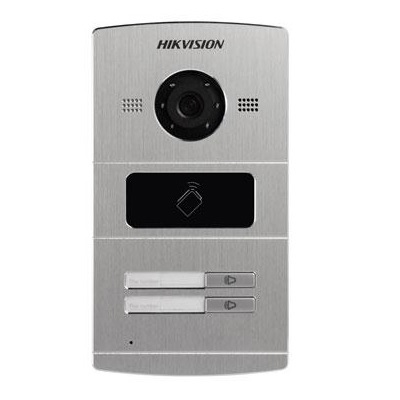
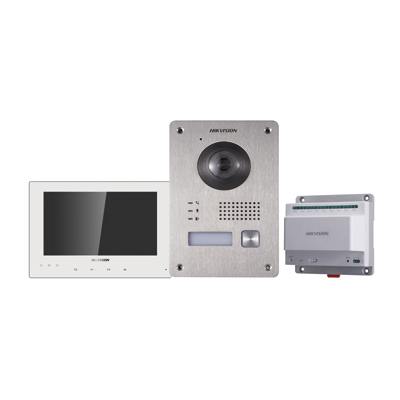
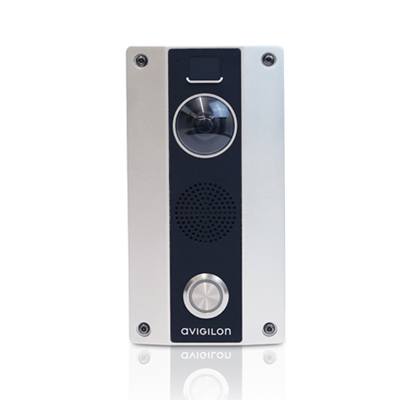
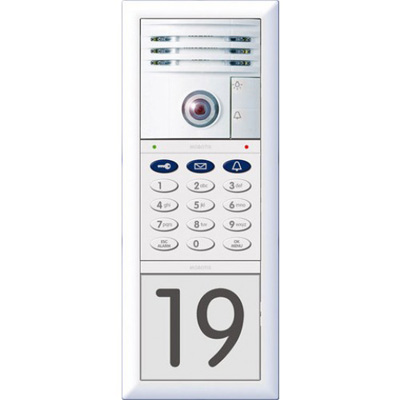
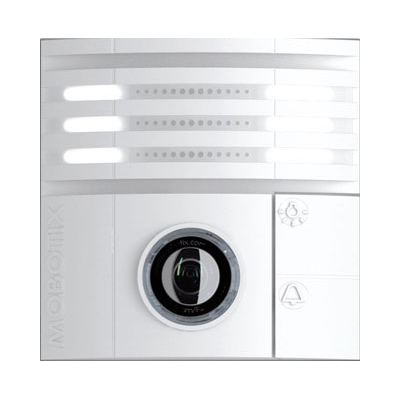
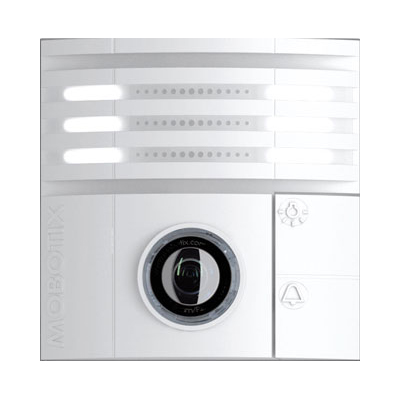

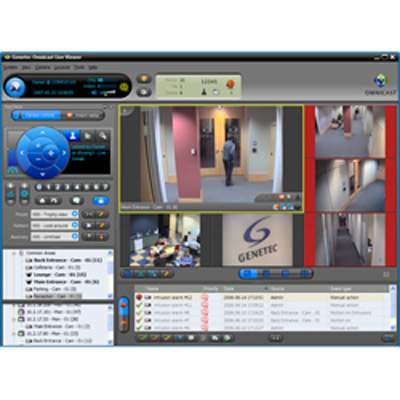
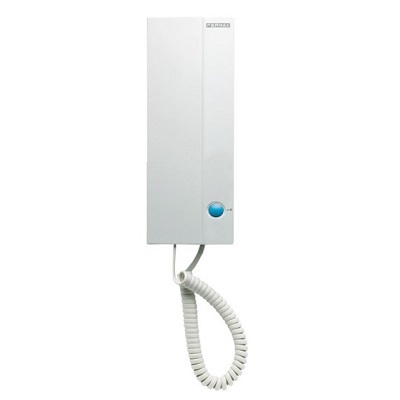


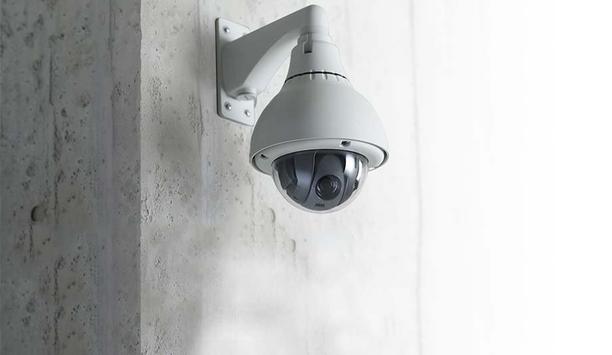
Videos



Audio surveillance: Manufacturers & Suppliers

Technology's role in securing banks and financial institutions
Download
Security technologies promote real-time awareness in K-12 schools
Download
Integrated systems enable critical and compliant security for transportation
Download
Modernising physical access control
Download
Access. Intrusion. One estate.
Download