Tyco Security Products - Experts & Thought Leaders













Latest Tyco Security Products news & announcements

SwiftConnect, a pioneering provider of connected access enablement, is powering easy, secure, and private access using an iPhone and Apple Watch with the Johnson Controls Software House C•CURE 9000 access control system. The SwiftConnect AccessCloud platform integration with the Software House C•CURE 9000 access control system makes it possible for Software House C•CURE 9000 customers to take advantage of the employee badge in Apple Wallet for physical access. Deployments of employee badges SwiftConnect has met several dozen thriving deployments of employee badges in the Apple Wallet Powered by SwiftConnect, an employee badge in Apple Wallet allows users to conveniently access buildings, turnstiles, amenity spaces, office suites, enterprise resources, and more with just their iPhone or an Apple Watch. To date, SwiftConnect has completed several dozen successful deployments of employee badges in Apple Wallet at landmark buildings in New York City, London, and beyond with customers who use the Software House C•CURE 9000 access control solution. Integration with Software House C•CURE “The SwiftConnect platform integration with Software House C•CURE is reshaping the way people interact with buildings and offices at dozens of our joint customer locations,” said Jason Ouellette, Head of Technology and Business Innovation for Security Products Access Control and Video Systems business at Johnson Controls. “We look forward to a continued successful partnership and helping organisations leverage the power of mobile for convenience, seamless, and secure access.” Integration development packages Validated through the Connected Partner Program from Tyco Security Products, a part of JCI, SwiftConnect has leveraged its tools and robust integration development packages to achieve the functionality and flexibility required for integrating with Software House C•CURE 9000. The integration broadens our ecosystem and extends our global reach to serve" “SwiftConnect and Johnson Controls share a common vision in helping enterprises and commercial real estate organisations transform buildings from traditional offices to more flexible workspaces by delivering on-demand, self-service access with the convenience of mobile credentials in digital wallets,” said Josh Jagdfeld, VP of Partnerships at SwiftConnect. “The integration broadens our ecosystem and extends our global reach to serve more customers looking to create better workplace experiences and automate their access management at scale.” SwiftConnect operational benefits SwiftConnect deploys employee badges in Apple Wallet by serving as the integration backbone between mobile app, credential technologies, access control systems and other business systems. The company’s intelligent centralised backend harmonises access control systems and other sources of truth to automate access management, aggregate access transaction data, and provide insights across platforms. Provides intelligence to administrators for more informed business decisions based on deeper insights from aggregated data. Enables admins to efficiently create and manage multi-location access permissions with any combination of buildings in a portfolio, eliminating manual input of credential data. Allows admins to add, edit and disable cardholder and credential records via Software House’s open API to harmonise lifecycle state with sources of truth, such as user directories. Leverages the automation of access management to edit clearance levels for cardholders based on changes in reasons for access. SwiftConnect’s capabilities are anchored in its open and interoperable approach that has set a new standard in the industry for connected access enablement.

Johnson Controls has chosen Ava Robotics, a globally renowned company in designing and developing intelligent robots for workplace applications, to improve human productivity, safety and quality of life, by powering its new Tyco Security Robot. Tyco Security Robot Tyco introduced the Tyco Security Robot, powered by Ava Robotics, in the Tyco Demo Room & Innovation Center, at the Global Security Exchange (GSX) 2021 Conference, taking place from September 23-25, 2021, in Orlando, Florida. Taking a unified approach to solve existing and emerging challenges within the workplace, including for specific and evolving building and facility security needs, this robot is designed to bring access control, video surveillance and security robotics together for a more comprehensive and efficient solution. In order to better address evolving security and facility monitoring needs, businesses are identifying opportunities to streamline security operations, maximise staffing and automate processes. Fully autonomous robot integrated with Tyco Illustra cameras The fully autonomous security robot includes sensors, touchscreen and integrates two Tyco Illustra cameras The fully autonomous security robot includes sensors, touchscreen and integrates two Tyco Illustra cameras, to streamline security operations and increase operational efficiency, creating unprecedented workplace monitoring and security capabilities. “Ava's mobile, autonomous and innovative robotics technology helped close the loop of solutions we needed to increase and streamline security operations. The robots observe, monitor and notify staff so they can focus more on taking the right action in real time,” said Jason Ouellette, Director of Technology & Business Innovation, at Johnson Controls. Enhanced deterrence and high-quality evidence The autonomous security robot provides enhanced deterrence and high-quality evidence for investigations, managing repeatable security tasks and enabling security personnel to focus on high-value activities. This combination of robots with existing reporting practices and historical trend analysis can improve the security posture of organisations by uncovering gaps, driving behavioral change and providing data to drive business decisions. The Security Robot provides: People detection to determine when people are present at unexpected times or locations. Incident prevention to limit potentially harmful incidents and minimise negative or dangerous interactions. Monitoring and management for faster reaction to incidents, review incidents remotely, monitor critical equipment and ensure safety is maintained across operations. Comprehensive security coverage, by increasing security patrols and establishing an enhanced physical presence that augments existing monitoring. Operations beyond traditional security, such as the ability to run routine safety inspections on equipment and critical infrastructure across operations and receive sensor data. Deploying intelligent, mobile technology to business operations “With the current growth and expansion of robots in the workplace, Ava's work with Johnson Controls serves as another example of applying intelligent, mobile technology, to drive better business outcomes and satisfaction.” said Marcio Macedo, Co-Founder and Vice President of Products, at Ava Robotics. Marcio Macedo adds, “There is growing need for facility-focused robots, outside of warehouse robots and building, and operational security is a smart place to focus on. This maps to our strategy to uncover unmet needs in the workplace, especially those that can be solved through robotics and automation.” “Taking a smarter, more efficient and purposeful approach to workplace security, is a crucial part of building and facility management, and overall business operations. The more we can affect better and safer outcomes, with automated, sustainable solutions, like the Security Robot, the better the work environment becomes for people,” said Osvaldo San Martin, Vice President and General Manager, Johnson Controls Security Products.

Johnson Controls, the pioneer for intelligent, healthy, and sustainable buildings has announced the launch of Tyco Illustra Pro Gen4 2MP, 4MP, and 8MP Edge-AI mini-domes. These latest mini-domes are part of an ever-increasing portfolio of IP cameras that focus on delivering AI classifications, customisable rules, and accurate event notification at the edge, while still maintaining the core attributes of ease of installation and enhanced cyber security. Flexible, powerful, and cost-efficient “Edge-AI is a critical building block for security eco-systems as our industry evolves from traditional centralised and on-premise processing models to more flexible, powerful and cost-efficient distributed edge and cloud architectures," said Gopal Paripally, vice president of engineering and technology, Security Products for Johnson Controls. "With the Illustra ProGen 4 cameras, we are focusing on the strategic importance of a solution for our customers, who require a high level of security without disrupting business operations.” Fast incident response This new line of cameras provides a response to incidents faster as AI enhances the speed and accuracy This new line of cameras provides commercial and light organisations with the capability to respond to incidents faster than ever before as AI enhances the speed and accuracy of forensic searches. This is achieved by embedding object classification capabilities directly on security cameras. Events can be narrowed to classes such as a person, car, bus, motorcycle, or bicycle. Automated surveillance Settings can be adjusted on each camera with various analytic rules that notify security or business owners when people or objects are detected for example if someone crosses a perimeter or is lingering around a restricted area. This functionality automates manual surveillance processes and enables organisations to use video surveillance as an increasingly preventive tool stopping incidents before they happen. Simple to use, easy to install The smart defog feature allows for accurate surveillance to continue even in challenging weather conditions With an integrated recess mount, QR code, and Illustra mobile app configuration and application profiles that automatically adjust the camera’s settings based on the chosen profile, Illustra Pro Gen4 cameras are designed to be simple to use and easy to install. Smart features such as a smart wide dynamic range automatically scan the video scene and adjust contrasting and overall scene balance without operator intervention or maintenance and the new smart defog feature allows for accurate surveillance to continue even in challenging weather conditions. Day and night surveillance True day/night camera functionality and built-in IR Illumination ensure that clear, sharp images of objects can be captured at a distance of up to 50 metres, regardless of the lighting conditions. Additionally, a range of input/output (IO) options, including micro HDMI and an integrated microphone, make these cameras highly flexible and powerful. End-to-end video encryption These latest models also offer end-to-end video encryption, from camera to VMS, and edge SD Card encryption. Illustra Pro Gen4 cameras are designed so they will not start if the software has been tampered with in any way. Additional safeguard controls include an enhanced security model that forces the use of complex, non-default passwords and encrypted communications.
Insights & Opinions from thought leaders at Tyco Security Products

The healthcare industry faces unique and significant security challenges. Healthcare security professionals must balance an open, welcoming environment for patients and visitors with the need to protect valuable assets and personnel in a high-stress, 24/7 setting. These requirements direct the physical security technologies deployed in medical facilities. We asked our Expert Panel Roundtable: What are the unique aspects of the healthcare market, and how should the physical security industry adapt?
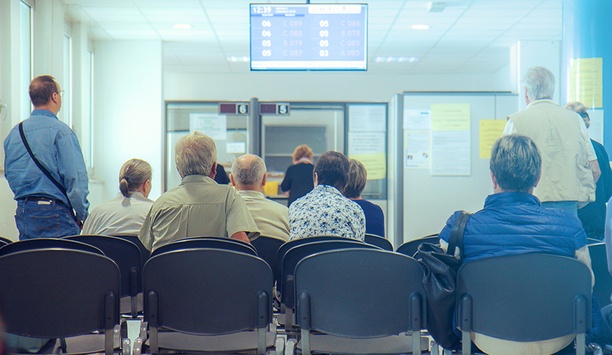
Video, access control and visitor management are among the technologies that are enabling greater safety and security at hospitals and other healthcare facilities. Video surveillance systems enable hospital management and security professionals to know what goes on in and around a medical facility. Recording images in high resolutions (megapixels and gigapixels) is becoming more and more important in healthcare, says Jason Ouellette, Product Line Director – Access Control, Tyco Security Products. Video event management software Video analytics are now being leveraged for patient tracking, asset tracking, and operational purposes If an incident occurs in a medical facility, the security staff has to be able to identify faces easily and accurately. Storage and costs have to be considered, of course. With technology improving and prices decreasing, video solutions can even be used for purposes beyond traditional security. For example, video analytics are now being leveraged for patient tracking, asset tracking, and operational purposes, and captured video can be used to defend against liability claims. What’s next? Video analytics will continue to be a valuable addition to any surveillance infrastructure due to its ability to address patient needs, operational efficiencies and early risk detection, says Brandon Reich, Senior Director of Surveillance Solutions, Pivot3. Through video event management software (VEMS), hospitals can customise the statistics that are relevant to their individual buildings or campuses without having to spend extra time or money on rigorous employee training. Data capture form to appear here! Real-time access control security updates Furthermore, once healthcare facilities are able to digitise all of their patient records, secure any of their ingress and egress points with real-time access control security updates, and fully transition from analogue to IP video surveillance cameras, VEMS systems that house analytical software will be able to multiply the benefits offered to hospitals, not just in real time, but in planning ahead for future risk, expansion and safety protocols. It is vital to implement integrated and innovative access control solutions With large, complex facilities, directors of security at hospitals struggle with controlling access to various levels of the facility, according to Eric Widlitz of Vanderbilt Industries. To manage the risks that hospitals face and ensure a comprehensively protected atmosphere for patients and staff, it is vital to implement integrated and innovative access control solutions. For example, ease of access with controlled entrances is vital to medical crash teams, as is the need for a zonal access control lockdown in the event of a contagious disease outbreak. Strict access limitations Different hallways, rooms, floors and waiting areas within a hospital require different amounts of restriction, and sensitive materials, such as medical files, controlled substances and sterile environments (such as operating and procedure rooms) all necessitate an additional layer of protection. Access control in particular has advanced significantly to offer healthcare facilities the ability to control access remotely, through mobile applications, confirm identity quickly and easily and program varying levels of access for visitors, patients, doctors and staff. One area that is recently experiencing rapid growth – and drastic change – is the securing of narcotics within healthcare facilities, says Robert Laughlin, CEO and Chairman, Galaxy Control Systems. In the past, all medicine was controlled in a central pharmacy located somewhere in the hospital or health facility. These pharmacies were highly secured areas, with strict access limitations; only authorised staff could get near the medicine stocks. Fiber optic communication lines For vehicle access control, medical centers and hospitals prefer beam barricades and shallow foundation barriers To improve the speed of delivery, and to have the necessary medicines ready at hand for in-patients without retaining a large delivery staff, the current trend is to have distributed pharmaceutical closets or carts that hold medicines much closer to the intended patients. For vehicle access control, medical centers and hospitals prefer beam barricades and shallow foundation barriers, according to Gregg Hamm of Delta Scientific. Manual beam barricades are installed at the Fort Bragg Veterans Administration Hospital in North Carolina to shut down certain areas of the facility when a higher alert is sounded. They will stop a 15,000-pound vehicle traveling 50 mph. The Navy Hospital in San Diego uses high speed, high security and very shallow foundation barricades to control all vehicles going in and out of the facility. With their extremely shallow foundation, they obviate the concerns of interference with buried pipes, power lines and fiber optic communication lines. They will stop a 15,000-pound vehicle traveling 50 mph. At the National Institute of Health in Bethesda, Maryland, even stronger shallow foundation barriers are used for traffic control and protection. These barriers will destroy a 65,000-pound (5.4 million foot-pounds) dump truck traveling 50 mph and continue to stand. Physical access control systems Controlling visitors to hospitals and healthcare facilities can directly impact security Controlling visitors to hospitals and healthcare facilities can directly impact security. Traditional methods of visitor management, such as paper visitor logs and handwritten badges are insufficient given today’s variety of security challenges. A hospital using paper-based systems cannot easily cross-check information, confirm patient information, check visitor names against up-to-date watch lists, or visually confirm identity. An increasingly popular and important application is secure and simplified visitor management, integrated with the physical access control systems (PACS). Today’s visitor management systems enable the screening, badging and tracking all visitors or, at a minimum, those visiting critical areas or during ‘after hours’ periods, Quickly identify inappropriate visitors One other growing technology is the ability to link to internal or governmental watch lists, to quickly identify inappropriate visitors before they gain access to the facilities. For example, Visitor Management systems can be configured to perform a Sex Offender search in both Children’s Hospitals and Pediatric areas, further decreasing the likelihood that someone of the list could gain access. Wayfinding is indoor navigation to guide a person step-by-step on the way to a desired destination HID Global and Phunware Inc. are addressing the need of healthcare institutions to deploy standardised technology to provide a better wayfinding and visitor engagement experience inside the hospital, across campus and even in parking lots. The companies are collaborating to improve the experience for hospital patients and visitors to find their way within medical facilities, using wayfinding on their mobile phones. Wayfinding is indoor navigation to guide a person step-by-step on the way to a desired destination. Enterprise-level mobile wayfinding “It’s easy for visitors and patients to get lost in hospitals, and every time they do it puts appointment times and patient satisfaction at risk,” says Rom Eizenberg, Vice President of Sales, Bluvision, part of HID Global “With our location-aware app on a mobile device, we equip the visitor to get instant, turn-by-turn navigation that creates a better experience than that which is currently available on the market.” HID’s healthcare IoT solution-enablement platform simplifies the delivery of real-time location of clinicians, patients and devices. The platform is enabled by Bluvision (part of HID Global). Phunware’s Multiscreen-as-a-Service (MaaS) platform also provides enterprise-level mobile wayfinding, engagement, data and more for other vertical markets, including retail, residential, hospitality, media and entertainment and more. Missed the rest our healthcare mini series? Read part one here and part two here.

When violence or a life-threatening incident occurs, hospitals and other healthcare institutions are often in the crosshairs. Hospitals increasingly face a reality of workplace violence, attacks on patients, and threats to doctors and other support staff. And even if violence happens outside a hospital – such as an active shooter at a public place – the local hospital must be prepared to respond to an influx of injured victims. When conflicts arise inside a hospital, there is an urgent need to lock the facility down quickly. Security professionals and their teams need access control options that allow lockdowns to occur at the touch of a button. Lockdown capabilities are an important aspect of safety and security for hospitals, doctor’s offices and medical facilities The need for mass notification is also growing in the healthcare environment Fire alarm public address system The need for mass notification – another aspect of responding in an emergency – is also growing in the healthcare environment. Various systems can communicate through the fire alarm public address (PA) system to notify people in an emergency, or, alternately, to use email notification, text messaging, pagers, smart phones and/or personal computers (PCs). In lockdown situations, access control systems provide an emergency button with various triggers in the system – a hospital can lockdown specific units or the entire facility. Data capture form to appear here! Jim Stankevich, Global Manager – Healthcare Security, Johnson Controls/Tyco Security Products, points out that the safety of hospital staff, particularly nurses, cannot be overlooked. In the emergency room, 55 percent of nurses are assaulted in some way each year, which is a high percentage. The safety of nurses and all hospital staff deserves more attention. Duress/emergency notification technology Stankevich says one solution is to use duress/emergency notification technology: staff can carry and wear a ‘panic button” or have a two-key combination on their computer as an alarm trigger. When the staff member hits the panic button, a direct message can be sent to security, alerting security staff about the event and requiring a response. There has been an increase in demand for the safety and security of patients, staff and visitors at healthcare institutions, as evidenced by the recent CMS (Centers for Medicare and Medicaid Services) Emergency Preparedness Rule. As of Nov. 17, 2017, healthcare institutions that participate in Medicare or Medicaid must demonstrate compliance with the rule. Emergency preparedness systems A major challenge in compliance to this rule is balancing patient safety with comfort At its core, the rule seeks to establish national emergency preparedness requirements to ensure adequate planning for both natural and man-made disasters, and coordination with federal, state, tribal, regional and local emergency preparedness systems. A major challenge in compliance to this rule is balancing patient safety with comfort. Institutions should consider two-way communication that enables leadership to disseminate targeted messages quickly and efficiently, while arming all employees with a tool that can alert the appropriate staff should an incident occur. Solutions like this enable swift communication of issues without disturbing patients and visitors unless necessary. Effective response to emergencies “Fortunately, hospitals and their security departments are generally well equipped to respond to most emergency situations”, said John M. White, president/CEO of Protection Management, a consultant who works with hospitals to address their security needs. During the Ebola scare in 2014, however, hospitals had to re-examine their plans to ensure they were prepared to meet the challenges specific to rare and deadly disease. “Hospitals are prepared for most things, but Ebola seemed to have caught the whole world off guard, so people responded in different ways,” says White, who previously was security director of two multi-campus medical facilities before becoming a consultant. Hospital security Hospitals made adjustments to their emergency programs to determine how best to handle Ebola patients" He adds, “Hospitals made adjustments to their emergency programs to determine how best to handle Ebola patients and to protect other patients and staff. It was a new threat that healthcare organisations had not specifically addressed.” A particular concern was the possibility of an infected person walking into an emergency room and infecting other people and/or requiring facility decontamination. One role the hospital security department plays in such an emergency is to control access to the facility and to control visitors’ movements once they are inside the facility, says White. If the Ebola scare had progressed to the point that a hospital would need to screen patients, security would be positioned at the front entrance to help with that screening and, if necessary, to direct patients to a specific area for quarantine. Protective equipment Security might also need to wear protective equipment to handle a patient who is resistant to treatment, for example. There are often interactions between security personnel and the general public, a scenario that becomes more complicated if Ebola or a similar infection is likely. In general, security would be tasked with maintaining order and keeping people where they need to be, freeing up the medical professionals to do their jobs more efficiently, says White. To prepare for the impact of the Ebola scare, hospitals addressed various training and equipment needs and adjusted their disaster/emergency response plans. Read parts two and three of our heathcare mini series here and here.

Security technologies promote real-time awareness in K-12 schools
Download
Technology's role in securing banks and financial institutions
Download
Integrated systems enable critical and compliant security for transportation
Download
Modernising physical access control
Download
Access. Intrusion. One estate.
Download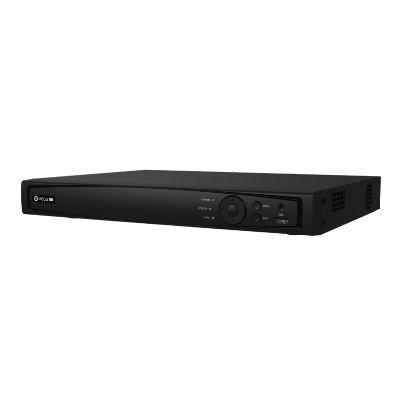
Tyco HRN-16081S-R HOLIS Pro H.265+/H.265 Embedded NVR, 16-ch, Gig Ethernet, 8 HDD Bays
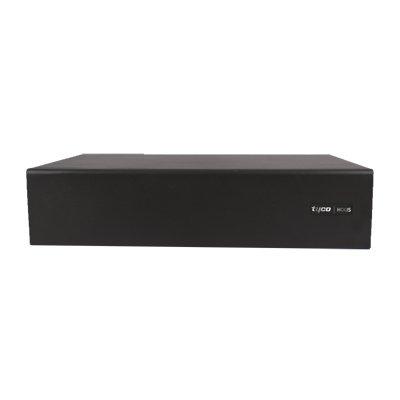
Tyco HRIN-1208-18-SR HOLIS Enterprise 12 Channel Embedded NVR, 8 SATA, RAID 5, 0TB
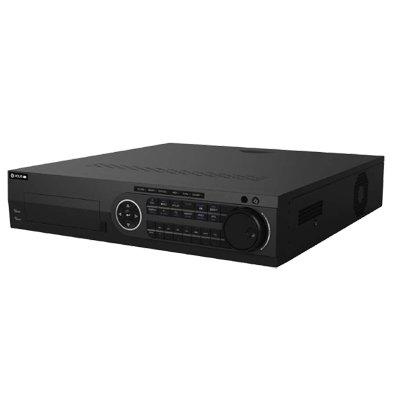
Tyco HRN-32081S-R HOLIS Pro H.265+/H.265 Embedded RAID NVR, 32-ch, 2-Gig Ethernet, 8 HDD Bays, Upto 80TB

