Teledyne e2v Limited - Experts & Thought Leaders






Latest Teledyne e2v Limited news & announcements
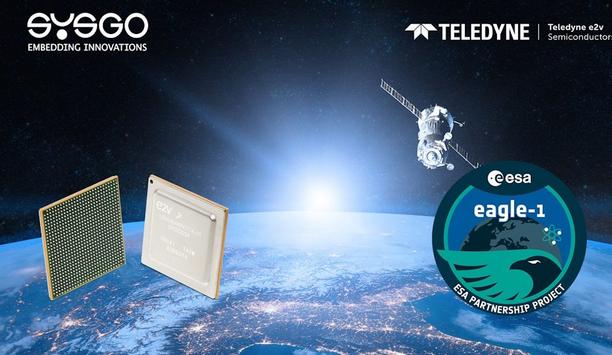
SYSGO, a European pioneer in secure real-time software solutions, has been chosen to supply cutting-edge software technology for the EAGLE-1 project. This innovative mission, led by SES, a provider of global content and connectivity solutions, in collaboration with 20 European partners and supported by the European Space Agency and the European Commission, will enable long-distance Quantum Key Distribution. The mission's goal is to design, launch, and operate EAGLE-1, establishing the first sovereign European space-based QKD system. Defending data integrity SYSGO’s PikeOS stands out as a hypervisor and real-time operating system that addresses the needs of applications As quantum computing advances, the urgency to protect data against potential quantum decryption threats becomes increasingly critical. In response, global efforts to develop quantum-secure communication infrastructures are rapidly progressing. EAGLE-1, a pioneering European satellite mission, marks a significant step in this initiative, aimed at ensuring data security in the face of unprecedented computational power. SYSGO’s PikeOS stands out as a hypervisor and real-time operating system that addresses the complex needs of safety-critical, mixed-criticality applications. PikeOS ensures that each application runs securely and independently through robust multi-partitioning, which is fundamental for missions like EAGLE-1. Radiation-hardened computing This sophisticated partitioning technology provides strict data integrity and reliable separation, even in environments where diverse software packages operate simultaneously. By leveraging PikeOS, the satellite’s payload and ground station software achieve the high determinism required for seamless quantum key distribution. Moreover, PikeOS supports real-time execution down to the microsecond level, making it perfectly suited for space operations. Another key advantage of PikeOS is its ability to run efficiently on space-hardened hardware, such as the Teledyne e2v QLS1046-Space microprocessor, a robust platform built to withstand radiation while delivering powerful computation at 30K DMIPS. Effiecient data management This setup also offers high-speed data management, incorporating advanced features like 10 Gb Ethernet and PCIe Gen3. In tandem, SYSGO’s ELinOS embedded Linux system complements PikeOS, managing non-real-time components effectively. The integration of these two technologies ensures a balanced and high-performing environment for the entire QKD infrastructure. Quantum security leap Together with ELinOS, an embedded Linux distribution also from SYSGO, the EAGLE-1 system benefits from a seamless integration of secure, real-time and non-real-time software components, enhancing reliability and performance in space and on the ground. Once operational, the EAGLE-1 satellite will serve as a critical infrastructure for testing and validating quantum-safe communications across Europe. It will provide early access to QKD technology, setting the stage for robust cybersecurity measures as quantum advancements evolve. Eagle-1 emphasises Europe’s pioneer in space-based quantum communication and data protection, and taking a crucial step towards ensuring resilient communication infrastructures within Europe and beyond.

Teledyne FLIR Defence has announced that Dr. Kemper Talley was named the 2022 Joseph D. Wienand Science, Technology, Engineering, and Math (STEM) Excellence Award winner. The award was presented by the National Defense Industrial Association (NDIA) at its 2022 Chemical Biological Radiological and Nuclear (CBRN) Conference and Exhibition in Baltimore. Real-time AR visualisation Teledyne FLIR Vice President and General Manager of Detection - Dr. David Cullin, and Director of Science & Technology - Dr. Jeremy Walker, served as conference panelists, while Director of Business Development - Jay Reckard moderated two panels at the event. Dr. Talley is currently pioneering the development of real-time, 3D CBRN threat mapping and augmented reality (AR) visualisation of threats through programmes in which Teledyne FLIR serves as prime contractor for the U.S. Department of Defense. Situational awareness and safety (His) innovation, creativity, and passion in the areas of STEM have directly impacted the improvement of CBRN defence" In its award citation, NDIA officials wrote, “Dr. Talley is at the forefront of creating digital CBRN battlefield capabilities that will improve warfighter situational awareness and safety by enabling them to more efficiently conduct CBRN recon and decon missions. (His) innovation, creativity, and passion in the areas of STEM have directly impacted the improvement of CBRN defence.” Threat detection technology “Kemper is a highly skilled scientist whose contributions are pushing the envelope not only for threat detection technology but also in how threat data is seen, shared, and managed on today’s battlefield,” said Teledyne FLIR’s Cullin. “He and the rest of our team in labs across the United States are working closely with Pentagon programme offices to optimise our ability to defend against weapons of mass destruction. Our goal is to allow warfighters to see previously unseen threats and avoid them,” Cullin added. Dr. Talley's education Dr. Talley is a principal investigator and theoretical physicist at Teledyne FLIR’s facility in Oak Ridge, Tenn. He graduated summa cum laude with a B.S. in Physics from Clemson University before obtaining his Ph.D. in Energy Science and Engineering with a concentration in Nuclear Science at the Bredesen Center for Interdisciplinary Research and Graduate Education at the University of Tennessee, Knoxville.

Teledyne FLIR Defense, part of Teledyne Technologies Incorporated has collaborated with AM General to display its Lightweight Vehicle Surveillance System (LVSS) on a HUMVEE 2-CT (2-Door Cargo Truck) during the Association of the U.S. Army (AUSA) annual conference 2022. The display is a technology demonstrator for future Army mobile command and control (C2) vehicles, integrating newly advanced radar, long-range cameras, and other sensors to detect and defeat threats such as weaponised small Unmanned Aerial Systems (sUAS). Lightweight Vehicle Surveillance System (LVSS) With its cutting-edge air domain awareness technology, LVSS fits in the back of the HUMVEE 2-CT, ready to provide counter-UAS; Intelligence, Surveillance, and Reconnaissance (ISR); and force protection capabilities. LVSS features a 16-ft. fully retractable mast that leverages a combination of 3D radar, EO/IR camera, plus RF detection The LVSS platform features a 16-ft. fully retractable mast that leverages a combination of 3D radar, electro-optical/infrared (EO/IR) camera, plus RF detection and mitigation sensors to provide early warning alerts and recognition. Ready to meet the requirements of several Army programs, including Command Post Integrated Infrastructure (CPI2) and Ground-Based Operational Surveillance System-Expeditionary (GBOSS-E), the capability concept would aid commanders with multi-domain decision support in a mobile C2 vehicle. StormCaster™-DX Also on display for the first time at AUSA is StormCaster™-DX, a multi-role laser designator payload built especially for use on FLIR’s R80D SkyRaider™ Group 1 sUAS. StormCaster-DX is uniquely designed to manage target areas using a Laser Spot Tracker while affecting the terminal guidance of laser-guided munitions. Until recently, this capability was only possible with larger UAS platforms or ground-based systems. Teledyne FLIR’s whitepaper published two weeks ago, ‘The Proliferation of Precision Fires,’ explores how troops can benefit from technology that enables them to call and direct fires on the battlefield anytime, in any environment. StormCaster-E Teledyne FLIR Defense also is introducing StormCaster-E, the latest in its StormCaster payload series designed for the company’s sUAS aircraft. The new long-range imaging sensor features a fully integrated EO camera built for demanding missions that require clear and precise imagery across daylight and low-light conditions. Mobility and agility LVSS provides mobile surveillance that can be quickly redeployed as threats change" “This first-time concept showcasing our LVSS in a HUMVEE truck illustrates how we can reduce the current command post footprint, while at the same time improving mobility and agility,” said Dr. JihFen Lei, executive vice president, and general manager of Teledyne FLIR Defense. Dr. JihFen Lei adds, “LVSS brings a host of sophisticated sensing technologies onto one platform. It provides mobile surveillance that can be quickly redeployed as threats change, a critical need on today’s battlefield as evidenced by events in Eastern Europe.” Performance “We’re also proud to launch our rugged new StormCaster-E payload, which marks a major leap forward in performance, line of sight stabilisation, and range of motion for a low SWaP-C package,” Dr. JihFen Lei added. AUSA attendees can see all these technology solutions and more at Teledyne FLIR, Booth 6915 in Hall E.

Technology's role in securing banks and financial institutions
Download
Security technologies promote real-time awareness in K-12 schools
Download
Integrated systems enable critical and compliant security for transportation
Download
Modernising physical access control
Download
Access. Intrusion. One estate.
Download
