Opgal Optronic Industries Ltd. - Experts & Thought Leaders



Latest Opgal Optronic Industries Ltd. news & announcements
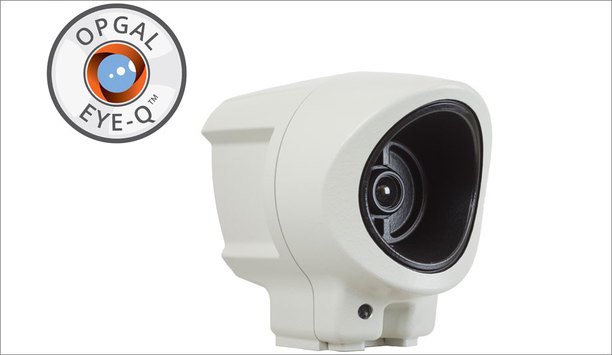
Based on many years of algorithmic research and field experience, Opgal Eye-Q™ delivers a high-quality thermal image so clear that even the finest details are visible Opgal Optronic Industries Ltd., a manufacturer of thermal imaging, has announced the Opgal Eye-Q™, an innovative approach to image processing that sets new standards for thermal image quality. Based on many years of algorithmic research and field experience, Opgal Eye-Q™ delivers a high-quality thermal image so clear that even the finest details are visible. Opgal Eye-Q™ is readily available for an array of applications, from surveillance – where small objects such as drones are detected – through security, where important target details previously undiscernible are now clearly visible – to optical gas imaging, where gas leaks are easily noted in the air. Thermal imaging at all target temperatures The unique image processing methods of Opgal Eye-Q™ make this technology consistently better than existing thermal imaging at all target temperatures, no matter the range or temperature differences and fluctuations. "With the proprietary Opgal Eye-Q™ processing, image sharpness resembles that of a daylight black and white video so much, that it is hard to believe that the image is thermal" says Amit Mattatia, President and CEO at Opgal Optronic Industries. “Opgal has once more proved its capability of launching breakthrough technologies by providing significantly better image quality for our partners and global customer base." Day and night surveillance Recent advances in thermal technology have made it the first choice for day and night surveillance due to its zero light, all weather capabilities. The constant evolution of customer needs has brought with it a higher demand for image quality as good as, or better than that of CCD colour daylight cameras. Opgal Eye-Q™ is already built into the new Sii™ OP dual channel thermal camera system and is also available as an optional feature with several other Opgal systems.

IMS report covers electronic perimeter security, including sensors, video and non-smart fencing In its newly released report, “World Market for Electronic Perimeter Security Equipment”, IMS Research has found Opgal to be one of the top ten perimeter security equipment providers in the world. US-based IMS Research is the leading independent provider of market research and consultancy to the global electronics industry. The study further names Opgal – a leading global provider of innovative thermal imaging and near infrared illumination solutions for civilian and military applications – as the second largest global provider of thermal imaging cameras to the perimeter security market, and one of only two thermal imaging equipment providers to increase market share in 2011. The IMS report focused on electronic perimeter security equipment, including sensors, video, and non-smart fencing. “The video segment is the fastest growing equipment segment with a 2010-2015 CAGR of 18.6%.” says Lily Aung, Market Analyst of IMS Research. “The high growth rate is a result of the continued high uptake of intelligent devices in the perimeter security market as well as the emerging interest in, and the commoditization of, thermal imaging cameras in this market” “We are pleased that IMS has underscored our customers’ satisfaction with Opgal’s products in the marketplace,” said Yair M. Sakov, Vice President of the Security Business Unit at Opgal. “Our commitment to innovate thermal imaging solutions lies at the core of the company’s growing global customer base.”

Opgal Optronic Industries announced that it had entered into a strategic partnership with Ngaro Intelligent Solutions. This agreement, which is a key component in Opgal’s European expansion, creates a new breed of security cameras providing unparalleled performance. The result is notable reduced cost and complexity for both perimeter and site security and surveillance. Perfecting its image processing capabilities for 30 years, Opgal’s innovative thermal imaging solutions are recognized for its unparallel image quality and strong signal-to-noise ratio (SNR). These features enable Ngaro’s market leading analytics algorithms to provide detection, surveillance and control functionality -far beyond what one may expect from intelligent surveillance systems based on infrared imaging. One immediate benefit is that customers are able to secure a variety of sites at a substantially lower cost. The combined Opgal and Ngaro platform offers a unique solution to Spanish security forces, security service companies, fire departments, nature reserve management entities and civil protection forces. Moreover, Ngaro’s intelligent surveillance and control systems complement Opgal’s thermal cameras to deliver intelligent solutions to Spanish and global system integrators. “Opgal’s image quality enables us to offer a high-quality, high-accuracy, comprehensive product portfolio addressing key requirements of the security market,” said Alvaro Mocholi, International Sales Manager of Ngaro. “Our customers are seeking innovation led smart cameras that can be tailored for cost and performance requirements. We look forward to a successful partnership.” “We are excited about our partnership with such an outstanding and well-respected technology provider in Spain,” said Yair M. Sakov, Vice President of the Security Business Unit at Opgal. “Ngaro’s product architecture and independently operating modules enable the design of a variety of solutions to protect infrastructures, facilities, processes and people against terrorism, theft, sabotage, fire, intrusion or any other type of threat which is identifiable by its thermal signature.”
Insights & Opinions from thought leaders at Opgal Optronic Industries Ltd.

The new buzz in the thermal imaging world goes by many names. In a short time, a small niche in the world of IR, which was previously sidelined to make way for more lucrative markets such as security and defence, has taken the top spot in the attention, production and sales for many manufacturers and integrators. It’s no surprise considering the size of this new market. Suddenly, hotels, cinemas, malls, hospitals, critical services, public transportation, office buildings and more have become consumers of thermal imaging cameras. Along with that, the more traditional markets, such as security, defense and industry are suffering from budget cuts, project cancellations, or postponements. Combine two of these elements, and the new elevated body temperature (EBT) camera market is easily 3-4 times the size of the other markets combined. Thermal imaging cameras and common misconceptions Can thermal cameras detect viruses? The answer is NO. The best the camera can do is tell you if someone has a higher skin temperature than others. There are many reasons for an elevated body temperature which are not all health-related, such as exercise or even sitting in a warm environment without air-conditioning. Are the cameras accurate? The accuracy debate is a significant and controversial discussion with much misinformation running around. When discussing accuracy, there are two considerations: The first consideration is the accuracy of the camera itself versus a blackbody. Blackbodies are devices which can regulate temperature very accurately (although not all are equal) and have a high emissivity level, which means they are almost not affected by surrounding heat or energy. All thermal cameras are calibrated against blackbodies. Still, some manufacturers have been using them in their EBT solutions to give the camera a consistent temperature reference to which it can adjust. The accuracy of the camera in this discussion talks about the camera itself. How sensitive the detector is, internal reflections, lens aperture, noise level and the calibration process itself. Also, if you read the fine print, most manufacturers quote accuracy levels which are valid only in a controlled or laboratory environment. As in, a room with a steady 25°C and a slow shift in temperature (not more than 1°C per hour). Most field conditions don’t allow this – so this low level of accuracy is challenging to replicate in practice.Blackbodies are devices which can regulate temperature very accurately The other focuses on the fact we are not looking for COVID in black bodies. We are looking for it in humans. And, the substance known as human skin acts very differently. To date, there are no medical models which can predict how skin will behave in different scenarios. We don’t know what the external skin temperature of a man weighing X who was exposed for X minutes to direct or indirect sunlight would be. So, while the black body may be spot on – it has no bearing on the temperature reading of humans. So, while we can improve the first issue, the second one is more complicated. One way to circumvent it is by using population statistical analysis and looking for the gradient between the healthy population (which does have existing medical models) to the people with a higher temperature which are statistical anomalies for such a camera. Thermal cameras and their suitability Are all thermal cameras suitable for temperature readings? There is a difference between a thermal camera and a thermometric camera. A thermal camera developed for security and defence are used to detect threats and give situational awareness. We don’t care that two trees with different temperatures will have different colors – we care about the person standing between them. We manipulate the image, so the viewer has a better understanding of what he sees. With thermometric measurement (as in – thermal temperature reading) we do the exact opposite. We want accurate temperatures readings for each pixel in our screen. A thermometric camera will go through a rigorous calibration together with the lens, which often takes longer. We need to offset, in the calibration tables, minute pixel-sized blemishes in the detector and lens. Those blemishes would be invisible in a thermal image – but can skew the temperature reading and produce inaccurate results. We regularly see suppliers who are using regular thermal cameras with blackbodies to auto adjust the temperature reading as described above. But, if you take that same blackbody and move it a meter to one side, you may discover the camera suddenly registers a different temperature – as not all pixels have a uniform calibration. Does it matter where we scan in humans? Yes and no. The inner canthus of the eye (the tear duct) is the most relevant external point with the best correlation to internal temperature. People looking at the inner canthus will manage to avoid a lot of the effects of ambient temperature on the skin. The tradeoff is that the inner canthus is a tiny area, and people would need to remove their glasses. Most of the world’s health organisations consider the difference between a healthy and sick individual to be 1.5° C (or 2.7° F). That change is consistent whether you’re looking at the tear duct, the forehead or a mouth. Thus, the solutions that look at the gradient temperature (population-based solutions) are just as effective when measuring the ambient temperature on the skin of the population tested. Do people need to stop in front of the camera? Not necessarily. It depends on the speed of the camera and the temperature detection algorithm. Some cameras can detect people walking very quickly as they only need a few frames to detect the temperature. Will the camera work outdoors? Most outdoor cameras will suffer from false alarms and misses. Some cameras have very advanced compensation algorithms for this, but they can’t take into account all the dynamic temperature changes, humidity, sporadic energy readings and the “bane of thermal imaging” - turbulence. Therefore, the conditions can strain even the most advanced algorithm. Why invest in this technology? The WHO states, that while asymptomatic transmission exists, it’s much less contagious then symptomatic transmission. Some doctors claim that a person with a fever sheds the virus five times more aggressively than a person with no fever. There are clear regulations for businesses to screen individuals for fever In some countries, there are clear regulations for businesses to screen individuals for fever as they come into the establishment. While you can have a person in the entrance with a contactless thermometer, they must stop people for a 5-second check each time they come in. That would cause long lines in many places with high traffic. And, during testing, standing less than 2 meters from the individual would throw social distancing out the window. If the tester got sick, the next day they would start endangering everyone else they checked. It’s better to screen automatically and only use the IR thermometer in cases where an alert was triggered and needed to be verified. Various forms of technology We’ve also seen much use of the IR tablets recently. While they are low cost, a person usually needs to stand very close (less than 1 meter) from the monitor to be caught by the camera. Thus, spreading his germs on the glass or plastic cover of the tablet while being screened. In conclusion – Thermal EBT cameras are important. They aren’t a miracle cure, and they won’t stop the spread of the virus. And one should be careful of false promises. But along with other solutions (most importantly – masks), they can help protect us during these times and allow the wounded global economy to rejuvenate itself.

Did you hear the one about the bear that nearly caused a nuclear catastrophe? It was around midnight on October 25 1962, in the midst of the Cuban Missile Crisis. A guard at Volk US Air Force Base – home to a number of armed nuclear bombers – spotted a shadowy figure apparently attempting to scale the fence. The supposed Soviet saboteur tripped the alarm, which was fatefully miswired. As a result, the klaxon was accidentally sounded, triggering a manoeuvre to scramble US interceptor jets to shoot down incoming enemy nuclear bombers. The pilots weren’t informed that more American armed nuclear bombers were already in the air nearby – the scene was set for a friendly fire incident of nuclear proportions. Just before the jets took off, the command centre, having realised that the wrong klaxon had sounded, sent a truck racing to the tarmac with orders to stand down. Crisis averted – just. Oh – and the Soviet saboteur that tried to sneak in? It turned out to be a curious bear. International security threats With the Cold War long thawed and security technology having considerably advanced since 1962, we shouldn’t see a repeat episode like that anytime soon. Today we face different threats. Our fears of international state on state conflict have been eclipsed by the threat of international terrorism, and – though military security is always crucial – protecting borders has become one of the most pressing security needs of our time. However, there are still lessons to be learned – safety and security are impossible without smart, integrated security solutions that can work in any weather, day or night. Two notable trends are helping organisations and security integrators shore up their defences: advances in uncooled thermal imaging technology, and the move towards a security-solutions based approach. System integrators stand to benefit from more comprehensive and effective multi-component systems that have a lower total cost of ownership. When borders stretch across hundreds or thousands of kilometres of land and sea, it can be a very difficult and expensive task to secure them Monitoring borders with cameras With conflict and other crises causing mass migration of refugees around the world, the importance of border security has leapt up several places on national leaders’ agendas. When borders stretch across hundreds or thousands of kilometres of land and sea, it can be a very difficult and expensive task to secure them. Picture the scene: miles upon miles of empty borderland: desert, scrub, fields. To monitor it, camera upon camera mounted on post after post, stretching to the horizon. If that camera is CCTV, it can give you a crisp HD image on a clear day, miles into the distance. However, it’s not so good in low visibility or at night, where effective range could be as low as 20 metres. To answer this problem, each is mounted in tandem with a thermal imaging camera that isn’t hindered by those factors. Understanding thermal imagery The decision to use thermal then begs the question: cooled or uncooled cameras? Cooled cameras undisputedly give the best performance, offer unmatched distance visibility, and are more user-friendly than ever before. Whereas once a cooled camera would require a tank of cooling liquid nitrogen or similar substance, now electric systems – much like a fridge – keep the camera cool. However, as far as cooled cameras have come technologically, they remain an expensive proposition, with annual maintenance required – i.e. an engineer driving out to each and every post, servicing each camera one at a time. Uncooled cameras don’t have this problem, meaning that they require far less maintenance, and they are also cheaper to begin with. Traditionally though, they would not have been able to compare; the image was grainy and the distance capabilities were negligible. Far more cameras were needed to cover large areas, wiping out any per-unit savings. Uncooled thermal cameras However, modern uncooled thermal cameras, coupled with cutting-edge analytics applied to the image data, are capable of covering huge distances like never before – up to fifteen kilometres away. This allows for fewer, cheaper, lower-maintenance cameras, hugely reducing the total cost of ownership when extrapolated across hundreds or thousands of kilometres. When then taken by a system integrator and combined with other security equipment such as ground sensors, motion sensors and patrol cars, modern uncooled camera systems create a compelling holistic border security solution – and these systems would have revealed the Volk bear’s furry identity pretty quickly, thereby avoiding a near disaster in the process. It’s imperative that security systems are linked to a control terminal, informing and updating security personnel, creating a real-time comprehensive picture of the security network Integrated airport security systems However, land and sea borders aren’t the only places countries are looking for protection. Think about airports for a moment: some of the most security-conscious civilian transit sites in the world. They too, need efficient and cost-effective border security. Consider the nature of threats to airports. Following the tragic events of 9/11, the focus shifted to individual security – stopping the passage of dangerous individuals and items onto planes. However, in recent years we have seen terrorists resort to cruder, less easily managed methods of destruction, such as vehicular and lone gunman attacks. So, where does this leave airports? On the one hand, they need to maintain vigilance in searching individuals and their luggage. On the other, they need to be alert to a vehicle or single person threats breaching their perimeter. Security control terminals The challenge for system integrators is to deliver systems that handle all of this seamlessly. To that end, it is imperative that thermal cameras, CCTV cameras, radar, motion sensors – everything – are linked to a control terminal, informing and updating security personnel and creating a comprehensive picture of the security network in real time. For example, if a suspected armed individual somehow found access into the airport – either through the perimeter fences or the front gates – what then? Will they look for a crowd to attack, will they try to make their way to a runway and try to sabotage an airplane? A modern security system has to be capable of tracking the threat whichever way it goes. Simple integration also means less potential for things to go wrong, things that would require expensive fixes and gaps in coverage Smart integrated solutions System integrators have more choice than ever before when it comes to building these integrated solutions. In fact, rather than sourcing individual components from individual manufacturers and agonising over esoteric operating systems and protocols when trying to link them, they can now choose from complete, integrated, interoperable security solutions, making life infinitely easier. This means a greatly reduced total cost of ownership – fewer false alarms and more targeted surveillance, reducing call-out and investigation costs. Simple integration also means less potential for things to go wrong, things that would require expensive fixes and gaps in coverage. Powerful connected security systems Had the Volk bear made its unfortunate blunder in 2017, disaster would not have to have been averted. An advanced uncooled camera would have immediately revealed him for what he was, and an integrated, intelligent security solution would never have sounded a false alarm. Today, to the benefit of us all, these two trends of advanced uncooled cameras and the easy integration of multiple systems, allow system integrators to build powerful connected systems to keep us all safe. After all, there are much more dangerous things out there than curious bears.

Security technologies promote real-time awareness in K-12 schools
Download
Technology's role in securing banks and financial institutions
Download
Integrated systems enable critical and compliant security for transportation
Download
Modernising physical access control
Download
Access. Intrusion. One estate.
Download
