Motorola Solutions, Inc. - Experts & Thought Leaders

























Latest Motorola Solutions, Inc. news & announcements

The Monitoring Association (TMA) announced that Motorola Solutions has been named a Platinum Communications Partner in support of the Automated Secure Alarm Protocol (ASAP), recognising the company’s leadership in improving the public safety ecosystem, telecommunicator wellness and modernising digital alarm communication between monitoring centers and public safety agencies. As one of the largest providers of computer-aided dispatch (CAD) systems, Motorola Solutions encourages ASAP adoption among emergency communications centers (ECCs) and works to provide connectivity to ASAP Service within its CAD solutions. Emergency communications workflows In 2025, Motorola Solutions introduced a cloud-based capability to simplify integrating ASAP alarm data into emergency communications workflows. The company recently expanded this capability across its command center software portfolio, including CommandCentral Aware, PremierOne and Flex, to promote seamless ASAP connectivity for its customers. This integration helps public safety agencies deploy the service more quickly and with fewer technical barriers. For ECCs already using Motorola Solutions CAD systems, enabling ASAP becomes a natural extension of their existing infrastructure to help reduce deployment time and cost. Enhanced situational awareness “Seconds can make all the difference in an emergency,” said Todd Piett, senior vice president, Command Center and Cloud Solutions, Motorola Solutions. “By creating a direct digital connection between alarm companies and 911 dispatch software through the ASAP Service, we can help keep emergency lines open for those in need while reducing manual coordination for dispatchers.” The ASAP AWS GovCloud capabilities provide ECCs with a streamlined, secure, resilient and standards-based method to receive alarm data directly into their CAD workflows. For the ECC, this eliminates manual call handling and reduces call-processing times and transcription errors. The result is better-informed responses, faster dispatch times, enhanced situational awareness for field responders and reduced workflow for telecommunicators for them to focus on higher-priority incidents. Time-sensitive emergencies A recent deployment in St. Joseph County, Ind. demonstrates that impact in practice. As the first in the nation to deploy the cloud-based alarm integration, the St. Joseph County 911 Consolidated Communications Center is on pace to save the county’s telecommunicators 350 hours a year that would otherwise have been spent on the phone, helping them keep 911 lines clear for the community's most time-sensitive emergencies. “Working with Motorola Solutions CAD systems enables us to meet agencies where they already are — within their existing CAD environments,” said Karen Carlson, vice president and general manager of ASAP Service. “By integrating directly into the tools ECCs use every day, we make it easier for agencies to adopt ASAP and begin seeing meaningful improvements in call handling and response efficiency.” Motorola Solutions is also actively working with its ECC customers to promote and deploy the ASAP service. The company maintains ongoing collaboration with TMA through regular working sessions to review deployment progress and support the program's continued expansion. This level of engagement and operational coordination reflects the commitment recognised by TMA’s Platinum Partner designation.

Cyber Threat Alliance (CTA), a non-profit organisation dedicated to improving the cybersecurity of the global digital ecosystem, today announced Motorola Solutions as its newest member and first in the safety and security technology sector. CTA and Motorola Solutions, including the Public Safety Threat Alliance (PSTA) it founded and administrates, will collaborate on cyber threat intelligence sharing to strengthen the security postures of public safety agencies and enterprises globally. Mission-critical technologies Motorola Solutions is a pioneer in mission-critical safety and security technologies for public safety, defence and enterprise organisations. Its robust ecosystem includes critical communications, command centre, video security and AI technologies that help protect people, property and places. It established the PSTA in 2022, which provides nearly 2,500 public safety agencies globally with actionable intelligence to defend against attacks. “I am pleased to welcome Motorola Solutions to the Cyber Threat Alliance,” said Michael Daniel, President and CEO, Cyber Threat Alliance. “Motorola Solutions brings a new perspective to the Alliance as a leading provider of mission-critical technologies that protect our communities and as the trusted leader for cyber threat intelligence sharing in the public safety sector through the Public Safety Threat Alliance. CTA members look forward to welcoming Motorola Solutions and the enhanced cyber threat collaboration that will ensue.” Cyber threat collaboration “All public safety agencies require a mission-critical cybersecurity posture to support the safety and security of their communities,” said Jay Kaine, Director of the PSTA, Motorola Solutions. “We look forward to collaborating with the Cyber Threat Alliance. Together, we will deliver earlier warnings and greater intelligence to the thousands of agencies that depend on this robust knowledge-sharing network to help stay ahead of increasingly sophisticated cyber threats.”

Motorola Solutions arrives at ISC West 2026 with a clear message for enterprise security leaders: the job of a modern security system is no longer just to watch. It is to understand, act and support business continuity through integrated systems that help organisations remain resilient and compliant. The company is showcasing its broadest platform expansions to date, featuring solutions tailored for the distinct security and operational needs of verticals, such as healthcare, retail, government and education. From detecting a blocked fire exit in a crowded school hallway to flagging a liquid spill in a hospital corridor – before they become liabilities – the new portfolio demonstrates how physical security technology is evolving into a real-time operational intelligence layer across the enterprise. Real-time operational intelligence "For decades, security has focused on applying AI to visually detect and investigate incidents while neglecting the immediate and effective response to a detected incident," said Jehan Wickramasuriya, senior vice president, Security & Resilience Software, Motorola Solutions. "By shifting the cognitive load from the human operator to agentic AI, we’re turning passive monitoring into autonomous, orchestrated response. This repositions teams to spend less time managing screens and more time focused on their unique safety needs." Intelligent software layer Modern enterprises require solutions that offer hybrid flexibility spanning on-premise and cloud systems. At Motorola Solutions’ booth 14059, visitors can experience how an expanded, unified ecosystem of video feeds, visual alerts and access control, powered by a new intelligent software layer, transforms manual monitoring into automated action by recognising patterns, verifying threats and executing next steps with a level of speed and consistency that human monitoring alone may miss. Among the highlights are: Agentic Response & Orchestration: ‘Operator’ (formerly Inform) bridges the gap between detection and action, unifying data across video, access and sensor systems into a cohesive view to orchestrate and execute complex incident response. This is supported by automated camera tours and audio analytics in Alta Video for greater situational awareness. The recent addition of Blue Eye remote video monitoring provides enterprises with a virtual guard, providing 24/7 human-led threat interception and talk-down capabilities. AI-Powered Platform: New hybrid intelligence advancements include expanded Visual Alerts capabilities, which will integrate SOPs and run alongside regular analytics on a new appliance to further automate threat triaging. Additionally, the introduction of Assist Chat provides operators with an AI-driven interface to quickly query system data and gain contextual insights, significantly increasing the scalability of security teams. The AI platform is supported by improved and expanded camera models that include the Avigilon H6A Dual Head bi-directional security camera and Avigilon Intercom Touch, a single access control unit combining a camera, reader and intercom. Additionally, the Avigilon H6A PanoPTZ pairs 360-degree panoramic coverage with AI-driven subject tracking across expansive environments. By unifying cloud and on-premise systems enabled by AI, Motorola Solutions’ latest advancements empower enterprises to move beyond the screen and focus on the specialised operational challenges of building safer, more resilient organisations. Experience the future of unified security at ISC West 2026 by visiting Motorola Solutions at booth #14059.
Insights & Opinions from thought leaders at Motorola Solutions, Inc.

2025 was another impactful year for mergers and acquisitions (M&As) in the security industry, which is undergoing an enormous transformation as global pioneers prioritise specialised technology to drive future growth. The year 2025 has been defined by massive corporate reorganisations, most notably Honeywell and Resideo spinning off core divisions to unlock shareholder value. Simultaneously, an aggressive wave of mergers and acquisitions is reshaping the landscape, with giants like ASSA ABLOY and Motorola Solutions absorbing innovators in AI-driven surveillance, cloud-native access control, and identity management. From residential security shifts to critical infrastructure enhancements, this article will summarise how these strategic moves signal a decisive industry pivot toward integrated and intelligent security ecosystems. Resideo to spin off ADI business Resideo Technologies, Inc. announced its intention to separate its ADI Global Distribution business from its Products & Solutions (P&S) business via a tax-free spin-off to shareholders. The separation is expected to be completed in the second half of 2026. P&S will continue as Resideo, a building products manufacturer of residential controls The goal is to unlock value, enhance operational performance, and improve strategic flexibility for both entities. After the separation, P&S will continue as Resideo, a building products manufacturer of residential controls and sensing solutions. ADI will become an independent public company and remain a global wholesale distributor of low-voltage products, including security and audio-visual solutions. Honeywell separates into three companies There are big changes pending at Honeywell, another global security industry company. Honeywell announced plans to separate its Automation and Aerospace businesses into two independent, publicly traded companies following a comprehensive portfolio evaluation. Combined with the previously announced spin-off of Advanced Materials, this strategy will create three distinct industry pioneers. The Automation and Aerospace separation is targeted for completion in the second half of 2026 as a tax-free transaction for shareholders. The largest portion of Honeywell’s traditional security business (cameras, access control, and fire safety) sits within the Building Automation segment of the new Honeywell Automation company. This unit includes products from recent major acquisitions, such as LenelS2. SimpliSafe’s new chapter SimpliSafe has agreed to be acquired by private equity firm GTCR from Hellman & Friedman SimpliSafe has agreed to be acquired by private equity firm GTCR from Hellman & Friedman, another private equity firm. As the third largest U.S. residential security provider, SimpliSafe will continue under the leadership of the current CEO, while its founders remain significant investors. GTCR, an experienced security industry investor, intends to support the company’s expansion and continued innovation in AI-powered, DIY home protection. This marks a new chapter in SimpliSafe’s mission to provide professional monitoring without long-term contracts. SimpliSafe is GTCR’s fifth investment in the security alarm industry, including prior investments in residential-focused security companies SecurityLink and Protection1, along with commercial-focused security companies HSM and Everon. Motorola grows technology portfolio Motorola Solutions grew its portfolio through acquisitions in 2025. The industry giant strategically expanded its safety and security ecosystem through the acquisition of four specialised technology firms. The company acquired Blue Eye to integrate AI-driven remote video monitoring and 24/7 security operations into its threat detection workflows. To support frontline workers, Motorola added Theatro’s voice-powered communication platform, which complements existing mobile and video technologies. Motorola further bolster its public safety capabilities with the acquisition of RapidDeploy, a cloud-native Next Generation 911 provider that offers real-time caller mapping and data analytics to accelerate emergency responses. Motorola also agreed to acquire InVisit to enhance its Avigilon Alta suite with cloud-based visitor management, streamlining guest registration and blocklist screening for enterprise security. These acquisitions aim to unify detection, communication, and response across various sectors, including retail, healthcare, and critical infrastructure. Allied sells majority stake in AMAG Allied Universal sold a majority stake in AMAG Technology to Shore Rock Partners In December, Allied Universal sold a majority stake in AMAG Technology to Shore Rock Partners. Shore Rock is a growth investor focused on critical infrastructure, with strategic backing from BellTower Partners. Allied Universal will retain a significant minority share. The sale is intended to allow 54-year-old AMAG, which provides integrated access control, identity, guest, and video management solutions, to operate independently from Allied Universal's services-based model for long-term growth. Shore Rock's plan is to invest in advancing AMAG's product line and customer relationships. With this transaction, David Sullivan, AMAG's President, will become CEO. Everon acquires ADT multifamily segment Commercial security provider Everon announced in September that it had entered into a definitive agreement to acquire the business-to-business (B2B) multifamily segment from ADT. This acquisition is a strategic extension that expands Everon's reach in the valuable multifamily market. It will allow the company to offer a more comprehensive portfolio of tailored solutions, including access control, video surveillance, and self-guided tour capabilities. Everon's CEO states that the deal enables them to help property owners and managers increase net operating income and improve operational efficiency. Dormakaba acquires TANlock and Avant-Garde Dormakaba, a global provider of access solutions, acquired TANlock GmbH in July Dormakaba, a global provider of access solutions, acquired TANlock GmbH in July. TANlock is a German firm specialising in innovative high-security access solutions for data centers and other critical infrastructure. The acquisition strengthens Dormakaba’s presence in the data center market. TANlock's intelligent system provides enhanced server cabinet security using electromechanical rack locks and various authentication modules. This solution is scalable, future-proof, and can be integrated into existing IT infrastructures for both retrofits and new installations. Dormakaba also agreed to acquire Indiana-based Avant-Garde Systems Inc. to strengthen its North American entrance control portfolio. This move bolsters Dormakaba’s presence in high-growth sectors like airports and data centers. Acre acquires REKS for AI Recent M&A activity also reflects the growing importance of artificial intelligence. For example, Acre Security acquired REKS, a purpose-built generative AI solution designed to transform access control, allowing professionals to use natural language queries for instant data insights. Integrated into Acre’s cloud-native ecosystem, this AI-powered platform prioritises data privacy while streamlining operations. Led by a new AI Development Team, Acre plans to expand these capabilities into intrusion detection and visitor management. Two acquisitions for Allegion Global security provider Allegion, through one of its subsidiaries, completed the acquisition of ELATEC Global security provider Allegion, through one of its subsidiaries, completed the acquisition of ELATEC, a manufacturer of security and access technology, specialising in RFID credentials and readers solutions designed in Germany and sold globally. ELATEC’s portfolio of readers leverages their internally developed software stack and ensures compatibility with nearly 100 credential types, making the company a pioneer in interoperability, which aligns well with Allegion’s partner-of-choice strategy. Allegion, also through one of its subsidiaries, acquired Brisant Secure Limited, a security hardware provider in the United Kingdom. Senstar acquires Blickfeld for LiDAR sensors Senstar Technologies Corporation has agreed to acquire Blickfeld, a specialist in 3D LiDAR sensors and software. Expected to close in Q1 2026, the acquisition integrates Blickfeld’s hardware into Senstar’s advanced security ecosystem. This strategic move expands Senstar’s addressable market into volume monitoring and traffic applications while enhancing its AI-powered situational awareness capabilities. Following the transaction, Blickfeld will operate largely independently as a subsidiary. ASSA ABLOY continues acquisition spree Global giant ASSA ABLOY was probably the most active company in the M&A market in 2025 Global giant ASSA ABLOY was probably the most active company in the M&A market in 2025, demonstrating aggressive market growth, strategically reinforcing its core business, and expanding its technological footprint across the global security marketplace. The acquisitions delivered on the company's strategy to strengthen its position in mature markets by integrating complementary products and solutions. A major theme for ASSA ABLOY was the enhancement of the door and perimeter security portfolio, particularly in the Americas. This effort included acquiring US-based Metal Products Inc. (MPI) for custom-made hollow metal doors and frames and International Door Products (IDP) for fire-rated steel door frames, both in the fall. Earlier in the year, ASSA ABLOY gained a stronger presence in Central Canada with the addition of Wallace & Wallace and Wallace Perimeter Security, a manufacturer, distributor, and installer of perimeter fencing, door, and gate solutions. The Entrance Systems Division also saw expansion with the acquisition of Belgium’s Kingspan Door Components, a manufacturer of sectional door panels. Furthermore, Door System, a Danish manufacturer of high-quality fire-rated doors, was signed for acquisition in the spring. Cloud-based platform ASSA ABLOY also made significant moves in electronic and access control solutions. Early 2025 saw two key acquisitions: Uhlmann & Zacher, a German supplier of access control handles and knobs, and InVue, a US-based provider of connected asset protection and access control solutions. Reinforcing this segment, SiteOwl, a pioneering cloud-based platform for physical security lifecycle management, was acquired in the summer. The spring acquisition of Pedestal PRO, a US manufacturer of access control pedestals and mounting solutions, further strengthens the electromechanical offerings in the Americas. ASSA ABLOY bolstered its capabilities in remote care technology with Germany’s TeleAlarm Group in late spring. HID Global expands in 2025 HID Global, a subsidiary of ASSA ABLOY, was also active on the M&A front in 2025 HID Global, a subsidiary of ASSA ABLOY, was also active on the M&A front in 2025, aggressively driving the convergence of physical and digital identity solutions and signaling a clear roadmap for security professionals. HID's move to purchase Vancouver-based IDmelon, announced in the autumn of 2025, targets the critical need for robust logical access control. IDmelon’s proprietary software platform transforms everyday identifiers, including existing physical credentials, smartphones, or biometrics, directly into enterprise-level FIDO (Fast IDentity Online) security keys. This approach streamlines an organisation’s transition to phishing-resistant, passwordless multi-factor authentication (MFA) and minimises the need for disruptive changes by integrating physical and digital access into a single, cohesive solution. Safer patient experience Separate from its focus on digital access, HID also bolstered its Identification Technologies Business Area by acquiring the Calmell Group. Calmell is a long-established manufacturer specialising in smart cards, smart paper, and magnetic tickets for the public transportation sector. This addition is expected to expand HID’s footprint and relevance in global public transportation ecosystems, allowing the Barcelona-headquartered firm to leverage HID’s core expertise in digital credentials to drive future-proof solutions for seamless mobility. Also, HID acquired Intelligent Observation to expand its Healthcare Real-Time Location Systems (RTLS) portfolio. Intelligent Observation provides a platform to reduce hospital-acquired infections (HAIs) by tracking hand hygiene compliance. The system uses wearable Near-Field Magnetic Induction (NFMI) devices and a cloud-based SaaS dashboard. This technology records and reports if healthcare workers sanitize appropriately, providing granular compliance data to administrators to enable a safer patient experience.
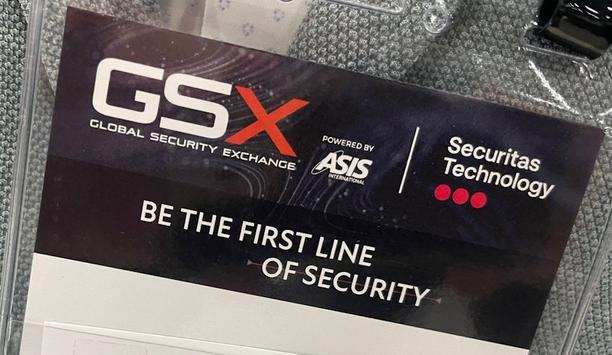
There was high-level energy at GSX 2025, befitting an industry undergoing massive change. Artificial intelligence (AI) was everywhere, but not so much in the booth signage. Rather, AI has made its way beyond marketing claims and solidly into the core of the products themselves. There were hundreds of examples of how AI is changing how security systems operate, all for the better. Clearly on display at GSX 2025 was an industry in the midst of metamorphosis. Deep integration of AI My conversations with companies across the security ecosystem revealed an industry heavily focused on leveraging advanced technologies like AI and the cloud to address increasingly complex global and localised threats. Several key themes emerged at the Global Security Exchange (GSX), sponsored by ASIS International, held Sept. 29–Oct. 1 at the Ernest N. Morial Convention Centre in New Orleans, La. Themes I heard repeated throughout the show floor included deep integration of AI, the ongoing shift toward cloud-based and hybrid architectures, and a sharp focus on modernising security systems to meet current challenges. AI and intelligent automation transform security The use of GenAI is moving beyond simple search functions into real-time decision support Companies are integrating AI and intelligent technologies to enhance analytics, streamline incident response, and improve internal efficiency. The use of Generative AI (GenAI) is moving beyond simple search functions into real-time decision support. For example, Bosch Video Systems introduced a "second tier" to its video analytics capabilities by combining highly sensitive edge detection with GenAI models in the cloud. For example, in visual gun detection, edge analytics might flag a potential gun (yellow), but the cloud-based GenAI then quickly reviews and confirms the threat (red), helping to filter out false alarms. Bosch is also using GenAI for more open-ended searches, such as a "Where's Waldo" application demonstrated at their booth. GenAI-powered system Eagle Eye Networks says they are focused on helping integrators "organise the AI chaos” through their cloud-based video platform. Their precision person and vehicle detection capabilities work across multiple cameras. Motorola Solutions introduced Inform, an AI-assisted incident response solution designed to bring clarity to the "noise" and help security teams respond to complex threats. They also offer Avigilon Visual Alerts, an on-prem GenAI-powered system that expands the natural language interface. AI internally to improve processes The Body Workforce Mini protects frontline workers and businesses "amid rising violence and theft." The Axon Body Workforce Mini, a small “computer with a lens” for non-police applications, is AI-capable and can perform real-time translations, automated report writing, and summarisation, and can even act as a personal assistant by incorporating company policies. All those functions are built into a lightweight body-worn camera designed to safeguard frontline workers in retail and healthcare verticals. The Body Workforce Mini protects frontline workers and businesses "amid rising violence and theft." Beyond products, integration company Everon is using AI internally to improve processes, such as handling commoditised tasks, which they expect will result in better customer satisfaction. Everon wants to be known as a premier service provider and will be introducing new services in the video realm. AI-powered search and continuous system upgrades Genetec prefers the term Intelligent Automation (IA), instead of AI, to describe its empathetic interface, which can "know" what additional information a security professional needs when they click on an image, for example. Genetec says the advantages of the cloud include AI-powered search and continuous system upgrades. Their Security Centre SaaS has had a fast and successful launch. It enables cloud-based systems with local storage. Genetec also highlighted the Cloudlink 210, a cloud-managed appliance designed to unify physical security operations that can be simply plugged in without involving IT staff. They call it a “headless appliance.” Cloud migration and the push for hybrid systems Hanwha debuted OnCAFE (Cloud Access for Everyone), a new cloud-based access control product The industry continues its strategic march toward the cloud, often through hybrid applications that blend on-prem strength with cloud flexibility. Acre's access control is described as "cloud-first technology," and they continue to focus on cloud solutions, incorporating AI. To help customers transition, they offer the "Bridge," a migration tool that allows systems to communicate throughout the move. At the same time, they are continuing to develop and enhance their core on-prem products – DNA Fusion and AccessIt!. Adding access control to supplement their video product line, Hanwha debuted OnCAFE (Cloud Access for Everyone), a new cloud-based access control product. The goal is to provide “access control that is easy;” It works alongside their OnCloud direct-to-cloud VMS as a Service platform. Future of video management The future of video management is increasingly hybrid. Milestone recently completed a three-year process of updating XProtect and building for the future of hybrid applications. At GSX, they showcased how their XProtect Evidence Manager seeks to "democratise evidence management" by collecting video, cell phone data, notes, and other metadata related to a case for easy sharing and prosecution. Also, Milestone’s “app centre” enables additional features to enhance XProtect without involving integration. Milestone is also focusing on "Metadata Ingest," which collects and aggregates data from various manufacturers (including Genetec, Motorola, and Exacq) for use by AI. Strategic modernisation and open integration Convergint and Genetec collaborated on a "2026 Technology Modernisation Outlook" white paper A key theme for the future is the shift toward open systems and strategic modernisation, enabling security professionals to better utilise new technology. Convergint and Genetec collaborated on a "2026 Technology Modernisation Outlook" white paper, arguing that dealers and end-users need to think more strategically when buying technology. They predict that "2026 will be the year of modernisation," with tangible results including unified intelligence, flexible deployment, and lower total cost of ownership. The call for open standards and architecture was also strong. What AI needs from open systems Johnson Controls noted that cloud, AI, and open standards are its three big focus areas. Their C-CURE IQ 3.10 is gaining adoption as it unifies access and video. OpenEye is seeking to address the "AI disruption anxiety" in the industry, focusing on what AI needs from open systems. The emphasis is on the value of a Model Context Protocol (MCP), an open standard and framework to enable AI systems to integrate and share data with external tools and sources. Addressing shifting global and local threats Allied Universal's "World Security Report 2025" highlights a risen focus on executive protection Companies unveiled solutions targeted at new security concerns, particularly the rising threat of violence, theft, and misinformation. Allied Universal's "World Security Report 2025" highlights an increased focus on executive protection and cites the rise of misinformation and disinformation as the number two threat. They noted that macro trends around instability and the political and social environment are driving security threats globally. To combat physical threats, Shooter Detection Systems introduced a new outdoor sensor, which is now generally available after a favourable feedback period that included an apprehension in one municipality. The company notes the unique challenge of developing technology for a "non-cooperative" threat like a person with a gun, in contrast to most security technologies that are "cooperative" and depend on user compliance. Implementation of integrated security Flock Safety is expanding its focus beyond licence plate readers into solutions for retail, with a new initiative to automate and streamline investigative processes, which are often manual. The company also showcased "drones as automated security guards," which can be deployed within 90 seconds to provide "eyes" on a site and enhance safety. The system works on its own network and is firewalled away from the city system A tour of the City of New Orleans' Real Time Crime Centre (RTCC), hosted by Axis Communications, demonstrated a mature implementation of integrated security. The RTCC uses Axis cameras, Genetec VMS, and is tied to a Motorola Solutions Command Centre to enhance efficiency and effectiveness, operating independently of the police department. They measure success in terms of valuable hours saved in an investigation or even when an event is happening. The system works on its own network and is firewalled away from the city system. Rapidly changing industry on display The GSX 2025 highlights an industry that is moving toward more intelligent and integrated solutions. The investment in AI is shifting security from reactive monitoring to proactive, automated assistance. Throughout the show floor, the continued embrace of hybrid cloud architectures, coupled with an emphasis on open standards and modernisation roadmaps, suggests a security ecosystem built for agility and future growth. These trends, and the GSX show itself, collectively underscore the industry's commitment to delivering scalable, next-generation solutions for a changing threat landscape.

The speed, scale and sophistication of today's safety threats can outpace human capacity to keep up. The implementation of artificial intelligence (AI) is essential to keep people safer and must be designed and deployed transparently. The complexity of today’s AI applications is expanding in physical security, with more AI models leveraging data to tune performance and using third-party application programming interfaces (APIs). In this context, it can be difficult to find clear, consolidated, transparent information about AI’s use in enterprise security technologies. How AI is used across the company’s technologies Motorola Solutions is taking a layered approach to help users easily understand how AI is used Motorola Solutions is taking a layered approach to help users easily understand how AI is used across the company’s technologies, starting at a high level with AI labels affixed to products, and getting more granular with structured information about AI testing, assessments and more. “We are aiming to provide clarity to the user and those they help protect to increase trust and transparency in AI innovation,” says Hamish Dobson, Corporate Vice President, Avigilon and Pelco Products, Motorola Solutions. Importance of AI transparency The AI labels, which have been compared to nutrition labels used on consumer products, are designed to be clear and easy-to-read at a glance. Each label explains the type of AI used, who owns the data processed, human controls, and the purpose behind the product’s specific application of AI. AI labels are comparable to nutrition labels used on consumer products. “We regularly seek input from external stakeholders – including customers, partners, consultants, investors, policymakers, and community members – on many aspects of our business,” says Dobson. “We briefed select customers and industry groups on our AI labels initiative and received positive feedback.” He continues: “Like us, customers and industry groups understand the importance of AI transparency and are looking for ways to clarify AI usage in public safety and enterprise security.” AI transparency efforts AI transparency efforts have taken on a variety of forms such as model cards, transparency notes Across industry, AI transparency efforts have taken on a variety of forms such as model cards, transparency notes and, in Motorola’s case, AI labels. The company pledges to continue to engage with industry participants on efforts to advance the overall pace, adoption, and maturity of responsible innovation initiatives across the industry, says Dobson. The AI labels help to increase dialogue and understanding of AI’s use in the security technologies that help to keep people safer. Motorola Solutions is looking to inform customers about how AI is being used to automate mundane tasks and prioritise information that may be critical to performing their roles. Motorola’s L6Q licence plate recognition For example, a business using Motorola’s L6Q licence plate recognition camera in its parking lot could view the AI label and see that AI is used to help recognise licence plate characteristics of vehicles within its view. The label would also help the customer understand that they maintain ownership and control of the data AI can process and can determine the data retention period. The label would also help the customer understand that they maintain ownership. What type of AI is being used AI outputs should have human oversight, and a user should understand the sources of data “By providing knowledge of where and what type of AI is being used, our customers can better understand what they are deploying, configure settings appropriately and inform their constituents,” says Dobson. AI-assisted experiences should be designed to be accountable and transparent, according to Motorola Solutions. AI outputs should have human oversight, and a user should understand the sources of data from which suggestions were drawn. AI labels highlight that the data AI can access is customer-owned and controlled, helping to increase confidence that AI outputs are based on that customer's specific data. Responsible and ethical use of technologies The AI label’s “first or third party model” section explains the source of the AI model. A first-party model is developed in-house by Motorola Solutions. A third-party model is developed outside of Motorola Solutions and made available by a third-party vendor; however, it may be customised by Motorola Solutions. MTAC is a multidisciplinary group that advises the company on the reliable and ethical use of technologies “This section aims to foster dialogue with our customers around Motorola Solutions’ role in testing, training, and refining the AI model or models used in our products,” says Dobson. Helping to propel the AI Label initiative, the Motorola Solutions Technology Advisory Committee (MTAC) is a multidisciplinary group that advises the company on the responsible and ethical use of technologies, including data and AI. Industry trends in technology’s responsible design MTAC continuously explores new ways to enhance trust with customers and the communities they serve, while helping to keep Motorola Solutions a step ahead of industry trends in technology’s responsible design, development, and use, according to the company. The MTAC “Blueprint” sets out the core principles that drive the approach. “We’re excited by the opportunity to continue to lead in this area through additional innovation, thought leadership, and stakeholder engagement,” says Dobson. Human-centered design New capabilities specifically augment human skills and capacity with the goal of helping humans Rather than replacing human decision-making, AI technologies will, in fact, augment it. Human-centered design is a core principle of the responsible technology “Blueprint” Motorola Solutions is developing. New capabilities specifically augment human skills and capacity with the goal of helping humans spend time on what matters most during a safety or security incident, applying their unique judgement, knowledge, and oversight in high-stakes environments. AI’s recommendations “We purposefully deploy AI to augment human focus, effort and performance,” says Dobson. “We design AI to maximise human strengths like judgement and reasoning and to adapt to changing roles, tasks, risk levels, and cognitive states while keeping AI outputs traceable and transparent, whereby the user can easily see, check and override AI’s recommendations.”

Technology's role in securing banks and financial institutions
Download
Security technologies promote real-time awareness in K-12 schools
Download
Integrated systems enable critical and compliant security for transportation
Download
Modernising physical access control
Download
Access. Intrusion. One estate.
Download
