Hexagon - Experts & Thought Leaders







Latest Hexagon news & announcements

Hexagon AB has announced the appointment of the board of directors of its potential spin-off company, Octave Intelligence plc. The Octave Board brings together senior leaders with experience building and operating global technology platforms, scaling enterprise software businesses, strengthening operational resilience, and governing public companies across industrial and digital markets: Leaders and their roles Brett D. Watson, Chair of the Board of Directors is President of Koch Equity, LLC, overseeing several Koch-affiliated investment groups and their diverse global portfolios. Mr. Watson is also an officer of Koch, Inc., where he serves as Vice President, Equity Development with responsibility for corporate development and M&A activity across the firm. Mr. Watson brings extensive experience in capital allocation, business scaling, and board leadership. He currently serves on the boards of Getty Images, Infor, MITER Brands, Molex, and Transaction Network Services. Mr. Watson previously served on the board of Hexagon AB from 2021 until 2024. Magnus Ahlqvist, Director has served as President and Chief Executive Officer of Securitas AB since 2018, leading significant transformations across the company’s global service operations. Mr. Ahlqvist brings deep international operating experience from prior senior leadership roles at Motorola Mobility, Sony and Ericsson, as well as extensive expertise in global business management. He is also chairman at the International Security Ligue. David J. Hollister, Director is a seasoned financial executive with extensive experience in financial management, operations, and investment oversight. He previously served in senior leadership roles at Bentley Systems, including Chief Financial Officer, Chief Operations Advancement Officer and Chief Investment Officer, and currently serves on the board of iDEAL Semiconductor and the advisory board for InEight Software. Mr. Hollister is a Certified Public Accountant. Meerah Rajavel, Director is Chief Information Officer of Palo Alto Networks and a recognised leader in cybersecurity, information technology, and digital transformation. Ms. Rajavel brings extensive operating and governance experience from prior chief information officer roles and public company board service, including service on audit and compensation committees. Jill D. Smith, Director is a seasoned leader with over 30 years of experience leading and governing global technology and data-driven companies, including having previously served as Chair of the board of AspenTech. Ms. Smith is a former chief executive officer and currently serves on the boards of Securitas AB, Evolent Health, Check Point Software, and MDA Space. She was previously a board member of Hexagon AB from 2013 until 2017. Mattias Stenberg, Director is Chief Executive Officer of Octave and was previously President of Hexagon’s Asset Lifecycle Intelligence and Safety, Infrastructure & Geospatial divisions. Mr. Stenberg held leadership roles in strategy, M&A, and corporate development at Hexagon AB and currently serves as a board member at Sinch AB. All of the above members of the Octave Board, other than Mr. Stenberg, are expected to be considered independent under the listing rules of the Nasdaq Global Select Market and Nasdaq OMX Stockholm. Delivering long-term value "Octave is entering the market with a Board that reflects the scale, responsibility, and operational rigor required to support customers running mission critical assets," said Brett Watson, Chair of the Board, Octave. "This group brings real operating experience across industrial markets and software platforms, along with disciplined capital allocation and governance. We share the goal of building a resilient, independent company dedicated to delivering durable, long-term value creation.” "It is a privilege to work with a Board of this caliber," said Mattias Stenberg, Chief Executive Officer and director of Octave. "Their depth of experience raises the bar on how we operate and ultimately makes us better partners to the customers who depend on our platforms every day." Suppoting Octave's strategy The Board will support Octave’s strategy to deliver solutions that give asset owners and operators the intelligence and insight to improve safety, uptime, sustainability, and long-term performance across energy, infrastructure, manufacturing, utilities, and public sector markets. The separation, spin-off and listing remain subject to this ongoing process and final approval of the Hexagon board and shareholders, as well as being subject to other conditions, consents and regulatory approvals. There can be no assurance that a separation, spin-off or listing will occur.
Octave, the potential software spin-off from Hexagon AB, unveiled its new brand identity, marking a major step toward its transition into an independent company. Comprised of Hexagon’s Asset Lifecycle Intelligence and Safety, Infrastructure & Geospatial divisions, alongside the Bricsys, ETQ and Projectmates businesses, Octave’s brand signals a clear vision of purpose and mission to unleash intelligence at scale. New brand The new brand unifies a market-leading portfolio that solves and simplifies complexity across the entire lifecycle, from design and build to the operation and protection of people, property, and assets. “Octave exists to help customers make better decisions when complexity is high and the stakes matter,” said Mattias Stenberg, chief executive officer of Octave. “We aren't just launching a logo; this is a commitment to help organisations achieve the outcomes that matter most. When failure isn’t an option and success is essential, Octave provides the clarity and accountability leaders need to realise their most critical outcomes." Challenges accomplished Industrial and infrastructure organisations are facing escalating complexity and uncertainty across their operations. Current leaders face a world of operational chaos, fragmented systems and data they can’t trust. Octave meets these challenges by transforming fragmented data into decisive action, helping leaders cut through the noise and turn unpredictability into a competitive edge. The Octave portfolio is powered by domain-specific artificial intelligence that helps organisations achieve crucial outcomes across the lifecycle that were previously difficult to address. Four core pillars By connecting the flow of data into one contextualised platform and leveraging domain specific artificial intelligence, Octave solutions provide the intelligence required to optimise performance across four core pillars: Design: Supports 3D modeling, engineering analysis, simulation and geospatial intelligence. Allows teams to create information-rich digital representations that serve as the basis for downstream activities. Build: Connects engineering, procurement, fabrication, construction, and commissioning workflows. Octave solutions coordinate materials, track progress, manage changes and improve cost and schedule predictability. Operate: Unifies operational data, historical information, maintenance activities, quality systems and worker tools. This enables real-time insight, predictive intelligence, and improved asset and system performance. Protect: Elevates public safety, physical security and industrial cybersecurity. This includes incident response, emergency management, situational awareness, digital security and regulatory compliance. As part of Octave’s new brand, the company also launched its new website and a social media presence to bring to life how Octave supports critical assets and people across the globe. The spin-off of Octave remains subject to an ongoing separation process and final approval of the board and shareholders, as well as other conditions, consents and regulatory approvals. There can be no assurances a separation, spin-off or listing will occur.

2026 is set to be a banner year for sporting events around the globe. From the winter games to the world’s premier soccer tournament happening this summer, host cities will be under tremendous pressure to keep residents and visitors safe. When athletes take to the field or hit the slopes, it always marks the culmination of years of planning and preparation — not only for the competitors, but also for the teams responsible for their safety and security. In many ways, both groups share similar goals: using the latest tools, technology and training to reduce friction, sharpen reactions, make split‑second decisions and quickly adapt to changing conditions. An integrated ecosystem Rising to these challenges is something that Hexagon knows well, having supported customers in multiple host cities, including Paris, London, Rio de Janeiro, Vancouver, Turin and others, going as far back as Calgary in 1986. Ensuring the safety of participants and spectators is always a top priority. Achieving it requires building and managing a tightly integrated ecosystem that reaches far beyond the slopes or stadiums. When a city is awarded host status for a major sporting event, it typically triggers massive investment in new venues, public areas, accommodations, commercial developments and transport links — designed both to showcase the nation globally and to create a lasting legacy. In parallel, security specialists and public safety organisations collaborate to mitigate risks and coordinate fast, effective responses to emerging situations. Security systems Video technology has long been a cornerstone of these efforts. Over the decades, we’ve seen the evolution from analogue to IP cameras, and more recently, the adoption of body‑worn video, facial recognition and drones. Scale continues to increase as well; for example, Mexico City has reportedly deployed 40,000 additional cameras in preparation for upcoming soccer events. Alongside video are numerous other mission‑critical systems — access control, perimeter protection (from traditional fencing to advanced LiDAR), public address systems, alarms and sensors. Video management system To illustrate how these elements come together, one of the customers in a host city implemented a comprehensive safe‑city solution to merge disparate data sources into a single operational picture. Multiple systems — including video, audio, radio, geolocation data and web inputs — were integrated into a common framework. Thousands of cameras fed a central video management system that connected to an integrated command and control centre. Operators used 40 desktop workstations and a PSIM interface, developed in collaboration with local law enforcement, to coordinate operations using automated response plans and adaptive workflows. This system enabled authorities to automatically detect overcrowding, loitering, unattended baggage and perimeter intrusions. It also protected critical infrastructure and supported traffic monitoring, congestion management and the detection of illegal parking. Ease of management and safety Such integration is essential for events with tight schedules and large, continuous flows of people. A single train incident, road closure or protest could delay thousands and result in empty venues — an unwelcome scenario when the world is watching. A unified, real‑time view allows teams to confidently coordinate responses ranging from traffic redirection to full stadium evacuations. Technology installed for safety can also support competition operations, especially in events spanning large areas such as skiathlons, marathons, triathlons or motorsports. One iconic French racetrack, for example, uses its VMS year‑round for security but also supplies race marshals with live and recorded visuals via a six‑screen view wall during events. This enhances on‑track decision‑making and maximises the value of the technology investment. Evaluating security measures Few cities host the world’s largest sporting events, but many face similar challenges — seasonal tourism, game days, festivals and major public celebrations. They must also adapt to shifting geopolitical realities, evolving threats and rising expectations for public safety. Every city should continually evaluate how it can better prepare for adversity and create safer, more secure environments for its people, places and infrastructure.
Insights & Opinions from thought leaders at Hexagon

It is the time of year when city centres transform, as outdoor Christmas markets fill town squares and high streets. An estimated 6,000 markets will open across Europe during the festive season, with some of the largest — including Nuremberg’s Christkindlesmarkt, London’s Hyde Park Winter Wonderland and Craiova in Romania — welcoming millions of visitors. Sadly, these popular events have in recent years been the subject of attacks, most notably Berlin in 2016 and the tragedy in Magdeburg last December, where a vehicle was driven into the crowd. Incidents such as these have encouraged governments, including the UK with the introduction of Martyn’s Law, to strengthen planning and preparation for large-scale public events. Digital twins: A new standard for event preparation Drone-based photogrammetry captures streets, squares and surrounding buildings with exceptional detail One of the most effective tools for preparing and safeguarding public spaces today is the creation of a photorealistic digital twin — a highly accurate 3D virtual model of the intended market area. Drone-based photogrammetry captures streets, squares and surrounding buildings with exceptional detail, enabling planners to work within a realistic and immersive environment long before any physical structures are installed. Digital twin design tools can ingest these datasets and visualise them using advanced technologies, creating a lifelike representation of even the most complex outdoor scenes. Designing the market in 3D before construction begins Once the digital twin is created, event organisers, city authorities and security specialists can begin shaping the market virtually. Temporary stalls, lighting installations, stages, decorative structures, back-office units, Christmas trees, ice rinks and other festive features can be positioned directly within the digital model. It‘s also possible to place static representations of people or larger groups to approximate crowd density and understand how occupied space will influence visibility, accessibility and the overall perception of the environment. This ability to design and refine the market layout before construction allows planners to test multiple variations, understand how structures interact and ensure that the environment remains safe and manageable throughout the event. Virtual camera planning, coverage assessment and analysis Digital twins also provide a robust foundation for planning the deployment of visual-monitoring systems Digital twins also provide a robust foundation for planning the deployment of visual-monitoring systems. Cameras can be placed directly into the 3D environment, allowing planners to immediately see how temporary structures, decorations or pedestrian flows will influence the field of view. Blind spots become apparent, alternative camera heights or angles can be explored and strategic decisions about additional mounting points or temporary towers can be made with confidence. For each planned camera, the expected resolution per metre or per foot is visualised directly inside the digital twin. Instead of relying on theoretical charts or static design tables, planners can instantly see whether a particular camera position will deliver the clarity required for the intended purpose, whether it is early detection of movement, recognition of behaviour patterns or full identification of individuals. Real-time visual feedback This real-time visual feedback makes the entire planning process more precise, transparent and efficient. These evaluations can be carried out within the realistic daytime environment captured by the digital twin. Planners can also prepare alternative scene variants — for example, dedicated night-time versions or layouts reflecting festive lighting — to understand how visibility and coverage may change throughout the event. Even without full weather simulation, this approach allows teams to anticipate typical operational challenges and refine the monitoring concept well before the first stall is erected. Testing safety and security scenarios Perhaps the greatest advantage of working with a digital twin is the ability to explore the environment from multiple perspectives before the event begins. Although the scene itself is static, planners can move through it using a virtual intruder to understand how the market will appear from ground level and to identify potential vulnerabilities that may not be obvious from a top-down view. This makes it possible to assess where hostile-vehicle barriers should be positioned, how narrow passages might feel when occupied, or where visibility may be reduced due to temporary structures or decorations. The static digital twin also provides a clear way to evaluate emergency access lanes, determine suitable locations for help points or medical posts and plan the general layout of security patrol routes. By navigating the scene freely and observing it from different perspectives, teams can refine the design and address potential blind spots long before construction begins. A unified environment with LiDAR The created digital twin also becomes the primary visualisation environment for LiDAR during live operations Beyond planning, the created digital twin also becomes the primary visualisation environment for LiDAR during live operations. Operators can interact with this 3D map directly and with a single click on any location, all PTZ cameras capable of viewing that point automatically reposition to it. This provides an unmatched navigation interface for real-time camera control, making situational awareness significantly faster and more intuitive. LiDAR then works seamlessly with a video management system, which controls all camera streams, recordings and video evidence, creating a tightly integrated monitoring workflow. Supporting real-world operations Once the market opens, the digital twin continues to serve as a valuable operational resource. If layouts change during the event — for example, because of additional attractions, adjusted walkways or altered security checkpoints — these modifications can be quickly modelled and evaluated before implementation. When the festive season concludes, the same model can be repurposed for future events, long-term city planning or other public-space deployments. A safer and smarter festive season Christmas markets are vibrant, high-profile and densely populated environments, making them attractive targets for those seeking to cause disruption. By combining detailed photogrammetry, advanced 3D visualisation, and rigorous spatial evaluation, cities can create safer, better-prepared, and more resilient festive settings. With tools such as digital twins and LiDAR, authorities can plan more effectively, anticipate risks earlier and ensure that every stall, pathway and vantage point contributes to a joyful — and secure — holiday season.
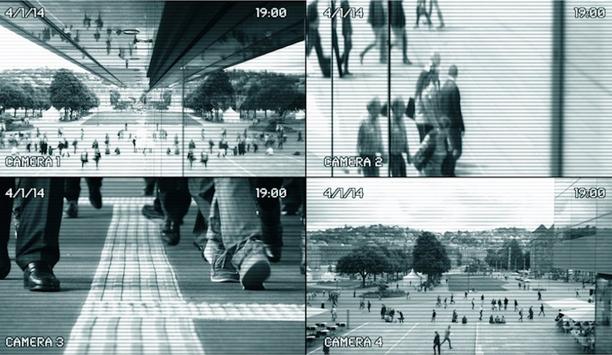
The terrorism threat in the UK is very real. In fact, since July 2019, the threat level has never dropped lower than “substantial” or “severe.” To ensure preparedness across public places and events, the UK government has introduced the new Terrorism (Protection of Premises) Act 2025, more commonly known as Martyn’s Law in memory of Martyn Hett, a victim of the 2017 Manchester Arena bombing. Overarching aim The new legislation requires operators of public spaces and events to immediately assess and improve their readiness to respond to a terrorist attack. The overarching aim: being better prepared, protected and ready to respond should an attack occur. Everything from busy shopping centres to large stadiums must comply with Martyn’s Law by April 2027, and the Security Industry Authority (SIA) is charged with enforcing the rules. Upgraded security systems The smaller venues and events are only required to enforce low-cost solutions with no physical measures There are different rules depending on the capacity of public premises or the event, ranging from a standard-duty premises (200 – 799 people, including staff) to an enhanced-duty premise (over 800). The smaller venues and events are only required to implement low-cost solutions with no physical measures. Enhanced environments, however, must provide monitoring in and around the facility and document public protection measures. Many organisations will likely invest in upgraded security systems. However, effective responses depend not only on hardware but also on situational awareness and training, helping staff identify potential threats and respond effectively under pressure. Physical security information management systems Terror-related attacks are rare and unpredictable, and the most experienced personnel are not always on shift when something does occur. Even if they are, the most seasoned security professionals can’t ensure every decision they make is the right one. One solution gaining attention is physical security information management (PSIM) systems, which integrate siloed security tools — such as CCTV, access control and fire sensors — into a unified platform. PSIMs enable rapid information processing, automated workflows and coordinated responses to incidents, whether routine or critical. Use PSIMs to handle emergencies PSIM systems have been around for many years and have been embraced by large airports and mass transit organisations PSIM systems have been around for many years and have been embraced by large airports, mass transit organisations and critical infrastructure companies. However, these systems are ideally suited to any larger scale environment, such as those classified as an enhanced-duty premise by Martyn’s Law. For example, airports use PSIMs to handle emergencies, locate missing persons or assess potential threats like unattended luggage. Similarly, PSIMs can improve situational awareness for stadiums, shopping centres and event venues, aiding crowd management, emergency evacuations and collaboration with police or emergency services. External stakeholder intervention Should an incident require external stakeholder intervention, the PSIM becomes a mission-critical collaboration tool, enabling real-time information (including video footage) to be shared with decision-makers, emergency control rooms and first responders en route to the scene. This ensures they arrive with the appropriate resources and can deploy faster to the right places. PSIM systems also facilitate post-incident analysis, helping organisations improve protocols, demonstrate compliance and fulfil their duty of care. Impacted by terror-related tragedies Martyn’s Law aims to eliminate the complacent mindset of “it won’t happen here” when assessing the risks associated with public gatherings. Communities impacted by terror-related tragedies serve as a stark reminder that such incidents can and do occur. Within the security sector, it is crucial to promote discussions on how new approaches, technologies, and training can enhance preparedness. Equally important is the responsibility to raise awareness about Martyn’s Law and its role in fostering safer public spaces.
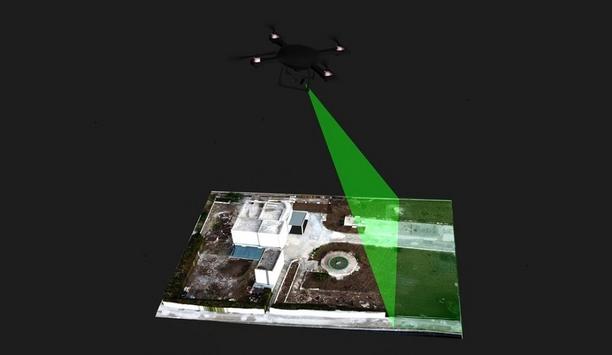
Seven minutes. That’s how long the recent Louvre heist took. In broad daylight, a group of thieves rode up on a construction platform, smashed display cases, stole several historical jewels tied to the Napoleonic dynasty and escaped on scooters before anyone in the control room even realised what was happening. It sounds like a scene straight out of “Mission: Impossible.” Only this time, Tom Cruise wasn’t there. In movies, we often see tight webs of red laser beams guarding treasures, with the hero gracefully sliding between them. Reality, however, is far less cinematic. Most museums still rely on mechanical sensors, simple infrared barriers, cameras and the most fallible component of all: the human eye. But the human eye doesn’t measure space. A camera records an image, but it doesn’t know that a display case has shifted by three centimetres, or that a visitor’s hand just crossed an invisible boundary. That’s where a new kind of perception comes in — LiDAR. From Hollywood fantasy to real-world security Forget the tangled maze of laser beams you’ve seen in films. A modern 128-channel rotating LiDAR fires hundreds of thousands of laser pulses per rotation — and it does this up to 10 times per second. That’s millions of spatial measurements every second, creating an invisible web of light that maps the scene in 3D, without anyone ever noticing. What LiDAR builds is called a point cloud — a live three-dimensional model of the environment. The system constantly compares this “snapshot” with the current scene. If anything changes — a hand moves closer to an artefact, a case is displaced or an object disappears — LiDAR detects it instantly. When technology sees in 3D Pan-tilt-zoom (PTZ) cameras automatically turn to the exact spot and start recording LiDAR technology (such as LidarVision, developed by Hexagon), brings true 3D situational awareness into museums and galleries. It doesn’t just see that someone is moving; it knows where, how fast and in what trajectory. Each detected object is tracked with its precise dimensions, velocity and spatial position. If a visitor steps too close to a protected exhibit, the system triggers an alarm. Pan-tilt-zoom (PTZ) cameras automatically turn to the exact spot and start recording. The operator no longer has to stare at dozens of screens, hoping to catch the right moment. LiDAR data also serves as forensic evidence — allowing investigators to replay the incident as a full 3D reconstruction. They can see exactly how intruders moved, from entry to exit, with centimeter precision. Beyond thieves: Everyday situational awareness LiDAR isn’t just a tool against master criminals. It helps with daily operations, too — recognising when someone lingers suspiciously near a sensitive exhibit, when an unauthorised object enters the room or even when a visitor collapses. The system can trigger a silent alert, notify security staff or automatically redirect nearby cameras. History that never comes back 13 paintings worth more than half a billion dollars vanished from Boston’s Isabella Stewart Gardner Museum Art theft is not a cinematic rarity — it’s a recurring tragedy. In 1990, 13 paintings worth more than half a billion dollars vanished from Boston’s Isabella Stewart Gardner Museum. None have ever been recovered. Even Leonardo da Vinci’s Mona Lisa was stolen from the Louvre in 1911 — though it was miraculously found two years later. That case, however, remains the exception. Thieves often fail to realise that cultural artefacts are not commodities. When they melt them down for gold or strip them for gems, they don’t just destroy value — they erase history. Spatial understanding is the future of security No security system is flawless. But while cameras merely watch, LiDAR understands space. From a single compact device, it monitors the 3D environment in real time, detects anomalies and reacts immediately. Modern security is no longer about higher fences or better cameras. It’s about spatial understanding — knowing what is happening in the room right now. And that’s something even Tom Cruise wouldn’t be able to slip through.

Technology's role in securing banks and financial institutions
Download
Security technologies promote real-time awareness in K-12 schools
Download
Integrated systems enable critical and compliant security for transportation
Download
Modernising physical access control
Download
Access. Intrusion. One estate.
Download
