Google Cloud - Experts & Thought Leaders










Latest Google Cloud news & announcements

Thales announces an expanded collaboration with Google Cloud to help enterprises address emerging security and governance challenges associated with agentic AI, bringing integrated protection, visibility, and policy enforcement to AI-driven workflows on Google Cloud. The integration of Thales AI Security Fabric with Google Cloud Gemini Enterprise helps organisations apply security, governance, and visibility across interactions among users, agents, models, and tools in real time. Next generation of enterprise AI “Enterprises are moving from AI assistants to AI agents that can autonomously take action, make decisions, and interact with critical business systems. This requires a fundamentally different approach to security,” Eva Rudin, Senior Vice President, Cybersecurity Products, at Thales, said. “By expanding our collaboration with Google Cloud, we are helping organisations build the necessary trust with security and governance as the foundation required for the next generation of enterprise AI.” As enterprises move beyond AI experimentation and begin deploying autonomous agents at scale, traditional security approaches are struggling to keep pace. Unlike conventional applications that operate within predefined workflows, AI agents can reason, plan, decide and act with other agents dynamically, creating new attack surfaces and governance challenges. Agentic AI lifecycle According to industry analysts, securing agentic AI has emerged as one of the most pressing challenges facing enterprise AI adoption, as organisations seek to balance innovation with security, compliance, and trust. The expanded collaboration between Thales and Google Cloud is designed to help organisations address emerging risks across the agentic AI lifecycle, including prompt injection, sensitive data leakage, unsafe outputs, unauthorised actions, and increasingly complex agent-to-agent interactions. Sensitive business systems As enterprises connect AI agents to sensitive business systems and critical data, they create a broader and more dynamic attack surface than traditional security architectures were designed to manage. For example, AI agents tasked with settling insurance claims could exceed their mandate by using personal information from outside approved sources to influence payouts, creating privacy and compliance risks. Thales AI Security Fabric applies controls around agents to keep them within authorised boundaries, limit data access, and block inappropriate actions in real time. This unified security layer provided by Thales AI Security Fabric works across interactions to help organisations enforce policy, detect AI-specific threats, maintain visibility into agent behaviour, and support governance requirements. With this foundation in place, organisations can deploy AI agents to execute legitimate business workflows while mitigating the risks associated with an expanding attack surface. AI-related risks “Google Cloud helps enterprises move from experimenting with AI agents to deploying them securely across their businesses,” Vineet Bhan, Director of Security and Identity Partnerships, Google Cloud, said. “As agents become more capable and connected to critical data and systems, customers need security and governance built into how they operate. Our work with Thales gives organisations additional capabilities to protect agentic AI workflows and adopt this next generation of AI with greater confidence.” Thales AI Security Fabric helps organisations securely scale AI by providing visibility and control over how AI systems and agents access data, interact with one another, and take action across the enterprise. It enables businesses to discover and assess AI-related risks, protect sensitive information, help prevent unauthorised or unsafe actions, and ensure AI activity aligns with organisational policies and user intent. Centralised governance and compliance capabilities also give security and business leaders greater confidence to expand the use of AI while maintaining appropriate oversight.

Google Cloud announced a significant, multi-million-dollar contract with the NATO Communication and Information Agency (NCIA) to deliver highly secure, sovereign cloud capabilities. This strategic partnership is a major step in bolstering NATO's digital infrastructure, strengthening its data governance, and enabling it to securely leverage cutting-edge cloud and AI capabilities. NCIA selected Google Distributed Cloud (GDC) to support the Joint Analysis, Training and Education Centre (JATEC). JATEC will leverage this infrastructure to modernise its operational capabilities and handle classified workloads. Cloud services and cutting-edge AI capabilities GDC air-gapped, a key component of Google's Sovereign Cloud solutions, brings Google's powerful cloud services and cutting-edge AI capabilities into completely disconnected, highly secure environments. This empowers organisations to run modern AI and analytics workloads on their most important data, unlocking valuable insights while maintaining absolute operational control and meeting the strictest digital sovereignty requirements. Leveraging this technology ensures that NATO maintains uncompromised data residency and operational controls, providing the highest degree of security and autonomy, regardless of scale or complexity. This contract underscores Google Cloud's dedication to supporting partners who protect and empower the most valuable data across NATO's allies. Robust and resilient infrastructure "Google Cloud is dedicated to supporting NATO's critical mission to develop a robust and resilient infrastructure and harness the latest technology innovations," said Tara Brady, President of Google Cloud EMEA, adding "This partnership will enable NATO to decisively accelerate its digital modernisation efforts while maintaining the highest levels of security and digital sovereignty." "NCIA is committed to leveraging next-generation technology, including AI, to enhance NATO’s operational capabilities and safeguard the Alliance’s digital environment," said Antonio Calderon, Chief Technology Officer, NCIA, adding "Partnership with industry is a critical component of our digital transformation strategy. Through this collaboration, we will deliver a secure, resilient and scalable cloud environment for JATEC that meets the highest standards required to protect highly sensitive data.”

OpenText, a global pioneer in secure information management for AI, announced an expanded partnership with Google Cloud to deliver transformative solutions across artificial intelligence (AI), data privacy, and sovereign cloud infrastructure. The collaboration combines OpenText’s enterprise information management expertise with Google Cloud’s AI and infrastructure technologies to help organisations solve complex business challenges with confidence and agility. Suite of intelligent agents OpenText will leverage Google’s Gemini models and Vertex AI to drive new AI use cases and deliver a suite of intelligent agents in Gemini Enterprise, empowering customers to tackle high-value business problems in industries such as insurance, financial services, and retail. With Gemini Enterprise, organisations will be able to use AI agents to automate claims processing, enhance fraud detection, drive data compliance, and streamline regulatory reporting—delivering measurable improvements in speed, accuracy, and operational efficiency. “Our partnership with Google Cloud is rooted in co-innovation,” said Sandy Ono, EVP & Chief Marketing Officer at OpenText. “Together we’re unlocking new possibilities for customers to apply AI in secure, scalable, and industry-specific ways that drive real business outcomes.” New data protection solution OpenText is also introducing a new data protection solution for the retail sector, which integrates OpenText’s Data Privacy and Protection (Voltage) platform with Google BigQuery. This joint offering delivers advanced encryption and data protection for sensitive data at rest, in transit, and as it feeds AI models—ensuring compliance with evolving privacy regulations. Growing importance of data sovereignty To meet the growing importance of data sovereignty, OpenText’s Private Cloud offerings now integrate with Google Cloud’s Sovereign Cloud solutions. This enables organisations in regulated industries to meet stringent compliance requirements while maintaining control over where and how their data is stored and processed. “OpenText’s commitment to sovereign cloud and sovereign AI is unwavering,” said Shannon Bell, EVP & Chief Digital Officer at OpenText. “Together with Google Cloud, we’re delivering secure, compliant environments that empower customers to innovate with AI on their terms.” “Google Cloud’s approach to digital sovereignty balances innovation with control, choice, and security,” said Sam Sebastian, Vice President, North America Regions, Google Cloud. “Through our partnership with OpenText, we’re empowering organisations to align their specific business needs, risk profiles, and regulatory requirements.” This partnership underscores OpenText and Google Cloud’s shared vision for trusted, secure, and scalable AI and cloud solutions that meet the needs of modern enterprises.
Insights & Opinions from thought leaders at Google Cloud
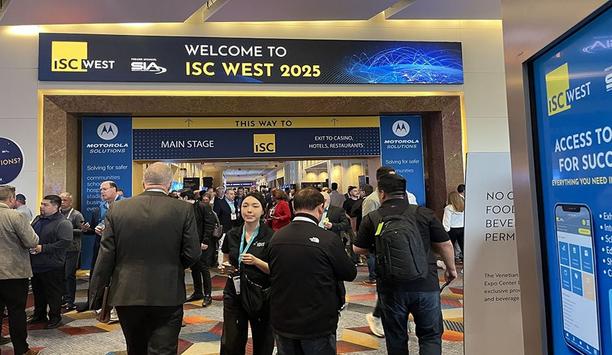
For all the emphasis on cloud systems and centralised servers at ISC West, a lot of innovation in security video systems is happening at the edge. New advancements inside video cameras are boosting capabilities at the edge, from advancements in processing power to artificial intelligence (AI) and machine learning (ML) algorithms that can now be deployed directly on the cameras or edge devices. Advancements in AI algorithms The progress of video systems becoming smarter at the edge is driven by the need for real-time insights, lower latency, bandwidth efficiency, enhanced privacy, and improved reliability. Advancements in edge computing hardware and AI algorithms are enabling a range of intelligent video applications across various industries, including physical security. Smarter functionality at the edge is a benefit of new computer systems-on-chips (SoCs) that are driving new heights of performance for today’s cameras. Axis Communications’ ARTPEC-9 Axis Communications’ new ARTPEC-9 SoC offers advanced video compression to reduce bandwidth Axis Communication’s new ARTPEC-9 system-on-chip (SoC) offers advanced video compression to reduce bandwidth and storage needs. With a low bitrate, the SoC helps deliver high-quality imaging with outstanding forensic detail. ARTPEC-9 also offers enhanced deep learning capabilities to allow users to leverage the latest video analytics and accelerate the implementation of AI technology. Axis maintains control over all aspects of the chip’s development to ensure high quality and cybersecurity. Among the benefits of ARTPEC-9 are better AI and deep learning, better image quality, better cybersecurity, and AV1 license-free video compression (see below). Hanwha Vision’s Wisenet 9 Hanwha Vision has launched Wisenet 9, its most advanced AI-powered System on Chip (SoC). Wisenet 9’s enhanced edge AI capabilities increase performance as the volume and complexity of security threats demand real-time, accurate analysis. By elevating edge-device performance, AI empowers systems to quickly analyse vast amounts of video data and discern crucial patterns and anomalies. A key differentiator driving Wisenet 9 is deployment of two Neural Processing Units (NPUs), which improve performance three-fold compared to Wisenet 7, the previous SoC generation. While one NPU handles image processing, the other focuses on object detection and advanced analytics. This dual NPU concept was introduced to ensure video quality and analytics have independent resources, thus preventing one function from impacting the performance of the other. The latest from Ambarella Ambarella is a supplier of edge AI systems-on-chips to multiple video camera manufacturers Off the ISC West trade show floor in a nearby meeting room, semiconductor company Ambarella demonstrated how it will continue to push the envelope of what is possible with generative AI at the edge. Ambarella is a supplier of edge AI systems-on-chips to multiple video camera manufacturers and recently achieved the milestone of 30 million cumulative units shipped. The demonstrations highlight Ambarella’s ability to enable scalable, high-performance reasoning and vision AI applications across its ultra-efficient, edge-inference CVflow 3.0 AI SoC portfolio. The company’s DeepSeek GenAI models run on three different price/performance levels of its SoC portfolio. In addition to advancements in GenAI processing at the edge, Ambarella integrates image processing, encoding and system-level functions into all its AI SoCs. New standard for video encoding: AV1 AV1 compression is a next-generation video coding technology that offers significant improvements in compression efficiency and video quality, especially at lower bitrates. Its royalty-free nature positions it as a crucial codec for the future of internet video. AV1 compression is a next-generation video coding technology. Axis Communication’s ARTPEC-9 chip now supports the AV1 video encoding standard. By embracing this standard, which is new to the physical security market although it was introduced in 2018, Axis sets the stage for AV1 compression to eventually become the industry standard, replacing H.264 and H.265. Network video transmission AV1 is an open-source, license-free coding format designed mainly for efficient network video transmission AV1 is an open-source, license-free coding format designed specifically for efficient network video transmission. It delivers high-quality video at low bitrates, reducing bandwidth consumption and storage costs. The codec was developed by the Alliance for Open Media (AOM), a nonprofit organisation founded in 2015 by Google, Intel, Amazon, Microsoft, Netflix, and Mozilla (among others), to provide open-standard, next-gen video coding technology. AV1 is ideal for cloud solutions—making streaming applications more robust, scalable, and capable of delivering real-time insights. Now the ARTPEC-9 chipset brings these benefits to the surveillance industry, and AV1 is currently supported by AXIS Camera Station. Providers of major video management solutions (VMS) such as Genetec and Milestone will be adding support for AV1, with further developments already underway. More intelligence at the edge Intelligence inside video cameras comes from the processing power and algorithms that enable them to perform tasks beyond simply capturing and recording images. This "intelligence" allows cameras to analyse the video stream in real-time, identify objects, detect events, and make decisions or provide alerts based on what they "see." New and improved SoCs are driving performance improvements at the edge. The increasing power of embedded processors and advancements in AI are continuously expanding the capabilities of intelligent video cameras.

In the competitive world of physical access control, Big Tech companies are seeking to play a larger role. Physical access competition Apple Wallet continues to stake its claim on mobile credentialing. Amazon One Enterprise is pushing a palm-based identity service. Google/Nest offers smart locks for home access control, with identity and access management provided in the Google Cloud. The entry of these big companies in the historically fragmented physical access control market is causing disruption and foreboding new levels of competition. Apple Wallet impacting credentialing trends The popularity of mobile wallets and contactless technologies in general has grown, creating more demand At Apple’s Worldwide Developer Conference in June 2021, the company announced support for home, office and hotel keys, including corporate badges and student ID cards, in Apple Wallet. Later, the company announced Hyatt as the first hotel partner to support the technology. Since then, the popularity of mobile wallets and contactless technologies in general has grown, creating more demand for a seamless solution such as Apple Wallet. Easy access In 2023, HID Global announced the availability of their employee badge in Apple Wallet, allowing staff and guests to easily access corporate spaces with their iPhone or Apple Watch, including doors, elevators, turnstiles, etc. Employees just need to hold their iPhone or Apple Watch near the reader to unlock. Factors affecting the rate of adoption However, implementing and maintaining an Apple Wallet-based access control system can incur costs for hardware updates, software licencing, and ongoing maintenance. Factors affecting the rate of adoption include the need to upgrade existing infrastructures to accommodate the technology, and the necessity for access control manufacturers to develop and implement integrations with Apple Wallet. Benefits of adoption Keys in Apple Wallet take full advantage of the privacy and security built into the iPhone and Apple Watch With larger companies leading the way, some smaller ones might take longer to catch up. There is also a need to educate building owners and administrators to see the value and benefits of switching to Apple Wallet-based access control. Convenience and greater security can accelerate adoption. Keys in Apple Wallet take full advantage of the privacy and security built into iPhone and Apple Watch. Sensitive data protection A compatible app, specific to the building’s access control system, is needed. Once added, credentials are securely stored in the iPhone's Secure Enclave, a dedicated hardware chip designed for sensitive data protection. Holding an iPhone near an NFC-enabled reader enables transmission of encrypted credentials. In addition to Near Field Communication (NFC), some systems also utilise Bluetooth Low Energy (BLE) for added security, longer read range, and hands-free unlocking. Phones need sufficient battery charge to function. Amazon One Enterprise Enables Palm-Based Biometrics In November 2023, Amazon Web Services Inc. (AWS) announced an identity service providing comprehensive and easy-to-use authentication for physical and digital access control. The system enables users to employ their palm as an access control credential, allowing organisations to provide a fast and contactless experience for employees and others to gain access to physical locations as well as digital assets. Physical and digital locations Physical locations include data centres, office and residential buildings, airports, hotels, resorts Physical locations include data centres, office and residential buildings, airports, hotels, resorts, and educational institutions. IT and security administrators can easily install Amazon One devices and manage users, devices, and software updates using AWS’s Management Console. Elimination of physical credentials An advantage of the Amazon approach is the elimination of physical credentials such as fobs and badges, and digital elements such as personal identification numbers (PINs) and passwords. AWS says security is built into every stage of the service, from multi-layered security controls in the Amazon One device, which is the same technology used in the Amazon Go retail stores, where shoppers can pay for purchases by scanning the palm of their hands. The devices combine palm and vein imagery for biometric matching and deliver an accuracy rate of 99.9999%, which exceeds the accuracy of other biometric alternatives, says the company. AI and ML The palm-recognition technology uses artificial intelligence and machine learning to create a “palm signature” that is associated with identification credentials such as a badge, employee ID or PIN. Boon Edam, a revolving door and turnstile manufacturer, offers Amazon’s palm biometric technology on its equipment, and IHG Hotels & Resorts uses the technology to provide employees a convenient way to identify themselves and gain access to software systems. Google and Nest Devices in Access Control When the Nest × Yale Lock is connected to the Nest app, a resident can unlock a door from their phone Google’s Nest devices include smart locks for home access control. The Google Nest × Yale Lock allows access control via both physical keys and passcodes accessible through the Google Home app. When the Nest × Yale Lock is connected to the Nest app, a resident can unlock a door from their phone. Passcodes can be created for family, guests, and other trusted persons. Alerts can be provided whenever someone unlocks and locks the door. When Nest “knows” a resident is away, the door can lock automatically. Voice control, Google Home app Voice control, using Google Assistant integrated with various Nest devices, enables use of voice commands to lock and unlock doors, thus adding another level of convenience. Smart home devices from various manufacturers can be controlled through the Google Home app. SMART Monitoring ADT’s Self Setup smart home security systems integrate Google Nest smart home products with ADT security and life safety technology, including SMART Monitoring technology. Microsoft Azure is another company that could impact access control. The Microsoft Azure Active Directory is an identity and access management platform that could be extended to physical access control, leveraging existing user credentials. Long-Range Impact on the Security Marketplace Big Tech companies are creating platforms for managing access control data, integrating with other security systems Increasingly, Big Tech companies are creating platforms for managing access control data, integrating with other security systems, and offering analytics for optimising security and building operations. Big Tech is also actively researching and developing new technologies for access control, such as facial recognition, voice authentication, and AI-powered anomaly detection. Access control communication and integration As their involvement in physical access control grows, Big Tech companies could potentially gain more influence in setting industry standards for access control communication and integration, similar to how they have become dominant in other areas such as mobile platforms. Given their expertise in user interface design and data analysis, Big Tech companies could help to direct how future access control systems are managed and how users interact with them, including more intuitive and user-friendly operations. Future of physical access control Existing concerns about privacy, security, and potential dominance by a few Big Tech companies could spill over into physical access control. However, traditional security companies, startups, and industry consortiums are also actively developing innovative solutions. Ultimately, the future of physical access control will likely be shaped by a combination of many different players and technologies – large and small.

Technology's role in securing banks and financial institutions
Download
Security technologies promote real-time awareness in K-12 schools
Download
Integrated systems enable critical and compliant security for transportation
Download
Modernising physical access control
Download
Access. Intrusion. One estate.
Download
