Bosch - Experts & Thought Leaders


































Latest Bosch Security Systems news & announcements

Omdia market share data for 2025 continues to show Milestone as the market pioneer across the EMEA region, with a 19 per cent share of a market now worth USD 573 million. Milestone Systems is the largest single provider of video management software (VMS) and Video Surveillance as a Service (VSaaS) in Europe, the Middle East and Africa (EMEA), according to 2025 market share data from technology research and advisory group, Omdia. Milestone has nearly one-fifth (19.1 per cent) of the overall EMEA market, which includes the UK and Ireland – a market-pioneer position that hasn’t altered since 2021. More informed decisions Across the EMEA region, the VMS and video surveillance as a service (VSaaS) market grew 10 per cent in 2025 to USD 573 million, and the Middle East and Eastern Europe saw particular growth. Omdia’s figures come at a time when organisations across EMEA are increasingly using video to support operational decision-making alongside security. Across traffic management, transportation, retail and manufacturing, video data is helping organisations better understand how sites and services perform and make more informed decisions. Morten Illum, Chief Revenue Officer, Milestone Systems, said: “This ranking reflects what customers across EMEA continue to look for: open, flexible video technology that gives them choice today and room to evolve tomorrow. Together with our partner community, we help customers design systems around their specific needs, while future-proofing their investment as AI and cloud technologies transform the value of video beyond security.” Strategically important markets Milestone’s leading position is built on three key offerings: Milestone XProtect® video management software, Milestone BriefCam® AI-powered analytics and Milestone Arcules® cloud VSaaS. Together, they give organisations the flexibility to deploy video on premises, in the cloud or across hybrid environments, while adding analytics without replacing existing systems. The UK and Ireland remain strategically important markets for Milestone. Earlier this year, the company opened its London Concept Centre, an interactive space where end users, integrators and partners can explore Milestone technology alongside solutions from partners including Axis, Bosch, Gallagher, Hanwha, Honeywell, i-PRO, ADI, Oprema, Zenitel and 2N before designing a system. AI anonymisation technology Martin McGrath, Sales Director for UK and Ireland at Milestone Systems, said: “The UK is a demanding market, and rightly so. Organisations increasingly expect their video systems to support business decisions as well as security needs, while continuing to adapt as their operations evolve. Our leading position across EMEA gives customers confidence that the platform they choose today will remain open, supported and continuously developed in the years ahead.” Milestone is also investing in the data foundations behind video AI through Project Hafnia, its regulatory-compliant video data library, and brighter AI anonymisation technology. Together, these initiatives are designed to give customers greater transparency into how AI models are trained.

At GSX 2025, September 29 – October 1, Bosch Video Systems will introduce products and solutions designed to significantly enhance situational awareness for customers. Visitors to the GSX booth 1555 will experience a GenAI solution with reasoning capabilities, cameras with edge-based AI, and the latest version of BVMS software that helps users focus on events that need attention. Leveraging visual intelligence, the new offerings empower customers to anticipate potential incidents and quickly take measures to address adverse situations. An intelligent assistant powered by GenAI In the cloud, IVA Pro Context takes over to analyse the scene in depth, providing a second layer of intelligence By transforming simple user-created prompts into detailed, actionable instructions for monitoring specific tasks, IVA Pro Context acts as an intelligent assistant for customers. It uses a next-generation hybrid architecture that combines edge-based AI video analytics with the deep contextual understanding of cloud-based GenAI. At the edge, IVA Pro performs real-time object detection, activity recognition, and metadata generation delivering the first layer of semantic insight directly from the camera. In the cloud, IVA Pro Context takes over to analyse the scene in depth, providing a second layer of intelligence. This layer helps users understand what is happening and why it matters in a specific scenario to support proactive decision-making and problem-solving across complex environments. AI-enabled cameras for high security applications GSX booth visitors will also see an expanded portfolio of AI-enabled cameras designed to enhance surveillance and perimeter security. The DINION thermal 8100i camera combines advanced thermal imaging with built-in IVA Pro Perimeter to capture images of intruders who are moving, crawling, rolling, or camouflaged up to 1,923 feet away. Uncooled microbolometer/VOx thermal technology and large aperture optics capture even the slightest temperature changes in people and objects. When combined with IVA Pro Perimeter, the cameras provide the most reliable long-distance object detection, while minimising false positives to ensure operators receive alerts only when needed. Latest AUTODOME 7100i cameras feature The latest AUTODOME 7100i cameras feature built-in IVA Pro Buildings, IVA Pro Perimeter The latest AUTODOME 7100i cameras feature built-in IVA Pro Buildings, IVA Pro Perimeter, and the new IVA Pro Privacy. IVA Pro delivers reliable and precise object detection and classification for city surveillance, traffic monitoring, and long-distance perimeter detection. With IVA Pro Privacy, the cameras collect actionable insights, while ensuring anonymisation using semi-transparent masks for moving objects, faces, individuals, or vehicles. The cameras also support IVA Pro Traffic, IVA Pro Intelligent Tracking, and IVA Pro Appearance licences for intelligent monitoring of traffic and crowds. Smarter surveillance software for a seamless response BVMS 13.0 improves operators’ ability to assess a situation through interactive maps. Operators can see real-time movement of objects, such as people and vehicles, directly on a map, along with designated activity zones. This feature provides a live and intuitive overview of what is happening and where. Supporting early detection of unusual activity, BVMS transforms video into actionable intelligence empowering users to respond faster and seamlessly manage operations. For details on these solutions and more, visit the GSX booth 1555. Video Systems and Solutions, branded Bosch, are offered by the Keenfinity Group.

RecFaces, a provider of ready-made biometric software solutions, announces the online expert panel “All Aboard Securely: Facial Biometrics for Asian Railway & Metro”, which takes place on September 19 at 2 PM (GMT+7). The event brings together pioneering voices from the transport, security, and advanced tech industries to explore how facial biometric technologies support the rapid development of railway and metro systems across Southeast and South Asia. Demands for security and efficiency As networks become more complex, operators face rising demands for security and operational efficiency From 2020 to 2030, Asia’s high-speed rail network is expected to expand by 28,000 kilometers to reach 70,000 kilometers in total, while metro projects are set to add about 158,000 kilometers across the region, with passenger volumes rising as well. As networks become more complex, operators face growing demands for security and operational efficiency. In this context, facial biometrics emerge as a powerful technology to support the sector’s growth by strengthening safety, ensuring operational resilience, and enabling seamless passenger identification. Regional trends and challenges The panel features Oleg Kurochkin, Business Development Director for the APAC region at RecFaces, Dr. Ajay Talwar, Head of Business Verticals for India & SAARC at Bosch Security and Safety Systems, as well as representatives of the rail transit industry. Together, they discuss regional trends and challenges, showcase how cooperation between Keenfinity (Bosch) and RecFaces helps create secure and efficient processes for metros and railroads, and maintain the balance between data privacy compliance and passenger convenience. RecFaces’ advanced facial recognition software RecFaces helps create safe and efficient methods for metros and railroads, and maintains the balance Oleg Kurochkin comments: “With Asia’s high-speed rail network expected to grow by over 28,000 kilometers in the next decade, the opportunity to embed biometric solutions from the very scratch is unprecedented. This is the moment to ensure safety and efficiency evolve alongside infrastructure”. Dr. Ajay Talwar adds: “At Keenfinity (Bosch), we recognize that transport operators such as Metros and Railways across Southeast Asia are navigating the twin pressures of rapid expansion and rising passenger expectations. Our focus is on delivering integrated surveillance, security, and safety solutions that drive efficiency, reliability, and trust." "Through collaboration between Bosch’s high-performance surveillance cameras and RecFaces’ advanced facial recognition software, we empower rail networks to achieve higher accuracy in analytics, faster incident response, and more resilient safety ecosystems — ultimately creating smarter and safer transport systems.” Innovative solutions to future-proof rail systems The session is designed for metro and railway operators, security technology providers, and urban development specialists seeking innovative solutions to future-proof Asia’s fast-growing rail systems. Registration is open, and all professionals interested in designing secure and efficient rail transit in Asia are warmly invited to join the discussion and exchange ideas with industry experts.
Insights & Opinions from thought leaders at Bosch
There was high-level energy at GSX 2025, befitting an industry undergoing massive change. Artificial intelligence (AI) was everywhere, but not so much in the booth signage. Rather, AI has made its way beyond marketing claims and solidly into the core of the products themselves. There were hundreds of examples of how AI is changing how security systems operate, all for the better. Clearly on display at GSX 2025 was an industry in the midst of metamorphosis. Deep integration of AI My conversations with companies across the security ecosystem revealed an industry heavily focused on leveraging advanced technologies like AI and the cloud to address increasingly complex global and localised threats. Several key themes emerged at the Global Security Exchange (GSX), sponsored by ASIS International, held Sept. 29–Oct. 1 at the Ernest N. Morial Convention Centre in New Orleans, La. Themes I heard repeated throughout the show floor included deep integration of AI, the ongoing shift toward cloud-based and hybrid architectures, and a sharp focus on modernising security systems to meet current challenges. AI and intelligent automation transform security The use of GenAI is moving beyond simple search functions into real-time decision support Companies are integrating AI and intelligent technologies to enhance analytics, streamline incident response, and improve internal efficiency. The use of Generative AI (GenAI) is moving beyond simple search functions into real-time decision support. For example, Bosch Video Systems introduced a "second tier" to its video analytics capabilities by combining highly sensitive edge detection with GenAI models in the cloud. For example, in visual gun detection, edge analytics might flag a potential gun (yellow), but the cloud-based GenAI then quickly reviews and confirms the threat (red), helping to filter out false alarms. Bosch is also using GenAI for more open-ended searches, such as a "Where's Waldo" application demonstrated at their booth. GenAI-powered system Eagle Eye Networks says they are focused on helping integrators "organise the AI chaos” through their cloud-based video platform. Their precision person and vehicle detection capabilities work across multiple cameras. Motorola Solutions introduced Inform, an AI-assisted incident response solution designed to bring clarity to the "noise" and help security teams respond to complex threats. They also offer Avigilon Visual Alerts, an on-prem GenAI-powered system that expands the natural language interface. AI internally to improve processes The Body Workforce Mini protects frontline workers and businesses "amid rising violence and theft." The Axon Body Workforce Mini, a small “computer with a lens” for non-police applications, is AI-capable and can perform real-time translations, automated report writing, and summarisation, and can even act as a personal assistant by incorporating company policies. All those functions are built into a lightweight body-worn camera designed to safeguard frontline workers in retail and healthcare verticals. The Body Workforce Mini protects frontline workers and businesses "amid rising violence and theft." Beyond products, integration company Everon is using AI internally to improve processes, such as handling commoditised tasks, which they expect will result in better customer satisfaction. Everon wants to be known as a premier service provider and will be introducing new services in the video realm. AI-powered search and continuous system upgrades Genetec prefers the term Intelligent Automation (IA), instead of AI, to describe its empathetic interface, which can "know" what additional information a security professional needs when they click on an image, for example. Genetec says the advantages of the cloud include AI-powered search and continuous system upgrades. Their Security Centre SaaS has had a fast and successful launch. It enables cloud-based systems with local storage. Genetec also highlighted the Cloudlink 210, a cloud-managed appliance designed to unify physical security operations that can be simply plugged in without involving IT staff. They call it a “headless appliance.” Cloud migration and the push for hybrid systems Hanwha debuted OnCAFE (Cloud Access for Everyone), a new cloud-based access control product The industry continues its strategic march toward the cloud, often through hybrid applications that blend on-prem strength with cloud flexibility. Acre's access control is described as "cloud-first technology," and they continue to focus on cloud solutions, incorporating AI. To help customers transition, they offer the "Bridge," a migration tool that allows systems to communicate throughout the move. At the same time, they are continuing to develop and enhance their core on-prem products – DNA Fusion and AccessIt!. Adding access control to supplement their video product line, Hanwha debuted OnCAFE (Cloud Access for Everyone), a new cloud-based access control product. The goal is to provide “access control that is easy;” It works alongside their OnCloud direct-to-cloud VMS as a Service platform. Future of video management The future of video management is increasingly hybrid. Milestone recently completed a three-year process of updating XProtect and building for the future of hybrid applications. At GSX, they showcased how their XProtect Evidence Manager seeks to "democratise evidence management" by collecting video, cell phone data, notes, and other metadata related to a case for easy sharing and prosecution. Also, Milestone’s “app centre” enables additional features to enhance XProtect without involving integration. Milestone is also focusing on "Metadata Ingest," which collects and aggregates data from various manufacturers (including Genetec, Motorola, and Exacq) for use by AI. Strategic modernisation and open integration Convergint and Genetec collaborated on a "2026 Technology Modernisation Outlook" white paper A key theme for the future is the shift toward open systems and strategic modernisation, enabling security professionals to better utilise new technology. Convergint and Genetec collaborated on a "2026 Technology Modernisation Outlook" white paper, arguing that dealers and end-users need to think more strategically when buying technology. They predict that "2026 will be the year of modernisation," with tangible results including unified intelligence, flexible deployment, and lower total cost of ownership. The call for open standards and architecture was also strong. What AI needs from open systems Johnson Controls noted that cloud, AI, and open standards are its three big focus areas. Their C-CURE IQ 3.10 is gaining adoption as it unifies access and video. OpenEye is seeking to address the "AI disruption anxiety" in the industry, focusing on what AI needs from open systems. The emphasis is on the value of a Model Context Protocol (MCP), an open standard and framework to enable AI systems to integrate and share data with external tools and sources. Addressing shifting global and local threats Allied Universal's "World Security Report 2025" highlights a risen focus on executive protection Companies unveiled solutions targeted at new security concerns, particularly the rising threat of violence, theft, and misinformation. Allied Universal's "World Security Report 2025" highlights an increased focus on executive protection and cites the rise of misinformation and disinformation as the number two threat. They noted that macro trends around instability and the political and social environment are driving security threats globally. To combat physical threats, Shooter Detection Systems introduced a new outdoor sensor, which is now generally available after a favourable feedback period that included an apprehension in one municipality. The company notes the unique challenge of developing technology for a "non-cooperative" threat like a person with a gun, in contrast to most security technologies that are "cooperative" and depend on user compliance. Implementation of integrated security Flock Safety is expanding its focus beyond licence plate readers into solutions for retail, with a new initiative to automate and streamline investigative processes, which are often manual. The company also showcased "drones as automated security guards," which can be deployed within 90 seconds to provide "eyes" on a site and enhance safety. The system works on its own network and is firewalled away from the city system A tour of the City of New Orleans' Real Time Crime Centre (RTCC), hosted by Axis Communications, demonstrated a mature implementation of integrated security. The RTCC uses Axis cameras, Genetec VMS, and is tied to a Motorola Solutions Command Centre to enhance efficiency and effectiveness, operating independently of the police department. They measure success in terms of valuable hours saved in an investigation or even when an event is happening. The system works on its own network and is firewalled away from the city system. Rapidly changing industry on display The GSX 2025 highlights an industry that is moving toward more intelligent and integrated solutions. The investment in AI is shifting security from reactive monitoring to proactive, automated assistance. Throughout the show floor, the continued embrace of hybrid cloud architectures, coupled with an emphasis on open standards and modernisation roadmaps, suggests a security ecosystem built for agility and future growth. These trends, and the GSX show itself, collectively underscore the industry's commitment to delivering scalable, next-generation solutions for a changing threat landscape.

Dr. Henrik Siegle has been the CTO at Bosch Building Technologies since November 2021. In this interview, he speaks about the megatrends of energy efficiency and sustainability, and about new developments in the building technology sector. Dr. Siegle, the building industry is currently facing major challenges in the form of climate change and energy shortages. How is Bosch Building Technologies dealing with these challenges? Dr. Henrik Siegle: Energy efficiency and sustainability have long been key priorities for us – and, indeed, for the entire Bosch Group. For Bosch Building Technologies, this also particularly applies to building automation. We have continually built up our strengths in this area in recent years, including through the takeover of other companies, especially in the United States and Germany – all with the aim of making buildings more energy efficient and more sustainable. We do this in a variety of ways, including automated HVAC control systems based on presence detectors, intelligent lighting and shade control. This approach enables us to optimise the operation of buildings, cut costs for customers and play our part in saving resources. Bosch itself became climate-neutral in 2020. How did you manage that? To achieve climate neutrality, we have implemented measures in four key areas Dr. Henrik Siegle: Bosch started addressing energy efficiency issues early on, which is why the Bosch Group, with more than 400 sites worldwide, is already climate-neutral. To achieve climate neutrality, we have implemented measures in four key areas – increasing energy efficiency, using more renewable energy from our own production, purchasing green energy and, finally, offsetting unavoidable CO2 emissions. We are working on further optimising our mix of measures, because the Bosch Group is totally committed to energy efficiency. We want to promote use of our energy-efficient products, but that’s not all – we are also keen to demonstrate our corporate commitment to sustainability. That’s why we analysed all our divisions, documented energy consumption and developed strategies for each individual division to cut our use of energy further. As the Bosch Building Technologies division, we supply solutions for the Group. One example is our cloud-based energy platform, which is used to analyse the individual energy flows in a factory on a very frequent basis and to predict future consumption. This enables us to continuously optimise our energy consumption at each individual site. The Bosch plant in Homburg is a good example. Since introducing the energy platform there, we have cut CO2 emissions by 6,700 metric tons in the first two years alone – that’s a reduction of 12 percent. At the Bosch Group, we also aim to reduce the CO2 emissions that we don’t generate ourselves directly, but which are produced in the supply chain, for example, or when our products are used. At Bosch, we are aiming to reduce these emissions by 15 percent by 2030. Can you give us some more examples of what Bosch Building Technologies is doing to help improve sustainability? Dr. Henrik Siegle: There are many initiatives and projects underway to increase sustainability at Bosch Building Technologies. One example is an environmentally friendly packaging concept that recently won an award within the Bosch Group. The concept, which involves reusing packaging material, not only significantly reduces the volume of waste, but also speeds up the repackaging processes. What’s more, the optimised size of the packaging also substantially reduces freight and storage volumes, which again cuts CO2 emissions. Our remote services are another fantastic example of the steps we are taking to increase sustainability. By offering our customers remote maintenance, we reduce the working hours involved, but that’s not all – this also prevents our service engineers having to travel to the customers’ premises, which again helps cut CO2 emissions. What is the significance of energy efficiency in the building sector overall? Dr. Henrik Siegle: Alongside industry, the building sector is responsible for approximately 40 percent of total CO2 emissions, so energy efficiency is clearly hugely important. The high proportion of emissions demonstrates the enormous potential for reducing energy consumption in the building sector and what big contribution we can make in this area with our sustainable solutions. Bosch turned the climate neutrality that we achieved as a Group into a business model Bosch turned the climate neutrality that we achieved as a Group into a business model and set up Bosch Climate Solutions GmbH, which is now part of Bosch Building Technologies. This means we are now in a position to offer to develop a climate neutrality strategy for other companies and supply them with the solutions they need through our system integrator. Companies have growing obligations to report on what they are doing to help the environment – and that’s why we’re working together with our partners to develop the building management services suite, or BMSS for short. This open, domain-spanning service offering combines and integrates the individual building systems, services and software solutions from various areas of application. This means the reliable facts about sustainability that are needed for ESG reporting can be generated – in other words, facts that constitute evidence of environmentally friendly operations. When it comes to the demand for energy efficiency solutions, is there such a thing as a typical customer? Dr. Henrik Siegle: We have a huge range of customers – from schools and hospitals to drugstore chains and industrial sites. Bosch Building Technologies offers a smartphone-based solution to provide contactless access to buildings Alongside sustainability, the connection of individual systems in safety and security technology has been a key topic for a long time now. How is Bosch Building Technologies positioning itself here as a full-service provider? Dr. Henrik Siegle: When it comes to connectivity, Bosch Building Technologies benefits hugely from cross-divisional collaboration within the Bosch Group. Overall, connectivity and the Internet of Things (IoT) are topics that we actively addressed at Bosch at a very early stage. As a result, we now have many years of experience of developing relevant technologies and applying these solutions professionally. There are a few solutions, in particular, that really stand out, such as Aviotec, our VdS-approved video-based fire detection system. The system’s security camera performs intelligent video analysis, which means we can detect a fire at a much earlier stage compared to conventional fire detection technology. What’s more, the camera’s built-in intelligence means it can be used for other purposes What’s more, the camera’s built-in intelligence means it can be used for other purposes, too, such as anti-intruder and anti-theft protection. We can also use it to monitor compliance with social distancing rules, for example. This is an innovative example of the connection of domains. However, it also goes without saying that connectivity plays a major role in our business within systems, too. In this context, I would like to mention our connected solutions that make it possible for technical building equipment processes to run as smoothly and efficiently as possible. These solutions include condition monitoring and predictive maintenance, for instance. One example is fire detection systems that independently supply information about their own operating condition and the necessary maintenance intervals. Another example comes from our Access & Intrusion business unit: We now also offer contactless access to buildings via a smartphone-based solution, i.e. via mobile credentials. In your view, what are the current and future market trends in security and building technology? Dr. Henrik Siegle: Well, regardless of market trends, it’s really important to us that we always put the customer at the centre of everything we do. What we want are solutions that meet customers’ needs – both now and in the future. Thanks to our user experience, or UX, method, we have an excellent understanding of what a customer actually wants and needs. That’s why we involve customers in the testing of our innovations as early as possible – it helps us find out whether and how the future product works in practice. We’re therefore always particularly close to our customers. We don’t just develop our products and solutions on this basis, but our services, too. When it comes to video security and intelligent building control in particular, artificial intelligence plays a key role Innovations in building technology are very wide ranging and, in my view, they all revolve around the megatrends of energy efficiency, sustainability, security and artificial intelligence. When it comes to video security and intelligent building control in particular, artificial intelligence plays a key role. This has huge potential – and we want to realise this potential more and more at Bosch. The video-based fire detection system that I’ve already mentioned is an excellent example. The thing that makes us stand out on the market is our business model, which is based on two key pillars. One of these is our system integrator business. This means we offer everything from a single source, right from the initial inquiry, consultancy and planning through to implementation and operation. The second pillar is our product business. The direct customer interface in the system integrator means we get direct feedback in the system integrator itself, both from customers themselves and from our colleagues. We incorporate this feedback into our product development processes. How is your system integrator business doing? Dr. Henrik Siegle: Very well. We’ve experienced good growth in this area in both Europe and North America. What’s more, just recently, we’ve also significantly expanded our system integrator business again through acquisitions in Germany, the United Kingdom and the Netherlands. One of our priorities is ensuring that our technology is always state of the art. Developing our expertise in this area also means that regular training for our associates is important, since technical developments are becoming more and more dynamic. Given this background, are you also feeling the impact of the skills shortage? Our business model can only work if we have skilled, motivated associates Dr. Henrik Siegle: It may sound obvious, but needless to say, our business model can only work if we have skilled, motivated associates. The question of how we attract new associates is not the only important one – it’s also vital to consider what we do for the ones we already employ. For example, we have our own academy spread across three sites in Germany, where we provide our associates with regular training, and we also put on a wide range of professional development seminars. To attract new talent, we offer dual study programmes along with programs for trainees, Master’s students and PhD students. We also often attend various career fairs. What’s more, we’re working more closely together with universities and institutes. We have quite a lot to offer in this regard. Our purpose, ‘Building solutions for a better life,’ doesn’t just motivate me personally – it also resonates very well outside Bosch. Bosch gives its associates the opportunity to work directly on important topics of both the present and the future with the aim of making the world a safer, more sustainable place – using state-of-the-art technologies such as artificial intelligence! Nevertheless, the skills shortage naturally still poses a major challenge.

GSX 2022 this week in Atlanta highlights the changing role of security in the enterprise. The role of the security director increasingly will encompass facets of cybersecurity as well as physical security. Transitioning to an operation that incorporates both disciplines requires a workforce that embraces education and building new skills. Education and the opportunity to build new skills are evident everywhere at GSX, including in the hundreds of education sessions and also in the knowledge shared on the show floor in the exhibit hall. Risk-based decisions “I really just do physical security.” That used to be a common phrase in the industry, but no more. In addition to ‘upskilling,’ security practitioners also need to speak the language of business and to insert the concepts of security into that language. Fast changes in security are challenging today’s professionals to keep up. The GSX education sessions seek to meet the need. Embracing ESRM includes a complete change in the thinking and approach to security Among the topics at the GSX conference is ESRM (Enterprise Security Risk Management), a security approach that focuses on risk-based decisions and partnerships with asset owners. It’s an approach that requires a holistic view of security risk. Embracing ESRM includes a complete change in the thinking and approach to security. Rather than seeking ‘approval’ for security decisions, security professionals identify risks and possible mitigation strategies and present them to management. Shaping access control Activity in the exhibit hall was brisk on the first day, which was heartening to those who attended a vastly downsized show last year in Orlando. At this show, there is even carpeting. Trends lead the lively discussions at GSX. In a presentation on the show floor Monday, manufacturer Brivo shared top trends that are shaping access control. The trends include: Hybrid work is here to stay. Some 60% of respondents to a Brivo survey said access control is extremely or very important to the hybrid work model. Providing immense value to an organisation, access data helps to manage occupancy and is part of the larger discussion of facility utilisation. Data analytics is ‘mission critical.’ Combining data from multiple sources, including access control, becomes powerful when leveraged using artificial intelligence (AI) and machine learning tools. Applications such as anomaly detection help companies improve operations. Some 65% of respondents to the Brivo survey say integrating access control with other technologies is an important trend. Keeping people healthy Other trends identified by Brivo include mobile credentialing and security centralisation (cloud) Other trends identified by Brivo include mobile credentialing and security centralisation (cloud). Among other exhibitors, Johnson Controls is focusing in their booth on solutions, not products, including the convergence of physical security into the digital space. The OpenBlue system is a digital platform that incorporates security, HVAC, fire/life safety, and building operations in a single platform that is the ‘nerve center’ of an organisation. Increasingly, the areas ‘security’ is responsible for are expanding. During the COVID pandemic, for example, security had to embrace a role in keeping people healthy (as well as safe). The challenges of the pandemic accelerated the OpenBlue portfolio as more security professionals expanded their role. Security operations centre “Moving into the digital space, and digitising what used to be a security operations center, enables us to increase automation and enable security operations to respond more quickly,” said Kenneth Poole, Johnson Controls’ Vice President, National Accounts, North America Building Solutions. Security directors are responsible for things they have never been responsible for before" “Surprisingly a lot of customers are being forced into new areas,” Poole added. “Security directors are responsible for things they have never been responsible for before.” Poole says he is encouraged by the willingness of ‘old school’ security directors to embrace the new reality. Azena’s approach to supplying edge-based camera applications on an ‘app store’ is gaining momentum. Several new applications are being announced at GSX, among the 110 apps on the Azena app store. Apps can be loaded onto Azena-enabled cameras manufactured by Bosch, Hanwha, Vivotek, BST, TopView, and Ability. Video management system Azena has simplified the integration of its app solutions, enabling developers to make only slight changes to an app and ensure it is compatible with the largest video management system (VMS) platforms, including Milestone, Genetec, and NX Witness. A wizard on the camera enables simplified mapping of data analytics to events in a VMS system. New applications in the Azena app store include video sensors to prevent ‘bed fall’ accidents in hospitals and healthcare facilities, incidents that can cost $35,000 on average and account for $34 billion in the United States in a year. The app identifies video signs of an imminent bed fall, such as excessive movement in bed. The analytics run inside the camera and the video feed doesn’t leave the device, so there are no privacy concerns. An Azena app is installed in a camera mounted on ‘Yellow,’ the ‘robot dog’ manufactured by Boston Dynamics Effectiveness of metal detectors Another new application is gun detection that can augment the effectiveness of metal detectors. Also, an Azena app is installed in a camera mounted on ‘Yellow,’ the ‘robot dog’ manufactured by Boston Dynamics and configured for security applications by Prosegur. An Azena app is installed in a Vivotek AI box on the back of the dog; it can detect fire, smoke, and moved luggage. Azena apps for flare and leak detection are becoming more popular in the oil and gas industries, and there are camera apps that can monitor tank levels. Cisco Meraki is introducing two new camera models at GSX, with 4K and 4MP options, a terabyte of storage for 4K, and 256Gb of storage for 4MP. Air quality sensors The cameras will allow most customers to record 30 to 90 days of video in the camera at the edge The cameras will allow most customers to record 30 to 90 days of video in the camera at the edge. Also at the show, they introduced a push button and air quality sensors that are easy to incorporate into a Cisco Meraki application. Cisco Meraki also offers a dashboard that is integrated with the rest of the product portfolio to enable users to view devices on the same interface and in the same ‘pane of glass.’ For physical security users, there is the Meraki Vision Portal, which enables physical security users to run a more effective investigation. Features include a floor plan view and the ability to switch among multiple cameras. Users can instantly search videos using ‘motion search’ to easily find an event in a video.

Security technologies promote real-time awareness in K-12 schools
Download
Technology's role in securing banks and financial institutions
Download
Integrated systems enable critical and compliant security for transportation
Download
Modernising physical access control
Download
Access. Intrusion. One estate.
Download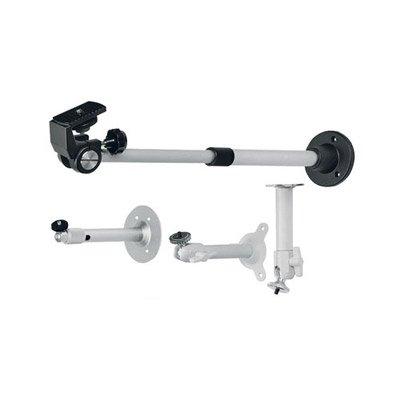
Bosch TC9208 indoor CCTV camera mount

Bosch D126 standy battery

Bosch UHO-HBGS-51 outdoor housing

