Allied Universal - Experts & Thought Leaders








































Latest Allied Universal news & announcements

Manchester-Boston Regional Airport opened to serve the state of New Hampshire and the surrounding New England community in 1927, a little over two decades after the Wright brother’s first powered flight. Located three miles south of central Manchester, the Manchester-Boston Regional Airport is the fourth largest passenger and third largest cargo airport in New England. The airport is also the busiest in the state, qualifying under the Federal Aviation Administration (FAA) as a “small hub primary commercial service facility.” Airport redevelopment project The 1990’s brought a large redevelopment project to the airport, sparking more modern facilities, increased room for aircraft, and a range of new shops and restaurants. By 2012 it had become clear that the airport and its parking areas required enhanced surveillance. Increased foot traffic, manpower, and federal safety regulations resulted in the awarding of an FAA grant for a new surveillance system.Increased foot traffic, manpower, and federal safety regulations resulted in the awarding of an FAA grant for a new surveillance system The Manchester-Boston Regional Airport faced a lengthy decision-making process when it came to security camera manufacturers, requiring products able to support the unique applications and varied environment of the airport. The security team monitored a range of spaces both in and outdoors, and required products that excelled under all of these varying situations and lighting conditions. The selected cameras needed to provide full high-definition video across multiple open areas, while also delivering detailed, close-up images within busy, crowded spaces. The airport’s FAA grant included stipulations regarding the types of products that could be purchased with the supplied funds, specifying that the selected system must qualify under the “Buy American” standard. This provision meant that all potential selections not only meet the technical requirements, but also be Made in USA. AV Costar: foundation for security system After a year of exploring the market, the client determined that AV Costar was the only manufacturer that not only satisfied the “Buy American” stipulation, but did so without sacrificing the airport’s fundamental security requirements by providing a wide range of high resolution megapixel cameras.AV Costar was open in demonstrating its Made in USA product design, manufacturing, quality control, and support as part of the selection process AV Costar was open in demonstrating its Made in USA product design, manufacturing, quality control, and support as part of the selection process. Securadyne Systems was selected as the systems integrator. Extensive planning determined which AV Costar products to install, where to do so, and how the installation process would be accomplished. Once Manchester-Boston Regional Airport chose AV Costar cameras as the foundation for their security system, they began to collaborate with On-Net Surveillance Systems, Inc. (OnSSI) to supply the video management system (VMS). OnSSI is an AV Costar Technology Partner Program member, with many joint customers around the world, demonstrating proven integration between the two company’s products and support services. Arecont cameras chosen by airport security team The AV Costar SurroundVideo® multi-sensor camera series piqued the security team’s interest for its 180° panoramic capabilities. Passengers, staff, and aircraft crew move frequently and often swiftly from one location to another in varied lighting, yet all proved trackable with the SurroundVideo cameras and the OnSSI software. The placement of SurroundVideo cameras at the Manchester-Boston Regional Airport provides comprehensive coverage while reducing the number of cameras needed overall, a feat that was especially useful in large areas such as the airport’s apron. The security team chose cameras from the AV Costar MegaDome® series, which are equipped with a wide range of innovative features For locations that required a single coverage view, the security team chose cameras from the AV Costar MegaDome® series, which are equipped with a wide range of innovative features. Features such as low light capabilities and remote focus and zoom all proved crucial to the airport’s requirements. Casino Mode™ is available in the 1080p versions of the MegaDome series, a feature that proved to be as useful at the Manchester-Boston TSA checkpoints as it is in a Las Vegas casino. Casino Mode guarantees 30 frames per second to capture every detail on fast-action applications, an incredibly effective tool when investigating security situations involving many complex, small movements for both live and forensic viewing.Casino Mode guarantees 30 frames per second to capture every detail on fast-action applications for many complex, small movements in both live and forensic viewing Investigating criminal or worker concerns Manchester-Boston Regional Airport has installed over one hundred and fifty AV Costar cameras, and the video surveillance system is continuing to grow. The latest installation of AV Costar products included the lower level of a parking garage as well as a newly renovated passenger checkpoint area. When asked if there are any specific incidents in which AV Costar cameras proved useful, Mr. Mueller responded, “Every other day we use the cameras to investigate criminal or worker concerns. We go back and monitor them for possible safety issues on the ramps, for passenger interaction, and for worker interactions. Anytime someone expresses a concern to me, they can come in and we can watch the footage together. I try to make sure that the option to view footage is fairly transparent, which has proved very useful to everyone. "SurroundVideo 180° cameras were again utilised in the latter situation due to the client’s satisfaction with stitching together images from multiple 180°s." Paul Mueller, Manchester-Boston Regional Airport’s security manager, stated, “We were sure to go back to AV Costar during this process. We have had a good working relationship with them for the past five years, and they enable us to use less cameras while still maintaining full view of inspection areas.”Primary camera views are displayed and monitored all the time, while others can be pulled up and played back as issues arise Passport and ticket inspection made easy AV Costar cameras are monitored 24/7 in the airport’s communications centre. Primary views are displayed and monitored all the time, while others can be pulled up and played back as issues arise. The system also allows for particular divisions within the Manchester-Boston Regional Airport to monitor cameras that are applicable to their work, such as in the parking garage. In terms of responsiveness, AV Costar makes it a top priority. “We had an issue recently with the lack of detail in some of the views for when people were having their passports and tickets inspected by TSA employees,” Paul stated, “An AV Costar rep came out and agreed that we could improve images, so he pulled the cameras and re-installed a newer firmware version which allowed for finer adjustments, completely and efficiently solving our problem.” AV Costar prides itself in its relationship with clients such as Manchester-Boston Regional Airport and to its continued design and manufacturing of quality, innovative, and industry-leading cameras within the United States for customers to use worldwide.

Allied Universal®, the pioneer security and facility services company, is proud to celebrate the country's security professionals during the 2026 National Security Officer Appreciation Week, Sept. 21 - Sept. 27, for their dedication and vital role in helping keep our communities safe. "Security professionals deserve our appreciation for the skill, professionalism and commitment they bring to their work every day,” said Steve Jones, global chairman and CEO of Allied Universal. “At Allied Universal, we value their contributions each day and I encourage everyone to take a moment this week to recognise a security professional and thank them for all they do.” Spotlight security professionals Allied Universal created the observance in 2015 to spotlight security professionals, broaden understanding of their work and highlight the range of careers available in the security industry. Often working behind the scenes, these professionals provide a steady presence in the places people work, learn, travel, shop and gather. Allied Universal encourages businesses, community organisations and individuals to thank a security professional this week and share their appreciation on social media.

Allied Universal®, the world's pioneer security and facility services provider, has been named one of America's Most Admired Workplaces by Newsweek for the third consecutive year. The list features companies most respected by current employees and job seekers. "This recognition is a tremendous honour because it reflects the commitment, professionalism and dedication our team members bring every day," said Steve Jones, global chairman and CEO of Allied Universal. Career advancement opportunities "Our success starts with our people, and we remain focused on creating opportunities for growth, investing in their development and fostering an environment where they can build rewarding careers." Allied Universal is dedicated to becoming an Employer of Choice, providing all employees with a workplace that offers rewarding career advancement opportunities, a positive work environment and a strong company culture.
Insights & Opinions from thought leaders at Allied Universal

2025 was another impactful year for mergers and acquisitions (M&As) in the security industry, which is undergoing an enormous transformation as global pioneers prioritise specialised technology to drive future growth. The year 2025 has been defined by massive corporate reorganisations, most notably Honeywell and Resideo spinning off core divisions to unlock shareholder value. Simultaneously, an aggressive wave of mergers and acquisitions is reshaping the landscape, with giants like ASSA ABLOY and Motorola Solutions absorbing innovators in AI-driven surveillance, cloud-native access control, and identity management. From residential security shifts to critical infrastructure enhancements, this article will summarise how these strategic moves signal a decisive industry pivot toward integrated and intelligent security ecosystems. Resideo to spin off ADI business Resideo Technologies, Inc. announced its intention to separate its ADI Global Distribution business from its Products & Solutions (P&S) business via a tax-free spin-off to shareholders. The separation is expected to be completed in the second half of 2026. P&S will continue as Resideo, a building products manufacturer of residential controls The goal is to unlock value, enhance operational performance, and improve strategic flexibility for both entities. After the separation, P&S will continue as Resideo, a building products manufacturer of residential controls and sensing solutions. ADI will become an independent public company and remain a global wholesale distributor of low-voltage products, including security and audio-visual solutions. Honeywell separates into three companies There are big changes pending at Honeywell, another global security industry company. Honeywell announced plans to separate its Automation and Aerospace businesses into two independent, publicly traded companies following a comprehensive portfolio evaluation. Combined with the previously announced spin-off of Advanced Materials, this strategy will create three distinct industry pioneers. The Automation and Aerospace separation is targeted for completion in the second half of 2026 as a tax-free transaction for shareholders. The largest portion of Honeywell’s traditional security business (cameras, access control, and fire safety) sits within the Building Automation segment of the new Honeywell Automation company. This unit includes products from recent major acquisitions, such as LenelS2. SimpliSafe’s new chapter SimpliSafe has agreed to be acquired by private equity firm GTCR from Hellman & Friedman SimpliSafe has agreed to be acquired by private equity firm GTCR from Hellman & Friedman, another private equity firm. As the third largest U.S. residential security provider, SimpliSafe will continue under the leadership of the current CEO, while its founders remain significant investors. GTCR, an experienced security industry investor, intends to support the company’s expansion and continued innovation in AI-powered, DIY home protection. This marks a new chapter in SimpliSafe’s mission to provide professional monitoring without long-term contracts. SimpliSafe is GTCR’s fifth investment in the security alarm industry, including prior investments in residential-focused security companies SecurityLink and Protection1, along with commercial-focused security companies HSM and Everon. Motorola grows technology portfolio Motorola Solutions grew its portfolio through acquisitions in 2025. The industry giant strategically expanded its safety and security ecosystem through the acquisition of four specialised technology firms. The company acquired Blue Eye to integrate AI-driven remote video monitoring and 24/7 security operations into its threat detection workflows. To support frontline workers, Motorola added Theatro’s voice-powered communication platform, which complements existing mobile and video technologies. Motorola further bolster its public safety capabilities with the acquisition of RapidDeploy, a cloud-native Next Generation 911 provider that offers real-time caller mapping and data analytics to accelerate emergency responses. Motorola also agreed to acquire InVisit to enhance its Avigilon Alta suite with cloud-based visitor management, streamlining guest registration and blocklist screening for enterprise security. These acquisitions aim to unify detection, communication, and response across various sectors, including retail, healthcare, and critical infrastructure. Allied sells majority stake in AMAG Allied Universal sold a majority stake in AMAG Technology to Shore Rock Partners In December, Allied Universal sold a majority stake in AMAG Technology to Shore Rock Partners. Shore Rock is a growth investor focused on critical infrastructure, with strategic backing from BellTower Partners. Allied Universal will retain a significant minority share. The sale is intended to allow 54-year-old AMAG, which provides integrated access control, identity, guest, and video management solutions, to operate independently from Allied Universal's services-based model for long-term growth. Shore Rock's plan is to invest in advancing AMAG's product line and customer relationships. With this transaction, David Sullivan, AMAG's President, will become CEO. Everon acquires ADT multifamily segment Commercial security provider Everon announced in September that it had entered into a definitive agreement to acquire the business-to-business (B2B) multifamily segment from ADT. This acquisition is a strategic extension that expands Everon's reach in the valuable multifamily market. It will allow the company to offer a more comprehensive portfolio of tailored solutions, including access control, video surveillance, and self-guided tour capabilities. Everon's CEO states that the deal enables them to help property owners and managers increase net operating income and improve operational efficiency. Dormakaba acquires TANlock and Avant-Garde Dormakaba, a global provider of access solutions, acquired TANlock GmbH in July Dormakaba, a global provider of access solutions, acquired TANlock GmbH in July. TANlock is a German firm specialising in innovative high-security access solutions for data centers and other critical infrastructure. The acquisition strengthens Dormakaba’s presence in the data center market. TANlock's intelligent system provides enhanced server cabinet security using electromechanical rack locks and various authentication modules. This solution is scalable, future-proof, and can be integrated into existing IT infrastructures for both retrofits and new installations. Dormakaba also agreed to acquire Indiana-based Avant-Garde Systems Inc. to strengthen its North American entrance control portfolio. This move bolsters Dormakaba’s presence in high-growth sectors like airports and data centers. Acre acquires REKS for AI Recent M&A activity also reflects the growing importance of artificial intelligence. For example, Acre Security acquired REKS, a purpose-built generative AI solution designed to transform access control, allowing professionals to use natural language queries for instant data insights. Integrated into Acre’s cloud-native ecosystem, this AI-powered platform prioritises data privacy while streamlining operations. Led by a new AI Development Team, Acre plans to expand these capabilities into intrusion detection and visitor management. Two acquisitions for Allegion Global security provider Allegion, through one of its subsidiaries, completed the acquisition of ELATEC Global security provider Allegion, through one of its subsidiaries, completed the acquisition of ELATEC, a manufacturer of security and access technology, specialising in RFID credentials and readers solutions designed in Germany and sold globally. ELATEC’s portfolio of readers leverages their internally developed software stack and ensures compatibility with nearly 100 credential types, making the company a pioneer in interoperability, which aligns well with Allegion’s partner-of-choice strategy. Allegion, also through one of its subsidiaries, acquired Brisant Secure Limited, a security hardware provider in the United Kingdom. Senstar acquires Blickfeld for LiDAR sensors Senstar Technologies Corporation has agreed to acquire Blickfeld, a specialist in 3D LiDAR sensors and software. Expected to close in Q1 2026, the acquisition integrates Blickfeld’s hardware into Senstar’s advanced security ecosystem. This strategic move expands Senstar’s addressable market into volume monitoring and traffic applications while enhancing its AI-powered situational awareness capabilities. Following the transaction, Blickfeld will operate largely independently as a subsidiary. ASSA ABLOY continues acquisition spree Global giant ASSA ABLOY was probably the most active company in the M&A market in 2025 Global giant ASSA ABLOY was probably the most active company in the M&A market in 2025, demonstrating aggressive market growth, strategically reinforcing its core business, and expanding its technological footprint across the global security marketplace. The acquisitions delivered on the company's strategy to strengthen its position in mature markets by integrating complementary products and solutions. A major theme for ASSA ABLOY was the enhancement of the door and perimeter security portfolio, particularly in the Americas. This effort included acquiring US-based Metal Products Inc. (MPI) for custom-made hollow metal doors and frames and International Door Products (IDP) for fire-rated steel door frames, both in the fall. Earlier in the year, ASSA ABLOY gained a stronger presence in Central Canada with the addition of Wallace & Wallace and Wallace Perimeter Security, a manufacturer, distributor, and installer of perimeter fencing, door, and gate solutions. The Entrance Systems Division also saw expansion with the acquisition of Belgium’s Kingspan Door Components, a manufacturer of sectional door panels. Furthermore, Door System, a Danish manufacturer of high-quality fire-rated doors, was signed for acquisition in the spring. Cloud-based platform ASSA ABLOY also made significant moves in electronic and access control solutions. Early 2025 saw two key acquisitions: Uhlmann & Zacher, a German supplier of access control handles and knobs, and InVue, a US-based provider of connected asset protection and access control solutions. Reinforcing this segment, SiteOwl, a pioneering cloud-based platform for physical security lifecycle management, was acquired in the summer. The spring acquisition of Pedestal PRO, a US manufacturer of access control pedestals and mounting solutions, further strengthens the electromechanical offerings in the Americas. ASSA ABLOY bolstered its capabilities in remote care technology with Germany’s TeleAlarm Group in late spring. HID Global expands in 2025 HID Global, a subsidiary of ASSA ABLOY, was also active on the M&A front in 2025 HID Global, a subsidiary of ASSA ABLOY, was also active on the M&A front in 2025, aggressively driving the convergence of physical and digital identity solutions and signaling a clear roadmap for security professionals. HID's move to purchase Vancouver-based IDmelon, announced in the autumn of 2025, targets the critical need for robust logical access control. IDmelon’s proprietary software platform transforms everyday identifiers, including existing physical credentials, smartphones, or biometrics, directly into enterprise-level FIDO (Fast IDentity Online) security keys. This approach streamlines an organisation’s transition to phishing-resistant, passwordless multi-factor authentication (MFA) and minimises the need for disruptive changes by integrating physical and digital access into a single, cohesive solution. Safer patient experience Separate from its focus on digital access, HID also bolstered its Identification Technologies Business Area by acquiring the Calmell Group. Calmell is a long-established manufacturer specialising in smart cards, smart paper, and magnetic tickets for the public transportation sector. This addition is expected to expand HID’s footprint and relevance in global public transportation ecosystems, allowing the Barcelona-headquartered firm to leverage HID’s core expertise in digital credentials to drive future-proof solutions for seamless mobility. Also, HID acquired Intelligent Observation to expand its Healthcare Real-Time Location Systems (RTLS) portfolio. Intelligent Observation provides a platform to reduce hospital-acquired infections (HAIs) by tracking hand hygiene compliance. The system uses wearable Near-Field Magnetic Induction (NFMI) devices and a cloud-based SaaS dashboard. This technology records and reports if healthcare workers sanitize appropriately, providing granular compliance data to administrators to enable a safer patient experience.
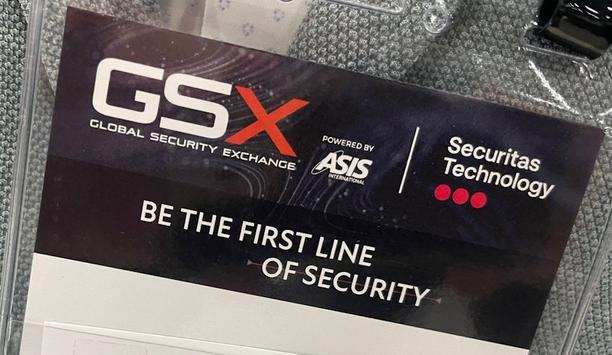
There was high-level energy at GSX 2025, befitting an industry undergoing massive change. Artificial intelligence (AI) was everywhere, but not so much in the booth signage. Rather, AI has made its way beyond marketing claims and solidly into the core of the products themselves. There were hundreds of examples of how AI is changing how security systems operate, all for the better. Clearly on display at GSX 2025 was an industry in the midst of metamorphosis. Deep integration of AI My conversations with companies across the security ecosystem revealed an industry heavily focused on leveraging advanced technologies like AI and the cloud to address increasingly complex global and localised threats. Several key themes emerged at the Global Security Exchange (GSX), sponsored by ASIS International, held Sept. 29–Oct. 1 at the Ernest N. Morial Convention Centre in New Orleans, La. Themes I heard repeated throughout the show floor included deep integration of AI, the ongoing shift toward cloud-based and hybrid architectures, and a sharp focus on modernising security systems to meet current challenges. AI and intelligent automation transform security The use of GenAI is moving beyond simple search functions into real-time decision support Companies are integrating AI and intelligent technologies to enhance analytics, streamline incident response, and improve internal efficiency. The use of Generative AI (GenAI) is moving beyond simple search functions into real-time decision support. For example, Bosch Video Systems introduced a "second tier" to its video analytics capabilities by combining highly sensitive edge detection with GenAI models in the cloud. For example, in visual gun detection, edge analytics might flag a potential gun (yellow), but the cloud-based GenAI then quickly reviews and confirms the threat (red), helping to filter out false alarms. Bosch is also using GenAI for more open-ended searches, such as a "Where's Waldo" application demonstrated at their booth. GenAI-powered system Eagle Eye Networks says they are focused on helping integrators "organise the AI chaos” through their cloud-based video platform. Their precision person and vehicle detection capabilities work across multiple cameras. Motorola Solutions introduced Inform, an AI-assisted incident response solution designed to bring clarity to the "noise" and help security teams respond to complex threats. They also offer Avigilon Visual Alerts, an on-prem GenAI-powered system that expands the natural language interface. AI internally to improve processes The Body Workforce Mini protects frontline workers and businesses "amid rising violence and theft." The Axon Body Workforce Mini, a small “computer with a lens” for non-police applications, is AI-capable and can perform real-time translations, automated report writing, and summarisation, and can even act as a personal assistant by incorporating company policies. All those functions are built into a lightweight body-worn camera designed to safeguard frontline workers in retail and healthcare verticals. The Body Workforce Mini protects frontline workers and businesses "amid rising violence and theft." Beyond products, integration company Everon is using AI internally to improve processes, such as handling commoditised tasks, which they expect will result in better customer satisfaction. Everon wants to be known as a premier service provider and will be introducing new services in the video realm. AI-powered search and continuous system upgrades Genetec prefers the term Intelligent Automation (IA), instead of AI, to describe its empathetic interface, which can "know" what additional information a security professional needs when they click on an image, for example. Genetec says the advantages of the cloud include AI-powered search and continuous system upgrades. Their Security Centre SaaS has had a fast and successful launch. It enables cloud-based systems with local storage. Genetec also highlighted the Cloudlink 210, a cloud-managed appliance designed to unify physical security operations that can be simply plugged in without involving IT staff. They call it a “headless appliance.” Cloud migration and the push for hybrid systems Hanwha debuted OnCAFE (Cloud Access for Everyone), a new cloud-based access control product The industry continues its strategic march toward the cloud, often through hybrid applications that blend on-prem strength with cloud flexibility. Acre's access control is described as "cloud-first technology," and they continue to focus on cloud solutions, incorporating AI. To help customers transition, they offer the "Bridge," a migration tool that allows systems to communicate throughout the move. At the same time, they are continuing to develop and enhance their core on-prem products – DNA Fusion and AccessIt!. Adding access control to supplement their video product line, Hanwha debuted OnCAFE (Cloud Access for Everyone), a new cloud-based access control product. The goal is to provide “access control that is easy;” It works alongside their OnCloud direct-to-cloud VMS as a Service platform. Future of video management The future of video management is increasingly hybrid. Milestone recently completed a three-year process of updating XProtect and building for the future of hybrid applications. At GSX, they showcased how their XProtect Evidence Manager seeks to "democratise evidence management" by collecting video, cell phone data, notes, and other metadata related to a case for easy sharing and prosecution. Also, Milestone’s “app centre” enables additional features to enhance XProtect without involving integration. Milestone is also focusing on "Metadata Ingest," which collects and aggregates data from various manufacturers (including Genetec, Motorola, and Exacq) for use by AI. Strategic modernisation and open integration Convergint and Genetec collaborated on a "2026 Technology Modernisation Outlook" white paper A key theme for the future is the shift toward open systems and strategic modernisation, enabling security professionals to better utilise new technology. Convergint and Genetec collaborated on a "2026 Technology Modernisation Outlook" white paper, arguing that dealers and end-users need to think more strategically when buying technology. They predict that "2026 will be the year of modernisation," with tangible results including unified intelligence, flexible deployment, and lower total cost of ownership. The call for open standards and architecture was also strong. What AI needs from open systems Johnson Controls noted that cloud, AI, and open standards are its three big focus areas. Their C-CURE IQ 3.10 is gaining adoption as it unifies access and video. OpenEye is seeking to address the "AI disruption anxiety" in the industry, focusing on what AI needs from open systems. The emphasis is on the value of a Model Context Protocol (MCP), an open standard and framework to enable AI systems to integrate and share data with external tools and sources. Addressing shifting global and local threats Allied Universal's "World Security Report 2025" highlights a risen focus on executive protection Companies unveiled solutions targeted at new security concerns, particularly the rising threat of violence, theft, and misinformation. Allied Universal's "World Security Report 2025" highlights an increased focus on executive protection and cites the rise of misinformation and disinformation as the number two threat. They noted that macro trends around instability and the political and social environment are driving security threats globally. To combat physical threats, Shooter Detection Systems introduced a new outdoor sensor, which is now generally available after a favourable feedback period that included an apprehension in one municipality. The company notes the unique challenge of developing technology for a "non-cooperative" threat like a person with a gun, in contrast to most security technologies that are "cooperative" and depend on user compliance. Implementation of integrated security Flock Safety is expanding its focus beyond licence plate readers into solutions for retail, with a new initiative to automate and streamline investigative processes, which are often manual. The company also showcased "drones as automated security guards," which can be deployed within 90 seconds to provide "eyes" on a site and enhance safety. The system works on its own network and is firewalled away from the city system A tour of the City of New Orleans' Real Time Crime Centre (RTCC), hosted by Axis Communications, demonstrated a mature implementation of integrated security. The RTCC uses Axis cameras, Genetec VMS, and is tied to a Motorola Solutions Command Centre to enhance efficiency and effectiveness, operating independently of the police department. They measure success in terms of valuable hours saved in an investigation or even when an event is happening. The system works on its own network and is firewalled away from the city system. Rapidly changing industry on display The GSX 2025 highlights an industry that is moving toward more intelligent and integrated solutions. The investment in AI is shifting security from reactive monitoring to proactive, automated assistance. Throughout the show floor, the continued embrace of hybrid cloud architectures, coupled with an emphasis on open standards and modernisation roadmaps, suggests a security ecosystem built for agility and future growth. These trends, and the GSX show itself, collectively underscore the industry's commitment to delivering scalable, next-generation solutions for a changing threat landscape.
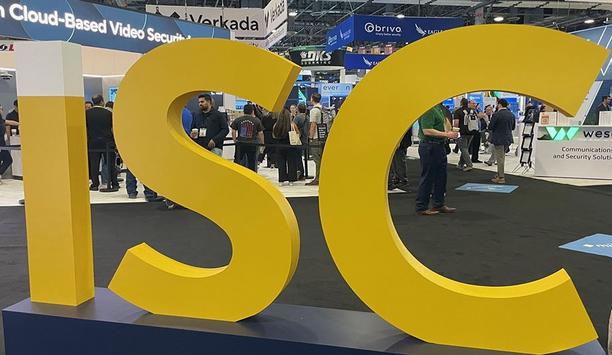
ISC West 2025 in Las Vegas showcased the latest advancements in security technology, offering security professionals a glimpse into the future of the industry. This year's expo highlighted the growing influence of artificial intelligence (AI), cloud computing, and enhanced integration. The pioneering comprehensive and converged security event attracted nearly 29,000 industry professionals to the Venetian Convention Centre. Integration into unified platforms Several companies emphasised the importance of cloud-based solutions and the integration of diverse security components into unified platforms. For example, Brivo's Security Suite provides “everything in one platform” – not just access control. Customers only pay for what they use because the system is flexible and scalable from a single door to enterprise level applications. Brivo’s suite includes video, but the system can also tie in with third-party “partners.” Genetec's Security Centre allows for more frequent updates through the cloud. Milestone is undergoing a two-year transition to bring its Xprotect system into the future by incorporating Arcules and Briefcam into a video-as-a service product. Suprema introduced BioStar X, which integrates access control and video analytics into a single platform. AI and mobile credentials Axis Communications’ Cloud Connect product announced three new partnerships at ISC West 2025 Axis Communications’ Cloud Connect product announced three new partnerships at ISC West – Eagle Eye Networks, SecuriThings, and Wesco. They join the three partners announced during the first year of Axis Cloud Connect – Genetec, Kone (elevators) and Milestone. AI and mobile credentials were still hot topics at ISC West 2025, but the conversation has evolved beyond amazement at the technologies’ capabilities and now centres on more practical aspects. From the theoretical to the practical “AI and mobility are still the ‘flavors de jour,’ but messages are evolving to manifest AI for better outcomes,” says Heather Torrey, General Manager, Commercial Security, Americas, for Honeywell Building Automation. The company has reframed its security portfolio to be very building- and business-focused, continuing to grow and evolve after the recent acquisition of LenelS2. “From the theoretical to the practical, we want customers to be part of the conversation so we can deliver AI that is meaningful to them, focusing on what’s most important,” says Torrey. Under Honeywell’s new ownership structure, “each part of the business can be more focused on customers’ needs,” she says. Honeywell continues its journey around mobile access and credentialing and migrating to cloud solutions. Innovations in Access Control Gallagher’s new Quickswitch access control board simplifies the migration from legacy systems Access control remains a critical component of security systems, and ISC West 2025 showcased several innovations in this area. Acre is releasing “Gallery,” its version of the App Store for access control. DormaKaba is launching the Keyscan KC Series door controller with TCP/IP connectivity and enhanced features. Gallagher’s new Quickswitch access control board simplifies the migration from legacy systems. Johnson Controls highlighted its C-Cure command centre and C-Cure IQ web client, offering a unified approach to access control and video. Hardware integrations for security panels For service provider Alarm.com, hardware products prepare a path to greater customer experiences, says Abe Kinney, Alarm.com’s Director, Product Management, who oversees hardware integrations for security panels, sensors, video, etc., and drives new product development. “We are looking to bridge the physical world to digital world,” he says. “We want to bring an advantage to our dealers that they can bring to customers.” Because Alarm.com’s customers pay a monthly fee, the products must be durable and economical, says Kinney. “It should work with no need for truck rolls.” The importance of longevity and flexibility Products are evaluated based on features, price, and ease of installation Products are evaluated based on features, price, and ease of installation. In particular, longevity is important for the Alarm.com’s pro channel. There is also a growing emphasis on deterrence industrywide. Says Kinney: “We recognise that detection is part of it, but we need to prevent problems from happening in the first place. And the industry is re-evaluating.” When it comes to cloud intelligence, Eagle Eye Networks puts the emphasis on flexibility. They offer AI that can perform anywhere on the system infrastructure, on the camera, on their on-site bridge device, or in the cloud. They support their own AI and also any AI product from a third party. “We focus on what customers want from the data AI detects,” says Hans Kahler, Eagle Eye Networks’ Chief Operating Officer. Integration with other systems A timely alert from gun detection could save a life, but AI can also generate information that might be used and analysed later, such as point-of-sale information, dwell time, foot traffic, etc. “What people want is the ability to work with the data for business intelligence,” says Kahler. Integration with other systems provides new opportunities for customers: For example, a licence plate reader at a restaurant drive-thru could trigger customisation of the menu board digital signage based on the customer’s previous buying pattern. Relentless Innovation Assa Abloy handles more than 40 million SKUs for all its various brands, faked in 28 factories in the US Assa Abloy handles more than 40 million stock keeping units (SKUs) for all its various brands manufactured in 28 factories in the United States. Merely complying with regulations such as the “Buy American Act” is a monumental effort considering the massive product line, attendees heard at Assa Abloy’s Annual ISC West Breakfast focusing on compliance challenges in the security market. Meanwhile, back at the trade show booth, Assa Abloy focused on “relentless innovation” in every corner of its product line. Assa Abloy’s message: Innovation in security does not have to be about AI or automation. In fact, inventive approaches to products come in all shapes and sizes and at every level of the product portfolio, and innovation is happening faster than ever. For example, the Safebolt product from Securitech, a brand recently acquired by Assa Abloy, can quickly lock down existing doors with the press of a red button on a cylindrical or mortise lock. Temporary Systems to Secure Events Securing events is the focus of Allied Universal's Unified Command Solutions, which specialises in setting up temporary security systems for conventions, trade shows, festivals, construction sites, parades, and other events. They can add technology to situations where previously mostly security officers were used, providing safety/security and enabling more efficient event operation. “We can put cameras anywhere, whether they need power or not, use cell service or WiFi, a localised network or the internet, or whatever,” says Andrew LaMadrid, VP, Sales for Allied Universal's Unified Command Solutions. Event operation and management IDIS came to ISC West looking to leverage new products that they did not promote in the past The focus is on easy implementation, flexibility, and fast setup and removal. “We look for a solution to solve each customer’s pain points,” says LaMadrid. They specialise in setting up and deploying surveillance cameras for safety/security and for event operation and management. Mobile surveillance is a relatively new “piece of our puzzle” when it comes to protecting high-profile events. “People are excited about what we can offer that’s new,” says LaMadrid. Unified Command Solutions has been around for about 12 years and was acquired by Allied Universal last summer. IDIS came to ISC West looking to leverage new products that they did not promote in the past, and visitors were very interested in those solutions, says Scott Switzer, IDIS CEO. “The progression of our product line has been tremendous,” he says. Last year, the IDIS booth offered only basic analytics, but this year they had 30 different advanced analytics including gun and aggression detection using the advanced solution “IDIS Vaidio AI.” What Makes You Different? The most common question IDIS hears at their trade show booth is: “What makes you different?” The answer: They offer an end-to-end solution, including cameras; they manage, control, design from end-to-end; and there is no need for multiple integrations. The time needed to install an IDIS system is significantly less because of the simplicity. “We have customers we have supported and grown together for over 20 years,” says Switzer. The company previously deployed IDIS cameras under the Costar brand before the Korean IDIS brand was introduced into the U.S. (IDIS purchased Costar and changed the name to IDIS America.) “This has been a tremendous show for us; we are looking to build our momentum and let more people know about IDIS,” says Switzer. Managing real AI at the edge The depth of their metadata enables new applications, whether for security or business operations Based in Prague, Czech Republic, and with U.S. offices in Pennsylvania, FF Group provides licence plate recognition for harsh environments. Using Axis cameras, they offer “managed real AI at the edge,” selling through a nationwide distributed network, says Alex Osypov, CEO and Founder of FF Group. Markets include parking lots, cities/municipalities, police, government, water systems, etc. The depth of their metadata enables new applications, whether for security or business operations. They are looking to combine and correlate data including LIDAR, RADAR, etc. to exploit the advantages of “data fusion.” Osypov says: “The market is growing because we are involving other adjacent markets.” Unified platforms and advanced tools Several companies are focusing on enhancing security operations centres (SOCs) by providing unified platforms and advanced tools. Axon’s Fusus system “layers” onto existing infrastructure, tying together various sensors into a single interface for real-time monitoring and information sharing. Increasingly, enterprises have invested in a lot of technologies – ac, video, asset trackers – but none of it talks together. Fusus ties all the systems together so that operators no longer have to look at 10 different screens. Rather, there is a “single pane of glass” that shows everything and facilitates sharing of information with law enforcement. Motorola also showcased its Security Operations Centre, which integrates hardware, software, smart sensors, communication radios, and broadband devices to streamline incident management.

Security technologies promote real-time awareness in K-12 schools
Download
Technology's role in securing banks and financial institutions
Download
Integrated systems enable critical and compliant security for transportation
Download
Modernising physical access control
Download
Access. Intrusion. One estate.
Download
