Allegion plc - Experts & Thought Leaders































Latest Allegion plc news & announcements

Allegion US, a provider of security solutions, technology and services, launched Allegion Optimize™, a mobile application created to unify and streamline management of select Allegion products within one easy-to-use tool built with customers’ needs in mind. The release coincides with the latest firmware update for the award-winning LCN Senior Swing Series Auto Operator, making it the first device to utilise Optimise. Key features allow installers and facility teams to calibrate, adjust, maintain and troubleshoot the LCN Senior Swing with just the app, resulting in greater efficiency, precision and safety. Openings running smoothly Optimise creates a single, unified experience that reduces time and friction in device commissioning, diagnostics and firmware updates across connected Allegion solutions via Bluetooth® connection. By providing support throughout the device’s life cycle, facility teams not only gain improved efficiency but better insight into the data and controls that help keep their openings running smoothly. "Between 2018 and 2033, it’s predicted that up to 50 percent of the facility management workforce will retire,” said Emily Zentz, Allegion product manager, automatic operators. “As new facilities professionals step into the industry, it’s imperative that technology advances in line with their growing expectations. The Optimise app answers that call, positioning Allegion’s line of auto operators with a modern experience.” Greater level of control Setting adjustments, troubleshooting and calibration on the LCN Senior Swing is now even easier. In-app calibration, diagnostic tools, firmware updates and data management enable installers and facility teams to have a greater level of control over their buildings. Once the LCN Senior Swing is installed, the installer can run the calibration cycle from the app. This allows them to be safely on the ground and watch the door more closely to determine whether further adjustments are needed. Users can fine tune the settings on the Optimise app without removing the cover on the Senior Swing or climbing a ladder. When troubleshooting, Optimise provides details for any error codes or notifications, so the user can quickly review, digest and act upon that information before engaging with technical support. Multiple product categories Allegion Optimise won’t stop with the LCN Senior Swing. It is designed to be the new unified device management mobile application that will simplify the commissioning, configuration and ongoing maintenance of future Allegion connected devices across multiple product categories. Plans to support additional auto operators and electronic locks will be announced later this year. Allegion Optimise is available now in the Apple App Store® and Google Play™ store for use with LCN auto operators.
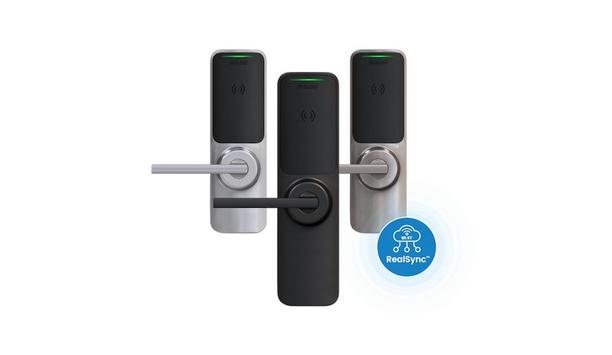
Allegion US, a provider of security solutions, technology and services, announces the expansion of the Schlage® XE360™ Series with RealSync™. Building upon the success of the XE360 Series offline locks introduced in 2024, this family of wireless locks can now provide building operators and administrators real-time device visibility and control without the need for additional wiring or infrastructure. This groundbreaking, fully wireless solution is designed to bring intelligent, real-time access control deeper into commercial buildings. It delivers the kind of management typically associated with wired access systems, but without the gateways, panels, wires or complex installation that usually comes with them. Wireless access control "The introduction of the XE360 Series with RealSync represents a seismic shift in the commercial access control landscape," said Nate Spitz, general manager, Schlage locks and access solutions at Allegion. "By leveraging a building's existing Wi-Fi infrastructure, we are breaking the traditional barriers of cost and complexity. This allows building owners and operators the ability to affordably scale real-time access to every door, fundamentally changing how the market approaches wireless access control." Historically, the commercial landscape has understood wireless access control over Wi-Fi as occurring periodically, meaning devices wake up on a set schedule (e.g., every 12 or 24 hours) to check in with the network. The XE360 Series disrupts this standard with RealSync™, Allegion’s first cloud-to-cloud communication protocol. RealSync enables persistent Wi-Fi connectivity, an always-on, continuous connection that allows for things like real-time monitoring alerts, instant remote lock and unlock capabilities, and immediate credential issuance or revocation from anywhere. Latest security enhancements At the core of this evolution is the innovative, interchangeable FleX™ Module. Properties that have previously deployed XE360 hardware as an offline solution can easily upgrade to real-time, persistent Wi-Fi connectivity simply by swapping the module. This forward thinking, modular design preserves the initial lock investment, reduces electronic waste, and allows security systems to evolve alongside the building's needs and technology demands. Not only do XE360 locks utilising RealSync provide real-time data and insights, but they can also take advantage of over-the-air firmware updates, deployed remotely, allowing openings to stay equipped with the latest security enhancements without requiring physical visits by facilities teams. This capability saves valuable time, reduces on-site maintenance, and enhances operational efficiency. For openings utilising XE360 devices in offline mode, at-the-door mobile updates are available. Proprietary power optimisation Because the XE360 Series with RealSync connects via existing Wi-Fi networks, it eliminates the need for hubs, door service routers and extensive cabling. This significantly reduces upfront capital expenditures and installation time for both new construction and retrofit applications. Additionally, Allegion has surmounted the typical six-month battery life barrier of wireless, Wi-Fi- enabled commercial locks. Through advanced, proprietary power optimisation, the XE360 can achieve over one-year of battery life using four standard AA batteries while maintaining its persistent Wi-Fi connection under suggested use. This drastically reduces operational demand, minimises maintenance visits, and lowers the total cost of ownership, all while allowing for the cost savings to be repurposed into additional deployments throughout the building. Cloud-based software platform The simplified setup and robust feature set of the XE360 Series with RealSync expands Allegion’s footprint well beyond traditional multifamily environments. The solution is purpose-built to scale across commercial spaces, small-to-medium businesses, student housing, and senior living facilities, with a strong architecture designed to support swift global expansion. For property managers and operators, the shift to RealSync is a significant operational advantage. The ability to manage credentials on demand, view real-time audit trails, and execute instant remote commands directly improves property security, strengthens tenant satisfaction, and ultimately helps drive higher Net Operating Income (NOI). Demonstrating immense market demand, multiple Physical Access Control Software (PACS) partners have already begun integrating with the new cloud-based software platform that powers RealSync prior to its commercial availability. Notably, longstanding PACS partner, Brivo, will be the first to offer a fully integrated RealSync solution to their ecosystem of security specifiers, dealers and end-users, later followed by additional partners.
Allegion US, a provider of security solutions, technology and services, will be showcasing new interoperable electronic access control solutions and integrations from Schlage, Zentra™ and Gatewise™ June 17–19 at NAA Apartmentalize (Booth #2307), an annual event that brings together multifamily housing professionals from around the world for three days of education, networking and learning about the latest industry trends and best practices. “Multifamily property operators have historically struggled with a visibility gap, often remaining unaware of an access issue at a door until a resident or staff member reports it,” said John Goodwin, Allegion GM, VP, multifamily access. Access control solutions “Integrating Zentra™ and Gatewise with Schlage XE360™ Series with RealSync™ gives property teams real time visibility and control from the perimeter gate to the apartment door, with no extra hardware required. That’s a complete solution and the kind of software impact that genuinely changes how a building runs.” Show attendees can join Allegion security consultants at booth #2307 for in-depth conversations around seamless access and have an up-close look at the latest innovations in access control solutions unified by software platforms with integrated hardware and support services for multifamily properties: Real-time connectivity Zentra and Gatewise are soon to expand their capabilities in the multifamily market through an upcoming integration with Allegion’s Yonomi™ Platform. This strategic collaboration empowers property managers utilising either software platform with seamless, centralised access to Allegion’s groundbreaking RealSync™ technology. Utilising Zentra's Access Core™ to bridge these systems, both Zentra and Gatewise customers can now experience persistent, real-time connectivity via a property's existing Wi-Fi infrastructure, allowing operators to send commands and verify lock status in seconds, without the need for additional gateways, hubs or investments in wiring. This powerful, real-time experience is delivered through the proven Schlage XE360™ Series, which is expanding its multifamily hardware lineup with a sleek, highly anticipated new deadbolt option. Like the rest of the XE360 family, the new deadbolt features an interchangeable FleX Module™ that allows properties to easily choose between offline Bluetooth® or the Wi-Fi-enabled RealSync™ mode supported by Zentra and Gatewise. High-maintenance physical intercoms Zentra and Gatewise are combining forces to deliver a modern guest access experience solution for multifamily properties. By bringing together Zentra’s robust cloud access control and the Gatewise Guest Access, this joint offering eliminates the need for expensive, high-maintenance physical intercoms. Guests simply scan a QR code at the entrance to access a digital directory and call the resident, who can then grant access remotely right from their smartphone. Together, Zentra and Gatewise provide a frictionless, hardware-light entry experience that enables securing the property from the perimeter gate all the way to the apartment door. “At Allegion, locks and hardware are just the starting point,” said Amit Sherman, Allegion VP, multifamily access solutions & operations. “Through partnerships with innovators like Zentra and Gatewise, we are redefining what’s possible in property security. With every integration and enhancement, we’re focused on empowering multifamily professionals to adapt quickly, optimise workflows and maintain the highest standards of security and convenience.” Improving resident experience Allegion is also highlighting its newly announced Campus-to-Community experience. This is the first unified, mobile-first ecosystem that connects the entire student journey—on campus and off—eliminating fragmentation and improving resident experience. By bringing hardware, mobile credentials, best-in-class software integrations and expert services together into one connected platform, it eliminates the friction that slows operators down and frustrates residents. Students gain one seamless mobile-access experience wherever their day takes them, while operators benefit from fewer service calls, smoother turnovers, and dramatically reduced complexity. Multifamily housing professionals Backed by Allegion’s century of trust and a broad ecosystem of software and integration partners, Campus-to-Community delivers a secure, modern student housing experience operators can confidently scale. Show attendees can round out their day-of experience with live games, demos and food at the booth. Multifamily housing professionals who will not be attending the show in person this year can utilise Allegion’s online resources including the Solving for Multifamily Podcast and a wide array of digital resources and virtual trainings.
Insights & Opinions from thought leaders at Allegion plc

The security landscape is undergoing a profound transformation, as evidenced by the innovations showcased at the ISC West Expo 2026. From dismantling of silos between physical and digital security to the ongoing transition to cloud and hybrid platforms, much of the discussion on the show floor was familiar, if somehow more urgent than ever. Clearly the industry is moving toward unified, cloud-native, and highly automated ecosystems. In a series of deep-dive meetings and demonstrations at the recent show, I got a first-hand glimpse of the future of the physical security marketplace. Spoiler alert: The future is now! HID Global: Tearing down the silos HID Global is addressing the long-requested convergence of physical and digital security. Recognising that the industry has historically operated in silos, HID is now leading with a combined implementation team to leverage the power of both sides. HID is supporting the transition by combining its logical and physical security teams to help end users design secure, end-to-end journeys for their employees. By leveraging its massive existing footprint in physical access, HID is uniquely positioned to help organisations upgrade their cybersecurity posture without a total "rip and replace" of their hardware. HID is seeing a surge in demand for converged credentials that unite building access with digital identity. On the digital front, HID has implemented FIDO (Fast Identity Online) and passkeys to replace traditional passwords with more secure, biometric-backed authentication methods. Acre Security: Bridging the gap to the cloud Acre Security previewed a cloud-native video solution, reinforcing its cloud-first security strategyAcre Security is currently consolidating brands, bringing established names like Feenics and AccessIt under a single corporate umbrella. A primary theme for the company at ISC West is the migration of legacy systems to modern infrastructure. To facilitate the transition, they are launching "The Bridge," a technology designed to help on-premise customers transition to the cloud at a pace that suits their operational needs. The company is also expanding its portfolio into video. Attendees at the show received a preview of a new cloud-native video solution slated for release later this year, signaling Acre’s commitment to a holistic, cloud-first security suite. Acoem: Real-time acoustic threat detection With a 35-year foundation in vibration and acoustics—including military sniper detection—Acoem is providing gunshot detection through edge processing. Unlike systems that rely on the cloud and may suffer from latency, Acoem’s technology processes data at the sensor level for instant alerts. Their sensors are engineered for massive outdoor spaces, covering a 500-foot radius (roughly 11 football fields) and can detect high-powered rifle shots from up to half a mile away. The system provides critical intelligence by distinguishing between muzzle blasts and "mach noise" from bullet travel, delivering an audio file to the end-user that maps the location and direction of the threat. They use AI to filter out environmental false positives, such as skateboards hitting metal rails. Alarm.com: The all-in-one dealer ecosystem Beyond hardware, Alarm.com is leveraging AI to streamline the sales process Alarm.com is doubling down on "giving tools to dealers to help them be successful," with a focus on unified commercial solutions. A highlight at ISC West is their new fire communicator, which integrates fire monitoring into their single app, completing what they call the "fourth leg of the stool." The product allows fire systems to benefit from the same real-time customer engagement and push notifications that have long been available for intrusion and video. The key products, such as commercial-grade hardware, are now available for immediate purchase. Beyond hardware, Alarm.com is leveraging AI to streamline the sales process. Their new AI Proposal Builder uses customer meeting notes to automatically generate customised, value-driven sales proposals for dealers. Allegion: A global shift in credentialing Following the acquisition of ELATEC, Allegion is adopting a more global market approach and expanding its OEM business. The company is involved in the development of Aliro, the newly unveiled mobile credentialing standard. Allegion’s strategy is built on versatility: While Aliro serves the burgeoning mobile market, they also offer PKOC for plastic cards, allowing them to provide solutions regardless of the user's preferred credential type. The ELATEC acquisition has effectively filled previous gaps in their use-case portfolio, positioning them as a comprehensive provider for both physical and digital access needs. AtlasIED: Engineering for life safety Transitioning from audio to a fully automated threat detection company, AtlasIED showcased its new IPX line at ISC West. This modular platform uses a single PoE++ port to power various "plug-and-play" modules, allowing for easy system upgrades. Their gun detection technology achieves a 99% confidence rating by "stacking" AI models; it cross-references audio data with infrared signatures to detect muzzle flashes and air quality sensors for particulates. With systems already running in 80% of U.S. international airports, the company maintains 24/7 domestic engineering support to manage these "life-safety adjacent" environments. Axis Communications: Unifying connectivity Axis Communications is advancing network video with 4G/5G surveillance, reducing cabling needs Axis Communications continues to lead in network video, with a new focus on offering surveillance through 4G and 5G networks to eliminate the need for extensive cabling in long-range applications. Axis also introduced several specialised hardware pieces, including the P1486-LE global shutter camera for high-speed traffic monitoring and the Q2802-TE, which integrates thermal and visual monitoring into a single unit. To assist technicians, they launched a new installer app that uses Bluetooth for easier camera pairing and management directly from a mobile device. Axon: De-escalation through enterprise wearables Focusing on frontline safety, Axon is expanding from law enforcement into the enterprise sector with its retail and healthcare-focused body camera. Weighing only 0.25 lb, these cameras are designed to be less intimidating, using colorful designs and acting as a primary de-escalator for aggressive behavior. A clear front display signals when recording is active, striking a balance between safety and a non-intimidating appearance. These devices feature live-streaming and panic alarms that connect workers to a Global Security Operations Center (GSOC). To ensure the footage is legally viable, Axon maintains a rigorous audit trail that authenticates every action recorded. Genetec: The value of the unified platform Genetec is advocating for unified platforms that reduce the time between incident detection and resolution. They argue that AI is becoming a commodity and that the true value lies in unified platforms that reduce the time from incident to resolution. Their approach emphasises the "outcomes" customers need, such as allowing security teams to coalesce around an investigation quickly. Genetec remains a strong supporter of open systems for enterprise customers, ensuring they have the choice to integrate diverse technologies rather than being locked into a manufacturer’s “walled garden.” This flexibility is critical for high-end security environments that require tailored, responsive systems. Johnson Controls: Large-scale enterprise solutions Johnson Controls has made a significant push into the enterprise video market with C-Cure IQ, a standalone VMS designed for major hubs like airports and large campuses. Through a partnership with Scylla, they have integrated 11 advanced analytics—including facial recognition and weapons detection—directly into their cameras. They also showcased new multi-sensor panoramic cameras capable of "stitching" multiple images into a single 360-degree view. While innovating in video, Johnson Controls also confirmed modern upgrades to their intrusion line, including their legacy DSC Neo line. The new DSC PowerSeries Neo 5, a high-end residential and commercial platform, features an all-new user interface and built-in PowerG+. They have also begun shipping the IQ5 family lineup, which is powered by a Qualcomm DragonWing processor. ONVIF: Standardising the future of AI and cloud ONVIF continues to lead the charge in establishing common languages for the security industry. A major focus is their new "Cloud Profile," which enables cameras to connect directly to the cloud through a standardised protocol. They are also expanding into audio standards to ensure IP-based speakers can seamlessly connect to Video Management Systems (VMS). To combat the rise of sophisticated digital manipulation, ONVIF is developing "video signing" standards. ONVIF is actively seeking more diverse enterprise participation to help shape these emerging AI standardsThis feature protects the integrity of video for evidentiary purposes by embedding a digital signature and timestamp directly into the footage at the camera level. Additionally, the organisation has formed an AI Working Group to develop common communication methods for "AI agents" within physical security systems. ONVIF is actively seeking more diverse enterprise participation to help shape these emerging AI standards. Roberto Licari is the new ONVIF Ambassador, seeking to attract new companies (even outside the security sector) to ONVIF as they look to expand their offerings. SwiftConnect: Bridging digital and physical identity SwiftConnect is redefining access control by shifting the focus from physical cards to digital identity. As a cloud-based "connected access network," the platform bridges the gap between IT identity providers (like Okta or Azure AD) and legacy physical access control systems. At the show's Security Experience Center demonstrations, SwiftConnect showcased its ability to integrate mobile credentials within Apple and Google Wallets across multiple technology platforms. By aligning physical security with Zero Trust principles, they ensure that access is governed by the same rigorous standards as digital networks. Their software-centric approach allows for a more seamless employee experience while simplifying the management of complex, multi-site building security. This emphasises a future where the mobile device becomes the primary tool for navigating the physical workspace. Wasabi Technologies: Redefining cloud storage economics With cloud technology becoming a baseline requirement at every booth, Wasabi Technologies highlighted its "hot cloud storage" as a cost-effective alternative to major hyperscalers. Their model claims to be 80% less expensive than competitors, notably removing hidden fees. Wasabi is increasingly bundled at the "back end" of security solutions through partnerships with integrators and end users. A key feature for law enforcement and high-security sectors is their "Object Lock" capability, which ensures that video evidence remains untampered with and immutable during defined retention periods. By providing high-performance storage without the unpredictable costs typically associated with the cloud, Wasabi is positioning itself as the foundational layer for data-heavy video surveillance applications that require long-term, secure retention. Wasabi is positioning itself as the foundational layer for data-heavy video surveillance applications ZKTeco USA: Versatile and integrated access ZKTeco USA showcased a range of integrated solutions, including turnstiles, visitor management, and access control. Their Atlas access control series offers versatility, supporting everything from traditional readers and keypads to QR codes and fingerprint scanning, with the flexibility to operate on-premise or in the cloud. For tight environments, they introduced the Mars 100 turnstile, which features a compact 2x3-foot footprint. They also highlighted the Omni series, an all-in-one standalone reader-controller that manages access, intercom, and visitor functions in a single device. Innovation in portability was evident in their new walk-through metal detectors, which consist of two poles with an 8-hour battery life—ideal for schools and temporary events. While they offer their own Armatura readers, ZKTeco emphasised that their solutions can integrate with other industry leaders to fit diverse customer needs.

Companies at GSX 2023 emphasised new ways that technologies such as artificial intelligence (AI) and the cloud can address long-standing issues in the security market. Among the exhibitors at the event in Dallas were companies seeking creative ways to apply technology, lower costs, and make the world a safer place. Reflecting on the exhibition, here are some additional takeaways. Expanding AI at the edge i-PRO is a company reflecting the continued expansion of edge AI capability in the security market. Today, more than half of the company’s lineup supports AI at the edge so the customer has a wide choice of form factors when seeking to leverage the feature set. AI processing relay, extended warranty i-PRO is increasing their warranty period from 5 to 7 years, which could be a lifetime warranty in some cases I-PRO also has an “AI processing relay” device that accepts non-AI video streams and applies edge analytics. AI has progressed from a high-end technology to a feature available in a variety of cameras at different price points. i-PRO is also increasing its warranty period from 5 to 7 years, which could be a lifetime warranty in some cases depending on a customer’s refresh schedule and lifecycle management. Active Guard, MonitorCast The company’s video management system (Video Insight) is continuing to build new features including “Active Guard,” an integrated metadata sorter. Their access control platform, MonitorCast, is a Mercury-based solution that is tightly integrated with Video Insight. Their embedded recorders now have PoE built in. “We can move at a faster pace to fill out our product line since leaving Panasonic,” says Adam Lowenstein, Director of Product Management. “We can focus our business on adapting to the market.” Emphasis on retail and other verticals Shoplifting is a timely issue, and retail is a vertical market that got a lot of attention at GSX 2023. “We see a lot of retailers who are primarily interested in protecting employee safety, but also assets,” says Brandon Davito, Verkada’s SVP of Product and Operations. “Shrinkage is a CEO-level priority.” “Retailers are getting more engaged with security posture, instead of letting perpetrators walk,” Davito adds. Intrusion detection Verkada has an intrusion product that will notify a central station if there is an alarm On the alarm side, Verkada has an intrusion product that will notify a central station if there is an alarm, and operators can review videos to confirm the alarm. Other capabilities seeking to discourage trespassers include sirens, strobes, and “talkdown” capabilities. International expansion Verkada continues to expand internationally with 16 offices in all, including Sydney, Tokyo, and London. The core value proposition is to enable customers to manage their onsite infrastructure more simply, including new elements such as PTZ cameras, intercoms, and visitor management. Verkada emphasises ease of use, including a mobile application to allow access to be managed across the user base. Forging partnerships “We are committed to the channel and industry, and we continue to build relationships and expand our reach,” says Davito. Among the industry relationships is a new partnership with Convergint, which was hinted at during the show and announced later the same day. They are also expanding their partnerships with Schlage, Allegion, and ASSA ABLOY. Working with other verticals They offer new features for K -12 schools, and a new alarm platform is easier to deploy and manage Verkada has also found success across multiple other verticals, notably healthcare, where they integrate with an electronic medical records system. They offer new features for K-12 schools, and a new alarm platform is easier to deploy and manage. They are integrating wireless locks to secure interior doors in schools, looking to secure the perimeter, and installing guest management systems. Transitioning the mid-market to the cloud Salient is squarely focused on the “mid-market,” a large swath of systems somewhere between small businesses and enterprise-level systems. Pure cloud systems are not as attractive to this market, which has a built-out infrastructure of on-premise systems. Adding a camera to an existing system is easier and less expensive than tying it to the cloud. Benefits of cloud It’s a market that may not be ready for the pure cloud, but there are benefits to be realised from adding a cloud element to existing systems. “We are continuing to augment our premise-based solutions with added cloud capabilities and flexibility,” says Sanjay Challa, Salient’s Chief Product Officer. The feedback Salient hears from their customers is “I want to own my data.” The hybrid cloud approach offers the right mix of control, flexibility, and unit economics. Cloud add-on capabilities We want to provide the flexibility for customers to go full-cloud as it becomes more economically attractive" Cloud add-on capabilities include bringing more intelligence about system operation to the user via the cloud. Over time, Salient expects to sell more cloud-centric offerings based on feedback from integrators and customers. “We want to provide the flexibility for customers to go full-cloud as it becomes more economically attractive over time,” says Challa. Vaidio AI technology Salient seeks to be a transition pioneer to help customers realise the path to the cloud. Their approach is “crawl, walk, run,” and helping customers make the transition at each stage. Salient has added AI to its product offering, incorporating Vaidio AI technology from IronYun into a powerful suite and broad array of on-premise analytics, which are gaining traction. The seamless approach makes it easy for customers to embrace AI analytics, although Salient remains broadly committed to open systems. Addressing ‘soft’ features for integrators AMAG is in the process of enhancing its product line with the next generation of access control panels. However, “product” is just part of the new developments at AMAG. In addition to “hard” features (such as products), the company is looking to improve its “soft” features, too; that is, how they work with the integrator channel. Integrator channel Rebuilding a process to make your organisation more efficient, is relatively easy; it just takes a lot of persistence" “We have the depth of our legacy customer base we can learn from, we just need to close the feedback loop quicker,” says Kyle Gordon, AMAG’s Executive Vice President of Global Sales, Marketing, and commercial Excellence, who acknowledges the value of reinstating face-to-face meetings after COVID. “We are laser-focused on nurturing our integrator channel,” he says. “Developing new features takes time, but rebuilding a process to make your organisation more efficient, that’s relatively easy; it just takes a lot of persistence,” says Gordon. More cohesive internal communication is another useful tool, he says. Disrupting the cloud based on price Wasabi is working to make cloud applications less expensive by offering a “disruptive” price on cloud storage, $6.99 per terabyte per month (80% less than hyperscalers). Contending “hyperscalers” like AWS are charging too much for cloud storage, Wasabi is using its own intellectual property and server equipment co-located in data centres around the world. Wasabi sells “hot cloud storage,” which refers to the fact that they only have one tier of storage and data is always accessible. In contrast, a company such as AWS might charge an “egress fee” for access to data stored in a “colder” tier. Cloud storage “We saw that several video surveillance companies had not yet adopted cloud storage, and we saw an opportunity to make it easy to use,” said Drew Schlussel, Wasabi’s Senior Director of Product Marketing. “We just install a little bit of software that allows them to store data in the cloud and bring it back from the cloud.” Performance, protection (cybersecurity), and price Wasabi works with integrators, resellers, and distributors and also integrates with VMS companies Wasabi works with integrators, resellers, and distributors and also integrates with VMS companies such as Genetec and Milestone. Emphasising performance, protection (cybersecurity), and price, their data centres are certified to SOC 2 and ISO 27001 standards. Faster throughput for weapons detection Xtract One is a young company focusing on weapons detection in a time of accelerated concern about gun issues post-COVID. Founded in Canada and based on technology developed at McMaster University, Xtract One has found a niche in providing weapons detection at stadiums and arenas. These customers already have budgets, and it is easy to shift the money to a newer, faster technology. Madison Square Garden in New York City is among its customers. Cost savings solution Xtract One can increase throughput to 30 to 50 people per entrance per minute (compared to 5 to 6 people per minute when using metal detectors). The solution doesn’t require anyone to empty their pockets and the system alarms on items beyond guns and knives. Using Xtract One allows customers to reduce the number of screening lanes and security staff, providing additional cost savings, all while getting fans through the screening process in half the time. Purpose-built sensors The system uses purpose-built sensors looking for specific characteristics, such as reflective and density properties In addition to stadiums and arenas, Xtract One, formerly Patriot One, is also getting “inbound” interest from schools, hospitals, manufacturers, and other verticals that makeup 50% of their business. “We’re on a rocket ride, mainly because the weapons issues are not going away,” says Peter Evans, CEO and Director at Xtract One. The system uses purpose-built sensors looking for specific characteristics, such as reflective and density properties, all correlated by an AI engine. Providing early warning of violence ZeroEyes is another company focused on weapons detection. Their AI gun detection system works with video images to identify if someone is “brandishing” (carrying) a weapon. In other words, the system does not detect concealed weapons. Identifying someone carrying a weapon provides early warning of a possible violent act. Increased response with AI-enables images Images are identified by AI and sent to a monitoring centre where a human confirms the image before contacting first responders. Knowing the location of a shooter enables staff to lock entry points, move people to safety, and direct first responders. The company was founded to leverage existing camera views to stop mass shootings and gun violence by reducing response times.

PropTech (property technology) is a term that describes electronic tools used in the real estate industry. It’s a buzzword that has made its way into the physical security industry, often in connection with access control. For the latest insights on the trends of security in PropTech, we asked this week’s Expert Panel Roundtable: What is the role of security as property technology (PropTech) transforms the real estate market?

Technology's role in securing banks and financial institutions
Download
Security technologies promote real-time awareness in K-12 schools
Download
Integrated systems enable critical and compliant security for transportation
Download
Modernising physical access control
Download
Access. Intrusion. One estate.
Download