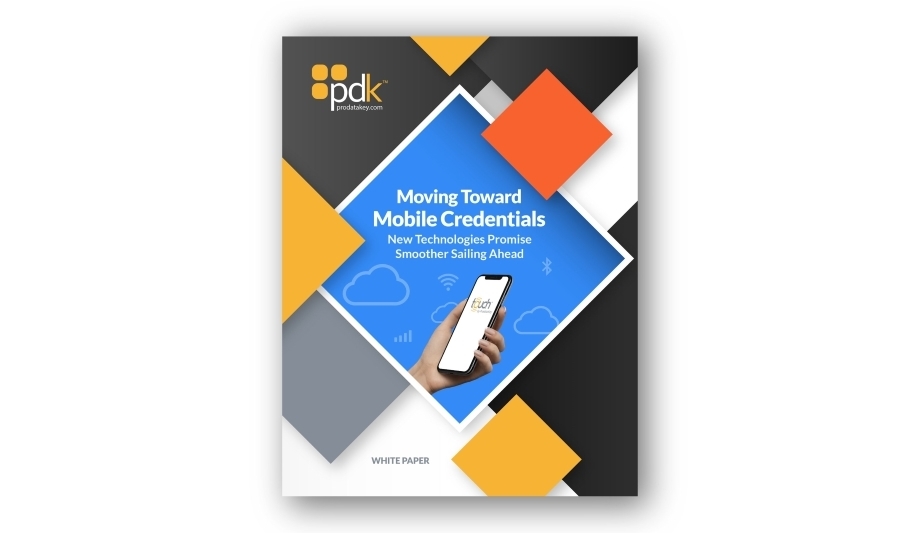

ProdataKey (PDK), an innovator of cloud-based networked and wireless access control products and services, releases a whitepaper that explores why widespread adoption of mobile credentialing in conjunction with access control systems has lagged behind other smart phone applications, and how new technologies promise to overcome barriers related to a security/convenience trade-off previously inherent in such solutions.
By virtue of their processing power, smart phones can provide superior encryption, and security, than RFID cards, fobs and smart cards. They are also more carefully guarded by employees.
Cumbersome activation process
Workers may loan a card to a colleague, but would never part with their phone and, unlike an access card, they would immediately seek to deactivate their phone if it were ever lost or stolen. Despite these and other security benefits, most mobile credentialing systems have fallen short in the area of convenience, requiring users to unlock and remove their phones from pocket or purse in order to use them as a credential.
These systems require a cumbersome activation process for users and additional effort by administrators
These systems also often require a cumbersome activation process for users and additional effort by administrators to manage. In order for smartphones to become the preferred method of credentialing, they need to provide a superior user experience to what they’re replacing – cards or fobs.
Better user experience
Readers of this white paper will learn how, and why, this equation is changing. Topics include:
- How mobile credentials can improve both security and convenience.
- The long-term benefits of deploying and using mobile credentials.
- How to create a better user experience over cards, fobs, and other less convenient mobile credentials.
- Why the convenience versus security trade-off is ending.
Josh Perry, PDK’s CTO, states, “The next generation of mobile credentialing, that leverages all the capabilities of cloud, smartphone and Bluetooth technology in exciting new ways, will deliver a consistently superior experience to security management teams, employees who use these systems, and security integrators who provide installation and support. Within a few years, I predict that the popularity of mobile credentialing will skyrocket.” ‘Moving Toward Mobile Credentials; How New Technologies Offer Smoother Sailing Ahead’ can be downloaded from PDK’s website