At the Global Anti-Scam Summit Asia 2025, Mr Tan Kiat How, Senior Minister of State for the Ministry of Digital Development and Information and Ministry of Health, and Patron of the GASA Singapore Chapter announced a new partnership between the Global Signal Exchange (GSE) and the Government Technology Agency of Singapore (GovTech Singapore) to exchange scam signals.
GovTech Singapore is the first government agency globally to join the GSE, signalling its commitment to strengthen global public-private partnership against online scams.
Data and threat signals in real time
Global collaboration is designed to make online scams less profitable and less effective
Supported by the Global Anti-Scam Alliance (GASA) and powered by Oxford Information Labs (OXIL), the GSE brings together public and private sector organisations worldwide to share abuse data and threat signals in real time, enabling faster disruption of criminal activity.
Tracking more than 380 million threat signals in real time, the GSE allows accredited members - including technology pioneers such as Google, Meta and Microsoft - to pool intelligence and act at speed and scale. This global collaboration is designed to make online scams less profitable and less effective.
Advanced automation and human analysis
As part of this partnership, GovTech Singapore, in partnership with the Singapore Police Force (SPF), will join more than 30 GSE members across industry that are sharing signals on scam-tainted websites. This will strengthen collective efforts to detect and disrupt scam activities.
As part of this league, GovTech Singapore, in partnership with the SPF, will join more than 30 GSE members
This builds on Singapore’s broader efforts to combat scams. GovTech Singapore and SPF co-developed the Scam Analytics and Tactical Intervention System (SATIS), an end-to-end platform that leverages artificial intelligence and machine learning - including GovTech Singapore’s in-house rMSE classifier - to help the SPF prioritise, evaluate, and disrupt scam sites.
Each day, the system reviews hundreds of thousands of websites using a combination of advanced automation and human analysis.
Membership of the GSE
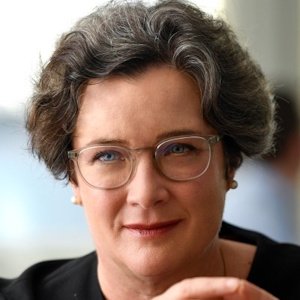
Emily Taylor, CEO at the Global Signal Exchange, commented, “GovTech Singapore’s participation sets a leadership example for other governments around the world to follow. Their membership of the GSE will allow them to join a strong global coalition of both public and private sector organisations working against scams – and the opportunity to work with the world’s pioneering tech giants."
"Turning the tables on the scammers is achievable but it involves businesses, governments and enforcement agencies worldwide to work much more closely together. Together we are stronger and together we can be the change that consumers and businesses need.”
Part of a wider set of initiatives
The announcement comes as part of a wider set of initiatives unveiled at the Global Anti-Scam Summit Asia 2025
Mark Chen, Director of the Government Anti-Scam Products team at GovTech Singapore, said, “Scams are increasingly borderless. By participating in GSE, GovTech Singapore can share intelligence with trusted partners and strengthen protection for our citizens, while contributing to the global fight against scam actors.”
The announcement comes as part of a wider set of initiatives unveiled at the Global Anti-Scam Summit Asia 2025. New data released at the Summit showed that online scams cost Southeast Asia an estimated US$23.6 billion in the past 12 months, with Singapore recording the highest per person loss at US$2,132.
A regional survey of 6,000 people also revealed that nearly 77% of Southeast Asian adults were exposed to a scam in the past year.
APAC markets in 2026
Google has announced a US$5 million grant to expand scam prevention resources across ASEAN, including scaling the educational game “Be Scams Ready”, designed to help consumers build critical scam-spotting skills. The game will launch in Singapore in October and is planned to expand into more APAC markets in 2026.
Jorij Abraham, Managing Director at GASA, who hosted the Summit, added, “Scams are no longer isolated incidents, they are a systemic, cross-border threat. As a founding supporter of the Global Signal Exchange, we are delighted that GovTech Singapore has joined the GSE and the world of collaboration it enables on a global scale and in real-time."
"When governments get involved, we see a step-change that can turn the tide against online criminals. We hope other policymakers and law enforcement agencies around the world take note of GovTech Singapore’s participation and follow suit. The Global Signal Exchange is changing the narrative on online crime, but we need everyone to join GSE and be part of the movement for change.”