
While access control is a fundamental element of security in higher education, many aging access control systems urgently need to be upgraded. This is according to a survey of 1,800 higher education security and IT professionals conducted by Genetec Inc., a technology provider of unified security, public safety, operations, and business intelligence solutions and HID Global, a worldwide provider in trusted identity solutions. While organisations are ready to embrace new technology, they are looking to go “beyond the door” and integrate with other security and operations systems.
Older technologies
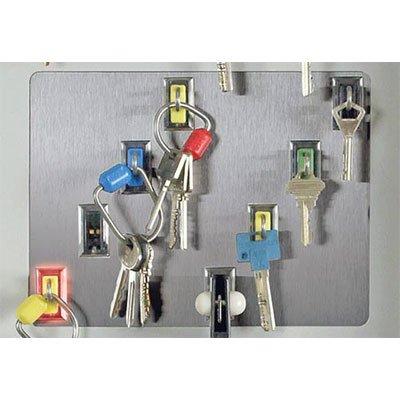
The survey shows that 33.76% of readers, 30.6% of controllers, and 24% of software are more than six years old. Older technologies such as barcode, magnetic stripe (mag stripe) and 125khz low-frequency proximity (prox) continue to dominate physical access control systems in higher education.
More than half of survey respondents still use mag stripe, and almost a quarter still use 125khz prox. 64% of survey respondents said their current access control system experiences malfunctions.
However, more than a third of survey respondents (35%) are ready to embrace more modern technology as a way of improving the experience for students, faculty, and administrators.
Access control for multiple applications
Over half of respondents (54.2%) would be interested in using their access control credentials to support multiple applications beyond physical access, and 44% stated that better integration with other security systems/components is a key driver to upgrade their access control systems.
Most colleges and universities want their students to use a single card or mobile credentials for multiple types of applications from accessing dormitory rooms and checking out books from the library to locking bicycles and paying for food, parking, and more.
However, 64% of survey participants said while they want to upgrade their systems, they view costs as an obstacle. This often leads institutions to ultimately migrate to systems that fulfil minimum requirements because of cost, rather than seek the features and integration capabilities they seek.
Unified video and access control solution
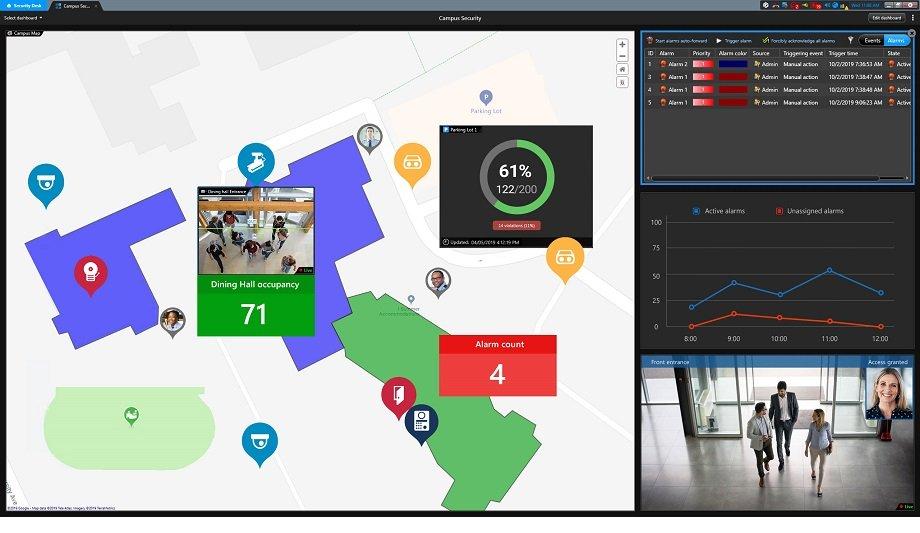
“There are new technology options that can make life easier for administrators as well as those who use the systems,” says Jason Friedberg, Commercial Head, Education at Genetec. “With ever-evolving threats, and a need for increased efficiency, accessibility and privacy, security on higher education campuses is an ever-changing environment. Institutions need to be prepared for these changes by upgrading to a unified video and access control solution that is flexible, connected, and easy to use.”
“And while cost is seen as an obstacle, the true value is often not factored in. With a modern, unified system, ongoing costs often end up being lower than those of legacy systems because the additional capabilities of newer systems increase operational efficiencies across multiple departments,” concluded Friedberg.

- Network / IP
- Electronic security systems
- Library security systems
- Campus security systems
- Physical security
- Security policy
- Security access systems
- Electronic access control
- Identity management
- Fingerprint reader
- Facility security
- School security
- Public security
- Door access control
- Security software
- Physical Security Information Management (PSIM)
- Integration software
- Crime prevention
- Mobile access
- Video surveillance