Check out our special report on casino security

What role does social media play in promoting security?
31 May 2018

Editor Introduction
Social media is part of our everyday lives, and increasingly it is also part of the security marketplace. Social media can be used for effective marketing and to communicate with customers, and it can be leveraged as a tool to make us all more secure. Communicating information in a crisis is another role social media can play to promote security. To elaborate on social media’s increasingly vital presence in the security marketplace, we asked this week’s Expert Panel Roundtable: What role can social media play in security?


Social media, when integrated with the right security systems like access control and video management technologies, can enable safer, smarter, more efficient environments. Take a stadium, for example, which is a complex facility to secure and where social media is typically only used to improve fan experience. This provides a great opportunity to leverage social media for a greater purpose, using it in combination with other technologies to reduce risk and increase safety. When integrated with security systems, social media feeds can arm security staff with situational awareness, helping to mitigate potentially harmful incidents. Beyond the security staff at a stadium, social media feeds can also be helpful to local law enforcement and local businesses who work together towards a common goal – a safer community.

Social media can help us reduce false police dispatches by drawing in a personal circle of people that can validate an alarm, whether it be a neighbour looking out their window to see what’s going on, or a family member that knows your travel plans and is taking care of your house. I believe social media will allow us to build small virtual villages where people take care of each other in a large impersonal city—making us safer and life more difficult for criminals. In fact, we’re already starting to see home alarm solutions that integrate to social networks, delivering the next generation of security.

Social media has brought a new channel for risk identification and situational awareness to security providers and law enforcement. While the concept of OSINT, or open-source intelligence, has been around for over a decade, social media has greatly expanded the amount of information now available for analysis and response. By using today’s advanced OSINT technology platforms for automated monitoring of social media posts, organisations can detect potential threats and maintain better awareness of imminent protests, riots, or terrorist activity. With more than three billion active social media users posting on a daily basis, there is a massive amount of data available on an ongoing basis for this type of analysis and response. The information gleaned from social media can thus be used to alert security management and law enforcement to enable better preparation and prevention of incidents as well as faster response to minimise any consequences.

Social media can be a powerful ally for the security industry and the people who rely upon it. For instance, the public tweeting videos/photos of events or incidents can be used to gather information or raise awareness with other people and the authorities. From a security provider’s point of view, it can also be great for business. If end users form groups to discuss products and to share experiences, it provides a great forum for testing in the field and feedback for improvements/developments. Manufacturers/service providers can directly interact with customers, thanking them for their input, enhancing the relationship and encouraging brand loyalty. When engaged with purposefully and sensibly, social media can be a huge help to security providers. However, it does mean investing in it properly, staying on top of the relevant channels, monitoring conversations/posts and interacting in a positive and fruitful way that benefits everyone.

Social media is part of our daily lives and integral to our interaction with customers in the marketplace. Social media outlets bring the human element to interfacing with our communities and customers. This humanisation allows us to connect on a different level with customers and address topics with a different tone. The security marketplace can take advantage of the broad audience that social media reaches and educate them on how to protect themselves. These channels of communication create a community; a community where customers can share best practices and increase the level of professionalism for the entire group. This community becomes a resource to collect insight into the daily roadblocks of customers and bring to light the opportunities for the marketplace. As the adoption of social media continues to increase, we will see benefits from the way we educate, communicate and learn about the needs of our customers.

As social media has grown in popularity, so has its involvement in emergency situations. There are two key uses: amplifying a message and crowd-sourcing information. Safety organisations can use social media to both proactively publish critical information and reactively respond to erroneous information. It’s critical that organisations publish accurately and frequently to ensure they provide succinct, actionable, timely information. Additionally, social media can be a helpful tool to combat incorrect narratives and prevent stories from third-party sources from clogging timelines. Social media is not only essential for sharing information during an event, but it can also allow security teams to gather information. Oftentimes, social channels are the first place the public turns to not only to collect information during an emergency, but also to share firsthand accounts of events. Monitoring these channels can provide valuable situational intelligence for improving responses and keeping both individuals and responders safe.
Editor Summary
Uses of social media in the security industry range from providing situational awareness to verifying and validating alarms. Social media also draws the industry's manufacturers, integrators and their customers closer together to share information more intimately about security challenges and how to solve them. Social media has faced some difficult questions lately regarding the need to ensure the privacy of data. Addressing those questions is critical to the future of social media – and its future role in security.
Johnson Controls, Inc. products


Johnson Controls, Inc. news
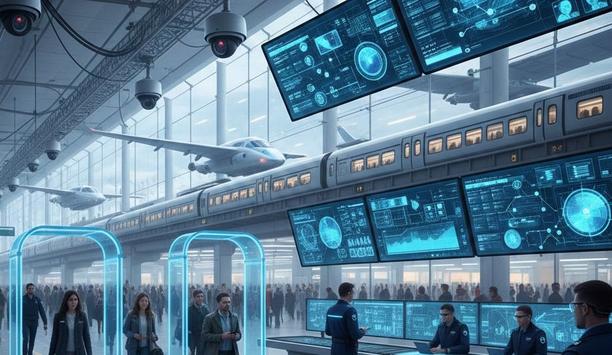
Transportation systems need robust physical security to protect human life, to ensure economic stability, and to maintain national security. Because transportation involves moving large numbers of people and critical goods across vast, often interconnected infrastructure, it presents a highly attractive target for various threats. More threats equate to a greater need for security. We asked our Expert Panel Roundtable: What are the emerging applications of physical security in the transportation...

Installing physical security systems requires integrating diverse technologies (e.g., cameras, access control, alarms) that often use different protocols and must be adapted to a building's unique physical layout and legacy infrastructure. Specialised technical expertise is required for seamless networking and proper configuration. Hopefully, no important factors are overlooked in the installation process. We asked our Expert Panel Roundtable: What is the most overlooked factor when inst...

Emphasising proactive rather than reactive security shifts the focus from dealing with crises and damage control to prevention. Advantages of a proactive approach include cost efficiency, better business continuity, and fewer crises that draw attention away from strategic improvements. Staying ahead of threats is a core mission of the security department, and technology has evolved to enable security professionals to deliver on that mission better than ever. We asked our Expert Panel Roundtable:...
Johnson Controls, Inc. case studies

Keeping beachgoers, swimmers and surfers safe is all in a day’s work for the team at South Maroubra Surf Live Saving Club, and every second counts when an incident unfolds on the water. One of the most topical issues and threats to those enjoying Australia’s world-renowned beaches is sharks, so for the surf club it made sense to look to smart, new technology to keep those who enjoy the sand and surf safe. Security technology to lifesavers "Since the club wa...

SwiftConnect, a pioneering provider of connected access enablement, is powering easy, secure, and private access using an iPhone and Apple Watch with the Johnson Controls Software House C•CURE 9000 access control system. The SwiftConnect AccessCloud platform integration with the Software House C•CURE 9000 access control system makes it possible for Software House C•CURE 9000 customers to take advantage of the employee badge in Apple Wallet for physical access. Deployments of emp...

It may sound like a small change, but installing security cameras on a property can significantly impact occupant and visitor behaviour by enabling more accountability. This is notable for environments such as K-12 schools where occupants are younger and more impulsive. Lack of visibility A public school system on the East Coast faced frequent incidents of bullying, vandalism and theft among students as well as the harassment of faculty and staff and was struggling to keep its occupants accou...
Johnson Controls, Inc. white papers
Johnson Controls, Inc. videos


Frictionless access control: 5 minutes with Rick Focke Tyco Software House

Video Surveillance Solutions: 5 Minutes with Ryan Hulse from JCI

Johnson Controls P2000 Security Management System Controls Access at RWU, Rhode Island, USA

An overview of the Johnson Controls P2000 Security Management System

Johnson Controls Company Profile

Johnson Controls Corporate Profile

Expert commentary
Security beat

Johnson Controls, Inc.
507 E Michigan Street
Milwaukee, WI 53202


