Check out our special report on casino security

What’s new “on the edge” of security and video surveillance systems?
15 Aug 2018

Editor Introduction
By definition, an edge device is an entry point to a network. In the physical security industry, edge devices are the cameras, sensors, access controllers, readers and other equipment that provide information to the IP networks that drive today’s systems. In the Internet of Things (IoT), edge computing refers to an increasing role of edge devices to process data where it is created instead of sending it across a network to a data center or the cloud. In our market, edge computing takes the form of smarter video cameras and other devices that store and/or process data locally. We asked this week’s Expert Panel Roundtable: What’s new “on the edge” of security and video surveillance systems?


As more powerful in-camera chipsets are developed, edge devices are capable of even more powerful analytics that can inform operators in real-time of events requiring attention. Part of this significant evolution is from a form of artificial intelligence (AI) called deep learning. Deep learning takes machine learning to a new level based on neural network theory that mimics the complexity of the human brain. Previously only available as a server-side process which would require video to be decompressed and processed, algorithms and companion data sets created from deep learning can be embedded on the edge to perform real-time detection and alerts for the specific conditions they have been trained to recognise. On-the-edge devices cannot continue to self-learn, but they can provide a useful function for recognising known objects or behaviours. Still in its infancy, this technology will take in-camera analytics to a new level for security and retail use cases.

Embedded artificial intelligence on the edge is a hot topic right now, and I suspect it will continue to be an area of interest to the market. When a security system utilises AI, it typically requires a large-scale application, with connections to hundreds of devices. With some level of AI processing functionality on the edge, it will enable the back-end server to load more quickly, and will also provide prompt, real-time analysis to users from the edge device and alleviate the headache of connecting hundreds of devices.

Advances in AI plug-ins within video surveillance systems will continue to move forward. As more data points become available to be monitored, these smart integrations of license plate recognition (LPR), facial recognition, anomaly detection and others are becoming more refined and proving to increase accuracy and reduce response times that better help organisations manage their overall security landscape.

Undoubtedly facial recognition technology is “on the edge” of the security and video surveillance sector. Once the stuff of sci-fi, AI and enhanced camera/screen resolutions have made it a practical reality. The applications are seemingly endless. The obvious application is tracking criminals or suspects across a wide area or highly busy environments (such as airports, stations and any other crowded places where people gather). There are also more humanitarian applications, such as finding a missing child or vulnerable adult across a dispersed area. Increasingly AI is going beyond just facial recognition – walking gait analysis has been a reality for a number of years. As sensors and cameras continue to improve in their accuracy, we can expect to see systems that can detect the most seemingly subtle of clues – such as the heat signature of the body or even sounds, such as voices or walking/breathing, which can all be unique.

In short, the answer is "functionality." That is, edge devices – such as cameras, speakers, access controllers and readers, network-connected sensors and other IoT devices that are at the "edge" of the network – are becoming more functionally capable. Edge functionality encompasses running video management and audio applications, analytics, networking, storage and more. With an increased amount of capability comes more possibilities with regards to applications running in the devices and applications based on correlating data from different devices. Intelligent edge devices can also communicate with each other over the network, increasing integration between sensors and creating a more cohesive approach to the management of these devices. The cloud is increasingly being used to connect and manage these devices. And while cybersecurity is not new, the proliferation of edge devices on the network brings a new level of urgency to it.

Security remains a primary need, but video surveillance systems can fulfill much more than that. Organisations often want to create more value out of their investment. To bring it one step further and get into the operations and business intelligence, new technologies are being incorporated with existing security systems. Edge devices can not only protect, but also provide insights into their environment. Intelligent capabilities such as video analytics and correlation engines augment the value of video surveillance installations. Maintenance and routine tasks can be automated, so operators focus on value-added duties, and respond to critical situations more rapidly. Everyone wants smarter data, and that data needs to be structured. We’re slowing moving away from traditional monitoring with list of cameras, towards a map-based experience with dashboards and widgets. This provides a rich and dynamic view of security and business environments, allowing organisations to do more with video.

Video surveillance has been around for years and is foundational to a building’s overall security strategy. However, in today’s technology-driven world, video means more than traditional cameras, as integration capabilities have transformed the video surveillance market. Now, video surveillance tools, like IP and PTZ cameras, are being integrated beyond security systems like access control and mass notification, to building systems such as lighting and HVAC controls. It’s important to work with an integrator to fully understand your building’s potential for connecting these systems. With the proper guidance and network infrastructure in place, the integration of video surveillance with other business systems can help create a more efficient, sustainable and secure building environment.
Editor Summary
Artificial intelligence (AI) comes up frequently among our Expert Panelists' descriptions of what's happening "on the edge" of today's security networks. AI is the latest development in the move toward processing of data near where it is created – at the edge. A couple of our respondents also hinted at a more abstract interpretation of "edge," as in leading edge (or bleeding edge). All the responses highlighted developments that will have a huge impact as they make their way into real-world solutions.
Johnson Controls, Inc. products


Johnson Controls, Inc. news
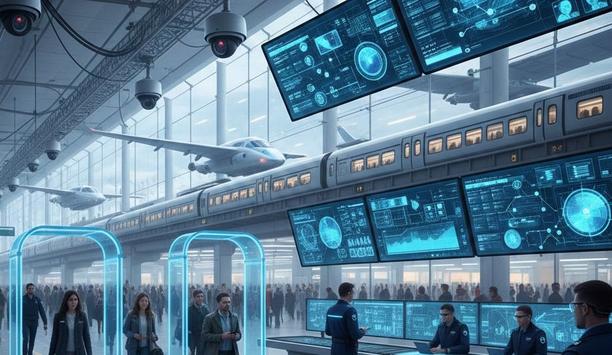
Transportation systems need robust physical security to protect human life, to ensure economic stability, and to maintain national security. Because transportation involves moving large numbers of people and critical goods across vast, often interconnected infrastructure, it presents a highly attractive target for various threats. More threats equate to a greater need for security. We asked our Expert Panel Roundtable: What are the emerging applications of physical security in the transportation...

Installing physical security systems requires integrating diverse technologies (e.g., cameras, access control, alarms) that often use different protocols and must be adapted to a building's unique physical layout and legacy infrastructure. Specialised technical expertise is required for seamless networking and proper configuration. Hopefully, no important factors are overlooked in the installation process. We asked our Expert Panel Roundtable: What is the most overlooked factor when inst...

Emphasising proactive rather than reactive security shifts the focus from dealing with crises and damage control to prevention. Advantages of a proactive approach include cost efficiency, better business continuity, and fewer crises that draw attention away from strategic improvements. Staying ahead of threats is a core mission of the security department, and technology has evolved to enable security professionals to deliver on that mission better than ever. We asked our Expert Panel Roundtable:...
Johnson Controls, Inc. case studies

Keeping beachgoers, swimmers and surfers safe is all in a day’s work for the team at South Maroubra Surf Live Saving Club, and every second counts when an incident unfolds on the water. One of the most topical issues and threats to those enjoying Australia’s world-renowned beaches is sharks, so for the surf club it made sense to look to smart, new technology to keep those who enjoy the sand and surf safe. Security technology to lifesavers "Since the club wa...

SwiftConnect, a pioneering provider of connected access enablement, is powering easy, secure, and private access using an iPhone and Apple Watch with the Johnson Controls Software House C•CURE 9000 access control system. The SwiftConnect AccessCloud platform integration with the Software House C•CURE 9000 access control system makes it possible for Software House C•CURE 9000 customers to take advantage of the employee badge in Apple Wallet for physical access. Deployments of emp...

It may sound like a small change, but installing security cameras on a property can significantly impact occupant and visitor behaviour by enabling more accountability. This is notable for environments such as K-12 schools where occupants are younger and more impulsive. Lack of visibility A public school system on the East Coast faced frequent incidents of bullying, vandalism and theft among students as well as the harassment of faculty and staff and was struggling to keep its occupants accou...
Johnson Controls, Inc. white papers
Johnson Controls, Inc. videos


Frictionless access control: 5 minutes with Rick Focke Tyco Software House

Video Surveillance Solutions: 5 Minutes with Ryan Hulse from JCI

Johnson Controls P2000 Security Management System Controls Access at RWU, Rhode Island, USA

An overview of the Johnson Controls P2000 Security Management System

Johnson Controls Company Profile

Johnson Controls Corporate Profile

Expert commentary
Security beat

Johnson Controls, Inc.
507 E Michigan Street
Milwaukee, WI 53202


