
 |
| HID's annual assessment is intended to help organisations understand the latest security advances |
HID Global®, a worldwide leader in secure identity solutions, recently issued its outlook on technology trends for 2015, as well as other anticipated developments across key vertical industries in the secure identity marketplace. The annual assessment is intended to help organisations understand and take advantage of the latest advances to improve security, convenience and the user experience.
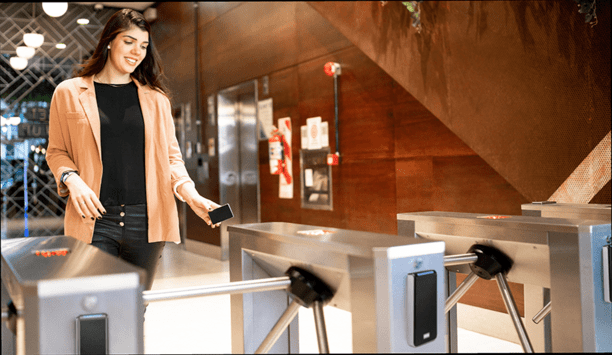
“This past year laid the foundation for what we expect to be an exciting 2015 for our customers and partners as they continue to benefit from the flexibility, adaptability and new capabilities made possible with award-winning Seos® technology,” said Dr. Selva Selvaratnam, senior vice president and chief technology officer with HID Global. “Whether it’s moving campus IDs onto smartphones, or centralising all identity management for protecting doors, data and cloud-based applications, or securing electronic medical prescriptions and ATM transactions, we will see the transformation of our customers’ experience using secure identities during the coming year, and beyond.”
Driving new capabilities across markets are a set of six key technology trends that Dr. Selvaratnam has identified, including:
"Whether it’s moving campus IDs onto smartphones, or centralising all identity management for protecting doors, data and cloud-based applications, or securing electronic medical prescriptions and ATM transactions, we will see the transformation" |
- Increased innovation fueled by interoperable technologies that enable partners to build new solutions (secure print authentication, EV charging station access, and more) that can be accessed with the same smart card or smartphone used to open doors.
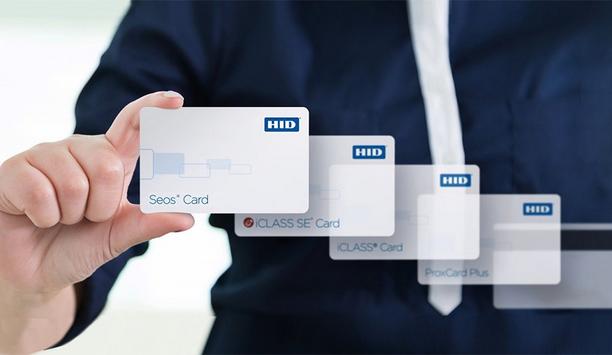
- The adoption of new credential form factors.
- Additional ways to open doors and other entrance systems.
- Advances in how to manage identities.
- Using biometrics to help change security from a barrier to a guardrail.
- The growing popularity of interconnected devices and the Internet of Things (IoT), where Wi-Fi locks, RFID-enabled devices, online hotel locks, and mobile keys are all connected ways of interacting or capturing data for the benefit of companies or consumers.
In addition, Dr. Selvaratnam highlighted a number of trends to watch across the following eight vertical market segments:
- Banking and financial institutions: Physical and logical security will continue to converge into unified solutions, against the backdrop of a mobile transformation in consumer banking, the U.S. move to EMV credit and debit cards, and the early phases of biometric authentication at the ATM.
- Hospitals and healthcare institutions: The latest secure identity solutions will play a pivotal role in securing the facility, narcotic prescriptions and personal health information, and will also be used outside the hospital to verify “proof of presence” for home health service delivery.
- Education: As the transition from magnetic stripe (magstripe) and proximity (prox) to high-frequency contactless smart cards continues, universities will also move campus IDs onto smartphones and other mobile devices using systems that can manage multiple ID numbers for multiple uses on multiple platforms.
- Federal government: Government-wide upgrades to new, more secure access control technology will extend beyond the desktop to the door, using both cards and mobile phones, and rigorous secure issuance requirements will drive the growing need for certified and approved printers.
- Government ID: Worldwide demand will grow for end-to-end, highly secure government-to-citizen ID solutions, along with small-footprint, industrial-strength printers that combine flexibility and security, reduce infrastructure investments, and maximise throughput.
- Transportation: IP-based access control will grow in importance across the transportation segment, improving security by integrating a physical access control system (PACS) with other solutions on the same network. Meanwhile, biometric systems will offer an opportunity to increase security and profits in both commercial and personal transportation applications.
- Enterprise: Organisations will increasingly need to improve security at the door, for their data, and in the cloud, and will move to converged solutions while simultaneously accelerating the move beyond passwords to strong authentication across numerous physical and logical access control applications.
- Retail: The biggest focus will continue to be defending against threats such as those experienced by Target Corporation and other major retailers. Other growth areas include mobile IDs, the Internet of Things, integrated biometric authentication, brand protection solutions that validate the authenticity of goods, trusted “proof of presence” applications for digital out-of-home (DOOH) media campaigns, and instant issuance solutions for branded credit and loyalty cards.
From facial recognition to LiDAR, explore the innovations redefining gaming surveillance