
How does technology contribute to the security of public events?
10 Apr 2024


Editor Introduction
Technology offers a range of tools to bolster security at public events, including before, during, and after. This year, the 2024 Summer Olympics in Paris will draw the attention of the world, requiring the best protection available for the venues, the athletes, and the attendees. Other happenings such as the FIFA World Cup, the Super Bowl, the Tour de France, and the U.S. NBA Finals are momentous events that challenge security and law enforcement personnel to keep them safe. We asked this week’s Expert Panel Roundtable: How is technology contributing to security in the arena of public events?


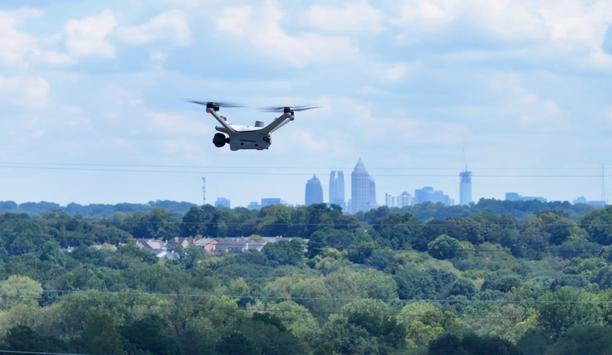
Technology significantly bolsters security at public events through advanced surveillance, access control, and communication systems. High-resolution IP cameras, drones, and facial recognition enhance real-time monitoring, aiding in threat detection. Access control technologies, such as biometric scanners and secured credentials ensure bad actors are kept at bay, while data analytics and AI analyse patterns for anomaly detection. Rapid communication platforms facilitate coordinated responses among security teams and law enforcement, while emergency notification systems keep attendees informed during critical situations. Cybersecurity measures protect digital infrastructure, and smart access management adjusts permission dynamically. Biometric identification enhances identity verification, and mobile apps empower attendees to report incidents. Overall, technology creates a layered security approach, mitigating risks and ensuring the safety of participants in public events.

Technology increasingly plays a pivotal and comprehensive role in enhancing events management: From heightening safety and security, preventing vandalism and hooliganism, and delivering critical real-time situational awareness to providing traffic and crowd insights, event managers are realising the full scope of their security tech stack for evolving applications. Increasing control, accelerating responsiveness, and democratising data access ensure safety teams can stay ahead of potential challenges. Events, such as the upcoming Paris Olympics, highlight the importance of managing mass attendance across an expansive landscape. By integrating and relying on artificial intelligence (AI) and CCTV technologies, security personnel are empowered with more visibility for faster decision-making and emergency response. These technologies will also support rapid incident analysis both for immediate investigations and long-term strategy improvements to increase ongoing effectiveness. A technology-driven approach ensures a comprehensive safety net that guarantees security and the guest experience, while also balancing the critical role of human security personnel with the responsible use of tools and tactics.

Public safety may be one of the biggest concerns in the security industry today. Over the last two decades, we have had to focus more heavily on improving the safety and security of events, city spaces, and the public in general. From the first body scanner implemented by the Transportation Security Administration (TSA) to the incorporation of AI technology into video surveillance, new technologies aim to enhance current procedures and systems. AI can lead to new ways of detection, rapid response, and protection in real-time events and environments. The goal of using AI-enhanced security to secure public spaces is needed now more than ever. The security landscape is moving towards a future focused on proactive and active deterrents of threats to public safety. The most exciting part to me is that advancements in AI technology can improve systems already in place, making adoption simple.

Command and control vehicles bring much-needed technology to public events, which often occur on sites lacking integrated infrastructure and communication systems. Mobile Commands create a robust Security Operations Centre (SOC) onsite, complete with onboard communication systems, video surveillance, drone detection, and real-time situational awareness from social media, local emergency services, weather sensors, and other sources. Events rated a Level 1 or 2 on the U.S. Department of Homeland Security’s Special Event Assessment Rating (SEAR) qualify for support from federal and state agencies that provide a Mobile Command presence. However, smaller events often face budget constraints that make access to a top-notch Command and Control vehicle a significant barrier. A new option, “Mobile Command as a Service” (MCaaS), empowers event security teams with badly needed resources they could otherwise not afford. Just as companies invest in fractional jet ownership, MCaaS provides access to a fully equipped, state-of-the-art Mobile Command for a specified number of engagements a year. In this way, technology is helping protect the public at parades, concerts, conventions, sporting events, and other gatherings where bad actors might otherwise exploit vulnerabilities and threaten lives.

A crucial part of securing public events is to raise situational awareness for event operators and law enforcement so they can keep the event going as planned. AI-based crowd detection and people counting are examples of analytics that can help manage large crowds and monitor the flow of people in real-time. Sending automated alerts to security and law enforcement when fire or smoke is detected can prevent damage and injury from becoming widespread. Is a vehicle present in a pedestrian-only area? Getting instant alerts from AI cameras helps validate and prioritise an appropriate response. AI also helps operators search across video streams for persons of interest using specific attributes such as the color of clothes, objects carried or worn, long/short hair, shoe colour, and more. AI-enabled cameras allow security teams to adopt a more proactive posture in response to imminent threats, making them much more efficient and effective when seconds count.

Technology plays a pivotal role in enhancing security at public events. From ticketing to parking management, venues, and communities utilise digital solutions to ensure an enjoyable experience while prioritising safety. This requires communication among multiple stakeholders. The event team, local businesses, government agencies, and first responders work together to create an environment of situational awareness and cohesive response during the event. A unified physical security platform that combines security systems with other event safety solutions plays a fundamental role in ensuring effective collaboration. Teams can use data from the unified platform to gain actionable insights and respond appropriately quickly. By embracing a unified, comprehensive security strategy, security teams can proactively safeguard attendees, assets, and personnel. Thus, they can more effectively foster safe, secure, and memorable public events.

Technology plays a crucial role in enhancing security measures for public events, enabling organisers and security personnel to better protect attendees and respond effectively to any potential threats or emergencies. Gone are the days when event security was solely about gates, guns, and guards. Today, it is imperative to use technology to detect threats ahead of time. You want to be aware of early indicators and threatening chatter. You want to avoid major incidents at the event, and you cannot do any of that without technology. You need to utilise OSINT (Open Source Intelligence) to detect, validate and act on potential threats. Moreover, technology allows you to do site assessments in an expedited fashion. You can look at critical incidents and chatter happening near and around your event location within seconds. Finally, technology allows you to escalate the threats you’ve detected and any other digital investigations to enforcement entities to manage trends and build more predictive insights to future-proof your event protection plan. I see technology as a partner to physical security. The technology identifies the intelligence your security teams need to be ready and equipped to protect event attendees, event principals, and physical buildings.

The security and safety of today's major sporting events are highly dependent on Radio Frequency Indentification (RFID) solutions for controlling the ticketing and crowd-management experience. Two key learnings emerged from successful HID deployments at the past three FIFA World Cups. The first is the value of going well beyond the ticket itself to include real-time monitoring for crowd-management analytics and post-event continuous-improvement insights. Second, deployment intangibles are increasingly important, including the solution provider's experience in anti-counterfeiting technology, on-site troubleshooting, and managing the growing interconnectedness of today's modern event ticketing processes. The industry's focus is turning to integrated Event Management Platforms (EMPs) that: 1) cover, at minumum, an outer - and inner-perimeter layer at each venue; 2) provide all necessary hardware for secure and smooth traffic flow and a positive fan experience; and 3) support all ticket types including mobile, paper and, in the future, NFC tickets on the secure element of a phone or even a smartwatch.
Editor Summary
It's important to remember that technology is a tool, and its effectiveness depends on how well it is implemented. Protecting public events involves the deployment of a range of security solutions, such as video surveillance, access control, communication systems, and even drones. For large events, crowd detection and people counting become more important. With the implementation of artificial intelligence and biometrics solutions, privacy concerns and responsible data management are critical considerations.
HID products







HID news

HID, a pioneer in trusted identity solutions, has achieved Texas Risk and Authorisation Management Program (TX-RAMP) certification for its Public Key Infrastructure as a Service (PKIaaS) solution. This certification demonstrates HID’s commitment to cybersecurity excellence and enables Texas state and local government to confidently engage with approved, trusted providers to procure secure, cloud-based certificate lifecycle management services with faster timelines and reduced administrati...

HID, a worldwide pioneer in trusted identity solutions, announced the appointment of Jos Beernink as Vice President Europe for its Physical Access Control (PACS) business. In this role, Beernink will lead HID’s strategy, sales and operations across the whole European region, helping organisations leverage trusted identity and access control technologies to create a secure, smarter and more efficient workplace and physical spaces. Prior roles of Beernink Beernink brings more than 2...

On Wednesday, November 19, starting at 08:00 CST, ASSA ABLOY hosts its Capital Markets Day in Milwaukee, Wisconsin, USA. Nico Delvaux, President & CEO and Erik Pieder, CFO, will provide an update on ASSA ABLOY’s strategy and direction, including an overview of the company’s strategic objectives and priorities to accelerate profitable growth. The financial targets of an EBIT-margin of 16-17% and annual sales growth of 10% over a business cycle are re-confirmed. No deta...
HID white papers












HID case studies

Enhancing enterprise security is high on the list of priorities for businesses across sectors. Within the retail industry, there is an additional focus on enabling new ways of working through management tools. Integrated solutions and applications help to create a robust security landscape and ensure a future-ready posture as organisations look to address emerging risks and create better experiences for next-gen employees. Physical access control (i.e., the readers on the door and the credentia...

Founded in 2010, Avolon is the third-largest aircraft leasing company in the world with 824 aircraft and 145 customers in 62 countries. Its new global headquarters in Dublin is comprised of 6,967 sq m (75,000 sq ft) of secure office space across six floors that houses its IT, catering, legal, and communications departments. Need for a centralised monitoring solution Avolon’s new premises in the upmarket Ballsbridge area of Dublin provided an opportunity for the company to rethink its app...

How do you rethink and transform building access for a 241-year-old company? BNY started by asking employees. The response was encouraging. The BNY team found that employees embraced the concept of mobile access solutions. The thought of implementing access solutions was already being considered by the company and the team was excited about the idea of providing a modern experience that allows employees worldwide to conveniently access their building spaces with a simple iPhone or Apple Watch....
HID virtual events





Expert commentary

Security beat

Haverhill Business Park, Phoenix Road, Haverhill, Suffolk, CB9 7AE, United Kingdom
Telephone: +44 (0)1440 714 850


