Is there a seasonal impact on security system sales?

Editor Introduction
Any business sees its share of highs and low, of flare-ups and lulls. In the security market, several factors can impact general business trends, whether at the macro level or for an individual manufacturer or integrator. The economy is always a factor in the business climate, but are there others? We asked our Expert Panel to assess the impact of another variable – the seasons. Specifically, we asked this week’s Expert Panel: What is the seasonal impact on sales of security technology and systems? When are the highs and lows?


The impact of seasonal sales in the security industry depends on the vertical market. If your company does business with the state or Federal government, you will see swings based on the spending habits of the "spend it or lose it" budget deadlines. Education is another vertical that has swings depending on school-board policies. Other verticals see little to no seasonal impact.

The seasonal highs and lows vary by market segment. Large project business is generally seasonal because of budget cycles. Projects are often specified and budgeted the prior year, and money is released early in the calendar year. This is because most companies’ fiscal years match the calendar year. We often see a spike of large orders at the end of a calendar year as people are spending the last of their budgets, the old “use it or lose it.” Two other vertical markets where we see a seasonal impact are Retail and Education. Because of the busy holiday season, retailers typically have a freeze in early October for any work in their stores. While projects are budgeted in the prior year, the money is generally released in mid to late-February following a full accounting of the holiday sales revenue. Construction projects for schools are done over the summer holidays (June-August).

We see a big influence of the holiday seasons on sales of security technology. For example, large projects often kick-off after the summer season. The selection process of new technology will then start and often includes multiple suppliers. The selection process and sale are then often finalised before the Christmas holidays, which is why we see a high in November and the beginning of December. Budgets for a new calendar year are often allocated in October and after the winter holiday, new projects will start to happen of which we see a high in May and June as there is often a need to finalise the projects before the start of the summer holiday.

We see a slowdown during the winter months (November, December, January, February) in the United States, mainly due to the ground being frozen from the cold temperatures throughout the Midwest and Northeast. We see an increase in sales in spring and late summer in the United States with the government fiscal year ending. The Middle East and Asian markets are pretty consistent, and weather isn’t a factor. Europe can be similar to North America without the jump in late summer since we don’t typically get as much money from their fiscal year ending push. Any type of terror attack will immediately increase sales irrespective of the time of year. Such increases in activity are completely dependent on the event and not related to any other factors.

I’ll admit to shooting from the hip here because I don’t deliberately track these figures. In the same way that architects probably have a limited feeling of seasonal variations in steel girder sales, we CCTV consultants won’t assiduously graph security technology sales. Nonetheless, we recognise the time lag between our design work and managing the subsequent procurement and installations. This is usually at least a month, and often two or three months, maybe longer, depending on tendering processes. My work can slow in July/August owing to clients’ holiday absences. The Christmas and New Year holidays create a lull in December too. Significantly, government departments in the U.K. have “spend it or lose it” budget cut-off at the end of March each year. It’s often the accounting year-end for companies too, so we often see a rush to spend through springtime. That helps to bring a smile through the dark winter months.
Editor Summary
It’s not a surprise that customers’ budgeting cycles and the yearly ebb and flow of their businesses have an impact on when they might want to buy a new security system. Complicating the picture is the long (and variable) time period required for a system to be designed, approved, put up for bid, etc. It’s also not surprising that these various factors translate into a somewhat predictable pattern of busy and slow times for consultants, integrators and manufacturers – although when the slow times happen depends on which group you consider. A measure of success might be how well companies prepare during the slow times for the coming, seasonal onslaught of business.
Delta Scientific Corporation products





Delta Scientific Corporation news

Delta Scientific Corporation, the global pioneer in high-impact vehicle barricade systems, is proud to announce the launch of its newest innovation: the DSC50 “S” Barrier, a lightweight, crash-rated security solution tailored for temporary deployment across high-traffic urban environments. Motivated by recent public safety challenges and a mounting global awareness of vehicular threats, Delta’s engineering team designed the DSC50 “S” Barrier to provide rapid, visua...
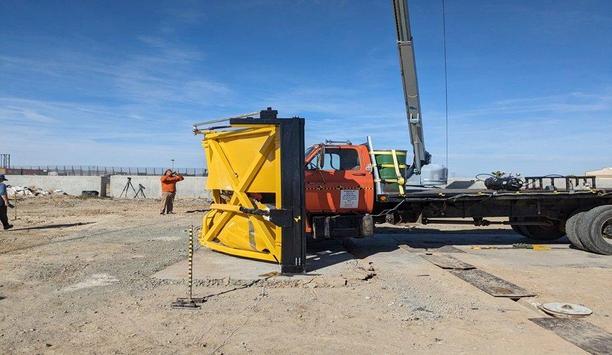
Delta Scientific, the manufacturer of counter-terrorist vehicle control systems used globally, announced their MP100 portable barrier system has successfully achieved an M30/P3 designation. Total penetration was measured at a mere 51 feet, making this an industry pioneer. The MP100 was tested to the new ASTM F2656-23 standard which measures the penetration level from the pioneering edge of the barrier versus the back-side of the barrier of the previous standard. Foldable design The MP100 port...
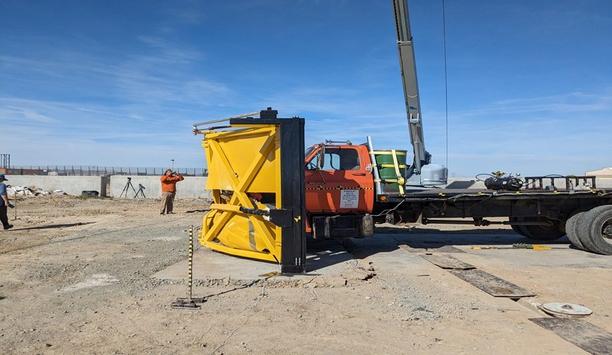
Delta Scientific, the manufacturer of counter-terrorist vehicle control systems used globally, announced their MP100 portable barrier system has successfully achieved a PU30/P3 designation. Total penetration was measured at a mere 29 ft, making this an industry pioneer. The MP100 was tested to the new ASTM F2656-20 standard which measures the penetration level from the leading edge of the barrier versus the back-side of the barrier of the previous standard. MP100 portable barrier system The M...
Delta Scientific Corporation case studies

The DSC550 was tested to the new ASTM F2656-20 standard which measures the penetration level from the foremost edge of the barrier versus the back-side of the barrier like the previous standard. This can provide a difference of (1.52 m.) and makes the negative penetration level even more impressive. Design and features The DSC550 open frame barrier features a shallow foundation of only 24 inches (61 cm). The open-frame design additionally provides a unique counter-balance design with no spring...

This July, Delta Scientific expanded its partnership with American Family Field, home of the Milwaukee Brewers, delivering new levels of crowd protection for fans and staff alike. After deploying MP5000 portable barriers for perimeter safety, stadium officials turned to Delta again, this time for a flexible solution at tighter access points. The answer: the MP100, Delta Scientific’s newest portable barrier with M30/P3 crash rating, rapid setup, and custom Brewers decals. Whether protec...
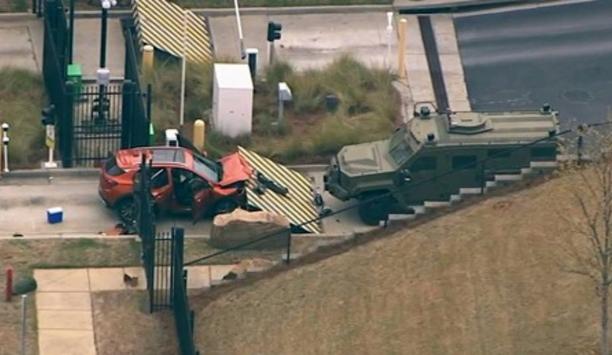
Delta Scientific, the pioneering manufacturer of counter-terrorist vehicle control systems used globally, announced that on Monday, April 1st, a DSC501 High-Security Barricade stopped an unauthorised vehicle from entering an FBI field facility in Atlanta, Georgia. According to officials, the orange Buick Encore tried to follow an FBI employee’s car into the facility before being stopped by the Delta DSC501 barrier. The driver was then apprehended by special agents who were in the immediat...
Delta Scientific Corporation videos


Delta Scientific: 40 Years Protecting the World's Most Important Facilities
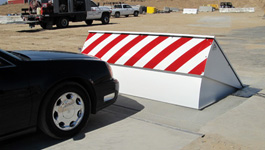
Delta Scientific Corporation DSC 207s Embassy barricade for US State Department
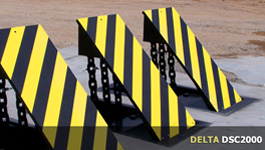
Delta DSC2000 Barricade System for High Speed Applications
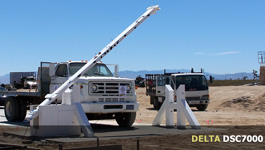
Delta's DSC7000 Barricade to Secure Wide Roadways from Attacking Vehicles

Delta DSC7500 Beam Barricade for Counter Terrorist Level Protection against Vehicle Attack

Delta Scientific Corporation- Leading Manufacturer of High-Security Anti-Terrorist Barricades
DSC 288 Slide Gate
DSC 650 Shallow Bollard System
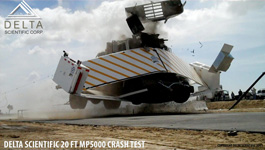
Delta Scientific Portable Barriers-MP5000
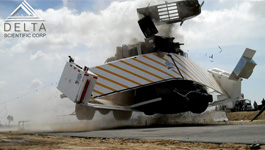
Delta Scientific Corporation- DSMP5000 16 Foot Version
Delta Scientific Corporation MP5000 Portable Counter Terrorist Barricade System Deployment
Delta Scientific Corporation DSC600 Shallow Foundation Fixed Bollard Array -K12 Crash test
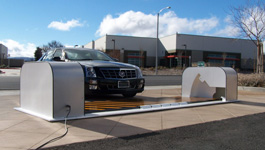
Delta Scientific Corporation DSC-1200 Surface Mounted Barricade
Delta Scientific's DSC 501 Shallow Foundation Barricade for Security and Vehicle Access Control
Expert commentary

Security beat
| Head Office 40355 Delta Lane Palmdale, CA 93551 USA  +1 (661) 575-1100 +1 (661) 575-1100  www.deltascientific.com www.deltascientific.com |


