Video analytics


White papers

Integrated systems enable critical and compliant security for transportation
Download
Minimizing storage, maximizing focus
Download
Security technologies promote real-time awareness in K-12 schools
Download
An end user's guide to physical security for data centres
Download
Understanding AI-powered video analytics
Download
Open credential standards and the impact on physical access control
Download
What is a universal RFID reader?
Download
System design considerations to optimize physical access control
Download
Milestone cloud deployment guide
Download
Using artificial intelligence (AI) to automate physical security systems
Download
Selecting the right network video recorder (NVR) for any vertical market
Download
How intelligent video is transforming banking and financial institutions
Download
The real cost of an outdated Video Security System
Download
Understanding the IT needs of video surveillance
Download
AI in security solution
Download
News

Allient Inc, a global designer and manufacturer of specialty Motion, Controls, Power and lightweighting composite / advanced materials products and solutions for targeted industries and applications, has today announced it will present its latest defense technologies and solutions at the Association of the United States Army (AUSA) Annual Meeting & Exposition, taking place October 12–14 at the Walter E. Washington Convention Center in Washington, D.C. Storage and deployment systems Visit them at Booth #3439 or get in touch to schedule a meeting during the event. At AUSA 2026, Allient will showcase its technologies and solutions, including: UAS and C-UAS Solutions – Allient will present UAS and C-UAS motors and drives, alongside UAS hangar, storage and deployment systems. Steering and Ground Vehicle Solutions – The showcase will highlight electric power steering systems, steering actuators, rack-and-pinion systems, steering shafts and electric drive motor systems. Motion and Motor Technologies – Allient will present frameless motors, mil-spec motors, linear motors, servo drives and controllers. Integrated Solutions and Advanced Materials – Allient will also highlight integrated solution stacks bringing together its motor, drive, steering and control technologies, alongside composite structures, advanced material solutions and self-sealing fuel systems. UAS hangar storage system Live demonstrations at the booth will include a gimbal, electric power steering simulator, UAS hangar storage system and UAS propulsion system. Allient will also launch a new initiative at the event, designed to showcase its defence technologies in a unique way. “We’re excited to return to AUSA this year and showcase our advanced defence technologies and solutions,” said Steve Warzala, President of Allient Defense. “With a range of products and live demonstrations on display, we’re looking forward to engaging with attendees throughout the show and highlighting how Allient is helping shape the future of defence.”

Scality, a global pioneer in data infrastructure software for AI storage at scale, announces the availability of Scality AI Inference Factory, an open-code software stack for deploying and operating AI inference on enterprise-owned infrastructure. The solution gives enterprises, government agencies and neo-cloud providers a supported alternative to cloud-based AI services, without having to assemble, integrate and maintain the entire software stack themselves. As AI moves from experimentation into production, organisations are looking for more predictable costs, greater control over model lifecycles and increased data sovereignty. For most organisations, the answer will be hybrid, with the most critical AI processes running on-premises. Running inference locally can address these requirements while keeping sensitive data within infrastructure that organisations own and operate. Inference-serving layer Scality AI Inference Factory brings together validated open-weight models, a disaggregated inference-serving layer, a control plane for authentication, metering, routing and scheduling, and Scality AI Data Infrastructure (ADI), which uses policy-governed autonomous operations to manage massive datasets across the AI lifecycle. Scality validates, ships and maintains the integrated stack. “With AI moving into mission-critical production environments, organisations need greater control over where inference runs, how their models are managed and what happens to their data,” said Jérôme Lecat, CEO at Scality. “For 15 years, Scality has built data infrastructure that thousands of customers around the globe rely on to operate 24/7. AI Inference Factory brings that experience to on-premises AI, giving organisations the reliability and sovereignty they need to run critical AI workloads on their own terms.” Cloud-based inference model Enterprises scaling AI in production are confronting challenges with the cloud-based inference model. With per-token pricing, the more useful an AI workflow becomes, the more it costs, producing bills that are difficult to forecast and impossible to cap. Model versions and quantisation can change at the provider's discretion, affecting the workflows built on them. Organisations with sensitive or regulated data face sovereignty concerns over where their prompts, documents and proprietary code are processed, under which jurisdiction, and who can restrict access to them. Scality AI Inference Factory is designed for organisations that want to run critical AI workloads on infrastructure they control while retaining flexibility across models, hardware and software. The stack supports specialised chatbots, AI-assisted software development, agentic applications and other inference-intensive workloads. High-performance object storage Scality AI Inference Factory combines: Validated open-weight models maintained as part of the supported stack; Disaggregated inference serving that separates prefill from decode so each can scale independently; A control plane that authenticates and meters requests, routes them to the appropriate GPUs holding the relevant context and schedules workloads against SLA targets; and Scality ADI, which provides high-performance object storage for models, enterprise data and inference state. On-premises deployments Scality validates and maintains the complete stack as a supported solution, helping organisations keep pace with rapidly changing models, serving technologies and security requirements without having to integrate and maintain the individual components themselves. "As AI adoption expands and AI agents become more prevalent, organisations are evaluating which IT environments are best suited to run inference. On-premises deployments are coming into focus for a variety of reasons, including cost optimisation, data security and privacy, and regulatory requirements. IDC research shows that running inference on-premises is a credible option for a growing set of enterprise and public sector workloads, provided the infrastructure can hold and serve model state efficiently at scale. Scality is among the vendors addressing that requirement across the inference and storage layers," said Nataliya Yezhkova, Vice President, Storage and Data Management, Enterprise Infrastructure, IDC. Reducing inference costs Scality ADI serves as the shared storage layer for AI Inference Factory, extending key-value (KV) cache beyond limited GPU high-bandwidth memory (HBM). This allows inference infrastructure to preserve and retrieve model context instead of requiring GPUs to recompute it, improving GPU utilisation and reducing inference costs. This is particularly important for reasoning models and agentic workloads, where KV cache can quickly exceed available GPU memory. Scality ADI provides a shared, multi-petabyte cache that GPUs read at latency the same order of magnitude as GPU memory, allowing them to retrieve existing context and remain focused on inference. Same order of magnitude Scality testing demonstrated that ADI can reduce GPU consumption while maintaining the same level of performance: 1.9-second load time for Gemma-3 27B, almost 10x faster than local NVMe, with the model streamed in parallel across the cluster over RDMA; 166 ms warm time-to-first-token on a 14K-token context restore from ADI, only 83 ms behind HBM; 14x faster KV cache retrieval than recomputation on a 14K-token context and up to 72x faster on a 439K-token context; A KV cache more than 80x larger than a single GPU’s memory, keeping up to 1,000 concurrent sessions resumable without recomputation; No measurable impact on token generation, as context is restored before the first token; and 97% of network line rate for data transfer between GPUs and storage. Same latency targets The architecture separates prefill from decode, with ADI acting as the shared cache between GPU pools. This allows available decode GPUs to access existing context without tying it to a specific GPU server. Separating prefill from decode has documented gains: DistServe (OSDI 2024) measured up to 7.4 times more requests served within the same latency targets. Adding a shared KV cache pool on top, Moonshot AI's Mooncake reported 75 percent more requests on Kimi's production traffic. As Giorgio Regni, Scality CTO, puts it: “The KV cache on Scality ADI is fast enough to sit in the serving path. Restoring a context from ADI is the same order of magnitude as GPU memory, and 14 times faster than recomputing it, with the GPUs staying busy the whole time. Storage is no longer the reason to keep the KV cache inside the GPU server.” AI inference factory Regni continues: “That opens the door to disaggregated serving. One pool of GPUs handles prefill, processing the prompt and writing the KV cache to ADI. A second pool handles decode, reading the cache back and generating tokens. With Scality ADI as the shared cache, any decode GPU can pick up any context, and there is essentially no size limit. Prefill no longer interrupts decode, and both pools run at full load.” For a technical deep dive into the AI Inference Factory architecture and test results, visit Scality’s companion blog. Sovereign AI workloads Scality AI Inference Factory is designed to preserve customer choice across the AI infrastructure stack. It is compatible with open-source harnesses and agentic frameworks such as OpenCode, Hermes, Goose, LangGraph and Pydantic AI, and runs validated open-weight models such as Mistral, Gemma, gpt-oss, Qwen, Kimi, GLM, and DeepSeek. The software deploys on standard servers from Dell, HPE, Lenovo and Supermicro. Every software component Scality ships is delivered as open code, enabling customers to inspect how inference state is stored and moved, and to submit contributions for Scality review. For organisations running sensitive, regulated or sovereign AI workloads, this provides transparency into the software handling their models and data rather than requiring them to rely on a closed external service. Scality ADI integrates with standard AI stacks and deploys at multi-petabyte scale on NVMe, with RDMA access to HDD for virtually unlimited KV cache capacity. A single namespace automatically tiers data across TLC, HDD and, optionally, tape, allowing organisations to align storage performance and economics with different stages of the AI data lifecycle. Scality AI Inference Factory is available now as a software license or as a fully managed service.

Skanska CDE, a developer of modern office buildings across Central and Eastern Europe, has implemented a digital wallet access control system at its Studio A office building in Warsaw, as part of a growing shift among commercial buildings toward wallet-based credentials as the default. Aimed at removing the friction of separate access apps for employees, tenants and guests, the deployment is built on the company's proprietary StudioApp web application and HID Origo Web Provisioning, a cloud-based credential management platform from HID, a global leader in trusted identity solutions. Mobile access card systems Located in Wola, the burgeoning business district in the Polish capital, Studio A is one of the first large-scale deployments in Europe built entirely on web provisioning rather than a dedicated mobile app. Employees and building staff receive an email invitation and can add their credentials to Apple Wallet or Google Wallet within seconds. Skanska CDE occupies a dual role in the project, as both the developer behind the StudioApp integration and the system's first end user, having deployed it across its Warsaw office before extending it to tenants and guests. The company is evaluating similar deployments across its other offices around the globe. Traditional mobile access card systems require users to download separate building apps, register accounts and go through activation processes, a barrier in corporate environments where security policies limit additional software installs. The Skanska-HID system at Studio A removes that step: users receive and activate their credentials directly within the wallet already installed on their phone. Separate building apps “Our intention was to create an intuitive, secure solution built to scale that responds to the real needs of tenants. The solution not only simplifies access but also meets high requirements in terms of data protection and operational security,” says Rafał Kot, Technical Quality Expert at Skanska Commercial Development Europe. “Moving away from physical badges toward fully digital and integrated solutions sets a new standard in designing and managing the access lifecycle process of a building or office space. In practice, the solution shows that the future of access control lies in systems that are invisible to the user, but highly effective and secure,” adds Mateusz Gluz, Senior Project Leader at Skanska Commercial Development Europe. Access control system The system is powered by HID Origo Web Provisioning for Wallet credentials. To issue a digital credential, an administrator needs only a user's first name, last name and email address. The credential is delivered directly to the user's Apple Wallet or Google Wallet through a secure link, with no app to download or install. Users simply tap their phone at the reader to gain access, using NFC technology. At the heart of the solution is the proprietary StudioApp web application, which serves as a central integration point between the access control system, the parking system and the HID Origo cloud back-end via a local server installed on site. Real-time integration “Web provisioning is a modern way to distribute digital Apple Wallet and Google Wallet credentials. It enables users to receive and install access cards directly via a web interface, without needing a mobile application, while maintaining full, real-time integration with the access control system. The Studio A project is one of the first in Europe where web provisioning serves as the default standard for all employees, tenants and guests using the Skanska property. It provides simple and fully automated onboarding,” comments Kamil Targalski, HID Business Development Manager for mobile access. This deployment demonstrates a faster, lower-friction model for managing access across large office portfolios, without the ongoing cost of maintaining a dedicated mobile app. Visit their Media Center, read Industry Blog, and follow them on Facebook, LinkedIn and X (Twitter).

Colt Technology Services, the global digital infrastructure company, announces that it is the first network service provider to offer a fully managed service for the proven enterprise networking technology solution named SCION (Scalability, Control and Isolation on Next Generation Networks) in Europe, North America and Asia. SCION technology has been developed in Switzerland by technology company Anapaya and is widely used across critical infrastructure, including the Swiss financial community. Combining Anapaya’s pioneering technology with Colt’s global network, operations and enterprise connectivity expertise, Colt SCION delivers next-level resilient networking, ideal for organisations with highly sensitive, regulated or mission-critical network requirements, including energy, healthcare, government, defence and global financial organisations. Mission-critical network requirements With data sovereignty and cybersecurity at the top of today’s boardroom agenda, organisations require complete visibility and control over their data flows. While traditional internet- or IP-based Wide Area Networks (WANs) can provide some visibility over where data travels, Colt SCION gives customers deeper levels of control and complete transparency of their data: organisations can define, audit and enforce exactly how their data travels end-to-end. This helps them meet regulatory requirements, support data sovereignty needs and deliver more predictable performance. Built with resilience and security at its core, this solution helps keep services running smoothly while protecting data from disruption, interception and other network-based threats. High-quality infrastructure Peter Coppens, VP - Product, Colt Technology Services, says, “Trust, resilience and control are non-negotiable for organisations handling critical data. Colt SCION delivers all three, giving enterprises greater assurance over how their data travels. As the first provider to bring SCION-enabled connectivity across Europe, North America and Asia, Colt combines a new security standard with the reach and control of its own global infrastructure.” “Colt’s new SCION-based products will make its advanced security and resilience capabilities available on a global high-quality infrastructure—when the need has never been greater. AI is enabling attackers to automate and scale increasingly sophisticated attacks, while the consequences of downtime for critical services are immediate. Organisations need new approaches to isolate and protect critical services against attacks from the public internet. SCION has proven secure and reliable in these challenging times as critical services are increasingly under heavy attack,” says Martin Bosshardt, CEO of Anapaya. Safeguarding critical data Colt SCION is now commercially available following a two-year proof of concept. Colt worked with developer Anapaya, who rigorously tested and validated the technology with several organisations in the financial sector already using the solution to give them deeper observability and to safeguard their critical data. Businesses can choose from two SCION solutions, each serving different networking needs: Colt SCION Private provides resilient connectivity to existing private ecosystems and extranets, suiting financial institutions looking to connect to existing private domains through partners. Colt SCION Global is a highly secure WAN solution, ideal for organisations looking for an ultra-resilient, secure, sovereign technology on which to build their backbone network infrastructure.
Expert commentary

When news broke that a Renoir painting had been stolen from an exhibition in the south of France, days after 600 diamonds were taken from a museum in Vienna, few in the art or security worlds would have been surprised. Europol had recently published “Changing Tactics, Changing Targets: The Evolving Nature of Museum Heists,” highlighting criminals’ growing focus on high-value objects and their increasing use of force. The latest theft also echoes the Louvre heist almost a year ago, both in how quickly it unfolded and in the security lessons it exposes. When every second counts Both French museum thefts happened in broad daylight. Both were fast. CCTV from the Renoir museum shows the perpetrators cutting through the perimeter fence early in the morning. Police were reportedly on site within five minutes of the alarm being raised. It still wasn’t fast enough. That matters. For many museums and galleries, simply building higher walls or stronger fences isn’t an option As criminals become bolder, custodians of national treasures and high-value objects need to rethink where protection begins. For many museums and galleries, simply building higher walls or stronger fences isn’t an option. These buildings are often architectural landmarks and public spaces. Turning them into fortresses defeats the point. But there is another lever security teams can pull: earlier detection. A few extra seconds of warning could give on-site security or nearby police the time they need to intervene before a work of art disappears. Forget the Hollywood lasers The cover of Europol’s museum heist report shows a criminal wielding a mallet in front of artefacts protected by red laser beams. It is the kind of security system made famous by films including “Entrapment,” “Ocean’s Twelve” and “The Thomas Crown Affair.” Virtual perimeters aren’t science fiction. But the technology available today looks very different. Museums and galleries need stronger protection without compromising their architecture or the visitor experience. One technology attracting attention is LiDAR, a spatial sensing system that uses lasers to understand what is happening within a physical environment An invisible perimeter The technology sends out laser pulses and takes millions of spatial measurements every second LiDAR is already used in environments ranging from railway stations and prisons to electricity substations. Its appeal lies in its accuracy and flexibility. It can operate indoors and outdoors, integrate with existing cameras, alarms and sensors and strengthen security without major physical alterations to a site. The technology sends out laser pulses and takes millions of spatial measurements every second, building a three-dimensional picture of its surroundings. Security teams can use that data to create virtual zones around a building, room or individual exhibit. Those zones can be changed as the site changes. Three-dimensional picture A museum perimeter, for example, might remain protected around the clock. A gallery being prepared for a new exhibition could be temporarily excluded while authorised staff work inside it. Once the zone becomes active again, an intrusion can trigger an immediate alert. The same principle can work while a museum is open. If someone gets too close to an exhibit, crowds begin to form or a person remains in a sensitive area, the system can alert staff or bring up feeds from relevant cameras. That means security teams can focus their attention where it is needed instead of relying on someone to spot every incident across banks of CCTV screens. Seeing what cameras can miss During an attempted robbery, LiDAR can identify the location and movement of people and vehicles During an attempted robbery, LiDAR can identify the location and movement of people and vehicles, including their direction and speed. It also has a significant advantage over conventional CCTV: it does not depend on external light. Detection can continue in bright daylight or complete darkness. That makes the perimeter less about a physical barrier and more about knowing, instantly, when someone crosses a line they shouldn’t. Security before the doors even open The technology can do more than detect intruders. Walk-through simulations allow teams to move through a virtual version of a site much as they would navigate an open-world computer game. Before an exhibition changes, teams can test how a new layout could affect visitor movement, identify blind spots and bottlenecks and assess evacuation routes. That gives security teams the chance to find problems before visitors arrive, not after something goes wrong. Protect the art, not the fortress Museums and galleries face a fundamental tension: make art and culture accessible while protecting objects that can be culturally irreplaceable and financially priceless. The answer cannot simply be more barriers. The next generation of museum security needs to detect threats sooner without getting between visitors and the works they came to see. The strongest perimeter may be the one nobody notices.

Across many sectors, AI is transitioning from an experimental process to a trusted tool, but how will construction - and architectural ironmongery specifically - balance this technological opportunity with traditional practice? Artificial intelligence was once considered the trend of tomorrow, but it’s now here, and already it’s impacting the design, specification and management of the built environment. Following a period of refined development, the technology is emerging as a valuable tool for architectural professionals, with its growing role signifying far more than a passing industry trend. Passing industry trend According to the Royal Institute of British Architects’ (RIBA) Artificial Intelligence Report 2025, 59% of architectural practices now use AI on at least some projects, an increase from 41% in 2024. Furthermore, a global survey led by the Royal Institution of Chartered Surveyors in 2025 found that 56% of investors planned to increase AI investment, suggesting that the rate of adoption will continue to accelerate over the coming years. However, whilst innovation typically creates opportunity, there are challenges to address These findings represent a cultural shift, one where AI is firmly embedding itself into workflows and influencing the decision making process. However, whilst innovation typically creates opportunity, there are challenges to address. As more professionals equip themselves with an arsenal of AI-driven tools, are we in danger of becoming overly reliant on technology? Or are those reluctant to adapt likely to be left behind? Daniel May, Director at Consort Architectural Hardware, shares insight: Repetitive administration tasks “The development of the built environment has always relied on technical precision. Specifications naturally contain large volumes of product information and technical data, with professionals managing document-heavy tasks in the form of specification writing, door scheduling and BIM coordination in order to meet project requirements and compliance obligations. All of this data must be analysed and processed accurately - often in line with demanding timescales - and it is here where AI can offer the greatest value.” “Where time was once consumed by repetitive administration tasks and information processing, professionals are now embracing AI as a means of working more efficiently. For architectural ironmongery specifically, where specification accuracy is critical, AI has the potential to support architects and specification professionals as they navigate the product selection process. As a tool, AI can streamline documentation by rapidly processing performance data and certification requirements, whilst also identifying inconsistencies and absent compliance information within schedules.” Complex project requirements “AI systems are helping professionals navigate increasingly complex project requirements quickly, accurately and consistently. As machine learning and autonomous models continue to advance, these tools may further reduce the administrative burden associated with architectural work models whilst improving accuracy and minimising the risk of human error in the process. With that said, the effectiveness of AI software is very much reliant on the quality of the information it receives.” “With the sector so deeply tied to fire safety, accessibility, security and regulatory standards, the caution around adopting AI as common practice is of course justified. Historically, much of the construction industry has been measured in its adoption of new technology, partly due to the critical nature of compliance and the significant consequences of error. Though, AI feels somewhat different because of its pace and potential, and as such, organisations must be measured in their approach to it, ensuring that professional knowledge remains central to delivering safe, efficient and compliant building projects.” The human element As industry standards and the legislation surrounding the built environment continues to evolve, so too will the methods used to achieve high level design and compliance. Seemingly, AI looks set to have an increasingly prominent role, but it should be viewed as a collaborative partner capable of enhancing professional expertise as opposed to a system that can, or should, do it all. Daniel continues: “At this stage, AI alone simply can’t understand the nuances of individual projects and that has implications for both design and compliance. This is particularly relevant in the post-Grenfell regulatory landscape, where accountability, traceability and evidence-based decision-making have become fundamental to product specification and delivery.” Building greater trust “Although AI can assist with information processing, the technology is not ultimately responsible for the decisions being made. Accountability has rightly become a major focus point in construction, and as AI continues to disrupt practices, the industry must ensure that responsibility remains clearly defined. AI-driven errors could lead to serious penalties in relation to compliance, safety and project delivery, proving human expertise remains critical.” “Moving forward, greater transparency within AI systems will be key. If professionals are able to understand how or why AI recommendations have been generated, they can assess them with confidence, building greater trust in the technology.” Architectural design solutions “When it comes to architectural design, the emotional intelligence, contextual understanding and creative balance offered by a team of professionals far outweighs the speed that AI can offer. Already, AI is being used to support visualisation and concept development for multi-layered projects in hospitality, healthcare and commercial environments to name a few, helping teams to explore ideas and communicate concepts at a quicker rate.” “However, can AI effectively develop architectural design solutions based on the bespoke requirements of a project, the operational needs of its users or even the general character of the building? Most would argue that it’s not conceivable, because AI lacks the lived experience and contextual understanding that comes from being present in the project itself.” Architectural ironmongery products “For architectural ironmongery products, professionals must regularly assess how products will function in real environments. Human intuition is impossible to replace and those informed design decisions, made by human professionals, will always be essential. Whilst some question whether AI could one day plan and deliver a project from concept to completion, perhaps the more important question should be whether future generations of professionals could lose the critical design and specification skills that are needed, should the industry become too dependent on AI.” “There is a growing sense of inevitability surrounding AI’s influence on architectural ironmongery and the wider built environment. As the industry continues to embrace this new wave of technological development, it is important to remember that innovation must complement the knowledge, judgement and accountability of the professionals who create safe and functional buildings, not replace it.”

In logistics hubs, production facilities and distribution centres, the access control system is invisible—until it isn't. For decades, the 125 kHz card has been the workhorse of industrial credentialing: inexpensive, reliable and universally understood. It does exactly what it has always done. That consistency has served many organisations well, even as security needs and credential From authentication to smart buildings, gain expert insights about unified access. The same card technology that opened the warehouse gate in 2005 is opening it today. And while operations teams have upgraded conveyors, ERP systems and warehouse management platforms, the front door has often remained on technology selected for an earlier era. Major operational event Why? It is rarely about a lack of awareness. More often, organisations are balancing cost, time and operational risk. In a facility that never stops, a full systemwide upgrade can feel less like a routine project and more like a major operational event. The path forward is continuous modernisation: deploying an agile access layer that adapts to new security requirements and credential technologies over time, rather than replacing everything at once. Universal reader technology makes that possible, without the “Big Bang” shutdown. Why legacy systems can benefit from modernisation The 125 kHz card (also named proximity, prox or low-frequency) helped set a practical standard for convenience and broad compatibility, but many organisations are now evaluating where its security model can be improved by newer options: Increased cryptographic protection. Traditional low-frequency credentials transmit a fixed identifier, which can make them harder to align with today’s expectations for encrypted and dynamic authentication. Increased credential validation. Traditional proximity systems do not provide the kind of mutual authentication or challenge‑response mechanisms that are increasingly common in newer credential platforms. Better protection from duplication/cloning. Because the credential model is comparatively simple, 125 kHz cards present fewer barriers to duplication or cloning than modern encrypted credentials which are inherently designed to better distinguish authorised users from copied identifies. An opportunity to secure the full path. Many legacy deployments also rely on Wiegand communication between reader and controller, creating a strong case for modernisation to encrypted, supervised protocols that help protect credential data in transit. Keeping the interoperability benefit of Prox. Newer open standard provides the same interoperability benefits while addressing improved security. The opportunity for the front door At the same time, security teams face an expanding threat landscape and compliance requirements A traditional access control upgrade is not just a technology swap. It means new readers at every door, new credentials issued to every employee and contractor, platform reconfiguration and installation labor across a facility that cannot afford to stop. Against that backdrop, the rational choice is often to do nothing. At the same time, security teams face an expanding threat landscape and compliance requirements that increasingly demand encrypted credentials. And with Apple Wallet corporate badges and BLE mobile credentials moving into the mainstream, employees and contractors will soon expect to use their phone as their badge, at least as an option if not the primary means of credential presentation. Four specific friction points keep organisations locked in place long after they know they should move. The logistical bottleneck - Replacing a proximity-based system has traditionally meant doing everything at once: new readers, new credentials, new platform configuration, every employee and contractor rebadged before the cutover date. For a site running 24/7 with extensive staff and rotating contractors, that isn’t just an upgrade. It’s a logistical nightmare requiring a hard shutdown. The rebadging event alone, coordinating hundreds or thousands of people through a credential transition on a fixed timeline, can consume weeks of HR and security operations bandwidth. The Credential Soup - Most logistics organisations are not running one clean credential population. They are running three or four: legacy prox for permanent staff, a different format inherited from an acquisition, a contractor badge system managed by a third party, a mobile pilot that never fully rolled out. None of them talk to each other, and no single reader handles all of them. Frozen Infrastructure - Static readers support only the credential formats they shipped with or have limited format support for updates. When a new vulnerability is disclosed or a new mobile standard is released, the hardware has no path to adapt. The only option is physical replacement, which means another capital project, more installation labour, and the same shutdown risk all over again. The Cyber-Physical Gap - IT departments run zero-trust architectures and encrypt everything on the network. Then the same organisation unlocks its server room with a Wiegand-protocol reader transmitting credentials in plain text. The IT security perimeter ends at the network edge. The physical front door is a different conversation entirely, and often nobody's budget. The way forward: Continuous modernisation of access credentials A continuous modernisation plan is both easier and more cost-effective than a one-time “rip-and-replace” event The answer to the Big Bang problem is not a better-planned Big Bang. It is a fundamentally different approach to access infrastructure that treats modernisation as an ongoing capability rather than a one-time event. A continuous modernisation plan is both easier and more cost-effective than a one-time “rip-and-replace” event. It significantly lowers the labour and logistical costs of rebadging the entire organisation at once and eliminates the need for forced downtime entirely. Instead, organisations upgrade incrementally (by site, by department, or as credentials expire), keeping operations running and spreading costs over time. And with future-proof universal reader technology, the reader stops being a fixed asset and becomes a platform that continues to evolve as needs change. Start with a universal infrastructure The foundation of continuous modernisation is a universal reader that can handle whatever credentials are already in the building (legacy proximity, modern smart cards, mobile credentials) while remaining ready for whatever comes next. As access technologies continue to evolve, support for additional credential formats and security approaches can be added through firmware updates rather than hardware replacement, ensuring a secure and future-proof access system. The burden can further be eased by the use of a universal credential that can support existing formats along with new formats, enabling the credentials to work on existing readers as well as new readers. Let old and new credentials coexist Legacy 125 kHz cards continue to function in parallel until the organisation is ready to retire them With a multi-technology reader in place, the rebadging process becomes a rolling transition rather than a synchronised event. New employees get modern credentials from day one. Existing staff transition as badges are renewed or departments are prioritised. Legacy 125 kHz cards continue to function in parallel until the organisation is ready to retire them. Eventually, 125 kHz support or insecure credential support can be switched off, cleanly and deliberately, via a remote firmware update. That means no forced downtime, and no mass confusion at the turnstiles. This applies equally to secure migration to either modern symmetric credentials (such as HID Seos or LEAF) or emerging asymmetric credentials (such as PKOC, Aliro or LEAF Verified). Secure the whole chain, not just the card Upgrading credentials without addressing the communication layer is only half the job. Moving from Wiegand to OSDP Secure Channel (a bidirectional, AES-128 encrypted protocol) closes the replay attack vulnerability and adds tamper detection between reader and controller. Modern credentials and a secure communication layer together protect the entire authentication chain, from the card or smartphone all the way to the access control platform. This becomes critical when the reader is handling the decryption of a secure credential and then communicating to the panel in clear text. OSDP encrypts this last step of communication, while also offering industry best practices for managing reader devices. Choose infrastructure that doesn't choose for you Interoperability is not just a convenience feature. It is a strategic asset Interoperability is not just a convenience feature. It is a strategic asset. A facility running universal reader infrastructure compatible with most transponder technologies and credential formats (physical and mobile) is insulated from vendor lock-in and the next credential transition. Universal readers also act as merger-and-acquisition insurance: when a company acquires a facility running a different badge system or a contractor arrives with an unfamiliar card format, existing readers can be configured to accept the new credentials from day one. As access technologies and credential standards continue to evolve, organisations with adaptable reader infrastructure will absorb that shift as a firmware update. Those without it will face another capital project. A market in motion: beyond legacy credentials Emerging open standards (which reduce vendor dependency) and widely adopted proprietary platforms are both moving the market toward stronger cryptography. These credentials can be delivered on physical smart cards, mobile devices or both. Organisations selecting reader infrastructure today should ensure it is prepared to support this transition without requiring a hardware swap. Several initiatives are gaining significant traction: LEAF Identity: An interoperable credential framework built on strong symmetric encryption, already deployed across a meaningful number of installations and a proven replacement path for legacy proximity systems LEAF Verified: A next‑generation physical access credential platform built on NXP’s MIFARE DUOX that uses public‑key cryptography to eliminate traditional shared key management and enable interoperable, vendor‑neutral access control. PKOC (Public Key Open Credential): An open, vendor-agnostic credential specification from the Physical Security Interoperability Alliance using asymmetric public key cryptography, in which the private key never leaves the device and a derivative of the public key is the credential Aliro: An open mobile-first credential standard released in February 2026 by the Connectivity Standards Alliance (CSA), the organisation behind the Matter smart home standard. Backed by Apple, Google, Samsung, and 220+ industry members providing native wallet, offline device support and mailbox features on top of asymmetric public key cryptography. HID Seos: A widely deployed proprietary credential platform that continues to drive responsible, large-scale secure symmetric-based encrypted deployments across small to enterprise environments for both card and mobile deployment, including wallet. Security that scales The same principles apply equally to a single site or a logistics operator running 5,000 employees The same principles apply equally to a single site or a logistics operator running 5,000 employees across a dozen sites. Because no single cutover date is required, a large organisation can sequence the migration by site, by department or by credential expiry cycle. The operational risk that makes a traditional upgrade unthinkable at scale becomes manageable when the transition is invisible to the people walking through the doors. The pressure to act is reaching a tipping point. Apple Wallet corporate badges and BLE mobile credentials are arriving in earnest in 2026, as well as asymmetric smart card options. These technologies are rapidly moving from isolated pilots into mainstream enterprise deployment across logistics, manufacturing and production environments. Evolve security infrastructure Organisations that have already invested in universal reader and credential infrastructure that is firmware-updateable and mobile-ready will absorb that shift without a second thought. Those that haven't will face another rip-and-replace decision just as the mobile credential wave hits. Organisations that have already invested in universal reader and credential infrastructure Continuous modernisation is not a one-time project. It is a permanent capability: the ability to evolve security infrastructure at the organisation's own pace, without forced downtime, without mass rebadging events, and without being held hostage to the next credential transition. Organisations that build that capability today are not just solving a security problem. They are future-proofing the way their facilities move. Universal access from ELATEC ELATEC's TWN4 universal readers are built on an agnostic design strategy: multi-technology, multi-frequency, and software-configurable, so organisations are not locked into a single credential technology or vendor. Key capabilities across the TWN4 family: Support for 100+ physical and mobile credentials and 60+ transponder technologies RFID, NFC, and BLE in a single reader platform Software-configurable via the ELATEC DevPack: credential formats, encryption settings, and security protocols can be updated remotely without hardware replacement Supports backward and forward compatibility as new standards emerge Available in a range of form factors for door access, desktop enrollment, OEM integration, and industrial applications
Security beat
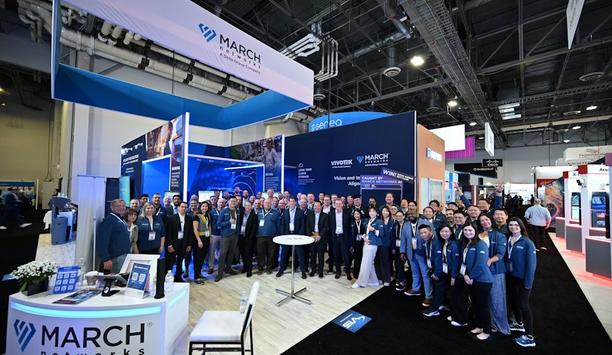
Combining VIVOTEK’s branded video security business with March Networks paves the way for the combined brands to meet customers’ increasing appetite for integrated solutions rather than individual components. The merger brings VIVOTEK's branded video security business together under one operating structure with March Networks’ enterprise-grade video surveillance, AI analytics, and cloud-managed security solutions. Customers now have access to a broader, more integrated portfolio spanning enterprise video management, advanced cameras, edge artificial intelligence (AI), cloud services, recording platforms, and business intelligence, says Net Payne, Chief Sales & Marketing Officer at March Networks and VIVOTEK. Distinct product strategies Given the combined companies, product development, sales, marketing, and customer support can move in step rather than in parallel. March Networks and VIVOTEK were already both part of the Delta Electronics family, but they previously operated as separate businesses with distinct product strategies, teams, and routes to market. March Networks and VIVOTEK announced the merger of their branded video security businesses last spring following Delta Electronics' acquisition of remaining VIVOTEK shares. “Aligning our complementary capabilities lets us innovate faster, simplify engagement, and respond more quickly to a market moving toward AI, cloud and intelligent video,” says Payne. This merger reflects a broader shift across the physical security industry, adds Payne. “Customers no longer see video purely as a tool for reviewing incidents after the fact,” he says. “They expect it to help identify risks earlier, simplify investigations, improve operations, and support better decisions across the organisation.” Cloud video management Meeting customer expectations requires more than bolting AI features onto existing systems Meeting customer expectations requires more than bolting AI features onto existing systems. Rather, it requires cameras, edge intelligence, recording, software, cloud services, and business data working together as one coordinated platform. “By bringing March Networks and VIVOTEK together, we combine deep expertise across the full video technology stack while preserving the relationships, sector knowledge and customer focus both companies have built over many years,” says Payne. “Our goal is to make intelligent video more integrated, scalable, and practical for customers and partners worldwide.” Both entities bring strengths to the combined companies. March Networks brings experience in enterprise software, cloud video management and large-scale deployments; while VIVOTEK brings strength in imaging, camera technology and edge intelligence. Together they seek to ensure more choice when designing systems, a clearer path for future expansion, and technologies that work together more effectively without compromising the reliability, cybersecurity, and support customers expect from both companies. Advantages for channel partners Channel partners gain a broader portfolio to address a wider range of customer requirements, combining components as each deployment demands. Channel partners also benefit from expanded geographic reach, deeper technical expertise, and greater investment in training and enablement. “Importantly, this is designed to be a seamless transition,” says Payne. “Partners keep working with the teams and relationships they already know, while gaining access to new capabilities and certification opportunities. Over time, that alignment should make it easier to design, deploy and support complete solutions.” Because they are established and respected brands, March Networks and VIVOTEK branding will continue to be used. Rebranding is not a goal, and neither identity is being replaced by the other. Coordinated decision-making “The immediate priority is organisational alignment by making it easier for customers and partners to benefit from the combined portfolio,” says Payne. Product branding will continue to reflect the relevant portfolio and market context. As product roadmaps become more closely coordinated, customers can expect greater interoperability and a more cohesive experience, says Payne. Any future branding changes will be managed carefully and communicated clearly. Combining the businesses reduces duplication and enables coordinated decision-making across product strategy, engineering, sales, marketing, operations, and customer support. “Instead of developing capabilities independently, teams can share their expertise, align roadmaps, and direct investment to where it has the greatest customer impact,” says Payne. Combining specialised knowledge globally The combined organisation operates across six continents and more than 75 countries The combined organisation includes more than 300 research and development (R&D) engineers across four Centres of Excellence in Canada, Taiwan, Italy and Poland, thus bringing together a substantial base of specialist knowledge. The unified network also sharpens the ability to prioritise global opportunities, respond to regional needs and bring innovations to market faster. The combined organisation operates across six continents and more than 75 countries, supported by more than 1,100 certified channel partners. That footprint provides greater capacity to support multinational customers while staying responsive to local market needs. Looking ahead, future growth will increasingly come from helping customers turn video into useful, actionable intelligence. “The market is moving beyond conventional surveillance toward solutions combining AI, cloud services, edge processing, video management and operational data — and our new structure brings these together as one connected solution rather than several isolated technologies,” says Payne. Broader technical expertise There will also be closer collaboration among specialists in imaging, hardware, software, analytics, and cloud, which is important given how much customer infrastructure, regulatory, and deployment requirements vary. The companies can support cloud, hybrid, and on-premise environments, giving organisations a practical path toward more intelligent video. More choice comes from bringing together complementary technologies across product groups. Greater scale is achieved through a larger engineering organisation, broader technical expertise and more capacity to invest in innovation. Challenges for the industry at large Looking to the future for the industry at large, the greatest challenge will be managing the rapid growth of AI Looking to the future for the industry at large, the greatest challenge will be managing the rapid growth of AI responsibly, securely and at scale, says Payne. Video systems will generate more data and automate more decisions, but organisations must be able to trust how that intelligence is created, protected, and applied, he adds. “Cybersecurity, privacy, data sovereignty, system interoperability and AI accuracy are more important than ever,” says Payne. Addressing these elements requires expertise across the entire technology stack: from camera and edge processing to recording, cloud infrastructure, video management and analytics. “Together, March Networks and VIVOTEK can coordinate development across all these layers, giving customers flexible architectures that balance innovation with security, transparency and operational control,” says Payne.

IQSIGHT seeks to bring visual intelligence to environments where clarity, reliability, and trust matter the most, says CEO Sabrina Stainburn. Formerly Bosch Video Systems, IQSIGHT is an intelligence-first video security company, combining more than 60 years of engineering expertise with real-time intelligence to help organisations see clearly, act confidently, and improve outcomes in environments when every second matters. While the brand is new, the technology, reliability, and trust behind it are familiar— the products still carry the Bosch name, and the engineering teams remain the same to ensure the continuation of the Bosch legacy. As a result, customers can expect the same standards they rely on today. Embracing emerging technologies IQSIGHT is embracing emerging technologies. “We are applying AI where it delivers value by helping systems understand what is happening and surface the events and patterns that matter most—so customers can detect risk earlier, make faster decisions, and operate with confidence,” says Stainburn. With intelligence at the edge, the cameras act as sensors to secure premises, make buildings safer, and monitor perimeters — without requiring a cloud connection. Edge-based AI also supports integration into existing systems to add visual intelligence without a rip-and-replace — such as adding cameras with visual gun detection outside of entrances or supplementing systems with the ability to detect clothing colour and other attributes. IQSIGHT combines the Bosch video portfolio with new AI-enabled capabilities AI-enabled capabilities IQSIGHT combines the Bosch video portfolio with new AI-enabled capabilities designed to remove blind spots IQSIGHT combines the Bosch video portfolio with new AI-enabled capabilities designed to remove blind spots and support earlier, better-informed decisions. The portfolio continues to include intelligent cameras, such as the FLEXIDOME, AUTODOME, DINION, and MIC models, AI-enabled Intelligent Video Analytics Pro (IVA Pro) offerings, and recording and video management solutions, such as BVMS software. This year, the portfolio will also expand with technologies and solutions built on IQSIGHT’s new intelligence-first platform. Vertical markets that are core to the strategy include government, critical infrastructure, education, and smart cities, all industries closely connected with safety, continuity, and operational performance. In these environments, visual intelligence helps organisations address practical challenges — securing perimeters, enhancing safety, and improving traffic flow — so they can operate securely and efficiently. Visual intelligence helps organisations address practical challenges Operating securely and efficiently “Reliability is essential in these industries, and our cameras are engineered to Bosch quality standards and designed to perform in demanding conditions, including extreme weather, while delivering dependable video and accurate analytics where it matters most,” says Stainburn. “These strengths make our video solutions ideal for any industry where security must be uncompromised.” IQSIGHT evolves from the sale of Bosch’s security and communications technology product business to European investment firm Triton on June 30, 2025. The product brands for video systems, access control, intrusion systems, and communications systems united under the roof of the new company Keenfinity Group. New organisational structure The Keenfinity Group now operates as a holding company consisting of four businesses In late 2025, Keenfinity Group introduced a new organisational structure designed to unlock the next chapter of growth and innovation. The Keenfinity Group now operates as a holding company consisting of four businesses, including the video systems business now called IQSIGHT. Bosch has a long history of partnerships and integrations, and partnerships will remain essential to how IQSIGHT delivers value and flexibility for customers. “We work closely with technology partners to ensure customers can use visual intelligence within the platforms and architectures that best fit their operations,” says Stainburn. Secure-by-design approach Deep integrations include VMS platforms, such as Genetec and Milestone, thus enabling real-time insights across on-premise and cloud environments. This approach gives customers choice — without compromising performance, security, or reliability, according to IQSIGHT. “Continually strengthening our existing partnerships is vital, and we regularly add capabilities to these integrations to deliver new features to enhance security and safety for customers,” says Stainburn. “Cybersecurity is not a feature for us — it’s a foundation,” Stainburn emphasises. “As video systems become more connected and intelligence moves closer to the edge, trust must be designed in from the start. We take a secure-by-design approach across our hardware, software, and integrations. That means protecting data at every stage — from capture to analysis to delivery.” Combining sight and intelligence Just as important, the company works closely with partners and customers to ensure systems fit into their broader security and IT strategies. “When organisations rely on video to make critical decisions, security and reliability must be non-negotiable,” says Stainburn. Stainburn sees video as evolving from traditional surveillance into “visual intelligence” — moving from simply recording events to understanding what is happening in real time. By combining sight and intelligence, organisations can see patterns, giving them the power to predict events that may happen. Proactively addressing risks Stainburn sees video as evolving from traditional surveillance into “visual intelligence” Traditionally, video security was based on video surveillance — an investigative tool for users to review what has already happened. With AI, users can take a different approach — looking at patterns to better secure their premises and have the foresight to intervene before incidents escalate. AI helps systems understand what is happening in a scene, enabling them to discern between a person standing at a train platform and an individual vandalising a train platform, someone holding a power drill versus someone holding a gun. “This level of visual intelligence brings clarity to unfolding events to assist users in proactively addressing risks,” says Stainburn. AI-enabled video systems With foresight, end users can prevent those events from occurring or other issues from escalating. The ability to discern patterns can also influence decisions around safety, resource use, and the customer experience, says Stainburn. “While security will always remain core, we expect visual intelligence to play an increasingly important role in improving operational efficiency across many environments over the next five years.” Not all AI-enabled video systems are equal. Edge, cloud, and GenAI-based tools have different strengths and selecting one approach over another depends on the application or the problem customers need to solve. IQSIGHT works closely with integrators and end users to understand the challenges they are addressing and to provide guidance on the best AI approach to reduce risks, lower response times, and improve operations. Proof of concept projects are important to demonstrating performance in the real world. That’s where IQSIGHT gains an advantage with solutions that deliver reliable results even in challenging conditions, says Stainburn.
There was high-level energy at GSX 2025, befitting an industry undergoing massive change. Artificial intelligence (AI) was everywhere, but not so much in the booth signage. Rather, AI has made its way beyond marketing claims and solidly into the core of the products themselves. There were hundreds of examples of how AI is changing how security systems operate, all for the better. Clearly on display at GSX 2025 was an industry in the midst of metamorphosis. Deep integration of AI My conversations with companies across the security ecosystem revealed an industry heavily focused on leveraging advanced technologies like AI and the cloud to address increasingly complex global and localised threats. Several key themes emerged at the Global Security Exchange (GSX), sponsored by ASIS International, held Sept. 29–Oct. 1 at the Ernest N. Morial Convention Centre in New Orleans, La. Themes I heard repeated throughout the show floor included deep integration of AI, the ongoing shift toward cloud-based and hybrid architectures, and a sharp focus on modernising security systems to meet current challenges. AI and intelligent automation transform security The use of GenAI is moving beyond simple search functions into real-time decision support Companies are integrating AI and intelligent technologies to enhance analytics, streamline incident response, and improve internal efficiency. The use of Generative AI (GenAI) is moving beyond simple search functions into real-time decision support. For example, Bosch Video Systems introduced a "second tier" to its video analytics capabilities by combining highly sensitive edge detection with GenAI models in the cloud. For example, in visual gun detection, edge analytics might flag a potential gun (yellow), but the cloud-based GenAI then quickly reviews and confirms the threat (red), helping to filter out false alarms. Bosch is also using GenAI for more open-ended searches, such as a "Where's Waldo" application demonstrated at their booth. GenAI-powered system Eagle Eye Networks says they are focused on helping integrators "organise the AI chaos” through their cloud-based video platform. Their precision person and vehicle detection capabilities work across multiple cameras. Motorola Solutions introduced Inform, an AI-assisted incident response solution designed to bring clarity to the "noise" and help security teams respond to complex threats. They also offer Avigilon Visual Alerts, an on-prem GenAI-powered system that expands the natural language interface. AI internally to improve processes The Body Workforce Mini protects frontline workers and businesses "amid rising violence and theft." The Axon Body Workforce Mini, a small “computer with a lens” for non-police applications, is AI-capable and can perform real-time translations, automated report writing, and summarisation, and can even act as a personal assistant by incorporating company policies. All those functions are built into a lightweight body-worn camera designed to safeguard frontline workers in retail and healthcare verticals. The Body Workforce Mini protects frontline workers and businesses "amid rising violence and theft." Beyond products, integration company Everon is using AI internally to improve processes, such as handling commoditised tasks, which they expect will result in better customer satisfaction. Everon wants to be known as a premier service provider and will be introducing new services in the video realm. AI-powered search and continuous system upgrades Genetec prefers the term Intelligent Automation (IA), instead of AI, to describe its empathetic interface, which can "know" what additional information a security professional needs when they click on an image, for example. Genetec says the advantages of the cloud include AI-powered search and continuous system upgrades. Their Security Centre SaaS has had a fast and successful launch. It enables cloud-based systems with local storage. Genetec also highlighted the Cloudlink 210, a cloud-managed appliance designed to unify physical security operations that can be simply plugged in without involving IT staff. They call it a “headless appliance.” Cloud migration and the push for hybrid systems Hanwha debuted OnCAFE (Cloud Access for Everyone), a new cloud-based access control product The industry continues its strategic march toward the cloud, often through hybrid applications that blend on-prem strength with cloud flexibility. Acre's access control is described as "cloud-first technology," and they continue to focus on cloud solutions, incorporating AI. To help customers transition, they offer the "Bridge," a migration tool that allows systems to communicate throughout the move. At the same time, they are continuing to develop and enhance their core on-prem products – DNA Fusion and AccessIt!. Adding access control to supplement their video product line, Hanwha debuted OnCAFE (Cloud Access for Everyone), a new cloud-based access control product. The goal is to provide “access control that is easy;” It works alongside their OnCloud direct-to-cloud VMS as a Service platform. Future of video management The future of video management is increasingly hybrid. Milestone recently completed a three-year process of updating XProtect and building for the future of hybrid applications. At GSX, they showcased how their XProtect Evidence Manager seeks to "democratise evidence management" by collecting video, cell phone data, notes, and other metadata related to a case for easy sharing and prosecution. Also, Milestone’s “app centre” enables additional features to enhance XProtect without involving integration. Milestone is also focusing on "Metadata Ingest," which collects and aggregates data from various manufacturers (including Genetec, Motorola, and Exacq) for use by AI. Strategic modernisation and open integration Convergint and Genetec collaborated on a "2026 Technology Modernisation Outlook" white paper A key theme for the future is the shift toward open systems and strategic modernisation, enabling security professionals to better utilise new technology. Convergint and Genetec collaborated on a "2026 Technology Modernisation Outlook" white paper, arguing that dealers and end-users need to think more strategically when buying technology. They predict that "2026 will be the year of modernisation," with tangible results including unified intelligence, flexible deployment, and lower total cost of ownership. The call for open standards and architecture was also strong. What AI needs from open systems Johnson Controls noted that cloud, AI, and open standards are its three big focus areas. Their C-CURE IQ 3.10 is gaining adoption as it unifies access and video. OpenEye is seeking to address the "AI disruption anxiety" in the industry, focusing on what AI needs from open systems. The emphasis is on the value of a Model Context Protocol (MCP), an open standard and framework to enable AI systems to integrate and share data with external tools and sources. Addressing shifting global and local threats Allied Universal's "World Security Report 2025" highlights a risen focus on executive protection Companies unveiled solutions targeted at new security concerns, particularly the rising threat of violence, theft, and misinformation. Allied Universal's "World Security Report 2025" highlights an increased focus on executive protection and cites the rise of misinformation and disinformation as the number two threat. They noted that macro trends around instability and the political and social environment are driving security threats globally. To combat physical threats, Shooter Detection Systems introduced a new outdoor sensor, which is now generally available after a favourable feedback period that included an apprehension in one municipality. The company notes the unique challenge of developing technology for a "non-cooperative" threat like a person with a gun, in contrast to most security technologies that are "cooperative" and depend on user compliance. Implementation of integrated security Flock Safety is expanding its focus beyond licence plate readers into solutions for retail, with a new initiative to automate and streamline investigative processes, which are often manual. The company also showcased "drones as automated security guards," which can be deployed within 90 seconds to provide "eyes" on a site and enhance safety. The system works on its own network and is firewalled away from the city system A tour of the City of New Orleans' Real Time Crime Centre (RTCC), hosted by Axis Communications, demonstrated a mature implementation of integrated security. The RTCC uses Axis cameras, Genetec VMS, and is tied to a Motorola Solutions Command Centre to enhance efficiency and effectiveness, operating independently of the police department. They measure success in terms of valuable hours saved in an investigation or even when an event is happening. The system works on its own network and is firewalled away from the city system. Rapidly changing industry on display The GSX 2025 highlights an industry that is moving toward more intelligent and integrated solutions. The investment in AI is shifting security from reactive monitoring to proactive, automated assistance. Throughout the show floor, the continued embrace of hybrid cloud architectures, coupled with an emphasis on open standards and modernisation roadmaps, suggests a security ecosystem built for agility and future growth. These trends, and the GSX show itself, collectively underscore the industry's commitment to delivering scalable, next-generation solutions for a changing threat landscape.
Case studies

Milestone Systems, a provider of open platform video management software (VMS), is helping Columbia Borough, Pennsylvania, strengthen public safety through a community-wide video security system built on Milestone XProtect® VMS. For more than 16 years, Columbia has worked with Lancaster-area security integrator App-Techs to develop and expand a distributed wireless video network serving its downtown, public buildings, parks, and other borough facilities. Today, the system supports roughly 83 camera feeds, including 4K multi-lens and PTZ cameras, primarily from iPro. Traditional wired infrastructure Located along the Susquehanna River in Lancaster County, Columbia is a historic borough of roughly 10,000 residents. As the community worked to revitalise its downtown and attract new businesses, borough leaders wanted safety and security to support that broader effort. Traditional wired infrastructure was impractical across Columbia’s geographically varied environment, requiring App-Techs to engineer a distributed wireless architecture. XProtect provides the video management foundation, with dedicated servers located in the municipal building and a remote park office. Officers can also access live camera feeds from laptops in patrol vehicles, while mobile access extends video to personnel during community events. Immediately dispatched officers Columbia’s dispatchers are the primary day-to-day operators of XProtect, monitoring cameras, and supporting officers in the field. In one incident, a dispatcher spotted someone breaking into a vending machine outside a laundromat and immediately dispatched officers. “Our staff member observed someone breaking into a vending machine just outside that building and was able to dispatch officers to the scene,” said Jack Brommer, Columbia Borough Police Department Chief. “Officers apprehended the individual, and it turns out this was a serial thief who had been breaking into vending machines across the tri-county area. So that single arrest helped resolve a number of thefts across multiple counties. That’s just the kind of impact this technology can have on a community.” Large community events The system also supports holding cells and interview rooms inside the police station, where microphones are integrated with cameras, as well as large community events. During Columbia’s annual “Thunder on the River” antique car show, Emergency Management personnel used the community camera network to support proactive monitoring and rapid response across the event. Over time, Columbia’s video system has supported faster incident response, stronger evidence for prosecution and greater situational awareness for dispatchers and police officers. Borough leaders also use signage in parks and public areas to make camera coverage visible as a deterrent. Gunshot-detection technologies “The data that I can point to is that we are trending downward, probably for the last five, six years, as far as call volume and crime trends. Those numbers have been very positive,” added Brommer. Looking ahead, Columbia plans to expand its use of video analytics, including object-search capabilities that can help investigators filter video by vehicle type, colour, and other attributes. The borough is also exploring emerging gunshot-detection technologies to further improve situational awareness.

Milestone Systems, a provider of open platform video management software (VMS), is helping Columbia Borough, Pennsylvania, strengthen public safety through a community-wide video security system built on Milestone XProtect® VMS. For more than 16 years, Columbia has worked with Lancaster-area security integrator App-Techs to develop and expand a distributed wireless video network serving its downtown, public buildings, parks, and other borough facilities. Today, the system supports roughly 83 camera feeds, including 4K multi-lens and PTZ cameras, primarily from iPro. Distributed wireless architecture Located along the Susquehanna River in Lancaster County, Columbia is a historic borough of roughly 10,000 residents. As the community worked to revitalise its downtown and attract new businesses, borough leaders wanted safety and security to support that broader effort. Traditional wired infrastructure was impractical across Columbia’s geographically varied environment, requiring App-Techs to engineer a distributed wireless architecture. XProtect provides the video management foundation, with dedicated servers located in the municipal building and a remote park office. Officers can also access live camera feeds from laptops in patrol vehicles, while mobile access extends video to personnel during community events. Immediately dispatched officers Columbia’s dispatchers are the primary day-to-day operators of XProtect, monitoring cameras, and supporting officers in the field. In one incident, a dispatcher spotted someone breaking into a vending machine outside a laundromat and immediately dispatched officers. “Our staff member observed someone breaking into a vending machine just outside that building and was able to dispatch officers to the scene,” said Jack Brommer, Columbia Borough Police Department Chief. “Officers apprehended the individual, and it turns out this was a serial thief who had been breaking into vending machines across the tri-county area. So that single arrest helped resolve a number of thefts across multiple counties. That’s just the kind of impact this technology can have on a community.” The system also supports holding cells and interview rooms inside the police station, where microphones are integrated with cameras, as well as large community events. During Columbia’s annual “Thunder on the River” antique car show, Emergency Management personnel used the community camera network to support proactive monitoring and rapid response across the event. Gunshot-detection technologies Over time, Columbia’s video system has supported faster incident response, stronger evidence for prosecution and greater situational awareness for dispatchers and police officers. Borough leaders also use signage in parks and public areas to make camera coverage visible as a deterrent. “The data that I can point to is that we are trending downward, probably for the last five, six years, as far as call volume and crime trends. Those numbers have been very positive,” added Brommer. Looking ahead, Columbia plans to expand its use of video analytics, including object-search capabilities that can help investigators filter video by vehicle type, colour, and other attributes. The borough is also exploring emerging gunshot-detection technologies to further improve situational awareness.

TECOM Group has enhanced security and accessibility across several of its flagship developments in Dubai, including Dubai Media City, with the installation of advanced Gunnebo Entrance Control solutions. Since its establishment in 1999, TECOM has shaped Dubai’s landscape as a hub for business and innovation. Its ten business districts, including Dubai Internet City, Dubai Knowledge Park and Dubai Design District (d3), are home to nearly 12,000 companies employing more than 124,000 people. Entrance control solution Developments like Dubai Media City welcome thousands of people every day, serving as both workplaces and collaborative hubs where ideas and intellectual property are shared. This made it essential for TECOM to implement an entrance control solution capable of maintaining robust security while preserving the smooth flow of people and the open, professional atmosphere expected across its developments. Following a competitive tender, Gunnebo Entrance Control was appointed to combine advanced entrance control, seamless integration with wider access control systems and a sleek design suited to modern commercial environments. More than 40 SpeedStile FLs gates were installed across several buildings, chosen for their performance, adaptability and ability to support high volumes of daily movement without compromising the visitor experience. Access control technology The SpeedStile FLs features a slim, contemporary appearance designed to complement modern commercial spaces. Beyond aesthetics, it incorporates advanced single-person detection systems, monitoring tailgating, piggybacking and unauthorised attempts to access secure areas. Audible alerts assist on-site teams, while third-party integration ensures compatibility with existing access control technology, including group movement through card stacking capabilities. For TECOM, this blend of security technology and design has delivered both reassurance and efficiency. By implementing SpeedStile FLs across its developments, the Group has strengthened security while preserving the collaborative and welcoming environment that defines its business communities. Fadi Yakoub concluded: “TECOM communities attract some of the world’s biggest names alongside dynamic start-ups, making them vital contributors to the region’s knowledge and creative economy. We are proud of our long-term partnership to deliver seamless entrance control solutions across their developments. The SpeedStile FLs provides flexible, reliable management of people flow, while also creating a welcoming and professional first impression for business communities.”

Bournemouth and Poole College, the largest provider of further education and apprenticeships in the Dorset area, has installed Hochiki's ESP addressable fire detection range across its four-storey site, protecting a diverse mix of teaching environments including IT suites, kitchens, workshops and engineering bays. The installation was specified and delivered by SFA Fire and Security, working closely with the college to design a system capable of handling the varied fire risks found across further education provision. Subjects such as catering, automotive maintenance, construction and engineering carry a higher risk of nuisance alarms from dust and fumes, while IT and digital media spaces rely heavily on electrical equipment. A tailored approach was needed to protect the site without interrupting learning. Protecting valuable teaching time ESP's common mounting base allowed SFA's installers to work through the site using a single standard base across most devices, reducing the range of parts held on site and helping installation stay on schedule despite the complexity of the building. In kitchens and workshops, LPCB and VdS approved heat sensors were used to distinguish genuine fire risk from cooking activity and dust, reducing false alarms and protecting valuable teaching time. ESP's textual identifier gives staff the exact location of an activated device, supporting fast and accurate evacuation decisions in a large site with high footfall. Wall-mounted VADs, certified to EN 54-23, added audio and visual alerts throughout the college, ensuring alarms reach staff and students regardless of location or impairment. Where cabling access was limited by drop beams, wireless technology was integrated onto the ESP loop, avoiding extensive drilling and preserving the building's original structure. Successful projects together Naomi Fell, Projects Director at SFA Fire and Security, said: "This project presented numerous challenges due to the complexity of each room and storey within the college. Our extensive experience with Hochiki's products, combined with the consistently positive feedback from our end-users, made Hochiki the clear choice for this project. We met the college's stringent deadlines with minimal disruption to teaching and learning." Ryan Baulcomb, Regional Sales Manager at Hochiki, added: "Hochiki and SFA have a strong, long-term partnership, built on years of successful projects together. This installation shows what that partnership can deliver on a genuinely complex site. We're proud that our products continue to give installers and end-users the reliability and support they expect." Bournemouth and Poole College now benefit from a fire detection system tailored to the specific demands of each corridor, room and storey across the site, with the flexibility to adapt as the college continues to grow.
Round table discussion

Adequate video surveillance coverage depends entirely on a facility's layout, square footage, and security goals. Historically, better coverage required more cameras, but technology innovations are changing those expectations and undermining previously held rules of thumb. We asked our Expert Panel Roundtable: Do today's video systems generally require more cameras or fewer cameras, and why?

At mid-year 2026, the broader economy tells a story of resilience under pressure. Conflict in the Middle East has triggered a shock to the energy supply, driving oil prices up and reigniting global inflation. However, a total downturn has been averted. Exceptional, historic levels of business investment and data centre construction are providing a firm floor for growth, offsetting cooler consumer spending and keeping labour markets fundamentally stable. But how are changing economics impacting the physical security market? We asked our Expert Panel Roundtable: How do changes in the broader economic climate impact physical security?

In the simplest terms, technology modernisation accelerates when older systems become too expensive to maintain or fail to support modern standards. Market competition pushes businesses to update their technologies to meet rising customer demands. Additionally, the rapid shift toward cloud-based infrastructures and artificial intelligence creates a fear of missing out, forcing companies to adapt or risk irrelevance. Focusing on the physical security market, we asked our Expert Panel Roundtable: What factors are accelerating technology modernisation in security?
Products
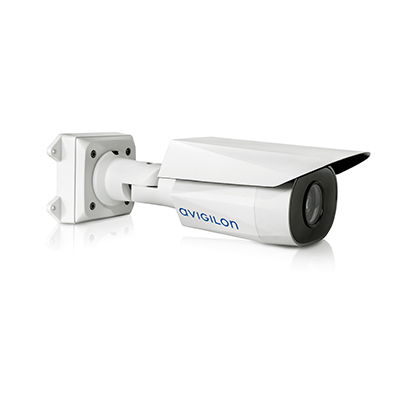
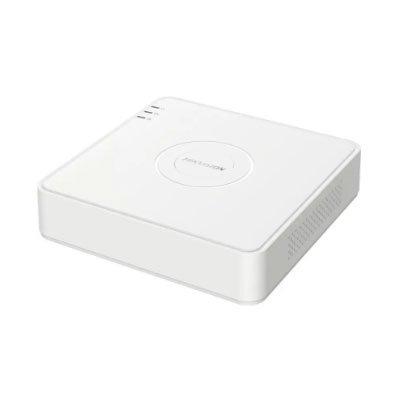



Video analytics: Manufacturers & Suppliers
- Bosch Video analytics
- exacqVision Video analytics
- Avigilon Video analytics
- Hanwha Vision Video analytics
- Hikvision Video analytics
- Axis Communications Video analytics
- Honeywell Security Video analytics
- FLIR Systems Video analytics
- IndigoVision Video analytics
- March Networks Video analytics
- Videotec Video analytics
- VideoIQ Video analytics
- AV Costar Video analytics
- LTV Europe Video analytics
- AMAG Video analytics


