School security
ZeroEyes, creator of the pioneer multi-analytics weapons detection and threat intelligence platform, announces an expansion of its proactive gun detection and intelligent situational awareness software deployment at Quest Academy Charter School, following a successful one-year deployment. This move reinforces the school’s commitment to protecting students, staff, and visitors from gun-related threats. Located in West Haven, Utah, Quest Academy serves approximately 1,000 students and emplo...

GISEC Global 2026, the Middle East & Africa’s largest and most impactful cybersecurity event, concluded its 15th edition following three days of international collaboration, technology innovation and high-level dialogue on the future of cyber resilience. Held for the first time at Dubai Exhibition Centre, Expo City Dubai, the 2026 edition welcomed thousands of visitors from more than 130 countries, alongside 750+ global cybersecurity brands and 350+ speakers. The international turnout...

XSponse, a provider of connected safety and emergency response technology, announces the appointment of Richie Perna as Chief Revenue Officer (CRO), effective September 19. Perna will lead XSponse’s national go-to-market strategy as the company moves into its next phase of growth and market expansion. Perna joins XSponse at a pivotal point in the company’s growth. Following a recent strategic investment from Armory Capital, XSponse is accelerating its national expansion and moving f...

Accredit Solutions, the global accreditation and workforce management technology provider for major events, venues and high-security environments, today announced the launch of Accredit Induct, a workforce readiness and compliance enforcement product that connects induction, identity, accreditation and access control into one operational workflow. The launch comes as venues, stadiums, arenas, visitor attractions, public spaces and event operators prepare for the implementation of the Terrorism...

ASIS International, the world’s largest association for security management professionals, opened its 2026 Global Security Exchange (GSX) conference at the Georgia World Congress Center in Atlanta. The event continues through 16 September and features more than 200 education sessions and over 500 exhibitors from more than 150 nations. The conference opened with two days of pre-conference programming on Saturday and Sunday, including ASIS Volunteers’ Day and the ASIS Awards of...

Artificial intelligence is transforming the global cybersecurity landscape, strengthening cyber defences while simultaneously enabling faster, more sophisticated attacks. According to the World Economic Forum's Global Cybersecurity Outlook 2026, 94% of organisations expect AI to be the biggest driver of cybersecurity change over the coming year, while 87% identify AI-related vulnerabilities as the fastest-growing cyber risk. Against this backdrop, GISEC Global 2026, organised by inD, a joint ve...
News

IQSIGHT announces the appointment of Michael J. Schulte as Chief Executive Officer, effective September 1, 2026. Michael will lead the global IQSIGHT business and report to Steve Shine, Chairman of IQSIGHT. Michael joins IQSIGHT with more than 30 years of leadership experience across technology, industrial and private equity-backed businesses. Most recently, he served as EVP and President of the Safety Solutions Group at Clarience Technologies and previously as President of Safe Fleet, where he helped drive growth, acquisitions and a successful private equity exit. Earlier, he held senior leadership roles at Atkore International, Danaher Corporation, and Boston Consulting Group. He holds an MBA from Harvard Business School. Successful private equity “Over the past months, we have worked closely with the leadership team to define a clear strategic direction for IQSIGHT and position the business for its next phase of growth. With that foundation in place, this is the right time for Michael to take the helm. Michael has an exceptional track record of driving execution, transforming businesses and delivering results. His leadership style, operational discipline and customer focus make him the ideal person to translate our strategy into action and unlock the full potential of IQSIGHT,” said Steve Shine, Chairman of IQSIGHT. “IQSIGHT has a strong heritage, outstanding people and a compelling strategy. I am excited to join the team and build on the excellent work already underway. Together, we will focus on execution, innovation and creating even greater value for our customers, partners and employees,” Michael Schulte said. Together, Steve Shine and Michael Schulte will build on the strong foundation already in place, ensuring continuity for customers and partners while driving the next phase of growth for IQSIGHT.

Cellebrite DI Ltd., a pioneer in AI-powered Digital Investigative and Intelligence solutions for the public and private sectors, today announced that Cellebrite Genesis is expanding to more global markets and is now generally available for enterprise organisations. The expansion builds on a successful early access program and strong momentum following Genesis' June 2026 public safety launch. Genesis has seen meaningful user growth worldwide and continues to expand internationally, with availability now in Australia and the United Kingdom and is expected to be available to the European Union later this month. Public safety departments Made generally available for the public sector in June, Genesis is serving a growing mix of national, regional and local agencies around the world, including some of the world's largest regional and metropolitan police departments along with public safety departments, law enforcement agencies, prosecutors' offices and correctional facilities of varying sizes. Purpose-built for a broad range of corporate investigations, Genesis helps enterprise teams move from manual evidence review to AI-assisted investigation that surfaces connections in minutes rather than weeks for internal corporate investigations spanning employee misconduct to financial fraud, M&A due diligence, insider threat and incident response, eDiscovery pre-processing and regulatory and compliance matters. Uncover missed connections As Cellebrite customers apply Genesis to active cases, the impact is tangible, accelerating the speed and efficacy of investigations across an array of crime types such as crimes against children, narcotics, human trafficking, homicide and cold cases. The following examples demonstrate how Genesis helps investigators move faster, uncover missed connections and turn digital evidence into action: Averting a planned school shooting: Following the arrest of a young student who threatened to commit a school shooting, investigators queried his phone data in Genesis and, within five prompts, identified and apprehended a second student across the country plotting a similar attack. Surfacing evidence that helped protect children: Genesis surfaced new information that had been missed in the initial manual review of a suspect's device, giving investigators the probable cause needed to arrest an accused child predator after a year-long investigation. Converting prison conversations into actionable intelligence: A major law enforcement agency used Genesis to analyse three months of phone calls by five prison inmates and identified three minutes of conversations that involved the location of illegal firearms. As a result, the police seized more than 200 guns and arrested three suspects as part of a broader investigation. Validating findings in a high-profile corporate investigation: In a case of potential financial wrongdoing tied to a scrapped IPO, it took investigators months to piece together who was involved - running the same data through Genesis surfaced it in minutes, while validating the findings. Triaging large video and audio files so a private digital forensics company could quickly isolate 20 video clips showing evidence of a crime, helping their client move the case forward quickly rather than needing to rely on manual review that would have taken days. Uncovering a terrorist financing network: After two months of manual review, a regional police agency used Genesis to immediately gain information about a suspected terrorist finance network. Validating new leads in a missing person cold case: A small county sheriff's department received a new tip related to a cold case. Investigators used Genesis to query all the records, and they were able to immediately determine the new information was not relevant to the case; manually running down this lead would have taken weeks. Mission of protecting communities "Genesis was built on the belief that evidence should move at the speed the investigation demands. In two months, that belief has scaled from early access to a proven solution that is trusted on multiple continents, and now, with enterprise availability, we're bringing that approach to the organisations who want to protect themselves from fraud, insider threats and data theft," said Shiven Ramji, CEO of Cellebrite. "It is exciting to hear the impact Genesis is having on investigations and our customer feedback. Genesis is an example of the rapid innovation our customers can expect, ensuring we can deliver on our mission of protecting communities, nations and businesses." Proprietary chat platforms Innovation within Genesis continues to move forward. The Company also added Deep Investigator, a new capability for mobile extractions. Deep Investigator surfaces data that usually resides in unparsed and other databases, thus going deeper into the content of mobile devices, helping investigators uncover digital evidence that lives in hard-to-reach places, including brand-new applications, proprietary chat platforms and data sources that are not fully understood. Deep Investigator automatically surfaces additional investigative leads with citations to the underlying evidence while applying Genesis' built-in guardrails, ensuring responses remain grounded only in the provided evidence. Every query and action is logged with the user's identity and timestamp, creating a complete audit trail. In the coming months Cellebrite expects to include new features and enhancements that add both expanded agentic capabilities and increased support for additional data sources. These innovations are designed to help investigators work smarter and faster, with an even better user experience.

Veritone, Inc., a pioneer in enterprise AI and data solutions, and ZeroEyes, the creators of a multi-analytics weapons detection and threat intelligence platform, have officially partnered to deliver a powerful, differentiated public safety offering. This collaboration aligns two industry leaders to provide organisations with a coordinated security solution encompassing near real-time threat monitoring and comprehensive post-event analysis for live events and chaotic environments. “Our partnership with ZeroEyes represents a critical step forward in how organisations can leverage artificial intelligence to protect their communities and assets,” said CEO Ryan Steelberg of Veritone. “By pairing ZeroEyes’ real-time, proactive alerts with Veritone’s advanced post-event analysis, we’re equipping security and law enforcement professionals with the actionable intelligence to help manage every stage of an incident.” Traditional security measures While traditional security measures often rely on reactive protocols, the integration of ZeroEyes and Veritone’s offerings provides a more complete lifecycle of threat management. ZeroEyes threat detection and intelligent situational awareness software layers onto existing digital security cameras. If a gun or knife is identified, images are quickly shared with the ZeroEye Operations Center (ZOC), a U.S.-based, fully in-house operations center, which is staffed 24/7/365 by specially trained U.S. military and law enforcement veterans. If these experts determine the threat is valid, they dispatch alerts and actionable intelligence – including visual description, weapon type, and last known location – to law enforcement and school administrators, often in a matter of seconds from the moment a weapon is detected. Following an event, Veritone’s advanced AI platform accelerates post-event analysis, helping agencies and security teams swiftly process data for investigations and evidentiary needs. Reducing false positives Central to this partnership is both companies' commitment to human-in-the-loop analytic deployment. In situations where rapid decision-making is critical, human verification plays an essential role in reducing false positives and helping alerts stay actionable. By combining ZeroEyes’ human-verified threat detection and situational awareness with Veritone’s post-event AI capabilities, the partnership gives security teams valuable intelligence at critical points before, during, and after an incident. “When responding to an active assailant, time and situational awareness are critical, and both are often in short supply,” said Mike Lahiff, CEO and cofounder of ZeroEyes. “Our goal is to give school administrators and their law enforcement partners more of both, providing actionable intelligence that supports a faster, more informed response. By partnering with Veritone, we can extend that value beyond the immediate threat and give customers additional tools to support post-event analysis and investigation.” Video analytics technology ZeroEyes’ patented solution has been recognised by the U.S. Department of Homeland Security as an effective anti-terrorism technology and holds the distinct honour of being the first video analytics technology to receive full SAFETY Act Designation. The platform's expanded capabilities now also include knife detection, further broadening its ability to proactively identify and mitigate acts of violence. Through this bi-directional referral agreement, both Veritone and ZeroEyes will leverage their respective networks to introduce clients to a more holistic, robust approach to physical security and incident management.
ZeroEyes, creators of the pioneer multi-analytics weapons detection and threat intelligence platform, announces that its proactive AI gun detection and intelligent situational awareness software has been deployed by Lincoln Unified School District (USD) 298 in Kansas to help protect students, staff, and visitors from gun-related threats. Situated in the rural community of Lincoln, the school district employs 85 faculty and staff and serves approximately 330 students from Pre-K through 12th grade across Lincoln, Barnard, Beverly, Shady Bend, Westfall, and surrounding areas. Its two campuses include a pre-school, daycare, elementary school, high school and technology centre. As part of its ongoing commitment to student safety, Lincoln USD 298 is adding ZeroEyes to existing security measures that include secure entrances and door locks across all buildings, all-night campus lighting, and a close partnership with the sheriff's department. Broader community initiatives The district secured funding through the Kansas Safe and Secure Firearm Detection Grant Program, administered by the Office of the Kansas Attorney General, to purchase and implement ZeroEyes. The grant followed coordination with local law enforcement and community leaders to identify AI gun detection as a key safety priority aligned with broader community initiatives. “The safety and well-being of our students is always our absolute top priority,” said Nikki Flinn, Lincoln Unified School District 298 Superintendent. “We had been following the development of AI gun detection technology for some time, because any opportunity to add another layer of protection for our kids is incredibly appealing. Thanks to this grant, we were able to make this vital technology a reality for our district.” Situational awareness software ZeroEyes' AI gun detection and intelligent situational awareness software layers onto existing digital security cameras. If a gun is identified, images are instantly shared with the ZeroEyes Operations Center (ZOC), the industry's only U.S.-based, fully in-house operations center staffed 24/7/365 by specially trained U.S. military and law enforcement veterans. If the threat is determined to be valid, alerts and actionable intelligence — including visual description, gun type, and last known location — are dispatched to law enforcement and school officials, often in a matter of seconds from the moment a gun is detected. "We are honoured to support a district that is deeply committed to the safety and well-being of their students and staff,” said Mike Lahiff, CEO and cofounder of ZeroEyes. “It’s inspiring to see forward-thinking leadership utilise grant funding to proactively upgrade their security infrastructure, protect their campuses, and provide peace of mind to the entire community."

Arrow Electronics, Inc. announces the appointment of Deidra C. (Dee) Merriwether to the new position of president and chief operating officer, effective Sept. 8, 2026, reporting to William F. Austen, interim chief executive officer. Merriwether will be responsible for leading Arrow’s global business segments and logistics organisations. With this announcement, the company augments its executive team and strengthens succession planning. “We are delighted that Dee is joining Arrow as president and chief operating officer. Her extensive experience in distribution combined with her successful track record leading commercial, operational, and financial teams make her an ideal leader to join Arrow at this time to support our terrific teams driving profitable growth and value creation for stakeholders,” said Steven H. Gunby, chairman of the Arrow board of directors. Optimised performance results Merriwether brings a robust background in broad-based business management and optimised performance results. Before joining Arrow and since 2021, she served as the senior vice president and chief financial officer of W.W. Grainger, Inc. and prior to that as the senior vice president and president, North American sales and services, and other roles of increasing responsibility since 2013. From 2002 to 2013, she held roles of increasing responsibility in general management and finance at Sears Holdings Corporation, departing as chief operating officer, retail formats, in 2013. She started her career as an engineer and production leader at Eli Lilly and Company and gained valuable accounting and mergers and acquisitions experience at PricewaterhouseCoopers International Limited. Corporate responsibility committee “I am thrilled to welcome Dee to Arrow and our executive team. She brings exceptional depth with her more than two decades of substantive distribution, sales channel, operations, and finance experience, with a demonstrated talent for innovation, versatility, leadership, and performance results. Further, she has the qualities we seek in our leaders -- she is humble, approachable, transparent, and driven by purpose and values to deliver results for our suppliers, customers, employees, and investors,” said Austen. Merriwether holds a Master of Business Administration from Indiana University’s Kelley School of Business and a Bachelor of Science degree with a major in chemical engineering from North Carolina Agricultural and Technical State University. She currently serves on the board of Weyerhaeuser Company as an independent director and member of the audit committee and governance & corporate responsibility committee.
ZeroEyes, creators of the multi-analytics weapons detection and threat intelligence platform, and Ohio’s Heath City School District today announced that ZeroEyes’ AI gun detection and intelligent situational awareness platform has been deployed by the district to protect students and faculty against gun-related violence. Located in Licking County, the Heath City Schools serve approximately 1,600 students and 250 staff members across four schools, including two elementary schools, a middle school, and a high school. ZeroEyes complements the district’s multilayered security approach, which includes a robust camera network, access control systems, bullet-resistant film on the windows, door barricades, and more. Multilayered security approach “Student and staff safety is always our top priority, so we are very interested in solutions that can provide real-time notifications in the event of a potential threat,” said Trevor Thomas, Ed.D., superintendent of Heath City School District. “ZeroEyes’ ability to enhance our existing safety measures with immediate, actionable intelligence broadens our security strategy to better protect our schools and provide peace of mind for our community.” ZeroEyes' AI threat detection and intelligent situational awareness software layers onto existing digital security cameras. If a gun is identified, images are instantly shared with the ZeroEyes Operations Center (ZOC), the industry's only U.S.-based, fully in-house operation center, which is staffed 24/7/365 by specially trained U.S. military and law enforcement veterans. Law enforcement veterans If these experts determine the threat is valid, they dispatch alerts and actionable intelligence — including visual description, gun type, and last known location — to law enforcement and school administrators, often in a matter of seconds from the moment a gun is detected. “We’re proud to partner with forward-thinking districts like Heath City that are committed to implementing layered security strategies,” said Mike Lahiff, CEO and cofounder of ZeroEyes. “By combining our real-time gun detection and intelligent alerting capabilities with their existing capabilities, we’re helping create a safer environment for all.”

Expert commentary

A security camera installed today has more AI processing power than the systems that guided early autonomous vehicle prototypes. And yet the operator who mounts that camera on a wall will, in all likelihood, never use most of that capability. Industry surveys bear this out: a wide gap persists between the number of security professionals who believe AI can improve outcomes and the much smaller share who have adopted it operationally. The reason has nothing to do with the silicon and everything to do with how the industry has asked people to configure these systems. The problem is not that the industry lacks algorithms. The problem is that physical security has never found a scalable way to personalise systems for each site. The personalisation dilemma hiding in plain sight The problem is that physical security has never found a scalable way to personalise systems for each site A surveillance deployment at an airport, a retail chain, a school campus, and a logistics yard can look strikingly similar in hardware terms. Each installation uses image sensors, edge processors, network connectivity, and a management layer. What changes is what the operator cares about. At a school entrance, the priority might be perimeter approach after hours and controlled access during the day. At a loading dock, the concern is tailgating, vehicle dwell time, and safety incidents near forklifts. At an airport, the operator may need queue-flow analytics one moment, unattended-item detection the next, and then a search for a specific person of interest carrying a particular bag. At a retail store, loss prevention teams want to correlate customer flow patterns with point-of-sale data and identify suspicious behaviour near high-value merchandise. This range of needs forces a reality that the industry has acknowledged in principle but never resolved in practice: the application pool across the market is vast, yet each individual site typically requires only a narrow set of outcomes. Each deployment needs personalisation once, at commissioning, and then again whenever the environment or the risk profile shifts. The app store that never became a market For the better part of a decade, the industry’s most visible answer to the personalisation problem was the “app store” model. The logic was straightforward: curate a marketplace of trained neural network algorithms, let integrators browse a catalogue, and download the right analytic for each job. Queue counting for a passport control hall. License plate recognition for a parking structure. Occupancy monitoring for a conference room. The concept borrowed directly from the consumer smartphone approach. In practice, it never matched physical security’s purchasing and operating rhythm. A phone owner discovers and downloads new apps continuously. A physical security deployment selects one or two analytics functions at installation and rarely revisits them. Another maintenance burden A queue-counting algorithm trained on airport data is excellent at queue counting The economic incentive to maintain, curate, and update a broad catalogue across a fragmented ecosystem of camera OEMs, VMS platforms, and system integrators never materialised when the average buyer drew from only a thin slice of it. And the question of who would operate such a marketplace across that fragmented landscape was never satisfactorily answered. The deeper issue is that distribution was not the hard part. Personalisation was. A queue-counting algorithm trained on airport data is excellent at queue counting. It does not naturally become a general-purpose security tool for whatever the operator needs next. Once a model is trained for a narrow task, adaptation requires another project, another integration cycle, and another maintenance burden. AI-enabled cameras The examples that do exist are instructive. Schiphol Airport in the Netherlands has used trained camera systems for over a decade to measure queue length at passport control and alert staff when additional counters should open. Rome trailed AI-enabled cameras to track pedestrian wait times at crosswalks, measure bus queue length, and monitor parking occupancy to support active transport and reduce vehicle emissions. These are effective, well-regarded deployments. They also illustrate the limitation: each required its own trained model, its own integration effort, and its own maintenance cycle. The queue-counting camera at Schiphol cannot be redeployed to detect an abandoned bag. That is a separate algorithm, a separate procurement, and a separate project. What changes with agentic AI Applied to physical security, this translates into a simpler commissioning experience Agentic AI points to a fundamentally different approach. An agentic system can receive goals expressed in natural language, determine the appropriate actions to fulfil those goals, execute those actions using available tools, and verify the results. Applied to physical security, this translates into a simpler commissioning experience: the operator expresses intent in plain language, and the system configures itself to achieve that intent. Consider the practical implications. An installer commissioning cameras at a retail location could type or speak a set of instructions: “Alert the manager if more than five people are waiting at checkout for longer than two minutes.” A facilities director could ask the system to “Track vehicles that enter the east parking lot after 9 p.m. and flag any that remain for more than 30 minutes.” A school security coordinator might specify: “Notify campus police if anyone approaches the perimeter fence between midnight and 5 a.m.” Appropriate perception capabilities None of these instructions require the operator to select a specific analytic from a catalogue, configure a detection model, or define pixel-level zones in a complex VMS interface. The system interprets the intent, selects the appropriate perception capabilities, configures thresholds and context, and validates behaviour over time. When the operator’s needs change, a new instruction replaces the old one. The camera hardware stays the same. The AI adapts. This is the core of the shift: minimal user input, maximum flexibility, and a security system that personalises itself without requiring the operator to navigate the traditional customise-certify-deploy cycle. Vision language models make it practical A conventional neural network trained for people counting can count people The enabling technology is the vision language model, or VLM. A VLM combines visual encoders with language reasoning, allowing it to interpret images or video in the context of natural language prompts. This is a qualitative leap beyond traditional convolutional neural networks, which classify or detect predefined objects and have no mechanism for open-ended interpretation. A conventional neural network trained for people counting can count people. It cannot distinguish between a crowd of commuters exiting a train station and a crowd assembling in protest. A VLM, by integrating contextual reasoning with visual analysis, can draw inferences that a task-specific model cannot. It can assess behavioural patterns, interpret spatial relationships, and respond to queries about scenes it has never been explicitly trained to analyse. Where a neural network might register two people carrying objects, a VLM could infer whether the scene suggests travellers with luggage or workers transporting equipment, provided the visual context supports that inference. Supporting multimodal input This matters in physical security because operational questions are rarely phrased as taxonomy labels. Operators want to express outcomes. They want to say “show me anything unusual near the loading bay after hours,” and the system should be able to reason about what “unusual” means given the site context. VLMs also support multimodal input. Audio cues such as a raised voice, a scream, an alarm, or breaking glass can contribute to scene interpretation when paired with video. In security applications, where events routinely unfold across both visual and auditory channels, this capability adds a meaningful layer of situational awareness. The edge constraint that forces discipline Large language models in the cloud use hundreds of billions of parameters and consume hundreds of watts None of this works if the architecture assumes data centre conditions. Most surveillance cameras operate under strict power and thermal limits. Power over Ethernet (PoE), the standard delivery mechanism, typically provides between 15 and 30 watts depending on the PoE class, and only a fraction of that budget is available for AI processing after the sensor, ISP, video encoder, and network stack have taken their share. In many installations, the AI workload must fit within a few watts. Large language models in the cloud use hundreds of billions of parameters and consume hundreds of watts. That scale does not translate to a camera mounted on a pole or embedded in a ceiling tile. For agentic AI to work at the edge of a physical security network, the models must be compact, efficient, and designed for the purpose. Neural network acceleration This is where smaller, domain-specific VLMs become essential. Models trained on industry-relevant image and text datasets, combined with techniques such as pruning, quantisation, and parameter-efficient fine-tuning, can deliver meaningful visual reasoning within the compute and memory constraints of an edge processor. The result is a VLM that fits inside a camera’s power budget and still responds to natural language instructions with useful accuracy. Ambarella’s CVflow AI architecture, now in its third generation, was designed for this class of workload. The architecture integrates advanced neural network acceleration with high-resolution image signal processing and video encoding on a single system-on-chip, allowing cameras to run complex AI inference alongside their core imaging functions without exceeding the thermal and power boundaries that define edge deployments. The company's latest addition to its portfolio, the 4-nanometer CV7, runs CNNs and vision language models concurrently across multiple video streams while consuming 20 percent less power than its predecessor. For infrastructure and robotic applications requiring heavier models, the 5-nanometer N1 family supports multimodal LLMs in multi-camera configurations. Distributing intelligence across far edge, near edge, and cloud This tier must respond in milliseconds and operate within a fixed power envelope A workable agentic architecture for physical security distributes intelligence across three tiers, each matched to the processing demands and latency requirements of its role. At the far edge, inside the camera itself, the processor handles real-time perception: object detection, tracking, zone logic, and initial event classification. This tier must respond in milliseconds and operate within a fixed power envelope. At the near edge, on a local gateway or network video recorder, a more capable processor orchestrates across multiple cameras, maintains state, correlates events, retrieves site-specific policies and procedures, and classifies incidents requiring more context than any single camera provides. At the cloud/server tier, available when connectivity permits, the system accesses heavier models for forensic analysis, fleet-wide analytics, model updates, and long-horizon reporting. Periodic cloud access This tiered approach keeps the most time-sensitive decisions local, where latency is lowest and data privacy is strongest. It also means agentic capabilities can scale incrementally. A small installation might run entirely at the far edge with periodic cloud access. A large campus might employ all three tiers, with near-edge orchestration coordinating PTZ patrol patterns across dozens of cameras while the cloud generates shift summaries and updates models based on fleet-wide telemetry. In practice, a security workflow built on this pattern often combines real-time detection at the far edge, behaviour-tree orchestration at the near edge for multi-camera coordination, local retrieval over site playbooks, and conservative safe-mode escalation when system confidence is low. The discipline of deterministic guardrails and structured verification loops is essential in security operations, where unpredictable system behaviour is not acceptable. A hybrid future, with VLMs orchestrating specialist models The transition to agentic AI does not eliminate specialised neural networks The transition to agentic AI does not eliminate specialised neural networks. Purpose-trained models will continue to deliver superior accuracy for well-defined, high-frequency tasks such as license plate recognition, face matching, and fire and smoke detection. In a mature agentic system, the VLM acts as an orchestrator. It handles open-ended perception and natural language interaction while routing to specialised models when a task demands their precision. A PTZ camera at a transportation hub might receive the instruction “monitor the west concourse for unattended items.” The VLM interprets the request, manages the interface, and reasons over broader scene context. Real-time video processing When it identifies a candidate object, it routes to a dedicated abandoned-item classifier optimised for that specific validation step. The VLM orchestrates. The specialist model validates. The operator receives a refined, actionable alert. That hybrid pattern places specific demands on the silicon. The processor must support both traditional CNN inference and generative AI workloads simultaneously while maintaining real-time video processing within the same power envelope. The value of a tightly integrated SoC, one that combines an advanced ISP, a deep learning accelerator, and a video encoder on a single die, is that it eliminates the multi-chip complexity and power overhead that would otherwise make this approach impractical at the edge. Making agentic AI deployable for the ecosystem Ambarella’s Developer Zone, launched at CES 2026, provides a centralised portal of tools Physical security is built on a broad ecosystem of camera OEMs, VMS providers, independent software vendors, module builders, and system integrators. For agentic AI to reach the market at scale, these participants need model-ready tooling, reference workflows, and a practical path from prototype to production. This is where developer ecosystems become part of the story. Ambarella’s Developer Zone, launched at CES 2026, provides a centralised portal of tools, optimised AI models, agentic blueprints, low-code templates, and documentation aimed at accelerating edge AI application development on Ambarella’s SoCs. Common software stack ISVs and integrators can evaluate models, prototype applications, and deploy using a common software stack that spans the company’s CV7 and N1 SoC families through the Cooper development platform. That consistency across the product range reduces per-project engineering cost and accelerates time-to-market for partners building perception and analytics solutions. The point is broader than any single portal: agentic systems require components that have already been tested and optimised for edge deployment, so that integrators can focus on solving their customers' problems rather than rebuilding the AI pipeline from scratch. The ecosystem participants who lead the transition to agentic AI in physical security will be the ones with access to tooling that fits into their existing development and deployment processes. What comes next Physical security has searched for years for a scalable answer to personalisation Physical security has searched for years for a scalable answer to personalisation. The app store model did not provide it. Manual configuration, while functional on a per-site basis, scales poorly across large portfolios of cameras and changing operational requirements. Agentic AI offers a credible path forward because it aligns with how operators actually think. They express outcomes, not model specifications. They want systems that adapt to new requirements without repeated engineering cycles. Traditional neural networks With VLMs as the interface layer, smaller domain-specific models at the far edge, orchestration at the near edge, and disciplined verification loops throughout, personalisation can become a standard part of deployment rather than a custom project. The building blocks are now in place. Power-efficient edge AI processors can run VLMs and traditional neural networks simultaneously. Developer ecosystems are maturing to support rapid prototyping and deployment. Reference architectures for distributing intelligence across far-edge, near-edge, and cloud tiers are solidifying. For an industry that already installs vast numbers of AI-capable cameras each year, the opportunity is to make the intelligence already embedded in those endpoints genuinely usable for the people who rely on them every day.

As the world’s security landscape grows ever more complex, the need for a dynamic, comprehensive, and globally minded gathering of thought pioneers and practitioners has never been more pronounced. Enter the Global Security Exchange (GSX) 2025, hosted by ASIS International, a signature event representing seven decades of commitment to advancing the security profession. This year marks a historic milestone, as GSX and ASIS International both celebrate 70 years of shaping the future of security, with New Orleans serving as the perfect host city for this anniversary celebration; making the 2025 conference not only a convergence of expertise but a tribute to the security profession’s evolution and resilience. Setting the stage: A global gathering with a rich legacy GSX has established itself as a premier international forum, bringing together security professionals Since its inception, GSX has established itself as a premier international forum, bringing together security professionals from nearly 100 countries across the globe. This diversity is both a testament to the universal importance of security and a reflection of GSX’s core objective—unifying security and business professionals under a shared mission: to elevate the industry through education, collaboration, and innovation. GSX’s member-driven approach GSX’s programming is carefully curated each year through a rigorous speaker proposal submission process by security professionals for security professionals. ASIS International consults extensively with its global membership and prior attendees to assess shifting educational needs and emerging industry priorities. This member-driven approach ensures that GSX continually evolves, remaining attuned to the rapidly changing security environment and the real-world concerns of professionals in every corner of the globe. Programming highlights: Education at the core The agenda features more than 200 sessions, giving a masterclass in the most pressing and transformative topics The heart of GSX 2025 lies in its robust educational offerings. This year, the agenda features more than 200 sessions, presenting a masterclass in the most pressing and transformative topics facing the security sector today. Three standout speakers Ian Bremmer, Sol Rashidi, and General Paul Nakasone - luminaries in geopolitics, artificial intelligence, and cybersecurity respectively—will headline the event, offering insights that bridge current realities with future opportunities. These keynote presentations promise to set the tone for an event dedicated to thought leadership and actionable intelligence. GSX 2025’s challenges and emerging trends GSX 2025’s educational framework is structured around nine distinct track themes. Each track addresses a critical area of security management, capturing both enduring challenges and emerging trends: Crime: Delving into the latest strategies for preventing, detecting, and responding to criminal activity in a world where threats are increasingly complex and transnational. Digital Transformation: Exploring the integration of cutting-edge technologies into traditional security operations, including automation, analytics, and the digitalisation of security infrastructure. Information Security/Digital Risk: Addressing the ever-expanding need to protect data, intellectual property, and privacy against cyber threats and breaches. Law/Ethics: Focusing on the legal and ethical dilemmas that security professionals navigate, from compliance to responsible innovation. Managing Organisations: Providing strategies for effective leadership, organisational change, and operational excellence within security teams and entities. National Security: Examining the intersection of corporate, governmental, and civic security with a global lens on terrorism, conflict, and cross-border risks. Physical/Operational Security: Reinforcing the foundations of asset protection, site security, and crisis response through practical case studies and new methodologies. Professional Development: Empowering attendees to advance their careers through skills training, certifications, and leadership development. Risk Management: Mapping techniques to assess, mitigate, and manage risks in a broad array of operational contexts. Together, these tracks create a comprehensive curriculum spanning the complete landscape of contemporary security—from foundational principles to emerging innovations, from physical infrastructure to digital domains, all viewed through an authentically international lens. Innovation in action: Beyond the classroom One of the hallmarks of GSX 2025 is its commitment to making education not just informative, but immersive and accessible. Attendees will find a wealth of learning opportunities woven directly into the Exhibit Hall itself. No longer confined to traditional classrooms, education pulses throughout the venue, with exhibitors invited to showcase their latest insights and real-world solutions to the industry’s most urgent trends. With approximately 500 exhibitors represented, this expansion transforms the Exhibit Hall into a vibrant nexus of exchange, discovery, and hands-on engagement. GSX’s broader ethos No special gear needed, just bring your device and headphones to access live AI-powered captions To further enhance inclusivity and participation, GSX 2025 is pioneering the use of real-time translations through Wordly, for 35 select sessions over the course of this three-day event. This feature ensures that language barriers do not hinder the sharing of ideas, enabling attendees from around the world to fully engage with content and collaborate across borders. This digital transformation is emblematic of GSX’s broader ethos: embracing innovation and experimentation to create greater access to professional development tools within the security profession. No special gear needed, just bring your device and headphones to access live AI-powered captions and translations. Specialised zones and rapid learning GSX 2025's Exhibit Hall transforms into a vibrant ecosystem of discovery, where dedicated learning stages create immersive worlds of specialised knowledge. Journey through the School Security Zone to unlock cutting-edge solutions protecting our educational communities; experience the Organisational Resilience Zone where tomorrow's adaptive strategies come to life; and energise at the X Stage, where security pioneers and integrators accelerate their expertise through lightning-fast, game-changing insights that drive real-world impact. Signature events and unique experiences No GSX experience would be complete without opportunities to connect, celebrate, and unwind No GSX experience would be complete without opportunities to connect, celebrate, and unwind. This year, “ASIS Celebrates!” will take place at the historic National WWII Museum, providing a unique backdrop for networking, reflection, and community building. Beyond formal programming, GSX 2025 pays attention to the “little touches” that make a big difference—such as the Security SyncUP Lounge, where attendees can relax, recharge, and reconnect in a welcoming setting that fosters meaningful exchanges and new friendships. The future of security, united GSX 2025 stands as a testament to seventy years of progress, learning, and community in the global security profession. As participants converge from every corner of the world, the event offers not just a forum for knowledge-sharing, but a catalyst for innovation, collaboration, and progress. With an agenda shaped by its members, a program rich in content and diversity, and a spirit of experimentation and inclusion, GSX 2025 is poised to once again set the standard for what it means to protect, connect, and inspire in a rapidly changing world.

In the past, security and IT teams operated independently, but today collaboration is critical. Modern security systems rely on various devices and systems that are linked to internal and external networks. Without IT involvement, physical security can become a weak point for cybersecurity. Although these groups have made headway in partnering up to ensure the successful implementation of new solutions, often there’s still a disconnect. Differing skills, priorities, and unique ways of thinking have contributed to siloed ways of working. Unified security technologies Thankfully, solutions do exist to help improve coordination between teams and departments Other factors can also make collaboration more difficult. Budget limitations and staff turnover may result in a lack of specialised security training among operators, who don’t know which stakeholders to engage or when. Staff may be willing to collaborate, but do they know who should be alerted when there’s an event? If everyone is alerted to everything, those who don’t need that information will eventually start to tune out. Thankfully, solutions do exist to help improve coordination between teams and departments. Unified security technologies can enhance collaboration, streamline communication, and improve response times. This enables cross-functional teams to respond faster, make better decisions, and work together to enhance overall security. IT and physical security teams Physical security teams are experts at identifying and mitigating physical threats to the organisation. IT teams know the ins and outs of keeping systems and networks secure. Both roles and skill sets are critical to securing the enterprise, but siloed operations create barriers to effective collaboration. Because IT and physical security teams have different mandates, meeting the needs of both can be tricky. In some organisations, different departments or specialties also have their own reporting structure and may have different ways of working. Silos may even exist within departments. Overcoming challenges to collaboration Addressing these challenges is the first step toward improving collaboration For example, floor security, dispatchers, investigators, and loss prevention specialists may be used to operating independently in their day-to-day routines. They may not always share data or involve each other in decision-making. Pioneers of these departments are used to being in charge of their domains and may resist initiatives that appear to threaten this independence. Addressing these challenges is the first step toward improving collaboration. Organisations need effective tools to filter out the noise and ensure that the right people get the information that’s relevant to them every time. There are tools available to help teams collaborate effectively, stay accountable for completing tasks, and keep track of what’s been done while maintaining departmental goals and objectives. The right technology can help break down silos The first step to improve collaboration is to break down silos between your security systems. Choosing a unified security platform creates a solid foundation for cross-functional collaboration. It ensures that your physical security and IT teams are reading from the same database. Everyone can see potential risks across both digital systems and physical sites. Unified security solutions centralise monitoring, alarm management, and reporting in a single interface. This helps security teams manage incidents, run investigations, and oversee all security policies. Risks of real-time cybersecurity Data from security systems can be useful to analyse and improve operations and customer experience Within the same platform, IT experts can have a comprehensive view of real-time cybersecurity risks. They can also implement a single data protection and privacy strategy across all locations. Built-in cybersecurity tools help to standardise encryptions, multi-factor authentications, user privileges, and more across the enterprise. In many organisations, colleagues from other departments also find great value in having access to this information. Data from security systems can be useful to analyse and improve operations, customer experience, facilities management, and more. There are many ways to collaborate using a unified security system. Depending on your goals and operating procedures, you have different ways to go about it. The starting point is always to simply get everyone on the same page. Leveraging technology for more effective collaboration A unified security software platform can not only manage your video surveillance, access control, automatic licence plate recognition (ALPR), and other physical security systems, but also data from many other kinds of IoT devices and databases. The volume of data is immense, but thankfully these systems can offer ways to filter out the noise and keep operators focused on the most relevant data for their work. Being able to quickly gather, analyse, and share data with other team members can make or break an emergency response. In one case, an attack at a convention centre was thwarted after a team member monitoring social media mentions of an event noticed threats published online. When security operators were alerted, they were able to use video analytics to identify the suspect at the event. Using a unified security platform, the operators were able to send the camera view to other team members near the suspect. In the end, they were able to stop the attack through multi-departmental collaboration. Right security platform The right security platform can also help you drive more effective and proactive operational decision-making The right security platform can also help you drive more effective and proactive operational decision-making. When bringing datasets from disparate systems together, it's easier to discover relationships and make changes to business operations. For example, in a retail environment, combining access control, heat maps, and point of sale (POS) data can provide insights into customer activity. This kind of data may be used for things like loss prevention, but it can also be helpful to improve customer experience by improving traffic flow or directing staff toward the busiest areas of the store. The importance of automation One of the most important ways a unified security platform can optimise operations and encourage collaboration is to leverage automation to prioritise and triage alerts. This reduces false alarms and streamlines emergency responses. The reality today is that security operators aren’t always specialists. In K-12 school campuses, for example, the person monitoring the system is often an administrator or teacher. A non-specialist operator may be comfortable using the system in their day-to-day routine, but what about when the unexpected happens? If they don’t know what to do in an emergency, precious time may be wasted while they look up written instructions or call a colleague to help. Instead of keeping your SOPs in a paper binder, you can digitise them so that your security platform guides operators. They immediately have the steps to follow in an emergency. The system can even automatically alert internal or external stakeholders if certain conditions are met. Pros of automation Automation may also reduce false alarms. Nuisance alerts are a real problem for many organisations because they pull resources away from important tasks. When there are many false alarms, operators can also become desensitised to them, which slows response in a real emergency. Nuisance alerts are a real issue for many corps because they pull help away from vital tasks There are several ways that a unified security platform reduces false alarms. When data from multiple systems is brought into the same platform, a door-forced-open event can be cross-referenced with footage from nearby cameras or motion sensors. The system is programmed to do this automatically and issue a priority alert if there’s both a door forced open and motion detected in a restricted zone. Or, when a door open alert happens, the system can direct operators to first check nearby cameras and then decide whether or not to send a security guard to investigate. Every organisation is unique and automations will reflect that. Stadiums or public transit may want to automate notifications to stakeholders’ phones, change the message on a digital marquee, or broadcast a public announcement when there’s something to communicate. In a school context, perhaps there is a panic button under the front desk, which triggers a threat alert. When the button is pressed, all classroom doors are locked from the outside. Teachers can get a text message notification warning them about the threat, and local police are alerted instantly. Practical steps for building a collaborative security environment As exciting as it can be to explore the possibilities of new technologies, it’s important to have realistic expectations. Start with small steps and simplify as much as possible. Operators require time and training to adapt to new systems, and teams that have been working independently may need time to develop rapport and trust with each other. When adopting new technologies, a phased approach is often best to avoid overwhelming staff. If staff are resistant to change, focus on understanding their perspective: what are they trying to accomplish? What motivates them? What are they afraid of? Once you understand what’s driving their objections, you can come up with solutions to work through concerns. In today's rapidly evolving security landscape, fostering collaboration between physical security and IT teams is no longer a luxury—it's a necessity. By breaking down silos, leveraging integrated security technologies, and embracing data-driven decision-making, organisations can significantly enhance their operational efficiency and response capabilities.
Security beat

The practice of executive protection changed forever on Dec. 4, 2024, when UnitedHealthcare CEO Brian Thompson was shot outside a Manhattan, New York, hotel. The shocking event raised awareness in board rooms around the world about the need for, and challenges of, executive protection. Questions followed immediately, including why was the high-level executive not protected? Combination of risk and reward UnitedHealthcare’s stock price has gone down more than 20% since the shooting The event also highlighted what is at stake for companies, extending beyond the safety of executives and impacting many factors, even including a company’s stock price. UnitedHealthcare’s stock price has gone down more than 20% since the shooting, equating to tens of billions of dollars. “Companies are considering the combination of risk and reward like never before when it comes to executive protection,” says Glen Kucera, President of Allied Universal Enhanced Protection Services. “What are the chances this could happen? Before Dec. 4 many thought it was zero. And what are the financial implications for a company if it happens? Executive protection is a small investment to protect against a worst-case scenario.” Evaluation of an executive protection Before the UnitedHealthcare shooting raised awareness, fewer than 50% of executives had protection. But concerns that previously fell on deaf ears now have the full attention of companies, says Kucera. “Boards of directors are having to figure this out,” he adds. “They may not have executive protection, but now they have to do it.” A threat assessment, conducted by a company such as Allied Universal, provides an independent evaluation of a company’s executive protection needs. The assessment evaluates factors such as an executive’s travel habits, the safety of their home, etc. Does the executive need protection 24/7, or just when they travel into more dangerous areas? Risks increase related to corporate earnings Sometimes, cases increase the need for executive protection, such as an internal threat In assessing threats, security professionals also look beyond the individual to consider the safety of a corporate facility, for example. “Is there a visual deterrent, controlling who comes and goes?” asks Kucera. “If there is good security, it all ties together. We do home assessment, facility assessment, route assessment, and travel assessment as needed.” Sometimes, circumstances increase the need for executive protection, such as an internal threat. Timing is a factor, and risks increase related to corporate earnings releases, new product announcements, and corporate layoffs or consolidation. Monitoring social media tracks shifting threats that impact the need for executive protection. UnitedHealthcare shooting “He didn’t have it and probably didn’t think he needed it,” comments Kucera about the UnitedHealthcare executive who was gunned down in the streets of New York City. “He was staying at the hotel across the street and was used to walking down the street every day.” “Sometimes executives want to preserve their privacy and be able to walk down the street,” says Kucera. “Getting protection can be seen as a sign of weakness. Some CEOs in the past have said they just didn’t want it.” However, the UnitedHealthcare shooting raised the stakes of the need for more vigilance. “The bottom line is you have to yet beyond objections and make the investment to protect against a worst-case scenario,” says Kucera. Anti-capitalist sentiment in the general population An internal police bulletin warned of an online hit list naming eight executives and their salaries Threats to executives sometimes arise from anti-capitalist sentiment in the general population about perceived inequalities in wealth and power. Executives provide symbolic targets for anyone who fights the system, and social media has amplified the voices of those who oppose capitalism. For example, a "Most Wanted CEO” card deck seeks to shine a spotlight on "titans of greed." Also, in the aftermath of the UnitedHealthcare shooting, CEO "wanted" posters appeared across New York City, threatening various executives of large companies. An internal police bulletin warned of an online hit list naming eight executives and their salaries. Careful monitoring of social media posts Careful monitoring of social media posts and other sources enables executive protection professionals to analyse data and separate the dangerous threats from the merely negative ones. Sadly, positive support of the UnitedHealthcare shooting was expressed by the 300,000 or so followers of the shooter, who became a celebrity of sorts. A huge outcry of negative sentiment toward the insurance industry led to fear that copycat incidents might occur. “There has been an unprecedented amount of positive support for committing murder,” commented Kucera. Executive protection requests HR executives can be at risk, especially at a time of layoffs or consolidation “Let’s face it, there has been a lot of controversy, from COVID to the Middle East crisis, to the political campaign, and there is negativity on both sides,” says Kucera. “People have opportunities to pick sides, and there is a lot of sentiment going both ways, and there is a small percentage of people who will act aggressively.” Executive protection requests now extend beyond the CEO to include others in the management ranks of companies. Basically, any public-facing executive is at risk, including anyone who makes statements to the press. Human resource (HR) executives can be at risk, especially at a time of layoffs or consolidation. Private information on the Internet Typically, an executive is assigned a single armed operative for protection. The firearm serves primarily as a visual deterrent that hopefully makes a potential perpetrator think twice. “When they plan an event like this, their expectation is that it will be a soft target,” says Kucera. “If there is an officer, it gives them pause.” Controversial or high-profile CEOs are typically protected 24/7, including when they travel with their family. Adding risks is the fact that private information is now posted on the Internet, including where an executive lives and where their children go to school. Internet monitoring Internet monitoring also includes the “dark web,” which includes sometimes dangerous information “We offer social media monitoring, and we advise them to be more careful with what they post,” says Kucera. “We monitor reactions to posts including any that might be threatening. We watch social media carefully if a company announces earnings or a change in their service or product offering.” Internet monitoring also includes the “dark web,” which includes sometimes dangerous information that is intentionally hidden and requires specific software, configurations, or authorisation to access. Own layer of protection Public and government officials can also come under fire in a variety of scenarios. FEMA officials faced threats after the recent floods in the Southeast, for example, among other situations where perceived unfair treatment promotes thoughts of retribution. Although government agencies have their own layer of protection, there are instances when they call on companies such as Allied Universal for additional help. Ad hoc protection for various executives In the aftermath of the UnitedHealthcare shooting, calls to Allied Universal’s Command Centre increased by 600%, reflecting requests for ad hoc protection for various executives. These requests are in addition to the company’s business providing “embedded” operatives that travel with executives all or some of the time. On that side of the business, requests for services are up probably 300%, says Kucera. {##Poll1742194323 - Has the recent increase in violent threats changed your company's view on executive protection?##}

An attention-grabbing exhibit at GSX 2024 in Orlando involved a robot dog that could open a door. Boston Dynamics robot dog ASSA ABLOY impressed attendees with the robotics demonstration, featuring the Boston Dynamics robot dog that could open a door using either an HID credential or a mechanical grip. This innovation represents a shift toward more autonomous security solutions and is suitable for environments where human access may be limited. ASSA ABLOY impressed attendees with the Boston Dynamics robot dog Operational efficiency Eye-catching exhibits at the GSX in Orlando, showcasing the future of security technology It was one of many eye-catching exhibits at the GSX in Orlando, showcasing the future of security technology, and offering practical solutions to the industry's challenges. For security professionals, the advancements presented opportunities to enhance operational efficiency and to maintain a proactive stance in a rapidly evolving market. Control ID face identification Alongside their robot demonstration, ASSA ABLOY also highlighted the Control ID Face Identification. Access Controller, providing advanced facial recognition access control. From identity management to AI-driven surveillance systems, GSX 2024 offered a glimpse into the tools that can streamline processes, increase security, and reduce costs. Here are some other highlights. ASSA ABLOY also highlighted the Control ID Face Identification More integration with critical infrastructure A major theme at GSX 2024 was the increasing integration of security solutions with critical infrastructure. ALCEA (formerly ASSA ABLOY Critical Infrastructure) is an example. Their globalised software solution ALWIN is designed for managing access control, visitor management, and other security factors across multiple locations. ALCEA's approach involves not only internal collaborations within ASSA ABLOY but also partnerships with external organisations. An example of innovation is the Neenah Foundry lockable manhole cover, blending safety and security. Solving identity management challenges The solution simplifies onboarding and access request changes while ensuring compliance with policies Identity management continues to be a key focus in the security sector, and AMAG Technology addresses this need with its Symmetry Connect product. The solution simplifies onboarding and access request changes while ensuring compliance with policies. For professionals overseeing identity access management, Symmetry Connect provides a streamlined, automated approach, reducing human error and increasing operational efficiency. AMAG also sees a growing demand for efficient visitor management systems, especially in the post-COVID landscape. AMAG’s products cater to the need for enhanced security without overburdening staff. AI and cloud-based surveillance solutions Axis Communications highlighted its advancements in AI and cloud-based video management systems with its AXIS Camera Station Edge and Pro products. These solutions can connect seamlessly to cloud systems, providing security professionals with easy access to surveillance data anywhere. With the increasing need for centralised management, Axis’s offerings ensure that security teams can efficiently manage surveillance with minimal infrastructure. Axis also showcased its commitment to AI-driven analytics based on superior video quality. There were also networked audio solutions for public announcements and background music, among other uses. Body-worn cameras for corporate and healthcare uses Traditionally focused on law enforcement, Axon is now expanding its body-worn cameras and TASER technology into corporate, retail and healthcare environments. Their Axon Body Workforce camera is a practical solution for protecting frontline workers in high-risk environments. Axon also introduced drone-based solutions for real-time aerial awareness Axon also introduced drone-based solutions for real-time aerial awareness, a significant benefit for large campuses or remote locations. As more industries adopt corporate surveillance systems, Axon’s offerings provide flexible, scalable solutions that address the need for real-time, actionable intelligence. Cloud-based access for smart buildings Brivo’s native cloud systems and flexible credentials offer practical, future-proof security options Brivo showcased how cloud technology is revolutionising access control by offering systems that integrate seamlessly with other smart building platforms. Their open API approach enables collaboration with IT teams, bridging the gap between physical security and IT management. Brivo’s new partnership with Comcast Smart Solutions illustrates how large enterprises can implement advanced solutions, including access control while maintaining flexibility. For professionals managing complex building environments, Brivo’s native cloud systems and flexible credentials offer practical, future-proof security options. AI-powered multi-sensor camera Hanwha focused on an AI-powered multi-sensor camera, equipped with an NVIDIA processor capable of running complex analytics. In addition, Hanwha’s new AI camera technology can process multiple video streams simultaneously, either stream from its sensors or outside cameras, enabling better tracking of objects in complex environments. Their eight-channel AI Box, which converts legacy cameras into AI-enabled devices, is an attractive solution for professionals seeking to upgrade existing systems without the need for complete overhauls. For security teams looking to enhance situational awareness, Hanwha’s AI-based offerings provide advanced, scalable solutions. Workflow management and hybrid cloud security Genetec continued the theme of integrated solutions with their Operations Centre module for Security Centre, which consolidates work management into a single platform. Built on lean management principles, this system simplifies workflow for security professionals, promoting real-time collaboration across mobile and web platforms. As the industry shifts from on-premises systems to hybrid cloud solutions, Genetec’s products provide seamless transitions for organisations. Their new SaaS Security Centre also allows for natural language video searches in multiple languages, making it easier for global teams to manage operations across locations. Simplifying remote surveillance The company’s focus on scalability and efficiency is demonstrated by the “Eagle Eye Complete” subscription service Eagle Eye Networks showcased their continued international expansion, highlighting a new data centre opening in Saudi Arabia and new hiring initiatives in Australia and Europe. Their “Eagle Eye Anywhere” solar-powered camera system exemplifies the move towards flexible, easy-to-install solutions that can be deployed in remote locations. Integrators benefit from simplified maintenance through remote management, reducing the need for on-site support and ensuring operational continuity. The company’s focus on scalability and efficiency, as demonstrated by the “Eagle Eye Complete” subscription service, reflects the broader industry’s shift toward managed security services. Tailored solutions for commercial clients Everon continues its transition away from its former identity as ADT Commercial. Claiming the status of a competitive commercial integrator, Everon is reinventing itself by offering customised billing and monitoring solutions for a range of industries. Their cloud-based business intelligence platform, which combines video surveillance with data analysis, is aimed at enhancing operational awareness by detecting anomalies such as OSHA violations or retail point-of-sale exceptions. With AI-driven dashboards, clients can customise their security solutions to meet specific needs, reflecting a growing demand for tailored, data-driven security applications. Innovation through cloud and mobile LenelS2 is part of Honeywell, and they emphasised their investment in cloud and mobile solutions at GSX 2024. Their "Enterprise OnGuard Cloud" platform, launched in June 2024, is a testament to the growing demand for cloud-enabled access control systems. With the addition of NFC-enabled Blue Diamond credentials, LenelS2 is pushing towards smarter, more secure mobile access options. The strategic combination of Lenel’s solutions with Honeywell’s infrastructure offers users enhanced engineering capabilities and global reach. This reflects a broader market trend of integrating mobile devices into physical security protocols. Bringing AI to everyday security LPR system, combined with their Searchlight Cloud Analytics, offers a powerful tool for identifying security risks March Networks highlighted their new AI-driven smart search feature, designed to help security teams quickly detect operational anomalies in retail and financial environments. From identifying misplaced cash in quick-service restaurants (QSRs) to detecting "jackpotting" attacks on ATMs, their solution highlights the increasing importance of AI in enhancing both security and operational efficiency. Their Licence Plate Recognition (LPR) system, combined with their Searchlight Cloud Analytics, offers a powerful tool for identifying and responding to security risks in real-time, emphasising the practicality of AI in daily security operations. Driving sustainability in security Securitas showcased its commitment to sustainability, a growing concern for businesses across all industries. By providing CO2 data for clients and promoting digital tools like mobile credentials, Securitas is leading the charge in creating greener, more sustainable security solutions. Their focus on remote services and occupancy insights offers companies a way to reduce their environmental impact while enhancing security operations. The company’s alignment with science-based targets and circular economy practices signifies the increasing role sustainability will play in the security sector. Future lies in integration The GSX 2024 trade show revealed that the future of security lies in intelligent integration, AI-driven analytics, and cloud-based management systems. The innovations presented will help security professionals streamline their operations, enhance situational awareness, and future-proof their systems. As these technologies continue to evolve, professionals must stay informed about the latest advancements to maintain a competitive edge in the security marketplace. GSX was a great place to start. At the end of the day at GSX, it wasn’t just the robot dog that was opening doors …. to the future of security systems. {##Poll1727925373 - Of the important factors highlighted at GSX 2024, which do you consider most when adopting new security solutions?##}

Active shooter situations grab the most attention, but there is a long list of other threats facing schools, including bullying, vandalism and emergency medical situations. Broadly speaking, a comprehensive approach to school security should prioritise prevention, preparedness and response to all threats. Holistic security approach “Fostering a culture of safety within a school, which involves strong relationships, trust, and communication, is highly effective and does not require significant costs,” says Christin Kinman, End User Sales Consultant with Allegion, a security manufacturer. “It is crucial to educate stakeholders about the unintended consequences of quick fixes, like barricade devices, to ensure informed decision-making and a holistic security approach. The goal should be to promote safety and security for all, every day, in every situation.” Integrated and successful security plans While this might solve a particular challenge, it can also create unintentional conflicts" "Creating an integrated security plan requires a multi-faceted approach," says Kinman. "Too often, security measures are implemented as a reaction to either an event or a specific vulnerability. While this might solve a particular challenge, it can also create unintentional conflicts," adds Kinman. “Creating a successful security plan involves a comprehensive approach,” she says. “An effective, systematic approach begins with assessing, identifying, and valuing assets, identifying threats and vulnerabilities, quantifying the impact of a loss, analysis and prioritisation, and finally, development of mitigation measures.” Safety and security An effective resource is the Partner Alliance for Safer Schools (PASS), which provides a framework to help with school assessments, including identifying and valuing assets, identifying external threats and internal vulnerabilities, assessing the impact of loss, and analysing and prioritising mitigation measures. Safety and security are words used seemingly interchangeably when it comes to schools, but they mean different things. “How we define these terms influences planning and addressing challenges,” says Kinman. “It is easiest to think of these terms as being either external or internal to the individual.” Coordinated security Safety is internal to the individual and relates to the individual’s perception of being free from harm Security is external to the individual and encompasses the protective physical, emotional, and environmental measures implemented in conjunction with policies, procedures, and training, as well as mental health measures and social and emotional learning. Safety is internal to the individual and relates to the individual’s perception of being free from harm or danger. Coordinated security measures create an environment of safety. Four main elements of physical security Kinman lists four main elements to physical security, often referred to as the 4D’s. These elements are deter, detect, delay, and deny: Deter refers to measures implemented to prevent an attack or threat from happening. These are usually visual deterrents that communicate legitimate use. Detect refers to measures that can detect the presence of a threat, such as video surveillance and monitoring. Delay refers to measures that slow down an attack or increase the level of effort needed for an incident to occur. Finally, deny refers to measures that prevent or restrict access to valued assets. Four layers of ground perimeter A layered approach to school security creates “layers” that must be defeated for an event to occur, says Kinman. Typically, the four layers are the ground perimeter, the private grounds around the building, the building perimeter, and the building interior. The ground perimeter layer demarcates public vs private space, and deterrence is the primary objective. The grounds layer allows for identification of legitimate vs illegitimate users and detection is the primary objective. The building perimeter layer prevents illicit users’ intent on harm from gaining access. The primary objectives at this layer are delay/deny. The building interior protects the most valuable assets, and the denial of an unauthorised individual is the primary objective. Report on Indicators of School Crime and Safety The second element is impact, also rated on a scale of 1-5 and ranging from negligible to catastrophic “Quantifying loss and assessing risk is one of the most important steps in creating an integrated security plan,” says Kinman, who explains that the two elements that guide this step are probability and impact. Probability is the likelihood that an event will occur, typically rated on a scale of 1-5 ranging from rare to almost certain. The second element is impact, also rated on a scale of 1-5 and ranging from negligible to catastrophic. “Probability multiplied by impact equals risk, which has a score ranging from 1-25,” says Kinman. “The higher the score, the higher the risk.” An analysis of vulnerabilities and threats using a matrix yields a systematic approach to prioritise improvements and identify mitigation measures. For statistics on crime and safety in schools, visit the Report on Indicators of School Crime and Safety: 2022. Security improvements “The costs of school security encompass various aspects, including physical measures, personnel, training and policy enforcement,” says Kinman. “While there is no fixed amount, it often involves investments in technology, such as access control and emergency response systems. Many security improvements do not require additional funding, like training staff and students on security protocols and implementing policies to create a culture of safety.” Generally, funding for public school security is a shared responsibility among federal, state and local governments; communities also contribute. “Striking a balance between shared responsibility and ensuring adequate resources is crucial for effective school security,” says Kinman. K-12 school security Community members and parents can donate by being vigilant and noting any suspect activities Various stakeholders play crucial roles in enhancing K-12 school security in addition to schools and communities. Stakeholders include community members, parents, local government, local law enforcement, first responders and non-profit organisations. “Engaging these stakeholders fosters a comprehensive approach to school security,” says Kinman. Community members and parents can contribute by being vigilant and reporting any suspicious activities. Local government can support schools with funding and resources, while local law enforcement and first responders can provide expertise, conduct drills, and establish emergency response protocols. Safe and secure learning environment In addition, non-profit organisations can offer valuable resources, training, and support programmes to address specific security concerns. “By involving all these stakeholders, schools can tap into a diverse range of expertise, resources and perspectives, pioneering to a more effective and comprehensive approach to school security,” says Kinman. “Collaboration and communication among these entities are vital to ensure a safe and secure learning environment for students and staff.”
Case studies

Introduction - Lightkeepers of Henry County is a grassroots nonprofit organisation based in New Castle, Indiana. It began informally in 2020 with a community vigil, where organisers realised that local residents wanted more activities centred on culture, diversity, and understanding. Lightkeepers became a registered 501(c)(3) nonprofit in 2023 and soon afterward acquired its own building. Guided by its core values of equity, education, diversity, and empathy, Lightkeepers aims to provide a safe place where everyone in the community feels appreciated and has a sense of belonging. Its programs focus on marginalised communities, including low-income residents, people with disabilities, and the LGBTQIA+ community. The organisation hosted the first Juneteenth celebration in Henry County, organises New Castle Pride, and runs food and blanket drives, festivals, and community meetings. Following historic flooding in the area, it is also hosting home damage assessments for affected residents. Limited police patrols The challenge - Lightkeepers is based in the former Westminster Community Center, a two-story cement building that has long been a staple of the neighbourhood. Over the years, it has served as an elementary school, a community center with after-school programs and classrooms, and most recently a food pantry. The building includes a large gym, several ground-floor rooms, an upstairs kitchen, classroom area, and offices, and an attached garage. Before Lightkeepers took it over, the building had been largely vacant, opening for only a few hours, two days a week, for food distribution. It is located in a low-income area with limited police patrols, and the parking lot was so poorly lit that the team repaired the light themselves. A city park directly behind the building had become a meeting place for illegal and unsafe activity. Limited police patrols Today, the building is in use throughout the day. With no set opening hours, it hosts fundraisers, community meetings, training sessions, birthday parties, and baby showers, with anywhere from four to more than 120 people inside at any one time. Festivals and other events also take place in the parking lot. During summer 2026, Lightkeepers partnered with fellow nonprofit Live Coalition to run the Hangout Hub, a weekday program offering activities and free meals for children aged 10 and over. Lightkeepers needed a way to protect the building and its contents, and to keep children and visitors safe while they were on-site. Board members, who often come and go outside of normal hours, needed to see what was happening in the building and parking lot before arriving or leaving. As an older building with boiler heating, the property was also at risk from problems that could go unnoticed when nobody was there. “After we acquired the building, we knew that we would need to be able to watch what we had, because of the neighbourhood it’s in. We definitely needed some sort of security, and we wanted safety for the kids in the gym,” says Mary Nicholson Tait, President, Lightkeepers of Henry County. Monitored intrusion detection The solution -Lightkeepers worked with 3xLOGIC and SONITROL to install video surveillance and monitored intrusion detection across the building, parking lot, and perimeter. The system was completed in 2024. A mix of 3xLOGIC indoor and outdoor cameras watches the building inside and out. A 360-degree camera mounted in the center of the gym ceiling gives full visibility of the space, while a camera in the entrance lobby covers the main entry point. Outside, cameras cover each side of the building, including edge-based deep learning cameras that, if required, can detect people and vehicles and identify details such as vehicle make, model, and colour. Deep learning analytics A 3xLOGIC VISIX 5MP InterACT camera on the front of the building overlooks the parking lot. The camera combines high-quality video with edge-based deep learning analytics and built-in deterrence features, including sirens, white or red and blue lights, two-way audio for talk-down, and custom messaging. Its analytics can detect loitering, intrusion, and vehicles in prohibited areas, with real-time alerts allowing potential incidents to be addressed early. SONITROL’s patented audio intrusion sensors inside the building provide 24/7 monitored intrusion detection. When a sensor is triggered, SONITROL operators can listen in to verify activity and dispatch police when required. Allowing potential incidents Mary can view live footage remotely using the 3xLOGIC mobile app on her phone and access the cameras from a desktop workstation in her office at the building. The SONITROL app, meanwhile, may be used on-site to arm and disarm the alarm system. “I’ve got the desktop set up in my office at the building, so if we have activities in the gym, we don’t have to go down and see what’s going on. We can just click on the camera and see what’s happening,” explains Mary. Monitored intrusion detection Results gained - Since installation, Lightkeepers can see what’s going on at the building from anywhere. Mary regularly uses the mobile app to keep an eye on the parking lot, and because the team does not keep regular business hours, board members can check the cameras before heading out to their cars at night. “We’ve got a lot of women on our board, and we’re over there at all hours. It’s nice for everybody to be able to see what they’re about to walk into before they leave the building,” says Mary. Late one Sunday night, an intruder forced their way in through the gym door. SONITROL’s monitored intrusion detection picked up the activity, operators called Mary, and police were dispatched. Officers were at the building before Mary, who lives five minutes away, could get there. The intruder fled without taking anything. Low winter temperatures In another incident, during unusually low winter temperatures, copper pipes in the building burst. SONITROL’s sensors detected the noise and alerted the team, and Mary checked the lobby camera on the 3xLOGIC mobile app, where she saw water coming out of the room. This meant the team could get someone to the building quickly and limit the damage. No repainting or structural repairs were needed, and no fittings needed to be thrown away. “Had it not been for the security system, we would not have known about the flooding. I was able to look from my app and see there was water, and we were able to get over there and take care of the problem. It saved us a lot of money in repairs and made a huge difference,” explains Mary. Deter nuisance activity The cameras, the repaired light, and the extra activity on-site have helped deter nuisance activity in the wider area, so the park behind the building is now somewhere local children can play. Residents across the street have welcomed the cameras, reporting fewer people coming into their yards and a decrease in illegal activity. “We were afraid they were going to be so mad at us because there were cameras over here. It was completely the opposite. The neighbours were really happy that they could see the cameras, because it provided safety for their properties. They actually thanked us,” Mary concludes. Additional camera coverage Future plans - Lightkeepers is preparing to partner with the Boys and Girls Club to deliver after-school programs from the building, to bring more young people on-site regularly. The organisation is also working with its integrator to assess additional camera coverage and to make full use of the InterACT camera’s siren, talk-down, and custom alarm features to actively deter unwanted activity in the parking lot.
ZeroEyes, creators of the multi-analytics weapons detection and threat intelligence platform, announces that its proactive AI gun detection and intelligent situational awareness software has been renewed by Central Valley School District in Beaver County, Pennsylvania after a successful first year of deployment. Serving four schools across Beaver County, Pennsylvania, including a primary center, elementary school, middle school, and high school, the district supports approximately 2,200 students and 200 faculty and staff. ZeroEyes has been integrated across all facilities as part of the district’s commitment to maintaining a safe, secure, and welcoming learning environment. Welcoming learning environment “The safety of our students and staff will always be our top priority,” said Brian Dolph, Safety & Security Director for the Central Valley School District. “By implementing ZeroEyes technology, Central Valley School District is taking a proactive step to enhance campus security and provide real-time detection of potential firearm threats, helping ensure that our schools remain safe places for teaching, learning, and growth. ZeroEyes has been a valued partner, delivering continuous monitoring and an added level of assurance in our campus security efforts.” Central Valley School District’s deployment is part of a broader, layered approach to safety that includes closed-circuit cameras, a visitor management system, ALICE-trained staff, regular district-wide safety drills, and school resource officers in all buildings. The district also conducts coordinated active shooter drills each summer in partnership with Beaver County Emergency Services and works closely with local communities, including Monaca Borough and Central Township, to support campus safety efforts. Situational awareness software ZeroEyes’ AI gun detection and intelligent situational awareness software layers onto existing digital security cameras. If a gun is identified, images are instantly shared with the ZeroEyes Operations Center (ZOC), the industry’s only U.S.-based, fully in-house operations centre staffed 24/7/365 by specially trained U.S. military and law enforcement veterans. If the threat is determined to be valid, alerts and actionable intelligence — including visual description, gun type, and last known location — are dispatched to law enforcement and school officials, often in a matter of seconds from the moment a gun is detected. “Central Valley School District has taken a thoughtful and proactive approach to campus safety,” said Mike Lahiff, CEO and co-founder of ZeroEyes. “By continuing to invest in real-time intelligence and working closely with trusted partners, the district is strengthening its ability to respond quickly to potential threats while maintaining a safe and supportive learning environment.”
ZeroEyes, creators of the pioneer multi-analytics weapons detection and threat intelligence platform, announces that its proactive AI gun detection and intelligent situational awareness software has been deployed by Goessel USD 411 in Kansas to help protect students, staff, and visitors from gun-related threats. Goessel USD 411 is a small rural district serving approximately 285 students and employing 75 faculty and staff members across two campuses -- an elementary school and a combined junior-senior high school. The district is strengthened by a caring and supportive community, engaged families, and a strong school board, all of which contribute to its success and commitment to student well-being. Broader community initiatives The district secured funding through the Kansas Safe and Secure Firearm Detection Grant Program, administered by the Office of the Kansas Attorney General, to purchase and implement ZeroEyes. The grant followed coordination with local law enforcement and community leaders that identified AI gun detection as a key safety priority aligned with broader community initiatives. “I was very impressed by the system’s performance during our calibration process,” said Scott Boden, Superintendent of Goessel USD 411. “The ability to accurately detect and identify a handgun from a distance exceeded our expectations and gave us added confidence in the technology’s role in helping keep our schools safe.” Intelligent situational awareness ZeroEyes’ AI gun detection and intelligent situational awareness software layers onto existing digital security cameras. If a gun is identified, images are instantly shared with the ZeroEyes Operations Center (ZOC), the industry’s only U.S.-based, fully in-house operations center staffed 24/7/365 by specially trained U.S. military and law enforcement veterans. If the threat is determined to be valid, alerts and actionable intelligence — including visual description, gun type, and last known location — are dispatched to law enforcement and school officials, often in a matter of seconds from the moment a gun is detected. Proactive detection technology Goessel USD 411 works in coordination with county law enforcement and surrounding agencies to support school safety efforts. The addition of ZeroEyes enhances this collaboration by providing earlier detection and faster communication, helping bridge the gap created by geographic distance and limited local resources. “Goessel USD 411 is taking an important step in strengthening school safety by implementing proactive detection technology,” said Mike Lahiff, CEO and co-founder of ZeroEyes. “By leveraging grant funding to bring advanced capabilities into a rural environment, the district is demonstrating a strong commitment to protecting its students and staff while preserving the close-knit culture that defines its community.”

A school access control system brings together access control, video surveillance, intruder detection, and emergency response into a single platform, allowing schools and universities to protect students, staff, and assets while maintaining the open, welcoming environment essential to education, across single campuses or multi-site institutions. A school access control system is the foundation of how modern educational institutions protect students, staff, and campus assets. Schools and universities are large, open, and highly connected environments, with thousands of students, staff, and visitors moving freely across expansive campuses every day. From lecture theatres and research laboratories to student accommodation, libraries, and sporting facilities. Because of this diverse nature of facilities, institutions must balance accessibility and collaboration with the need to protect people, assets, and infrastructure. It's a balance that's becoming harder to manage, and institutions are investing accordingly. The global education security market is projected to grow from around USD 1.01 billion in 2025 to USD 1.82 billion by 2031, as schools and universities modernise ageing systems and move toward integrated, campus-wide security. The core challenge is unauthorised access. Campuses span vast, open spaces with multiple entry points, making them naturally vulnerable to people who shouldn't be there. Add the valuable assets held on site (equipment, IT infrastructure, research, and chemicals) and the need to protect residential accommodation and staff areas, and the security picture becomes genuinely complex. Institutions must manage all of this while keeping the environment welcoming, inclusive, and accessible. Campus access control for open environments Educational institutions carry a distinctive tension. A profusion of valuable assets must be protected (buildings, equipment, chemicals, and research facilities) while a vibrant, changing student population needs everyday access to classrooms, libraries, sports halls, and laboratories, often across multiple buildings and campuses. Inner Range ensures that only authorised staff and students are permitted in restricted areas while keeping common areas open and accessible. Multiple authentication methods (cards, fobs, mobile credentials, PINs, and biometrics) provide flexibility, with multi-factor combinations available for high-security areas such as laboratories and data rooms. Access permissions can be automatically revoked based on a calendar schedule or a specific campus activity, ensuring access rights always reflect current enrolment and timetabling. All activity logs are recorded digitally, allowing the auditing of access to resources including time and actions taken. Integration with student management systems One of the most powerful capabilities for education is automatic access provisioning. Inner Range seamlessly integrates with external systems such as student management applications, offering the convenience of automatic access upon enrolment. This provides a safer campus and a better student experience while dramatically reducing administrative overhead. Student access permissions can be supplemented by enrolment and training records, providing a tailored solution for each campus. A single credential can serve multiple campuses and functions including access control, personal ID, and library services. Protecting empty campuses out of hours Some of the greatest risk to a campus happens when nobody is there. Outside school hours, on weekends, and during holiday periods, unattended facilities become prime targets for break-ins, theft, vandalism, and graffiti. Large campuses with multiple blind spots are especially exposed. Inner Range protects campuses around the clock. When an intruder enters a restricted area, the system can trigger an alarm, notify a central monitoring station, initiate a guard tour, and send an instant alert to the building manager. Intrusion detection can be armed automatically when the site closes and disarmed during operational hours, ensuring continuous protection without interfering with daily routines. Incident response and emergency coordination When incidents occur, institutions need to respond quickly across large, distributed environments. Inner Range enables coordinated responses through real-time alerts, automated actions, mass notifications, and system-driven workflows. Whether coordinating an emergency response across multiple buildings or managing a specific incident, the system ensures the right information reaches the right people at the right time, with tailored messages based on assigned roles and responsibilities. Inner Range's Priority Access adds a further layer, keeping doors in a protected area locked until a designated staff member is first on site. During an emergency, Priority Access also safeguards entry to affected areas, giving authorised responders control while keeping others out. Integrated video surveillance and intercoms Video surveillance integration gives control rooms immediate access to live and recorded footage across the campus. Take a common scenario: a student presses the help button on an intercom point in a car park. The system treats it as an alarm and triggers a coordinated response. Guards receive texts and emails. Relevant video appears on the guard's video wall. The surrounding area can be locked down automatically. Every system works hand-in-glove to deliver an effective response, improving coordination across the campus. Single pane of glass across multiple campuses The Inner Range Enterprise Solution provides a single pane of glass for monitoring security, access, alarms, and operational events across multiple campuses and facilities. Rather than juggling independent systems across different locations, teams maintain consistent policies, reporting, and operational procedures throughout the entire institution. Bringing together access control, intrusion detection, alarm monitoring, mobile technologies, and operational workflows, Inner Range simplifies complex security environments while sharpening visibility at every level of the organisation. Smarter, safer, more efficient campuses Beyond security, Inner Range helps institutions save energy and enhance safety. Lights and heating turn on and off automatically based on whether people are in a building. Facility managers get centralised control over cameras, gates, and parking lights, all from a single, easy-to-use platform. Administrative tasks are simplified through automated, customised reporting delivered to relevant stakeholders. With more than 130 native and 350 third-party integrations, the platform connects into existing infrastructure and scales effortlessly, from a single school to a multi-campus university.
ZeroEyes, creators of the multi-analytics weapons detection and threat intelligence platform, announces that its AI gun detection and intelligent situational awareness platform has been deployed by Kansas’ Bonner Springs–Edwardsville USD 204 to protect students and faculty against gun-related violence. USD 204 serves more than 2,400 PreK–12 students with 455 staff members across a network of schools in the suburban communities of Kansas City, Bonner Springs, and Edwardsville, including one high school, one middle school, three elementary schools, and two pre-K buildings. ZeroEyes complements the district’s multilayered security plan, which also includes school resource officers (SROs), secured entrances, and close, ongoing collaboration with local law enforcement agencies across all three communities. Situational awareness platform The district secured funding through the Kansas Safe and Secure Firearm Detection Grant Program, administered by the Office of the Kansas Attorney General, to purchase and implement ZeroEyes. “Ensuring the safety of our students and staff is at the core of everything we do,” said Lisa Terrell, Director of Education Foundation & Counseling Services. “The deployment of ZeroEyes is a natural extension of our district’s proactive, layered approach to security, enhancing the strong foundation we’ve built through trusted partnerships with local law enforcement, secure facilities, and dedicated personnel.” Digital security cameras ZeroEyes' AI gun detection and intelligent situational awareness software layers onto existing digital security cameras. If a gun is identified, images are instantly shared with the ZeroEyes Operations Center (ZOC), the industry's only U.S.-based, fully in-house operation centre, which is staffed 24/7/365 by specially trained U.S. military and law enforcement veterans. If these experts determine the threat is valid, they dispatch alerts and actionable intelligence — including visual description, gun type, and last known location — to law enforcement and local security teams, often in a matter of seconds from the moment a gun is detected. “Thanks to the Office of the Kansas Attorney General, we can provide an added level of confidence for USD 204’s families and community with ZeroEyes,” said Mike Lahiff, CEO and co-founder of ZeroEyes. “It's great to see the district reinforce its commitment to creating a safe, supportive environment where every student can thrive.”
ZeroEyes, creators of the multi-analytics weapons detection and threat intelligence platform, announces that its proactive AI gun detection and intelligent situational awareness software has been deployed by Colby Public Schools in Kansas to help protect students, staff, and visitors from gun-related threats. Located in a rural community in northwestern Kansas, Colby Public Schools serves approximately 950 students across three campuses, including an elementary school, middle school, and high school, supported by a staff of 175 employees. The district’s close-knit environment fosters strong relationships among students, staff, and the broader community. Broader community initiatives The district secured funding through the Kansas Safe and Secure Firearm Detection Grant Program, administered by the Office of the Kansas Attorney General, to purchase and implement ZeroEyes. The grant followed coordination with local law enforcement and community leaders to identify AI gun detection as a key safety priority aligned with broader community initiatives. “As a smaller district, we don’t have the resources to dedicate someone to monitoring cameras at all times,” said Lucas Schnider, IT Director at Colby Public Schools. “ZeroEyes acts as an extra set of eyes to catch something we might otherwise miss. Most security tools are reactive, but this gives us a proactive way to respond and better protect our students and staff.” Situational awareness software ZeroEyes’ AI gun detection and intelligent situational awareness software layers onto existing digital security cameras. If a gun is identified, images are instantly shared with the ZeroEyes Operations Center (ZOC), the industry’s only U.S.-based, fully in-house operations center staffed 24/7/365 by specially trained U.S. military and law enforcement veterans. If the threat is determined to be valid, alerts and actionable intelligence — including visual description, gun type, and last known location — are dispatched to law enforcement and school officials, often in a matter of seconds from the moment a gun is detected. Strong working relationship Colby Public Schools maintains a strong working relationship with local law enforcement, with officers regularly collaborating with the district to support safety initiatives and respond quickly when needed. This partnership reinforces the district’s commitment to maintaining a safe and supportive learning environment. “Colby Public Schools is building a culture of safety where students can learn, grow, and thrive every day,” said Mike Lahiff, CEO and co-founder of ZeroEyes. “By leveraging state grant funding and strengthening their existing safety partnerships, the district is demonstrating its commitment to protecting students and staff while preserving the close-knit culture that defines its community.”
Round table discussion

Students deserve a safe and positive environment where they can learn and thrive. Teachers and administrators should be able to focus on their primary role of educating students because they feel supported and protected by a comprehensive security plan. Staff require a clear protocol for responding to emergencies. And parents deserve peace of mind that their children are safe during the school day. One of the tools for safer schools is physical security technology. We asked our Expert Panel Roundtable: How can physical security systems make schools safer?
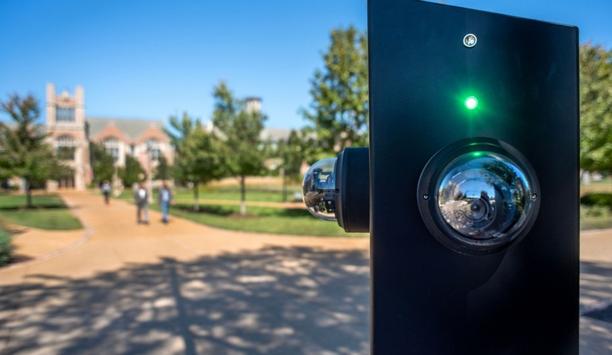
College campuses are meant to be places of learning, growth, and community. Fostering such an environment requires the deployment of policies and technologies that ensure safety and security. Considering the growing role of security technology in the higher education market, we asked this week’s Expert Panel Roundtable: What are the new applications for security technology in the college and university markets?

Physical security is a large market overall, encompassing a range of diverse vertical markets, each with its own set of challenges and opportunities. The success of the security industry overall depends on the ability of companies and technologies to meet the specific needs of each vertical market. Some markets offer more lucrative opportunities than others. We asked this week’s Expert Panel Roundtable: Which vertical markets have the greatest potential for growth for physical security systems?
Products
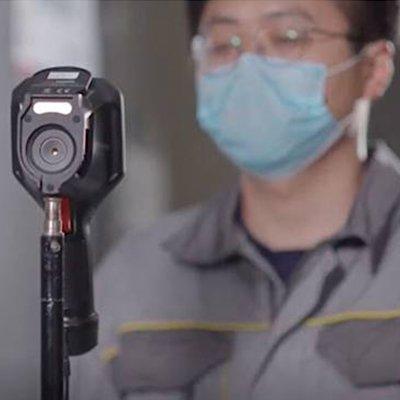





White papers

Modernising physical access control
Download
Security technologies promote real-time awareness in K-12 schools
Download
How biometrics are reshaping security in a connected world
Download
Using artificial intelligence (AI) to automate physical security systems
Download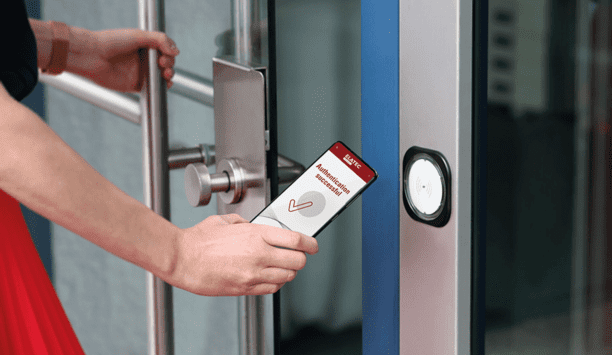
Physical access control
Download
The key to unlocking K12 school safety grants
Download
Access management in higher education
Download
School security checklist
Download
Why SAAS Security Platform is more popular in American SMEs
Download
Safeguard Students With New Techniques And Technology
Download
Assessing safety readiness for education campuses
Download
The critical role of access control in K-12 school security
Download
Protecting dormitory residents and assets
Download
School security moves to the cloud
Download
Physical access control in higher education
DownloadVideos



School security: Manufacturers & Suppliers

Technology's role in securing banks and financial institutions
Download
Security technologies promote real-time awareness in K-12 schools
Download
Integrated systems enable critical and compliant security for transportation
Download
Modernising physical access control
Download
Access. Intrusion. One estate.
Download