4K
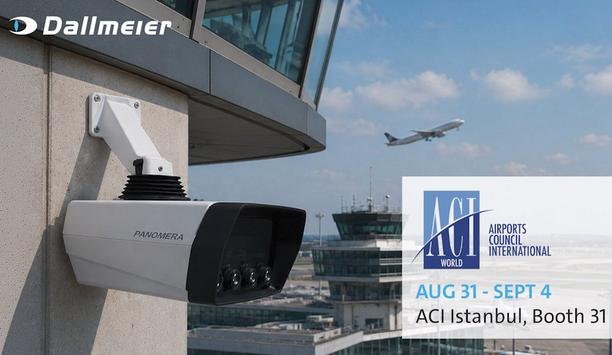
At the ACI Airport Experience Summit 2026 in Istanbul, Dallmeier will present innovative solutions for airports at booth 31. Visitors will learn how intelligent video technology can help enhance security and safety, streamline airport operations, and deliver lasting improvements to the passenger experience. A key focus of Dallmeier’s presence at the show is the protection and monitoring of security-critical areas on the airside. From perimeter security and the monitoring of runways and ta...
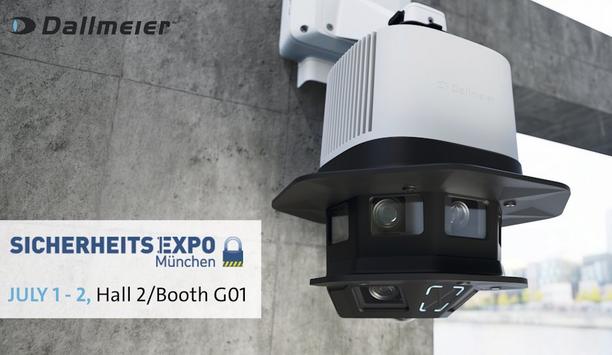
At SicherheitsExpo in Munich, Germany, Dallmeier will showcase innovative solutions for large-area video surveillance at booth G01. The main focus will be on the Panomera® V8, which has been specifically developed for applications requiring not only the highest image quality, but also powerful video analytics capabilities. The Panomera® V8 combines multifocal sensor technology with integrated AI-based video analytics, making it ideally suited for monitoring large areas. Thanks to the un...

Verkada, a pioneer in AI-powered physical security technology, today announced a broad range of hardware and software updates across its platform, including: new generations of bullet cameras and access control units, expanded AI-powered alerting capabilities, and enhanced visitor management for healthcare. "Every update we make to Verkada's platform is focused on giving security teams the right tools for the right situations," said Brandon Davito, Senior Vice President of Product and Operation...

Axis Communications, a pioneer in network video, has announced a series of new security innovations designed to increase deployment flexibility, enhance edge intelligence, and scale modern systems. These technologies reflect the growing convergence of physical security and IT, and reinforce Axis commitment to solutions that seamlessly connect devices, business intelligence and insights across organisations. The cutting-edge AXIS TP3604-E Private Cellular Back Box enables high-performance IP cam...

Xthings, a global provider of AIoT and smart security solutions, introduces X Tower, an autonomous, solar-powered security tower designed for rapid deployment in environments where traditional wired systems are impractical or cost-prohibitive. Debuting at ISC West 2026, X Tower is built to address common physical security challenges, including limited infrastructure, long installation timelines, and gaps in coverage across large, distributed, or remote sites. The system is designed to provide c...

Axis Communications, the industry pioneer in network video, announces a series of new security innovations designed to increase deployment flexibility, enhance edge intelligence, and scale modern systems. Together, these technologies reflect the growing convergence of physical security and IT, enabling organisations to unify video, sensors, and analytics within a single intelligent infrastructure. Headlining this year’s lineup is a cutting-edge private cellular solution, alongside a high-...
News

At ISC West 2026, Xthings, a global pioneer in AIoT and smart security, is introducing Xthings Tower, a fully autonomous Physical-AI smart tower designed to deliver proactive public safety anywhere it’s needed, without trenching, wiring, or reliance on the power grid. Traditional emergency call boxes and surveillance systems are largely reactive. They depend on manual activation and respond only after an incident occurs. Large public spaces, campuses, logistics hubs, parks, and temporary sites often lack continuous 24/7 coverage, and wired deployments are slow, complex, and infrastructure-dependent. Precise motion detection Xthings Tower changes that. “Public safety infrastructure hasn’t kept up with how people actually move through physical spaces,” said Raj Sundar, Senior Director of Product Management at Xthings. “Xthings Tower doesn’t just record what happened. It understands behaviour in real time, classifies risk locally at the edge, and enables early intervention, all in a fully self-contained system that can be deployed within days.” Xthings Tower is a self-contained Physical-AI system that combines perception, intelligence, and action into a single autonomous platform. Four 4K UHD low-power cameras provide true 360° coverage, while high-resolution radar enables precise motion detection and eliminates blind spots through radar + vision fusion. Always-On Video (AOV) ensures continuous awareness. Real-time intervention Edge-based AI analyses behaviour in real time and classifies activity by risk level: High risk: violence, intrusion, robbery, weapons Mid risk: loitering, illegal parking, perimeter violations All AI decisions happen locally for speed, accuracy, privacy, and resilience, even in low-connectivity environments. When risks are detected, instant alerts and early warnings are sent to command centers. Integrated high-brightness LED lighting enhances visibility and deterrence. A one-touch SOS and assist button provides immediate two-way support. Unlike traditional systems that respond after incidents occur, Xthings Tower enables early detection, real-time intervention, and prevention. Unified command interface Purpose-built for flexibility, Xthings Tower operates independently of fixed infrastructure: 200W solar panel with lithium battery storage True off-grid, wire-free operation 4G/LTE connectivity with optional wired Ethernet NDAA-compliant architecture Rapid installation within days Security teams can deploy a single tower in a remote area or scale across multi-site and city[1]wide deployments; all managed centrally through a unified command interface. Traditional wired security Xthings Tower is engineered for environments where traditional wired security is impractical or cost[1]prohibitive, including: Cities & Municipalities: parks, plazas, transit hubs, smart city initiatives Commercial & Industrial: business parks, logistics hubs, remote yards Scenic & Public Spaces: tourist destinations, nature reserves, limited-infrastructure areas Campuses: universities, schools, perimeter monitoring, emergency readiness Additional capabilities include environment monitoring and public phone charging, extending the tower’s role beyond surveillance into community-facing safety infrastructure. Video security solutions Xthings Tower integrates seamlessly with centralised command centres and is part of the broader Xthings Physical-AI ecosystem, alongside Xthings One and the company’s portfolio of access control, biometric, and video security solutions. The result is a unified approach to physical security: edge-first, privacy-preserving, and designed for real[1]world deployments at scale. “Because safety shouldn’t depend on infrastructure,” Sundar added. “And intelligence shouldn’t wait for emergencies. The physical world deserves AI that understands it.” Xtower will be on display at ISC West 2026 at the Xthings booth: Stand #32061.

VITEC has developed an integrated ISR video mission commander solution to simplify the capture, distribution and management of video, supporting the evolving requirements of modern military operations. The solution combines VITEC’s ultra low latency encoding hardware with the EZ TV video distribution platform to enable secure, interoperable real time video delivery across mobile, airborne and command environments. Mission-critical information “In today’s complex operational environments, the challenge is no longer access to data, it is the ability to transform multiple sensor feeds into clear, real-time situational awareness. By enabling secure, ultra-low-latency video distribution across the entire mission chain, VITEC empowers commanders to make faster, more informed decisions when it matters most,” said Ghassan Dadokh, Regional Head of Défense & Security Senior Business Development Manager, VITEC. Modern military teams rely on an expanding range of sensors including drones, UGVs, fixed cameras and mobile platforms, generating large volumes of ISR video that can be difficult to manage effectively. Siloed systems, inconsistent formats and latency issues often slow decision-making and disrupt the distribution of mission-critical information. VITEC’s approach is designed to address these challenges, offering defence organisations a more interoperable, scalable and secure method for distributing live and mission relevant video across all tiers of command. Highly dynamic environments The mission commander solution incorporates VITEC encoders directly into forward deployed assets such as vehicles, UGVs and portable ground stations. These encoders enable HD and 4K sensor feeds to be streamed over RF, LTE or Satcom links into the command and control network. Through the EZ TV platform, operators at all levels, including dismounted personnel on rugged tablets, can view, manage and distribute live, archived and on demand video through a unified interface. This supports a coherent operational picture even in bandwidth constrained or highly dynamic environments. By supporting standard streaming protocols, MISB and KLV metadata, and AES 256 encryption, the system remains compatible with existing C2 and ISR architectures while enabling secure dissemination across single site, multi-site and coalition deployments. The combination of hardware-based processing, bandwidth efficient codecs and centralised management helps reduce operator burden, improve responsiveness and maintain a consistent view of critical video sources.

At ISC West 2026, March 25-27 in booth 11053, IQSIGHT, formerly Bosch Video Systems, will highlight AI-enabled solutions that empower organisations to see clearly, act confidently, and improve security outcomes. With new Intelligent Video Analytics Pro (IVA Pro) offerings and an intelligence-first platform powering the latest cameras, IQSIGHT solutions eliminate blind spots, speed decision-making, and enhance operational resilience. “IQSIGHT applies visual intelligence to enable reasoning capabilities in systems to understand what is happening, not just capture video,” said Sachin Khanna, Vice President and Chief Product Officer, IQSIGHT. “Our intelligent video systems surface events and patterns to help organisations shift from reactive incident response to proactive action. With foresight, they can detect risk earlier and intervene before issues escalate.” Enhanced scene understanding with GenAI GenAI powers the new IVA Pro Context to add reasoning and contextual understanding to video. It transforms simple user-created prompts into actionable monitoring instructions for customised detections in complex environments that easily adapt to operational needs. Customers will soon have the flexibility to choose from a hybrid edge and cloud solution or a completely edge-based offering to best meet the needs of their organisations. The hybrid model performs real-time object detection and activity recognition at the edge, while the cloud adds insight to explain why events matter. The edge-based solution will be previewed at ISC West and offers many of the same benefits to organisations restricted from deploying cloud-based solutions. With either approach, IVA Pro Context delivers detailed scene information to improve awareness and support faster problem solving. Demonstrating how GenAI and agentic AI are shaping the future of security and safety, IQSIGHT will host interactive sessions for attendees to experience an intelligent agentic system that thinks, acts, and responds autonomously to automate workflows and enhance efficiency. Expanded suite of application-specific AI analytics IVA Pro offerings provide insights like object classification, vehicle attributes, and counting data for a range of security and operational uses. The introduction of IVA Pro Tunnel expands the portfolio to 13 application-specific analytics solutions. It detects dropped objects and anomalies in low-visibility environments to enhance mobility and safety. Real-time alerts to loss of visibility, stationary or slow-moving vehicles, wrong-way drivers, and pedestrian presence accelerates incident response for improved safety in tunnels. Edge-based intelligence with a new camera platform IQSIGHT will demonstrate a new generation of cameras built on an intelligence-first platform that supports advanced video analytics and is ready for future GenAI capabilities. Highlights include: FLEXIDOME dual 7100i IR combines two imagers in a single housing with the flexibility to share an IVA Pro license across views or use licenses independently to customise intelligent alerts for each area. DINION 7100s box camera series boosts clarity and reliability in demanding environments, such as tunnels, transportation hubs, and industrial sites. Compatible with a wide range of housings, it adapts easily to high-risk environments. AUTODOME 7100i IR pan-tilt-zoom camera features up to 4K ultra-HD imaging and an innovative ball design for distortion-free video above the horizon to deliver clarity for city surveillance, traffic monitoring, and perimeter protection environments. MIC fusion 9100s integrates an optical imager with a thermal sensor and offers metadata fusion to overlay data from both streams for detection and tracking of objects even in low-visibility conditions. Video infrastructure “For years, video systems captured incidents after they happened,” said Dan Kostecki, Vice President of Sales - North America, IQSIGHT. “With AI and visual intelligence, cameras can now recognise patterns and detect when something changes in real time, turning video systems into intelligent sensors that improve safety, efficiency, and operations, not just security. At ISC West, we’re excited to show how organisations can start thinking differently about what their video infrastructure can do." For details on these solutions and more, visit ISC West booth 11053.

Hanwha Vision, a global vision solution provider, has launched a new Barcode Reader (BCR) camera designed for the logistics industry. With a modular design for flexible configuration, enhanced barcode recognition performance, and seamless systems integration, this solution boosts efficiency for the logistics sector. Flexible and customisable modular design The camera features a modular structure, allowing users to customise the lens, LED module, and front cover to meet specific site requirements. With diverse lens options ranging from 6mm to 25mm and LED modules with both wide and narrow beam angles, the camera ensures optimal viewing angles and brightness in various installation settings. This flexibility allows customers to select only the components they need, helping to overcome complex installation challenges while maximising return on investment. High-performance, cost-effective solution The 3MP monochrome (black and white) camera is optimised for barcode recognition, delivering enhanced image clarity while minimising data processing requirements As a monochrome camera, it captures black and white images, significantly improving the speed and accuracy of barcode scanning. This makes it particularly suitable for environments like logistics centres that require rapid processing of a high volume of barcodes. Seamless integration with Hanwha Vision Logistics Solutions This BCR camera works seamlessly with Hanwha Vision’s 4K dual-sensor BCR camera and integrated software to create an even more powerful solution. While the 4K dual-sensor camera can be installed to monitor package status and scan barcodes from a top-down view, the 3MP mono camera is effective at recognising barcodes on the front and sides of parcels, providing comprehensive coverage for complex logistics environments. Additionally, with Hanwha Vision’s integrated software that combines invoice tracking and surveillance monitoring, users can track barcodes and review corresponding video footage from a single platform. The camera is also compatible with third-party VMS, allowing for seamless integration into existing systems. Enhanced barcode recognition accuracy and reliability This camera features AI-based barcode recognition technology that automatically detects and recognises the location of barcodes on packages, ensuring high accuracy. The HDR (High Dynamic Range) feature also effectively removes noise in low-light conditions, providing clear images and precise barcode scanning in any lighting conditions.

The high-tech company TRUMPF has presented three partner companies with the Supplier Award for their outstanding and long-standing cooperation. IDS Imaging Development Systems GmbH received the "Best Innovator" award for its exceptional innovative strength. The reason for the award: IDS developed a tailor-made solution for a strategically important area of application at TRUMPF in record time. Live monitoring technology It combines uEye Live monitoring technology with the intelligent IDS NXT camera platform, enabling high-resolution 4K streaming with maximum IP code 69K protection. IDS is thus laying the foundation for new opportunities in the areas of remote operation, process digitalisation and machine autonomy – key topics for the future of manufacturing “Trust, quality, and working together to move forward are our top priorities in our collaboration with our suppliers. With the TRUMPF Supplier Awards, we recognise partners who go above and beyond the everyday – through outstanding reliability, exceptional innovative strength, and the courage to break new ground with us,” says Jan Kistner, Head of Corporate Purchasing at TRUMPF. Future of industrial manufacturing "This recognition shows that we are on the right track with our innovation strategy," says Jan Hartmann, managing partner of IDS. "We would like to thank all teams for their outstanding efforts and look forward to many more exciting projects with TRUMPF." The award highlights the importance of innovation and partnership-based cooperation for the future of industrial manufacturing. IDS will continue to pursue this path consistently.

RISCO announced the UK launch of VUpoint AI, a video solution comprising smart AI cameras and NVRs that integrate natively with the RISCO ecosystem and the comprehensively updated iRISCO app. The range delivers faster, more accurate event verification and real-time monitoring for installers and end users across homes and businesses, with practical operational insights for commercial sites. No premium price tag “VUpoint AI is a game-changer for our installer community. It’s seamlessly integrated with new and existing RISCO systems, bringing advanced video intelligence without adding complexity,” said Dave Tate, Commercial Director, RISCO UK&I. “By pairing advanced video analytics with our cloud and control panels, customers get fewer false alarms, faster verification and advanced AI performance without the premium price tag.” What’s new Proactive deterrence: Built-in light and siren options to challenge intruders before entry Clear evidence, day and night: 4MP/5MP full-colour imaging with strong low-light performance Smarter alerts: AI analytics including virtual line crossing, perimeter intrusion and object-left detection People & vehicle insights: number plate recognition (ANPR), cross counting and people counting for access and flow management IP as a Zone: Configure AI cameras to be assigned to (and managed as) a zone in a RISCO intruder system. Operational visibility: heatmaps, crowd density and queue monitoring to optimise staffing and layout Seamless within the RISCO ecosystem VUpoint AI connects with RISCO control panels and the RISCO Cloud for unified setting/unsetting, notifications and video verification in iRISCO, and integrates with other RISCO solutions - giving users and monitoring teams a single, consistent experience. The solution includes a suite of advanced software tools available now, including powerful search tools, an intuitive video player and a dedicated device web page, with VMS scheduled to be added as part of the package. NVR range The VUpoint AI NVR family offers 4-32 channel models with PoE, 4K HDMI, AI by recorder/camera support and scalable storage - designed for professional installations. Availability VUpoint AI is available now in the UK; installers purchase directly from RISCO UK. Training and technical resources are available via RISCO University and launch webinars. Privacy & compliance VUpoint AI supports privacy-aware configuration, data minimisation and secure remote access via the RISCO Cloud. The range is NDAA Section 889 compliant, with UKCA Declarations of Conformity for NVRs and PoE cameras and a UK PSTI Statement of Compliance available. Site operators should ensure appropriate signage and policies when using functions such as ANPR and people counting.

Expert commentary

The physical security industry has been in love with the cloud for quite some time. And understandably so. The promise of instant scalability, centralised access, and simplified maintenance is hard to ignore, especially in an era of remote work and distributed facilities. But reality is catching up to the hype. For many, especially those dealing with video surveillance at scale, the cloud is no longer the catch-all solution it once seemed. Rising costs, bandwidth limitations, and latency issues are exposing its shortcomings. And the more resolution increases, from HD to 4K and beyond, the heavier that burden becomes. Modern security cameras This is where edge computing, specifically AI-enabled edge processing available in modern security cameras, starts to look less like an option and more like a necessity. But it’s not just about adding intelligence to cameras. It’s about how that intelligence is deployed, scaled, and maintained. This leads us to containerisation and tools such as Docker, which are a revolutionary piece of the puzzle. When cloud isn't enough Cloud analytics for video sounds great in theory: stream everything to the cloud Let’s start with a basic issue. Cloud analytics for video sounds great in theory: stream everything to the cloud, let powerful servers do the thinking, then serve up results to end-users in real time. However, in practice, this model can break down quickly for many end-users. Raw video is heavy. A single 4K camera streaming 24/7 can generate terabytes of data per month. Multiply that by hundreds or thousands of cameras, and the bandwidth and storage costs become unsustainable. Then there’s latency. If AI needs to detect a person entering a restricted area or identify a licence plate in motion, seconds count. Routing video to a cloud server for analysis and waiting for a response can introduce delays. Adding in concerns about uptime, such as what happens if the internet connection goes down, it becomes clear why relying exclusively on the cloud creates friction for mission-critical deployments. The edge advantage Edge processing turns that model on its head. Instead of sending everything out for analysis, edge-enabled cameras do the heavy lifting on-site. AI algorithms run directly on the device, interpreting what they see in real time. They generate metadata—lightweight descriptions of events, objects, or behaviors—rather than raw video. This metadata can be used to trigger alerts, inform decisions, or guide further review. The benefits are obvious: latency drops, bandwidth use plummets, and storage becomes more efficient. Edge processing solves many cloud deployment issues by keeping the compute where the data is generated, on the device. This frees the cloud up to do what it’s best at: providing scalable and centralised access to important footage. But where does the edge go from here? How do we evolve these powerful IoT devices to deliver even more situational awareness? Enter Docker: An app store for Edge AI They package an app along with everything it needs to run: the code, settings, libraries, and tools This is where the concept of containerisation and open development platforms like Docker comes in. Let’s start with an analogy that is helpful for understanding containers. Imagine you're getting ready for a trip. Rather than hoping your hotel has everything you need, you pack a suitcase with all your essentials: clothes, toiletries, chargers, maybe even snacks. When you arrive at your destination, you open the suitcase and you’re ready to go. You don’t need to borrow anything or adjust to whatever the hotel has, since you’ve brought your own reliable setup. Containers in software work the same way. They package an app along with everything it needs to run: the code, settings, libraries, and tools. This means the application behaves exactly the same, whether it’s running on a developer’s laptop, on the edge in an IoT device, or in the cloud. Security camera with a powerful edge processor There’s no last-minute scrambling to make it compatible with the environment it lands in, because it’s self-contained, portable, and consistent. Just like a well-packed suitcase simplifies travel, containers simplify software deployment. They make applications faster to start, easier to manage, and more predictable, no matter where they’re used. For a security camera with a powerful edge processor, it’s like giving the camera its own specialised toolkit that can be swapped out or upgraded without touching the rest of the system. It also means you can run multiple AI applications on a single camera, each in its own isolated environment. Integrators and end-users These applications don’t interfere with each other and can be updated independently Want to add fall detection to a healthcare facility’s camera network? Just deploy the analytics in a container. Need to monitor loading docks for pallet counts at a warehouse? Spin up a different container. These applications don’t interfere with each other and can be updated independently. As a developer, if you use an open container platform like Docker, any system that supports Docker can utilise your software. This removes the need to do expensive custom work for each partner and ecosystem. This is one reason Docker containers are tried and true in the larger IT space and are just starting to get traction in the security sector. Docker also makes this scalable. Developers can build AI tools once and push them out to hundreds or thousands of devices. Integrators and end-users can customise deployments without being locked into proprietary ecosystems. And because containers isolate applications from core system functions, security risks are minimised. Metadata, not megabytes Traditional video analytics systems often require full video streams to be processed One of the most underappreciated aspects of this method is the way it redefines data flow. Traditional video analytics systems often require full video streams to be processed in centralised servers, either on-premises or in the cloud. This model is brittle and costly, and it’s also unnecessary. Most of the time, users aren’t interested in every frame. They’re looking for specific events. Edge AI enables cameras to generate metadata about what they see: “Vehicle detected at 4:02 PM,” “Person loitering at entrance,” “Package removed from shelf.” This metadata can be transmitted instantly with minimal bandwidth. Video can still be recorded locally or in the cloud, but only accessed when needed. This dramatically reduces network load and allows the cloud to be used more strategically: for remote access, long-term archiving, or large-scale data aggregation, without being overwhelmed by volume. Building smarter systems, together A single camera can run analytics from multiple third parties, all within a secure, containerised framework An equally important aspect of containerisation is how it opens up the ecosystem. Traditional security systems are often built as closed solutions. Everything—from the cameras to the software to the analytics—comes from a single vendor. While this simplifies procurement, it limits innovation and flexibility. Docker flips that model. Because it’s an open, well-established standard, developers from any background can create applications for edge devices. Integrators can mix and match tools to meet unique customer needs. A single camera can run analytics from multiple third parties, all within a secure, containerised framework. This is a profound shift. Security cameras stop being fixed-function appliances and become software-defined platforms. And like any good platform, their value increases with the range of tools available. Hybrid: The realistic future So, where does this leave the cloud? It is still essential, but in a more specialised role. The most robust, future-proof architectures will be hybrid: edge-first and cloud-supported. Real-time detection and decision-making happen locally, where speed and uptime matter most. The cloud handles oversight, coordination, and data warehousing. Real-time detection and decision-making happen locally, where speed and uptime matter most This hybrid model is especially useful for organisations with complex deployments. A manufacturing plant might retain video locally for 30 days but push older footage to the cloud to meet retention requirements. A retail chain might analyse customer flow on-site but aggregate trend data in the cloud for HQ-level insight. Hybrid gives organisations the flexibility to optimise cost, compliance, and performance. Regulatory realities It’s also worth noting that not every organisation can, or should, store data in the cloud. Privacy regulations like GDPR in Europe or similar laws elsewhere require strict control over where data is stored. In many cases, sensitive footage must remain in-country. Edge and hybrid models can make compliance easier by minimising unnecessary data movement. Conclusion: Smart security starts at the edge The next wave of innovation in physical security won’t come from bigger cloud servers or faster internet connections. It will come from smarter edge devices, with cameras and sensors that don’t just record, but understand and classify events. And the foundation for that intelligence isn’t just AI, but how that AI is deployed. Containerisation via platforms like Docker is unlocking new levels of flexibility, security, and scalability for the physical security industry. By embracing open standards, supporting modular applications, and rethinking how data flows through the system, physical security professionals can build solutions that are not only more effective but also more sustainable, secure, and adaptable. The cloud still has its place. But the edge is essential to the future for real-time intelligence, mission-critical uptime, and cost-effective deployment.

Although video camera technology has been around since the early 1900s, it was not until the 1980s that video started to gain traction for security and surveillance applications. The pictures generated by these initial black and white tube cameras were grainy at best, with early colour cameras providing a wonderful new source of visual data for better identification accuracy. But by today’s standards, these cameras produced images that were about as advanced as crayons and coloring books. Fast forward to 2022, where most security cameras deliver HD performance, with more and more models offering 4K resolution with 8K on the horizon. Advanced processing techniques, with and without the use of infrared illuminators, also provide the ability to capture usable images in total darkness; and mobile devices such as drones, dash cams, body cams, and even cell phones have further expanded the boundaries for video surveillance. Additionally, new cameras feature on-board processing and memory to deliver heightened levels of intelligence at the edge. A new way of doing things But video has evolved beyond the capabilities of advanced imaging and performance to include another level: Artificial Intelligence. Video imaging technology combines with AI, delivers a wealth of new data, not just for traditional physical security applications, but for a much deeper analysis of past, present, and even future events across the enterprise. This is more than a big development for the physical security industry; it is a monumental paradigm shift that is changing how security system models are envisioned, designed, and deployed. Much of the heightened demand for advanced video analytics is being driven by six prevalent industry trends: 1) Purpose-built performance Several video analytics technologies have become somewhat commoditised “intelligent” solutions over the past few years, including basic motion and object detection that can be found embedded in even the most inexpensive video cameras. New, more powerful, and intelligent video analytics solutions deliver much higher levels of video understanding. Vintra custom-built their platform to focus on what matters most to security professionals: speed and accuracy.” This is accomplished using purpose-built deep learning, employing advanced algorithms and training input capable of extracting the relevant data and information of specific events of interest defined by the user. This capability powers the automation of two important workflows: the real-time monitoring of hundreds or thousands of live cameras, and the lightning-fast post-event search of recorded video. Vintra video analytics, for example, accomplishes this with proprietary analytics technology that defines multi-class algorithms for specific subject detection, classification, tracking, and re-identification and correlation of subjects and events captured in fixed or mobile video from live or recorded sources. 2) Increased security with personal privacy protections The demand for increased security and personal privacy are almost contradictory given the need to accurately identify threatening and/or known individuals, whether due to criminal activity or the need to locate missing persons. But there is still societal pushback on the use of facial recognition technology to accomplish such tasks, largely surrounding the gathering and storage of Personally Identifiable Information (PII). The good news is that this can be effectively accomplished with great accuracy without facial recognition, using advanced video analytics that analyse an individual’s whole-body signature based on various visual characteristics rather than a face. This innovative approach provides a fast and highly effective means of locating and identifying individuals without impeding the personal privacy of any individuals captured on live or recorded video. 3) Creation and utilisation of computer vision Computer vision-driven video analytics transform professional video security systems from being purely reactive to proactive and pre-emptive solutions.” There are a lot of terminologies used to describe AI-driven video analytics, including machine learning (ML) and deep learning (DL). Machine learning employs algorithms to transform data into mathematical models that a computer can interpret and learn from, and then use to decide or predict. Add the deep learning component, and you effectively expand the machine learning model using artificial neural networks which teach a computer to learn by example. The combination of layering machine learning and deep learning produces what is now defined as computer vision (CV). A subset but more evolved form of machine learning, computer vision is where the work happens with advanced video analytics. It trains computers to interpret and categorize events much the way humans do to derive meaningful insights such as identifying individuals, objects, and behaviours. 4) Increased operational efficiencies Surveillance systems with a dozen or more cameras are manpower-intensive by nature, requiring continuous live or recorded monitoring to detect and investigate potentially harmful or dangerous situations. Intelligent video analytics, which provides real-time detection, analysis, and notification of events to proactively identify abnormalities and potential threats, transform traditional surveillance systems from reactive to proactive sources of actionable intelligence. In addition to helping better protect people, property, and assets, advanced video analytics can increase productivity and proficiency while reducing overhead. With AI-powered video analytics, security and surveillance are powered by 24/7 technology that doesn’t require sleep, taking breaks, or calling in sick. This allows security operations to redeploy human capital where it is most needed such as alarm response or crime deterrence. It also allows security professionals to quickly and easily scale operations in new and growing environments. 5) A return on security investment “With video analytics, what has always been regarded as a cost centre is now being looked at as a profit centre.” The advent of advanced video analytics is slowly but surely also transforming physical security systems from necessary operational expenses into potential sources of revenue with tangible ROI, or as it is better known in the industry, ROSI – Return on Security Investment. New video analytics provide vast amounts of data for business intelligence across the enterprise. Advanced solutions can do this with extreme cost-efficiency by leveraging an organization’s existing investment in video surveillance systems technology. This easy migration path and a high degree of cost-efficiency are amplified by the ability to selectively apply purpose-built video analytics at specific camera locations for specific applications. Such enterprise-grade software solutions make existing fixed or mobile video security cameras smarter, vastly improving how organizations and governments can automatically detect, monitor, search for and predict events of interest that may impact physical security, health safety, and business operations. For example, slip-and-fall analysis can be used to identify persons down or prevent future incidents, while building/area occupancy data can be used to limit crowds or comply with occupancy and distancing guidelines. In this way, the data gathered is a valuable asset that can deliver cost and safety efficiencies that manual processes cannot. 6) Endless applications The business intelligence applications for advanced video analytics platforms are virtually endless including production and manufacturing, logistics, workforce management, retail merchandising and employee deployment, and more. This also includes mobile applications utilising dashboard and body-worn cameras, drones, and other forms of robotics for agricultural, oil and gas, transportation, and numerous other outdoor and/or remote applications. An added benefit is the ability to accommodate live video feeds from smartphones and common web browsers, further extending the application versatility of advanced video analytics. Navigating a busy intersection The accelerated rate of development for new advanced video analytics makes the intersection of video and AI technologies a very busy one to navigate. Just like crossing the street, one needs to be cautious in their approach. There are a lot of players entering this space who are making big statements and claims about their solutions. When vetting a provider, consider that it’s all about how they develop their technology, the accuracy they deliver, and their ability to leverage this new source of data to improve the specific outcomes you need to achieve. And most of all, it’s about proof of performance and how they arrived at the desired outcomes. Navigate your way across this busy intersection pragmatically, and you will find intelligent video analytics to be a real game-changer for your organisation’s physical security operations.

Nowadays to save costs by making full use of old devices while upgrading the old security projects, many integrators or installers prefer to use video management software to manage multiple brands of video devices (such as IP cameras, and NVR), instead of only one single brand. So that they could have more flexible choices to earn profits while saving costs. Multi-brands video device management On other hand, with market segmentation and specialisation, instead of managing the video by themselves, application service providers of different industries prefer video surveillance companies could help them to collect the video from various brands of front-end video devices. Thus they could focus more on application development according to the characteristic of different industries. Therefore to meet the requirements of the surveillance market, how to manage multi-brand video devices has become very important, especially for third-party video management software companies. Then how to manage multi-brands multi-brands video devices (such as IP cameras, and NVR) with your VMS system? The first step is: integration Preparing your system for video devices integration Selecting an open architecture VMS system allows for a deeper, seamless level of integration There’s more to integration than just the ability to plug in a video device. Does your VMS allow you to take advantage of the latest IP camera and other video device technologies? Does it support open architecture? Closed architecture systems offer limited integration. Selecting an open architecture VMS system allows for a deeper, seamless level of integration, and allows you to upgrade hardware at your own pace. It also allows you to expand your suite of security solutions in the future, as your needs change. Choosing a VMS system And these questions also need to be considered when choosing a suitable VMS system: Does your system support multiple protocols to communicate with video devices? Can your system easily integrate the private SDK provided by the IP camera manufacturer? Make sure the communication between multi-brand video devices (such as IP cameras, NVR) and your video surveillance VMS system can be put through. ONVIF Nowadays most famous overseas video surveillance manufacturers all support the standard protocol ONVIF, which enable VMS system easily to access their video devices (such as IP cameras, and NVR). Some will provide protocols like RTSP, HLS, HTTP-FLV, and Websocket. Some will provide their private protocols like EHOME/ISUP protocol and DHOME. And also GB/T28181, and GA/T1400 protocols are very popular in China. Simple and easy integration As for the VMS system, the more protocols it supports, the easier it can put through communication As for the VMS system, the more protocols it supports, the easier it can put through communication with the front-end video devices. Thus it will make the whole process of integration simple and easy. And about video surveillance manufacturers who only can provide SDK, in this way open architecture of VMS system is needed because it can help to put through the communication smoothly. The second step is management Since communication between front-end video devices and the VMS system is put through. VMS system can access, capture, and collect the video from the network video devices (both live and recorded). It then stores that video to dedicated data storage media (on-premises, external locations, or in the cloud), based on automated policies, pre-determined by the organisation. That is how a VMS system work. But if the front-end devices are different, they are using a different format, bitrate, and resolution. For example, one brand of IP camera uses H.265, 4K resolution, and the other brand of IP camera use H.264, 1080P. How can a VMS system manage them together? Video transcoding technology That requires the VMS system should have efficient video transcoding technology to convert different video formats and resolutions into unified video formats and resolutions, and strong video transmission technology to meet low bandwidth network adaptability. Smooth streaming automatically adjusts bit-rate and resolution between the VMS system and front-end devices according to real-time network conditions. For example: The video with a high bitstream can be converted to a low bitstream. 8K,4K,3M, 10 80P. .. → D1,CIF,VGA... Transcode video in different encoding formats to the unified encoding formats. H.265, MPEG4 → H.264 The third step: output standard video data for the third-party integration A good VMS system should provide convenient ways for several video processing applications. In interactions applications, particularly in media interchange, a good system should output standardised protocols and stream formats (such as HLS, RTSP, WebSocket, etc) according to the needs of the third party, so that the third party can easily acquire and use video from VMS system for the further application or development.
Security beat

When it comes to security cameras, the end user always wants more—more resolution, more artificial intelligence (AI), and more sensors. However, the cameras themselves do not change much from generation to generation; that is, they have the same power budgets, form factors and price. To achieve “more,” the systems-on-chips (SoCs) inside the video cameras must pack more features and integrate systems that would have been separate components in the past. For an update on the latest capabilities of SoCs inside video cameras, we turned to Jérôme Gigot, Senior Director of Marketing for AIoT at Ambarella, a manufacturer of SOCs. AIoT refers to the artificial intelligence of things, the combination of AI and IoT. Author's quote “The AI performance on today’s cameras matches what was typically done on a server just a generation ago,” says Gigot. “And, doing AI on-camera provides the threefold benefits of being able to run algorithms on a higher-resolution input before the video is encoded and transferred to a server, with a faster response time, and with complete privacy.” Added features of the new SOC Ambarella expects the first cameras with the SoC to emerge on the market during early part of 2024 Ambarella’s latest System on Chip (SOC) is the CV72S, which provides 6× the AI performance of the previous generation and supports the newer transformer neural networks. Even with its extra features, the CV72S maintains the same power envelope as the previous-generation SoCs. The CV72S is now available, sampling is underway by camera manufacturers, and Ambarella expects the first cameras with the SoC to emerge on the market during the early part of 2024. Examples of the added features of the new SOC include image processing, video encoders, AI engines, de-warpers for fisheye lenses, general compute cores, along with functions such as processing multiple imagers on a single SoC, fusion among different types of sensors, and the list goes on. This article will summarise new AI capabilities based on information provided by Ambarella. AI inside the cameras Gigot says AI is by far the most in-demand feature of new security camera SoCs. Customers want to run the latest neural network architectures; run more of them in parallel to achieve more functions (e.g., identifying pedestrians while simultaneously flagging suspicious behavior); run them at higher resolutions in order to pick out objects that are farther away from the camera. And they want to do it all faster. Most AI tasks can be split between object detection, object recognition, segmentation and higher-level “scene understanding” types of functions, he says. The latest AI engines support transformer network architectures (versus currently used convolutional neural networks). With enough AI horsepower, all objects in a scene can be uniquely identified and classified with a set of attributes, tracked across time and space, and fed into higher-level AI algorithms that can detect and flag anomalies. However, everything depends on which scene is within the camera’s field of view. “It might be an easy task for a camera in an office corridor to track a person passing by every couple of minutes; while a ceiling camera in an airport might be looking at thousands of people, all constantly moving in different directions and carrying a wide variety of bags,” Gigot says. Changing the configuration of video systems Low-level AI number crunching would typically be done on camera (at the source of the data) Even with more computing capability inside the camera, central video servers still have their place in the overall AI deployment, as they can more easily aggregate and understand information across multiple cameras. Additionally, low-level AI number crunching would typically be done on camera (at the source of the data). However, the increasing performance capabilities of transformer neural network AI inside the camera will reduce the need for a central video server over time. Even so, a server could still be used for higher-level decisions and to provide a representation of the world; along with a user interface for the user to make sense of all the data. Overall, AI-enabled security cameras with transformer network-based functionality will greatly reduce the use of central servers in security systems. This trend will contribute to a reduction in the greenhouse gases produced by data centres. These server farms consume a lot of energy, due to their power-hungry GPU and CPU chips, and those server processors also need to be cooled using air conditioning that emits additional greenhouse gases. New capabilities of transformer neural networks New kinds of AI architectures are being deployed inside cameras. Newer SoCs can accommodate the latest transformer neural networks (NNs), which now outperform currently used convolutional NNs for many vision tasks. Transformer neural networks require more AI processing power to run, compared to most convolutional NNs. Transformers are great for Natural Language Processing (NLP) as they have mechanisms to “make sense” of a seemingly random arrangement of words. Those same properties, when applied to video, make transformers very efficient at understanding the world in 3D. Transformer NNs require more AI processing power to run, compared to most convolutional NNs For example, imagine a multi-imager camera where an object needs to be tracked from one camera to the next. Transformer networks are also great at focussing their attention on specific parts of the scene—just as some words are more important than others in a sentence, some parts of a scene might be more significant from a security perspective. “I believe that we are currently just scratching the surface of what can be done with transformer networks in video security applications,” says Gigot. The first use cases are mainly for object detection and recognition. However, research in neural networks is focussing on these new transformer architectures and their applications. Expanded use cases for multi-image and fisheye cameras For multi-image cameras, again, the strategy is “less is more.” For example, if you need to build a multi-imager with four 4K sensors, then, in essence, you need to have four cameras in one. That means you need four imaging pipelines, four encoders, four AI engines, and four sets of CPUs to run the higher-level software and streaming. Of course, for cost, size, and power reasons, it would be extremely inefficient to have four SoCs to do all this processing. Therefore, the latest SoCs for security need to integrate four times the performance of the last generation’s single-imager 4K cameras, in order to process four sensors on a single SoC with all the associated AI algorithms. And they need to do this within a reasonable size and power budget. The challenge is very similar for fisheye cameras, where the SoC needs to be able to accept very high-resolution sensors (i.e., 12MP, 16MP and higher), in order to be able to maintain high resolution after de-warping. Additionally, that same SoC must create all the virtual views needed to make one fisheye camera look like multiple physical cameras, and it has to do all of this while running the AI algorithms on every one of those virtual streams at high resolution. The power of ‘sensor fusion’ Sensor fusion is the ability to process multiple sensor types at the same time and correlate all that information Sensor fusion is the ability to process multiple sensor types at the same time (e.g., visual, radar, thermal and time of flight) and correlate all that information. Performing sensor fusion provides an understanding of the world that is greater than the information that could be obtained from any one sensor type in isolation. In terms of chip design, this means that SoCs must be able to interface with, and natively process, inputs from multiple sensor types. Additionally, they must have the AI and CPU performance required to do either object-level fusion (i.e., matching the different objects identified through the different sensors), or even deep-level fusion. This deep fusion takes the raw data from each sensor and runs AI on that unprocessed data. The result is machine-level insights that are richer than those provided by systems that must first go through an intermediate object representation. In other words, deep fusion eliminates the information loss that comes from preprocessing each individual sensor’s data before fusing it with the data from other sensors, which is what happens in object-level fusion. Better image quality AI can be trained to dramatically improve the quality of images captured by camera sensors in low-light conditions, as well as high dynamic range (HDR) scenes with widely contrasting dark and light areas. Typical image sensors are very noisy at night, and AI algorithms can be trained to perform excellently at removing this noise to provide a clear colour picture—even down to 0.1 lux or below. This is called neural network-based image signal processing, or AISP for short. AI can be trained to perform all these functions with much better results than traditional video methods Achieving high image quality under difficult lighting conditions is always a balance among removing noise, not introducing excessive motion blur, and recovering colours. AI can be trained to perform all these functions with much better results than traditional video processing methods can achieve. A key point for video security is that these types of AI algorithms do not “create” data, they just remove noise and clean up the signal. This process allows AI to provide clearer video, even in challenging lighting conditions. The results are better footage for the humans monitoring video security systems, as well as better input for the AI algorithms analysing those systems, particularly at night and under high dynamic range conditions. A typical example would be a camera that needs to switch to night mode (black and white) when the environmental light falls below a certain lux level. By applying these specially trained AI algorithms, that same camera would be able to stay in colour mode and at full frame rate--even at night. This has many advantages, including the ability to see much farther than a typical external illuminator would normally allow, and reduced power consumption. ‘Straight to cloud’ architecture For the cameras themselves, going to the cloud or to a video management system (VMS) might seem like it doesn’t matter, as this is all just streaming video. However, the reality is more complex; especially for cameras going directly to the cloud. When cameras stream to the cloud, there is usually a mix of local, on-camera storage and streaming, in order to save on bandwidth and cloud storage costs. To accomplish this hybrid approach, multiple video-encoding qualities/resolutions are being produced and sent to different places at the same time; and the camera’s AI algorithms are constantly running to optimise bitrates and orchestrate those different video streams. The ability to support all these different streams, in parallel, and to encode them at the lowest bitrate possible, is usually guided by AI algorithms that are constantly analyzing the video feeds. These are just some of the key components needed to accommodate this “straight to cloud” architecture. Keeping cybersecurity top-of-mind Ambarella’s SoCs always implement the latest security mechanisms, both hardware and software Ambarella’s SoCs always implement the latest security mechanisms, both in hardware and software. They accomplish this through a mix of well-known security features, such as ARM trust zones and encryption algorithms, and also by adding another layer of proprietary mechanisms with things like dynamic random access memory (DRAM) scrambling and key management policies. “We take these measures because cybersecurity is of utmost importance when you design an SoC targeted to go into millions of security cameras across the globe,” says Gigot. ‘Eyes of the world’ – and more brains Cameras are “the eyes of the world,” and visual sensors provide the largest portion of that information, by far, compared to other types of sensors. With AI, most security cameras now have a brain behind those eyes. As such, security cameras have the ability to morph from just a reactive and security-focused apparatus to a global sensing infrastructure that can do everything from regulating the AC in offices based on occupancy, to detecting forest fires before anyone sees them, to following weather and world events. AI is the essential ingredient for the innovation that is bringing all those new applications to life, and hopefully leading to a safer and better world.

GSX 2022 this week in Atlanta highlights the changing role of security in the enterprise. The role of the security director increasingly will encompass facets of cybersecurity as well as physical security. Transitioning to an operation that incorporates both disciplines requires a workforce that embraces education and building new skills. Education and the opportunity to build new skills are evident everywhere at GSX, including in the hundreds of education sessions and also in the knowledge shared on the show floor in the exhibit hall. Risk-based decisions “I really just do physical security.” That used to be a common phrase in the industry, but no more. In addition to ‘upskilling,’ security practitioners also need to speak the language of business and to insert the concepts of security into that language. Fast changes in security are challenging today’s professionals to keep up. The GSX education sessions seek to meet the need. Embracing ESRM includes a complete change in the thinking and approach to security Among the topics at the GSX conference is ESRM (Enterprise Security Risk Management), a security approach that focuses on risk-based decisions and partnerships with asset owners. It’s an approach that requires a holistic view of security risk. Embracing ESRM includes a complete change in the thinking and approach to security. Rather than seeking ‘approval’ for security decisions, security professionals identify risks and possible mitigation strategies and present them to management. Shaping access control Activity in the exhibit hall was brisk on the first day, which was heartening to those who attended a vastly downsized show last year in Orlando. At this show, there is even carpeting. Trends lead the lively discussions at GSX. In a presentation on the show floor Monday, manufacturer Brivo shared top trends that are shaping access control. The trends include: Hybrid work is here to stay. Some 60% of respondents to a Brivo survey said access control is extremely or very important to the hybrid work model. Providing immense value to an organisation, access data helps to manage occupancy and is part of the larger discussion of facility utilisation. Data analytics is ‘mission critical.’ Combining data from multiple sources, including access control, becomes powerful when leveraged using artificial intelligence (AI) and machine learning tools. Applications such as anomaly detection help companies improve operations. Some 65% of respondents to the Brivo survey say integrating access control with other technologies is an important trend. Keeping people healthy Other trends identified by Brivo include mobile credentialing and security centralisation (cloud) Other trends identified by Brivo include mobile credentialing and security centralisation (cloud). Among other exhibitors, Johnson Controls is focusing in their booth on solutions, not products, including the convergence of physical security into the digital space. The OpenBlue system is a digital platform that incorporates security, HVAC, fire/life safety, and building operations in a single platform that is the ‘nerve center’ of an organisation. Increasingly, the areas ‘security’ is responsible for are expanding. During the COVID pandemic, for example, security had to embrace a role in keeping people healthy (as well as safe). The challenges of the pandemic accelerated the OpenBlue portfolio as more security professionals expanded their role. Security operations centre “Moving into the digital space, and digitising what used to be a security operations center, enables us to increase automation and enable security operations to respond more quickly,” said Kenneth Poole, Johnson Controls’ Vice President, National Accounts, North America Building Solutions. Security directors are responsible for things they have never been responsible for before" “Surprisingly a lot of customers are being forced into new areas,” Poole added. “Security directors are responsible for things they have never been responsible for before.” Poole says he is encouraged by the willingness of ‘old school’ security directors to embrace the new reality. Azena’s approach to supplying edge-based camera applications on an ‘app store’ is gaining momentum. Several new applications are being announced at GSX, among the 110 apps on the Azena app store. Apps can be loaded onto Azena-enabled cameras manufactured by Bosch, Hanwha, Vivotek, BST, TopView, and Ability. Video management system Azena has simplified the integration of its app solutions, enabling developers to make only slight changes to an app and ensure it is compatible with the largest video management system (VMS) platforms, including Milestone, Genetec, and NX Witness. A wizard on the camera enables simplified mapping of data analytics to events in a VMS system. New applications in the Azena app store include video sensors to prevent ‘bed fall’ accidents in hospitals and healthcare facilities, incidents that can cost $35,000 on average and account for $34 billion in the United States in a year. The app identifies video signs of an imminent bed fall, such as excessive movement in bed. The analytics run inside the camera and the video feed doesn’t leave the device, so there are no privacy concerns. An Azena app is installed in a camera mounted on ‘Yellow,’ the ‘robot dog’ manufactured by Boston Dynamics Effectiveness of metal detectors Another new application is gun detection that can augment the effectiveness of metal detectors. Also, an Azena app is installed in a camera mounted on ‘Yellow,’ the ‘robot dog’ manufactured by Boston Dynamics and configured for security applications by Prosegur. An Azena app is installed in a Vivotek AI box on the back of the dog; it can detect fire, smoke, and moved luggage. Azena apps for flare and leak detection are becoming more popular in the oil and gas industries, and there are camera apps that can monitor tank levels. Cisco Meraki is introducing two new camera models at GSX, with 4K and 4MP options, a terabyte of storage for 4K, and 256Gb of storage for 4MP. Air quality sensors The cameras will allow most customers to record 30 to 90 days of video in the camera at the edge The cameras will allow most customers to record 30 to 90 days of video in the camera at the edge. Also at the show, they introduced a push button and air quality sensors that are easy to incorporate into a Cisco Meraki application. Cisco Meraki also offers a dashboard that is integrated with the rest of the product portfolio to enable users to view devices on the same interface and in the same ‘pane of glass.’ For physical security users, there is the Meraki Vision Portal, which enables physical security users to run a more effective investigation. Features include a floor plan view and the ability to switch among multiple cameras. Users can instantly search videos using ‘motion search’ to easily find an event in a video.

A new generation of video cameras is poised to boost capabilities dramatically at the edge of the IP network, including more powerful artificial intelligence (AI) and higher resolutions, and paving the way for new applications that would have previously been too expensive or complex. Technologies at the heart of the coming new generation of video cameras are Ambarella’s newest systems on chips (SoCs). Ambarella’s CV5S and CV52S product families are bringing a new level of on-camera AI performance and integration to multi-imager and single-imager IP cameras. Both of these SoCs are manufactured in the ‘5 nm’ manufacturing process, bringing performance improvements and power savings, compared to the previous generation of SoCs manufactured at ‘10nm’. CV5S and CV52S AI-powered SoCs The CV5S, designed for multi-imager cameras, is able to process, encode and perform advanced AI on up to four imagers at 4Kp30 resolution, simultaneously and at less than 5 watts. This enables multi-headed camera designs with up to four 4K imagers looking at different portions of a scene, as well as very high-resolution, single-imager cameras of up to 32 MP resolution and beyond. The CV52S, designed for single-imager cameras with very powerful onboard AI, is the next-generation of the company’s successful CV22S mainstream 4K camera AI chip. This new SoC family quadruples the AI processing performance, while keeping the same low power consumption of less than 3 watts for 4Kp60 encoding with advanced AI processing. Faster and ubiquitous AI capabilities Ambarella’s newest AI vision SoCs for security, the CV5S and CV52S, are competitive solutions" “Security system designers desire higher resolutions, increasing channel counts, and ever faster and more ubiquitous AI capabilities,” explains John Lorenz, Senior Technology and Market Analyst, Computing, at Yole Développement (Yole), a French market research firm. John Lorenz adds, “Ambarella’s newest AI vision SoCs for security, the CV5S and CV52S, are competitive solutions for meeting the growing demands of the security IC (integrated circuit) sector, which our latest report forecasts to exceed US$ 4 billion by 2025, with two-thirds of that being chips with AI capabilities.” Edge AI vision processors Ambarella’s new CV5S and CV52S edge AI vision processors enable new classes of cameras that would not have been possible in the past, with a single SoC architecture. For example, implementing a 4x 4K multi-imager with AI would have traditionally required at least two SoCs (at least one for encoding and one for AI), and the overall power consumption would have made those designs bulky and prohibitively expensive. By reducing the number of required SoCs, the CV5S enables advanced camera designs such as AI-enabled 4x 4K imagers at price points much lower than would have previously been possible. “What we are usually trying to do with our SoCs is to keep the price points similar to the previous generations, given that camera retail prices tend to be fairly fixed,” said Jerome Gigot, Ambarella's Senior Director of Marketing. 4K multi-imager cameras “However, higher-end 4K multi-imager cameras tend to retail for thousands of dollars, and so even though there will be a small premium on the SoC for the 2X improvement in performance, this will not make a significant impact to the final MSRP of the camera,” adds Jerome Gigot. In addition, the overall system cost might go down, Gigot notes, compared to what could be built today because there is no longer a need for external chips to perform AI, or extra components for power dissipation. The new chips will be available in the second half of 2021, and it typically takes about 12 to 18 months for Ambarella’s customers (camera manufacturers) to produce final cameras. Therefore, the first cameras, based on these new SoCs, should hit the market sometime in the second half of 2022. Reference boards for camera manufacturers The software on these new SoCs is an evolution of our unified Linux SDK" As with Ambarella’s previous generations of edge AI vision SoCs for security, the company will make available reference boards to camera manufacturers soon, allowing them to develop their cameras based on the new CV5S and CV52S SoC families. “The software on these new SoCs is an evolution of our unified Linux SDK that is already available on our previous generations SoCs, which makes the transition easy for our customers,” said Jerome Gigot. Better crime detection Detecting criminals in a crowd, using face recognition and/or licence plate recognition, has been a daunting challenge for security, and one the new chips will help to address. “Actually, these applications are one of the main reasons why Ambarella is introducing these two new SoC families,” said Jerome Gigot. Typically, resolutions of 4K and higher have been a smaller portion of the security market, given that they came at a premium price tag for the high-end optics, image sensor and SoC. Also, the cost and extra bandwidth of storing and streaming 4K video were not always worth it for the benefit of just viewing video at higher resolution. 4K AI processing on-camera The advent of on-camera AI at 4K changes the paradigm. By enabling 4K AI processing on-camera, smaller objects at longer distances can now be detected and analysed without having to go to a server, and with much higher detail and accuracy compared to what can be done on a 2 MP or 5 MP cameras. This means that fewer false alarms will be generated, and each camera will now be able to cover a longer distance and wider area, offering more meaningful insights without necessarily having to stream and store that 4K video to a back-end server. “This is valuable, for example, for traffic cameras mounted on top of high poles, which need to be able to see very far out and identify cars and licence plates that are hundreds of meters away,” said Jerome Gigot. The advent of on-camera AI at 4K changes the paradigm Enhanced video analytics and wider coverage “Ambarella’s new CV5S and CV52S SoCs truly allow the industry to take advantage of higher resolution on-camera for better analytics and wider coverage, but without all the costs typically incurred by having to stream high-quality 4K video out 24/7 to a remote server for offline analytics,” said Jerome Gigot. He adds, “So, next-generation cameras will now be able to identify more criminals, faces and licence plates, at longer distances, for an overall lower cost and with faster response times by doing it all locally on-camera.” Deployment in retail applications Retail environments can be some of the toughest, as the cameras may be looking at hundreds of people at once Retail applications are another big selling point. Retail environments can be some of the toughest, as the cameras may be looking at hundreds of people at once (e.g., in a mall), to provide not only security features, but also other business analytics, such as foot traffic and occupancy maps that can be used later to improve product placement. The higher resolution and higher AI performance, enabled by the new Ambarella SoCs, provide a leap forward in addressing those scenarios. In a store setup, a ceiling-mounted camera with four 4K imagers can simultaneously look at the cashier line on one side of the store, sending alerts when a line is getting too long and a new cashier needs to be deployed, while at the same time looking at the entrance on the other side of the store, to count the people coming in and out. This leaves two additional 4K imagers for monitoring specific product aisles and generating real-time business analytics. Use in cashier-less stores Another retail application is a cashier-less store. Here, a CV5S or CV52S-based camera mounted on the ceiling will have enough resolution and AI performance to track goods, while the customer grabs them and puts them in their cart, as well as to automatically track which customer is purchasing which item. In a warehouse scenario, items and boxes moving across the floor could also be followed locally, on a single ceiling-mounted camera that covers a wide area of the warehouse. Additionally, these items and boxes could be tracked across the different imagers in a multi-headed camera setup, without the video having to be sent to a server to perform the tracking. Updating on-camera AI networks Another feature of Ambarella’s SoCs is that their on-camera AI networks can be updated on-the-fly, without having to stop the video recording and without losing any video frames. So, for example in the case of a search for a missing vehicle, the characteristics of that missing vehicle (make, model, colour, licence plate) can be sent to a cluster of cameras in the general area, where the vehicle is thought to be missing, and all those cameras can be automatically updated to run a live search on that specific vehicle. If any of the cameras gets a match, a remote operator can be notified and receive a picture, or even a live video feed of the scene. Efficient traffic management With the CV52S edge AI vision SoC, those decisions can be made locally at each intersection by the camera itself Relating to traffic congestion, most big cities have thousands of intersections that they need to monitor and manage. Trying to do this from one central location is costly and difficult, as there is so much video data to process and analyse, in order to make those traffic decisions (to control the traffic lights, reverse lanes, etc.). With the CV52S edge AI vision SoC, those decisions can be made locally at each intersection by the camera itself. The camera would then take actions autonomously (for example, adjust traffic-light timing) and only report a status update to the main traffic control centre. So now, instead of having one central location trying to manage 1,000 intersections, a city can have 1,000 smart AI cameras, each managing its own location and providing updates and metadata to a central server. Superior privacy Privacy is always a concern with video. In this case, doing AI on-camera is inherently more private than streaming the video to a server for analysis. Less data transmission means fewer points of entry for a hacker trying to access the video. On Ambarella’s CV5S and CV52S SoCs, the video can be analysed locally and then discarded, with just a signature or metadata of the face being used to find a match. No actual video needs to be stored or transmitted, which ensures total privacy. In addition, the chips contain a very secure hardware cyber security block, including OTP memory, Arm TrustZones, DRAM scrambling and I/O virtualisation. This makes it very difficult for a hacker to replace the firmware on the camera, providing another level of security and privacy at the system level. Privacy Masking Another privacy feature is the concept of privacy masking. This feature enables portions of the video (say a door or a window) to be blocked out, before being encoded in the video stream. The blocked portions of the scene are not present in the recorded video, thus providing a privacy option for cameras that are facing private areas. “With on-camera AI, each device becomes its own smart endpoint, and can be reconfigured at will to serve the specific physical security needs of its installation,” said Jerome Gigot, adding “The possibilities are endless, and our mission as an SoC maker is really to provide a powerful and easy-to-use platform, complete with computer-vision tools, that enable our customers and their partners to easily deploy their own AI software on-camera.” Physical security in parking lots With a CV5S or CV52S AI-enabled camera, the camera will be able to cover a much wider portion of the parking lot One example is physical security in a parking lot. A camera today might be used to just record part of the parking lot, so that an operator can go back and look at the video if a car were broken into or some other incident occurred. With a CV5S or CV52S AI-enabled camera, first of all, the camera will be able to cover a much wider portion of the parking lot. Additionally, it will be able to detect the licence plates of all the cars going in and out, to automatically bill the owners. If there is a special event, the camera can be reprogrammed to identify VIP vehicles and automatically redirect them to the VIP portion of the lot, while reporting to the entrance station or sign how many parking spots are available. It can even tell the cars approaching the lot where to go. Advantages of using edge AI vision SoCs Jerome Gigot said, “The possibilities are endless and they span across many verticals. The market is primed to embrace these new capabilities. Recent advances in edge AI vision SoCs have brought about a period of change in the physical security space. Companies that would have, historically, only provided security cameras, are now getting into adjacent verticals such as smart retail, smart cities and smart buildings.” He adds, “These changes are providing a great opportunity for all the camera makers and software providers to really differentiate themselves by providing full systems that offer a new level of insights and efficiencies to, not only the physical security manager, but now also the store owner and the building manager.” He adds, “All of these new applications are extremely healthy for the industry, as they are growing the available market for cameras, while also increasing their value and the economies of scale they can provide. Ambarella is looking forward to seeing all the innovative products that our customers will build with this new generation of SoCs.”
Case studies

Stadiums and arenas are no longer places that come to life only on an event day. Increasingly, they are becoming year-round hubs for concerts, conferences, hospitality, retail, and community activity. The Tottenham Hotspur Stadium is one such example of a venue generating additional revenue and audiences beyond football matches, with its 2025 commercial income rising from £255.2 million to £277.1 million, due to hosting four National Football League (NFL) franchises, high-profile boxing events, and a Beyoncé summer concert series. Positive visitor experience Yet, as these venues grow more complex and multifaceted, so does the challenge of keeping visitors and staff safe throughout the year. Security is no longer simply about responding to incidents.; Instead, it has become a strategic function that enables stadium leadership to tailor security to different event types and risk levels, keep on top of health and safety and maintenance, and add value to marketing, sales, operations, and more. More pointedly, venue operators will soon have to comply with the Terrorism (Protection of Premises) Act 2025, better known as Martyn's Law, which received Royal Assent in April 2025 and is expected to come into force in spring 2027. With less than a year before implementation is anticipated, organisations responsible for large publicly accessible venues are increasingly assessing how they can strengthen preparedness while maintaining a positive visitor experience. Wider readiness strategy Named in memory of Martyn Hett, a victim of the Manchester Arena attack in 2017, the legislation introduces new responsibilities for venue operators to consider the risk of terrorism and put appropriate measures in place to help prevent, respond to, and reduce the impact of a terrorist attack if it occurs. Notably, for venues with attendees of over 800 people, physical protection such as video surveillance, vehicle access control, ground security, and more, must be considered and evaluated on a regular basis. AI-powered video solutions can help organisations meet their obligation under Martyn’s Law as part of a wider readiness strategy. Video surveillance systems Traditional video surveillance systems have always played a critical role in venue security, but their effectiveness has often relied on human operators monitoring dozens, or even hundreds, of video feeds simultaneously. In busy environments, critical details can be missed, particularly when security teams are managing large crowds, multiple entry points, and fast-moving situations. With AI-powered cameras and video management systems (VMS), operators no longer need to continuously monitor multiple video, chat, and sensor data streams. Instead, AI does the monitoring, flagging any suspicious activity, unauthorised objects (people and vehicles), crowd congestion, and so on, for operators to respond to if needed. Operators are freed up to focus on other activities, while the system will quickly alert them to events that require intervention, helping them respond to events rapidly and prevent situations from escalating. Ground teams also benefit from contextual, AI-powered insights that can help them track and locate a person or vehicle of interest, such as clothing colour, direction of travel, and if they are potentially carrying a weapon. Multi-directional models By enabling security teams to assess and respond to situations before they develop into something more serious, venues are better prepared for some of the objectives underpinning Martyn's Law. The legislation places particular emphasis on preparedness, requiring organisations to consider how they would respond to incidents through measures such as evacuation, lockdown procedures, and effective communication. Situational awareness is fundamental to all four. Modern-day cameras equip operators with high-definition footage of an event or object of interest. Most cameras available on the market start at 1080p definition, with 4MP, 6MP, 8MP or 4K resolution options. Camera form factors have also improved, with dome, flat eye, bullet, fish eye, pan-tilt-zoom (PTZ), thermal, and multi-directional models providing venues with a range of options to fit any sized area and surveillance need. Monitoring crowd movements Real-time intelligence from video surveillance provides operators with a clearer understanding of what is happening across a venue and its surrounding environment. Vitally, AI-powered video analytics and AI object detection help operators to avoid missing events that need their attention and action. During an emergency, security teams can monitor crowd movements, identify potential bottlenecks, move towards the last known location of a potential attacker, and direct the public away from dangerous areas. Information on an attacker’s location, physical appearance, and direction of travel, plus the location of any casualties or people hiding within the venue, can be shared with on-site personnel and emergency services, helping to coordinate a faster and more efficient response. Multiple analytics triggers To further refine operator response times and efficiency, alerts can be set based on multiple analytics triggers, for example, if a person is detected crossing a line and then remains in a pre-defined area for a set number of seconds. For post-event investigations, operators can search footage quickly using the metadata stored within video. For example, they can pull up all footage of all people wearing a grey top, or, to filter this further, a child wearing a grey top. This improves the efficiency and speed of carrying out investigations. Generative AI tool Moreover, if a video analytics tool supports it, operators can use an AI-powered search feature that enables them to input a phrase or sentence of what they are looking for, with the system showing them all relevant results. This feature, known as semantic search, is a more natural way of searching akin to prompting a generative AI tool to come to a result. Operators can also select a specific area of interest to view all footage related to that area, allowing them to quickly find motion within that area. They can see all motion within that section on all captured video footage, to see, for example, who left a suspicious package in a room. Some video analytics systems can also pull footage of similar objects across multiple cameras, which can help track the direction of a vehicle or person of interest as they move across a busy and large event space. Wider entertainment districts Modern venue security increasingly extends beyond the perimeter fence or turnstile. Many new stadium developments are embedded within wider entertainment districts, retail destinations, and mixed-use communities. As a result, operators are responsible for understanding activity not only inside a venue but also across surrounding public spaces where large crowds gather before and after events. AI-enabled video helps operators to monitor large areas efficiently, maintaining situational awareness across multiple locations and mixed-use premises (the arena, retail, transport links, storage and backroom areas, and so forth). Operators gain a comprehensive understanding of potential risks and a stronger ability to respond before issues escalate. AI-powered video analytics There are also value-added benefits to other departments, such as marketing, sales, maintenance, staffing, and cleaning. Understanding and predicting busy periods and crowd flow patterns, alerting to long queue lengths, identifying congestion points, and monitoring vehicle movements and parking spaces all help to improve the visitor experience and streamline event operations. This is particularly useful for multi-use venues where one day a football match may be hosted, the next day a corporate event, and the following day a concert, with different stadium areas being used each time. Operators need visibility of how people move through their spaces and where resources are best deployed. AI-powered video analytics can provide that intelligence in real time. Venue leaders have a short window of opportunity to strengthen their security strategies ahead of Martyn’s Law coming into force. Investing in AI-powered video security shifts security into a proactive, value-generating function that meets the needs of today’s multi-use event spaces and helps to deliver the visitor experience that attendees have become accustomed to.

The MAK – Museum of Applied Arts in Vienna bridges the gap between past and future, design and contemporary art. As one of the oldest museums of applied arts in the world, the MAK stands for diversity, inclusion, innovation, and sustainable development — values that are also reflected in its ongoing infrastructure modernisation efforts. A prime example: security. To protect rotating exhibitions and the high number of visitors, the MAK relies on state-of-the-art video surveillance technology from Dallmeier. Security in a dynamic environment The museum’s historic building with its high ceilings, changing exhibitions, and demanding lighting conditions presents unique challenges for security infrastructure. The varying spatial configurations and atmospheric lighting – designed to enhance the presentation of the art – make it particularly difficult for conventional surveillance cameras. Effective monitoring calls for precisely tailored installation solutions to ensure uninterrupted visual coverage. “The technology used must not only deliver high quality but also be flexible and efficient enough to adapt to frequently changing conditions. By installing more than 100 high-resolution single-sensor cameras, Dallmeier created a customised solution capable of meeting all our challenges,” says Gerald Schön, Owner of Gerald Schön Elektro- & Sicherheitstechnik. Discreet and unobtrusive In addition to the protection of exhibits and the prevention of theft, burglary and vandalism, MAK´s focus is on visitor safety. At the same time, security technology should help to maintain a pleasant atmosphere. The surveillance cameras are therefore installed very discreetly throughout the museum complex, including the exhibition rooms, corridors, the MAK Design Shop, access roads, and entrances. The installed 4K Domera® cameras deliver high resolution images even in difficult lighting conditions. Thanks to the innovative “RPoD” (Remote Positioning Dome) function, camera angles can be adjusted remotely via the video management system — eliminating the need for labor-intensive physical reconfiguration. This is especially advantageous for the museum’s high ceilings and frequently changing exhibitions. AI-based features such as Intrusion Detection and Loitering Detection ensure precise alarms and significantly reduce false alerts. These technologies not only detect manipulation attempts during operating hours but also play a vital role in protecting sensitive areas after hours. Video management system Fisheye cameras provide full situational awareness, even in the museum’s largest exhibit halls. The integration of Dallmeier’s SeMSy® Compact video management system enables centralised management of recordings, intuitive operator control, and powerful tools like the AI-driven “SmartFinder” function. This allows staff to analyse incidents quickly and with minimal effort. The MAK’s decision to use Dallmeier products wasn’t based solely on image quality and innovative features. Data protection and cybersecurity were equally decisive — areas where Dallmeier, with its “Made in Germany” promise, delivers strong value. Disrupting daily operations Dallmeier products feature the highest level of technical security, enabling customers to implement and operate their video security solutions in a GDPR-compliant and cyber-secure manner. They also meet all the criteria crucial for successfully presenting evidence in court. Executing the project without disrupting daily operations was a logistical feat. From the initial planning phase to final installation, every detail was carefully coordinated. Working closely together, Gerald Schön Elektro- & Sicherheitstechnik and the MAK’s internal security department analysed the museum’s needs and developed a tailored solution. “Thanks to thorough planning and close coordination, we were able to complete the project with 100% planning reliability and zero complications,” explains Gerald Schön. Frequent exhibition changes With the modernisation of its security infrastructure, the MAK has taken a significant step toward the future. The video system integrates seamlessly with the museum’s historic and architectural features, ensuring reliable protection of valuable exhibits and a smooth, undisturbed experience for all visitors. “The ability to remotely adjust the camera angles has proven to be an invaluable benefit — especially with our high ceilings and the frequent exhibition changes,” emphasises Peter Tampier, MSc, Head of Security at the MAK. The transition from “blurry images” to Ultra HD was executed smoothly thanks to the outstanding teamwork and deep expertise of all involved partners.

The University of Kentucky’s (UK) police department oversees the surveillance infrastructure for the school’s main campus, but their responsibilities also include an on-campus hospital and the UK HealthCare statewide healthcare network, significantly expanding the scope and complexity of security operations. “There are many differences when you look at policing on a college campus as well as healthcare institutions,” said Joesph Monroe, Chief of Police, University of Kentucky. “The University of Kentucky police are responsible for both.” Large-scale modernisation To address these demands, the University of Kentucky completed a large-scale modernisation of its surveillance infrastructure, transitioning to a unified camera ecosystem built around Hanwha Vision technologies. Prior to the upgrade, the University’s surveillance environment consisted of more than 60 independent systems, many of them analogue and deployed at a departmental level. This structure created blind spots, hindered coordination, and made investigations time-consuming, as security personnel were forced to navigate multiple platforms to reconstruct incidents – challenging for any surveillance team, but even more complex given the unique dynamics of a hospital environment. Edge-based analytics “It's important to have real time information to be able to get awareness of what's going on,” said Nathan Brown, Deputy Chief of Police of Administration, University of Kentucky. “Now we can provide our first responders with information so they can most safely respond, especially in places like our ERs, where things can get volatile very quickly at times.” “But with that, you have to think about privacy, HIPAA requirements,” Monroe added. “There may be a time that you have to mask or blur out somebody’s video.” The UK deployment includes advanced multi-sensor cameras, 8K and 4K ultra-high-resolution models, and edge-based analytics that enable data capture directly at the camera level. Incident response workflows “We're developing a roadmap to make sure that every building has a 100% security perimeter camera coverage,” said Brown. “The first line of defence is making sure that you know who is coming into your facilities.” This consolidated approach has significantly improved incident response workflows. Operators can now access live and recorded video immediately, enabling rapid verification of reported threats and supporting a more informed deployment of resources. Reducing infrastructure demands A major advantage of the new system lies in its use of multi-sensor cameras to replace traditional single-lens deployments. A single multi-sensor unit now delivers 360-degree visibility using one device, one cable, and one license. This approach has dramatically expanded coverage while reducing infrastructure demands, installation time, and long-term maintenance costs. Beyond security, the University is leveraging onboard camera analytics to support operational efficiency. “One thing that we're moving forward with on our roadmap, and with our standards, is to use those on-camera analytics a lot more for our operations,” said Stephen Cornett, Security Systems Director, University of Kentucky Police Department. Modernised surveillance system Ultimately, the modernised surveillance system reinforces the University’s commitment to public safety, demonstrating through daily operations that security remains a top institutional priority. “Installing these cameras and the correct access control points at the right places,” Brown said, “Allows us to protect our community and make sure everyone understands that we're all in this together."

Managing the public safety concerns for a major university with an average daily population of roughly 60,000 is challenging enough. Add the needs of an on-site hospital and state-wide healthcare network, and the surveillance requirements can become burdensome, highlighting the importance of the right security infrastructure. The University of Kentucky (UK) recently completed a campus-wide security system upgrade to Hanwha Vision cameras. The UK police and security team, including Police Chief Joseph Monroe, Deputy Chief Nathan Brown and Security Technology Group leader Stephen Cornett, oversees the surveillance infrastructure, covering security for the University, a major hospital and healthcare system (UK HealthCare, located on-campus and under the police department’s responsibility), and other UK Health hospitals and healthcare facilities across the state. Right security infrastructure Monroe described the University of Kentucky Police Department as a growing organization. “When I started 30 years ago, we had 35 officers,” he said. “Now we’re nearly 90, plus campus police, hospital police, crisis management teams, and a security technology group. But our mission hasn’t changed: provide a safe and secure environment for students, faculty, and staff to learn and work.” UK’s previous surveillance system was a fragmented collection of more than 60 disparate, mostly analog, systems across various colleges and departments. This patchwork resulted in significant gaps in security coverage with no firm foundation for centralization or standardization. “Investigating an incident meant logging into multiple platforms,” said Brown. “It was slow and inefficient.” Real-time information Now, the school’s network boasts nearly 5,000 cameras, including Hanwha Vision’s advanced multi-sensor, 8K, and edge-based analytics models deployed across campus, remote sites, the football stadium, and classroom buildings. The team also built a new Security Operations Center (SOC) to monitor and manage its new camera network. The SOC also uses the Fusus platform for real-time information sharing with city cameras and the City of Lexington’s Real-Time Crime Center. Full situational awareness “We can respond to incidents faster and more accurately,” Brown said. “We recently received a swatting call (a false report of a dangerous situation) claiming an active shooter in the library. Our operators pulled up live video immediately, saw normal activity, confirmed it was false, and adjusted our response procedures accordingly, still deploying officers but with full situational awareness.” The University previously used single-sensor cameras, which limited their coverage and also required more labor-intensive configurations. Multi-sensor cameras “We could only cover a small area,” Cornett said. “To get full coverage, we’d need 10-plus cameras, which also meant multiple cable runs, licenses, and mounts. Now, with our new Hanwha Vision multi-sensor cameras, one device, one cable, and one license gives us 360° situational awareness, especially at building corners and hard-to-mount locations. It’s expanded our view dramatically.” Brown added, “A single-image camera often loses context when a subject moves off-screen. The Hanwha Vision multi-sensor cameras provide 360° wide-area coverage from one unit, eliminating blind spots without relying on an operator. They deliver continuous, comprehensive visibility, critical for tracking incidents from start to finish.” Metal detector lines The University police and security teams can now also share video data with other departments, which has proven useful especially during sporting events and other large gatherings. They use the cameras’ onboard analytics to conduct people counting, object recognition to support operational efficiency, crowd management, and real-time oversight of metal detector lines. On football gamedays, the University’s population doubles, which means the surveillance challenges increase accordingly. “That requires special event planning, more views of parking lots, and extended coverage beyond the stadium,” Monroe said. High-resolution images The team installed a Hanwha Vision 4K camera at the stadium, describing the improvements in coverage as a “game-changer.” “The 8K camera captures the entire footprint,” Cornett said. “We can digitally zoom in on any incident and still get high-resolution images. We pair it with surrounding cameras to track suspects, identify perpetrators, and build a complete picture with no blind spots and no missed moments. It ensures patron safety, smooth operations, and the best possible fan experience during games, concerts, and events.” Comprehensive public safety The UK team plans to add more cameras as their security and surveillance requirements expand. They are confident that the Hanwha Vision camera network can easily scale with their needs, accomplishing their mission of comprehensive public safety and more efficient operations. Brown said, “We’re giving our community a tangible sense of protection by demonstrating that safety is a priority, every day.”

Atlanta faces crime challenges in its public parks, just like any major U.S. city. However, unlike most, it has tackled the issue head-on with a large-scale, multi-year investment in new surveillance cameras powered by Hanwha Vision technology. “Our primary focus is always on addressing high-crime areas to better protect citizens using our facilities,” said Anthony Jones, Director of Public Safety, Department of Parks & Recreation (DPR), City of Atlanta. “To achieve this, our internal security team collaborates closely with the Atlanta Police Department.” Public safety concerns DPR oversees all public parks, recreation centers, facilities, trails, and programs across Atlanta. In 2021, the department began prioritising locations for the first phase of security upgrades, in response to growing public safety concerns. DPR worked with NetPlanner Systems, a leading technology integrator, to select 20 sites with the highest frequency of major crimes based on a police department study. “In recreation centers, surveillance typically includes dual-dome or single-dome cameras installed at entry points and gymnasiums, while in outdoor spaces we strategically select locations to maximise coverage,” said Randy Major, Senior Security Engineer at NetPlanner. “We also evaluate when a dual-sensor camera is sufficient or when a PTZ (pan-tilt-zoom) camera is justified, ensuring that any infrastructure investment delivers the most value.” Existing local infrastructure To address various project challenges, NetPlanner introduced creative solutions including the use of solar support and existing local infrastructure. In parks where traditional power sources are unavailable, NetPlanner deployed a unique solar-powered setup that ensures continuous operation of surveillance systems. This approach reflects the City’s commitment to maintaining comprehensive public safety coverage, even in areas with limited infrastructure. The City transitioned to Hanwha Vision cameras after the previous supplier experienced supply chain issues. Hanwha was able to meet key timelines, especially the frequent need for overnighting parts, and has since provided reliable performance, support, and quality. When power supplies were missing from a shipment for a major park, 20 units were overnighted to keep the project on schedule. Incident response times To date, more than 400 Hanwha Vision cameras are installed throughout DPR locations, mainly the PNM-C34404RQPZ, featuring a quad-sensor (4-channel) module in 4K (8 MP) resolution, combined with a 2 MP PTZ (pan-tilt-zoom) unit. The Hanwha Vision cameras integrate with Atlanta PD’s 911 dispatch and Fusus real-time crime center (RTCC) command center platform. The new cameras’ improved video quality and comprehensive coverage allow for precise identification and incident documentation, speeding law enforcement investigations and reducing incident response times. Comprehensive surveillance system “The cameras’ pinpoint accuracy and visual clarity help us to quickly retrieve footage, conduct research, and assist in investigations,” said Jones. “This capability provides residents with peace of mind, knowing that their parks are covered by a comprehensive surveillance system." The new surveillance cameras’ effectiveness was successfully tested following a recent incident at Atlanta’s Coan Park. Incident footage was recorded and turned over to Atlanta PD, leading to timely arrests. Improved public confidence The City will expand its system based on ongoing security assessments by DPR teams and NetPlanner security engineers to determine the best technology to deploy, adding cameras for wider coverage in high-crime areas and exploring the use of more AI-driven features. The Atlanta DPR surveillance upgrade is a blueprint for major metropolitan public safety initiatives, effectively demonstrating the long-term benefits of collaboration between law enforcement and city management. The department is confident its new security capabilities will grow with their needs, delivering higher video quality, effective coverage, and improved public confidence.

The busy London Borough of Hammersmith and Fulham is home to over 180,000 people living in high-density housing, along with many major public spaces including parks and the stadiums of Chelsea, Fulham and Queens Park Rangers football clubs. Maintaining surveillance coverage to ensure the safety of citizens and businesses was of paramount importance to the local authority. The council needed to upgrade its existing surveillance system with high-definition cameras that provided greater situational awareness and 360-views of busy public spaces. Multi-directional cameras enhance coverage The five-channel AI PNM-C34404RQPZ model feeds operators with extensive coverage using a PTZ Smart technology solutions provider, North, designed the security solution that comprises 60 Hanwha Vision PNM-C34404RQPZ and PNM-9322VQP multi-directional PTZ cameras, and which replace analogue models across the borough. The 5-channel AI PNM-C34404RQPZ model provides operators with extensive coverage using a PTZ and four cameras in one combination, with a powerful suite of analytics and detailed image quality of up to 4K. Likewise, the PNM-9322VQP features five sensors that provide 360-degree views, giving the coverage of five separate cameras, without the need for additional cabling or server space. Equipped with intelligent analytics, the cameras enhance operators’ situational awareness and responsiveness. Improving air quality The surveillance system integrates with connected air quality sensors and other Internet of Things (IoT) devices that increase insights available to leadership. Proactive steps can be taken to improve air quality, such as reducing traffic flow on smaller roads, near public outdoor spaces or schools, or during specific times, such as commuting hours. Boosted multi-agency collaboration Improving the management of cross-borough events and boosting collaboration and knowledge-sharing Insights from the cameras are shared across departments in the borough and with the neighbouring Royal Borough of Kensington and Chelsea along with local police enforcement agencies, thereby improving the management of cross-borough events and boosting collaboration and knowledge-sharing. Councillor Rebecca Harvey, H&F Cabinet Member for Social Inclusion and Community Safety, said: “Hammersmith and Fulham is determined to deliver London’s most efficient, effective and forward-thinking video surveillance system. It is part of the proactive steps we’re taking to protect women and girls, reduce crime and make our streets safer for our residents, businesses and visitors.” Video surveillance solution Tony Oliver, Head of Physical Security at North, said: “The investment H&F Council is making to enhance CCTV operations underlines its clear commitment to consistently improve the quality of the environment for people who live there.” The London Borough of Hammersmith and Fulham, with the aid of Hanwha Vision, now has a pioneering video surveillance solution that improves safety, offers scalability as needs evolve, and provides wide-area coverage across the borough.
Round table discussion

The new school year is a good time to reflect on the role of security in protecting our schools. From video to access control to some newer technologies, our Expert Panel Roundtable found plenty to talk about when we asked this week’s question: How does security technology make our schools safer?

One impact of Chinese companies entering the physical security market has been an erosion in product pricing, creating what has been called the "race to the bottom". However, political forces and cybersecurity concerns have presented new challenges for Chinese companies. Adding cybersecurity increases costs, and the addition of more functionality to edge devices is another trend that has impacted product pricing. We asked this week's Expert Panel Roundtable: Has price erosion ended (or slowed down) in the security market?

The year ahead holds endless promise for the physical security industry, and much of that future will be determined by which technologies the industry embraces. The menu of possibilities is long – from artificial intelligence to the Internet of Things to the cloud and much more – and each technology trend has the potential to transform the market in its own way. We tapped into the collective expertise of our Expert Panel Roundtable to answer this question: What technology trend will have the biggest impact on the security market in 2019?
Products







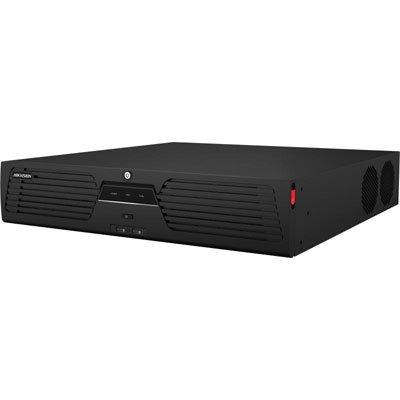

Videos


Technology's role in securing banks and financial institutions
Download
Security technologies promote real-time awareness in K-12 schools
Download
Integrated systems enable critical and compliant security for transportation
Download
Modernising physical access control
Download
Access. Intrusion. One estate.
Download