In today's security conscious environment, repeated false alarms can be costly to a business, and not just in financial terms. A false alarm is simply the activation of one's security alarm system for no apparent reason. With the introduction of European standards and the UK implementation of PD6662 (scheme for the application of European Standards for intruder and hold-up alarm systems) and DD243 (code of practice aimed at reducing false alarms, written by UK Association of Chief Police Officers) documents, both of which greatly improve the standard European document, the false alarm rate per system has been substantially reduced. However, they do still exist. Tony Makosinski from Honeywell Security examines the causes of false alarms and discusses ways they can be reduced and, preferably, eliminated.
False security alarms can usually be attributed to the user, and on occasion to the environment. Let us look at each of these in turn.
The user's role in false security alarms
We may find ourselves in the situation where more responsibility is being placed on the shoulders of increasingly younger and untrained staff. It is one thing to simply turn a key in a lock, but quite another to expect staff to understand what is involved in securing the environment before setting the security alarm unless they have been trained and fully understand what is involved. Some of the most common causes of false alarms are: incorrect entry of user code, failure to secure both doors and windows, misoperation of panic buttons, and entering an area within the building where an alarm is already set.
How does a false alarm occur during entry to the building?
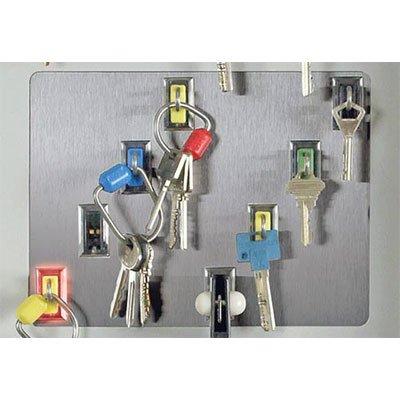
Sometimes staff can forget their user code when opening the building door. Today, PD6662 has made this a thing of the past by recommending that authorised key holders use an individually coded proximity tag or card to complete the entry process. Staff can add this to their personal keys so that it is always at hand. One example of how technology has recently advanced is the ability to include an access control function in the intruder alarm system. This means that the main entry point remains physically locked until the authorised key holder has disarmed the entire system with his or her card, and at other times that standard users can unlock the door with their cards.
How to avoid late night call outs
Some companies make spurious activation of alarms a disciplinary offence |
These are often the result of doors or windows swinging open because they have not been secured properly. An intruder alarm system can alert the user if a door is being opened at the time of setting as the panel will not arm, but the system cannot establish if the doors are closed and secured correctly. This is where user training is imperative. If users know in advance which doors and windows need to be verified and secured, they will be able to check them before leaving the premises.
How to eliminate the error factor
When a panic device has been activated, the reason given by a member of staff is often either that it was an accident or that he/she just wondered what would happen if the button was pressed. There are a few factors to comment on here. Firstly, when planning the initial alarm installation, it is key to work closely with the installer, users and the business to ensure that panic devices are only installed where necessary and in a location where the likelihood of accidental activation can be minimised. This in itself will reduce the number of false alarms. Secondly, user training once again is critical to ensure that all members of staff are aware of the consequences of misoperation of the system. Some companies make spurious activation of alarms a disciplinary offence.
How to stop staff wandering into protected areas
There are just two answers to this question. First, utilise the access control function on a modern intruder alarm system to ensure that whenever an area is set, the doors to it are firmly locked.
 |
| Access control can prevent staff from wandering into alarmed areas, thus reducing false alarms |
Second, use a graphic interface instead of relying on the traditional keypad with two lines of sixteen characters per line to describe what is set and unset. The installation of a user-friendly graphical touch screen shows exactly the current status of all parts of the system. If this is placed strategically near a secure area, authorised users can check the status of the area they wish to enter before doing so.
Environment's role in triggering of false alarms
Typically, environmental factors that trigger a false alarm can be attributed to: a change within the building environmental system such as heating, air conditioning, and changes to the internal building layout without updating the alarm system configuration to reflect these changes.
Modern alarm detection devices have evolved to ignore many of the things that used to cause false alarms. That said, they cannot cater for the unthinking employee. Think of how many times staff have exited the building leaving a fan heater operating under the desk or in the store room or left an oscillating fan on in the summer. If the person setting the security alarm is not aware of this or does not check, these can often lead to a false alarm later. Training and constant reminders will help eliminate this common problem and have the added benefit of reducing energy bills and, in turn, carbon footprint.
It is key to ensure that panic devices are only installed where necessary |
Something else to consider are structural changes to an office environment. In today's ever-changing business world, the need for departments to change location and size leads to the need for modern and flexible buildings. This means that at some stage walls, corridors and offices may need to be adjusted or moved. When this happens, businesses must remember to contact the alarm installer to check if the alarm system configuration needs to be updated in accordance with the office space structural changes.
Training for optimising human interaction with the alarm system
Security alarm manufacturers continually drive their R&D departments to improve the customer/user experience when developing new products. It is also true that the technology that these products are based on evolves and improves over time. However, manufacturers can only go so far. We may never get to the stage where you can have a totally autonomous alarm system where user interaction is not required. The human factor has to be accounted for within all intrusion detection systems and the best way to do this is in the correct training of staff and the best use of technology. One must also not forget to involve the installer with system development and usage from the very beginning.
 | Tony Makosinkski Honeywell Security Group |